Everyone has seen this story in movies: an ordinary character discovers they’re special, gets handed an impossible mission, and suddenly has the fate of the world in their hands. The Chosen One has become one of the most common storytelling frameworks, especially in fantasy and sci-fi. Sometimes they’re born with a prophecy hanging over their heads, or sometimes they have to prove they deserve the title, but almost always, they start out lost and end up facing something far bigger than themselves. And that’s exactly where these stories work best, because it’s not just about saving the world; it’s about fear, doubt, bad decisions, and that pressure of knowing there’s no backup plan.
Videos by ComicBook.com
With that in mind, some movies manage to use this approach in creative ways, while others feel like they’re just following the basic Chosen One playbook. In this list, we’ve rounded up the 5 best movies (or franchises) that truly know how to handle this storytelling. Still, we ranked them to take a closer look at which one executes it best.
5) The Lord of the Rings

In The Lord of the Rings, the Chosen One looks a little different from the usual mold. Frodo Baggins is an ordinary hobbit who’s tasked with destroying the One Ring and stopping Sauron from taking over Middle-earth. No special powers here, just courage, endurance, and a moral strength no one else can maintain when faced with the Ring’s temptation. At the same time, Aragorn is the rightful heir to Gondor, forced to accept his destiny as a leader in order to unite the free peoples. It works because the story blends a small hero on an impossible mission with a classic hero fulfilling a political prophecy — and it pulls both off solidly.
So why does The Lord of the Rings land in last place on this ranking? Because, as great as it is, the Chosen One arc here is quieter. Frodo isn’t exactly a traditional messiah figure, Aragorn’s journey is fairly predictable, and there’s no overwhelming sense of absolute power or unavoidable destiny like in other entries on this list. Still, the execution is excellent: you feel the responsibility, the weight of the mission, and the emotional tension every step of the way.
4) Star Wars

Some people might be surprised by Star Wars landing where it does on this ranking (or maybe not). The saga is one of the biggest examples of this kind of storytelling: in a galaxy filled with wars, Jedi, and Sith, Anakin is the promised one meant to bring balance to the Force — and he fails spectacularly. That’s when Luke steps in, picks up the prophecy, and actually tries to make it happen. What works here is that the whole Chosen One concept isn’t just about powers, but about sacrifice and real consequences: Anakin breaks everything, Luke nearly dies, and later on, Rey shows up to prove that the cycle can continue.
Still, as iconic as Star Wars is in this area, it can feel predictable and a bit cliché. You already know the prophecy will come true in the end, and the emotional payoff doesn’t always hit as hard as it should. What saves the story are the moral choices and the personal impact on each character — those elements carry a lot of weight. And since it was also one of the first franchises to really explore this structure on film, it deserves credit. It has a legacy.

3) Harry Potter

In Harry Potter, Harry is literally the Chosen One, and no big ceremony is required. A prophecy says he’s the only one capable of defeating the ultimate villain, Voldemort, and the saga follows his entire journey from orphan to hero who has to deal with fear and doubt along the way. But what really earns the franchise points is that it never pretends its protagonist is perfect: the audience watches Harry mess up, nearly die, lose important people, fall apart emotionally, and still keep going. That might sound small, but it isn’t, because a lot of stories completely forget to show that side of the journey.
So basically, Harry Potter ranks higher because its arc feels more intimate and psychological than epic on a universal scale. And that’s a good thing. Harry proves that being chosen is more about handling responsibility and making genuinely difficult decisions than just having superpowers. There’s an extra layer of complexity here, and that’s exactly what helps you connect with him and realize that something that looks glamorous on the surface is actually exhausting and heavy underneath.
2) The Matrix
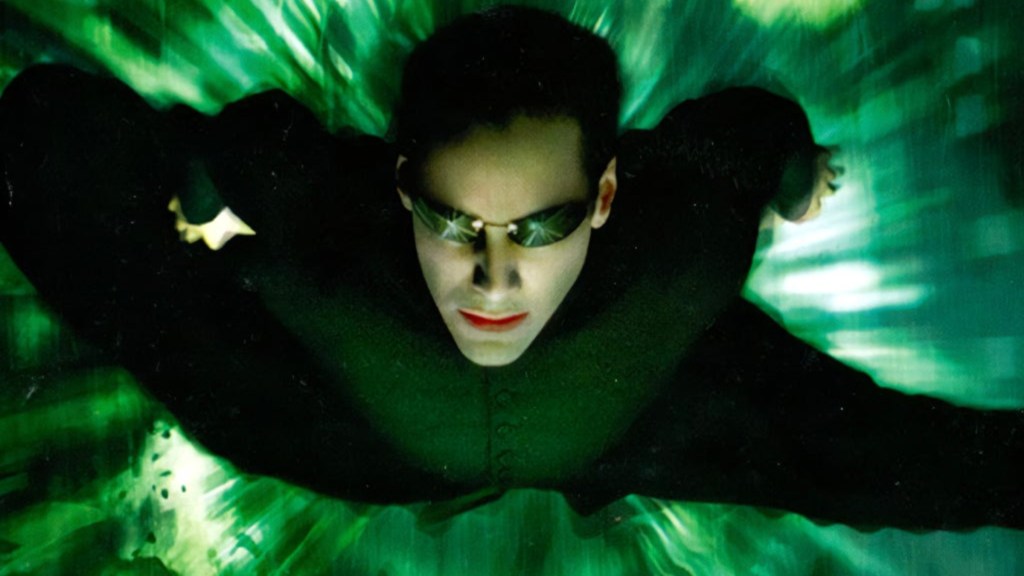
In this case, it’s about taking the Chosen One framework and pushing it to another level. In The Matrix, the future is ruled by machines, humanity is trapped inside the Matrix, and Neo is the one who can set everyone free. He starts out as just another hacker and slowly figures out his role, until he literally becomes the guy who bends reality. What sets him apart is that being the Chosen One isn’t just about destiny, but about believing in himself, stepping into the role of saving the world, and, of course, fighting a lot along the way. Here, it isn’t something the universe officially decides for him.
The Matrix blends action, philosophy, and character growth perfectly while placing its protagonist in a make-or-break position. Neo doesn’t just fulfill a prophecy — he has to earn the title of Chosen One, and in doing so, he redefines what that even means, all with style, groundbreaking effects, and massive stakes. The only reason it doesn’t take the top spot is that, despite how epic it feels, the scale is still mostly confined to the Matrix and the war against the machines.
1) Dune
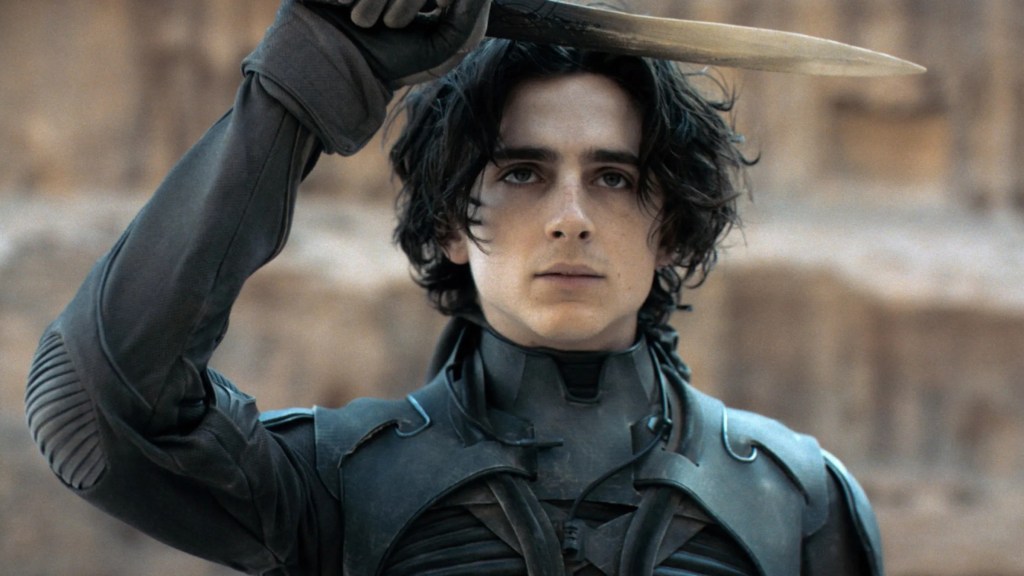
Paul Atreides is basically the definitive example of the modern Chosen One. In the Dune franchise, his family takes control of Arrakis, the planet that produces the most important spice in the universe, and Paul discovers he’s the Kwisatz Haderach (the one foretold in Fremen prophecy). But this saga isn’t just “the hero saves everyone.” It makes it clear that this position comes with politics, religion, morality, and consequences on a massive scale: if Paul gets it wrong, everyone suffers. It’s complex, heavy, and very risky — there’s an enormous amount of pressure on his shoulders.
And that complexity is what puts Dune at the top of the ranking. It takes everything that works about the Chosen One storytelling and adds crucial layers of nuance. Paul is a hero, a prophet, a leader, and a potential destroyer of worlds all at once. The story doesn’t simplify the idea like Harry Potter or Star Wars, doesn’t keep it subtle like The Lord of the Rings, and it doesn’t lean purely on action like The Matrix. It’s the full package: narrative depth, high stakes, psychological weight, and epic scale, all working together. There’s simply no real competition.
What do you think? Leave a comment below and join the conversation now in the ComicBook Forum!
Most Viewed
-

Image Courtesy of Prime Video -
Image Courtesy of DC Comics -

Courtesy of Crunchyroll