Do you know grand-scale cinema? James Cameron is one of the directors who truly masters it. From The Terminator to Avatar (which is now about to get a third film), he’s changed the way action and sci-fi movies are made, always pushing technology, storytelling, and scale to the limit without holding back. Some of his films are instant classics that left a mark on cinema history, while others can be curious missteps. Still, they all carry his stamp: obsessive attention to detail, set pieces you don’t see anywhere else, and characters that stick with you. But don’t think Cameron is all explosions and visual effects. Behind the spectacle, he knows how to build tension, emotion, and even drama without any fluff. Getting to this high level, though, required taking serious risks.
Videos by ComicBook.com
Each of his films represents a different phase of his career, from clumsy early experiments to works that changed Hollywood. Here’s every James Cameron movie ranked from worst to best.
9) Piranha II: The Spawning

You know those movies that aren’t very good but are usually a filmmaker’s first projects because they’re still finding their footing? Piranha II: The Spawning is basically that for Cameron. It lands on this ranking more out of historical obligation than actual merit. The plot is creative, but not in a good way, with flying piranhas attacking tourists. It’s a messy project, with no real directorial voice, and honestly, zero of the Cameron we know and love appears here.
This movie works more as a curiosity for anyone wanting to see where it all began, but as cinema, it’s basically an accidental study in how nothing fits together. And that’s fine — every director has a rough start. It ranks last because it’s literally the only Cameron film that doesn’t carry his DNA. No built-up tension, no strong characters, no technical or narrative impact. Piranha II: The Spawning is just a weird little footnote in his career that doesn’t represent his work at all.
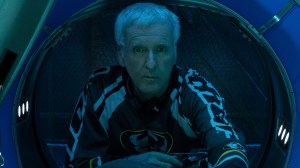
8) True Lies

Remember True Lies? You might, but it’s not exactly one of Cameron’s most memorable works, especially compared to the rest of his filmography. But is it fun? Absolutely. The story follows a secret agent going through a marital crisis, and you can tell Cameron is having a blast mixing espionage with this domestic chaos. The cast is solid, with Arnold Schwarzenegger blowing everything up and Jamie Lee Curtis in one of the coolest action comedies of the ’90s. It even has set pieces that a lot of modern movies can’t touch, like Schwarzenegger hanging from a Harrier jet (something that today would probably be 90% green screen).
Still, as mentioned, when you look at Cameron’s body of work, it’s clear this one plays in a lighter league and, at times, feels dated. Sure, it entertains, but it doesn’t have the depth to rank above Cameron’s stronger projects. True Lies is the kind of movie you slot into the list thinking, “Yes, it works, but someone has to take this spot.” Cameron’s capable of way more than this.
7) The Abyss

The Abyss is the movie that shows Cameron having huge ideas and struggling to keep them under control. The story concept is about a team of divers discovering an unknown lifeform deep in the ocean, and it’s great, with the visuals still impressing. But honestly, the film tries to juggle a military crisis, marital drama, and a pacifist message all at once, and the result ends up a bit uneven. When it works, it really works. But when it doesn’t, you can feel Cameron biting off more than he could chew at that point in his career. It’s like he wanted to show a little more than he could handle, but the story needed better organization.
It ranks just above a couple of others but still lands low because, despite the ambition, it’s uneven — no way around it. You can see the Cameron who would go on to change Hollywood every five minutes, but also the Cameron still figuring out how to structure it all clearly. Here, he was still finding his groove. The Abyss is an important film, but not the most efficient one.
6) Avatar: The Way of Water
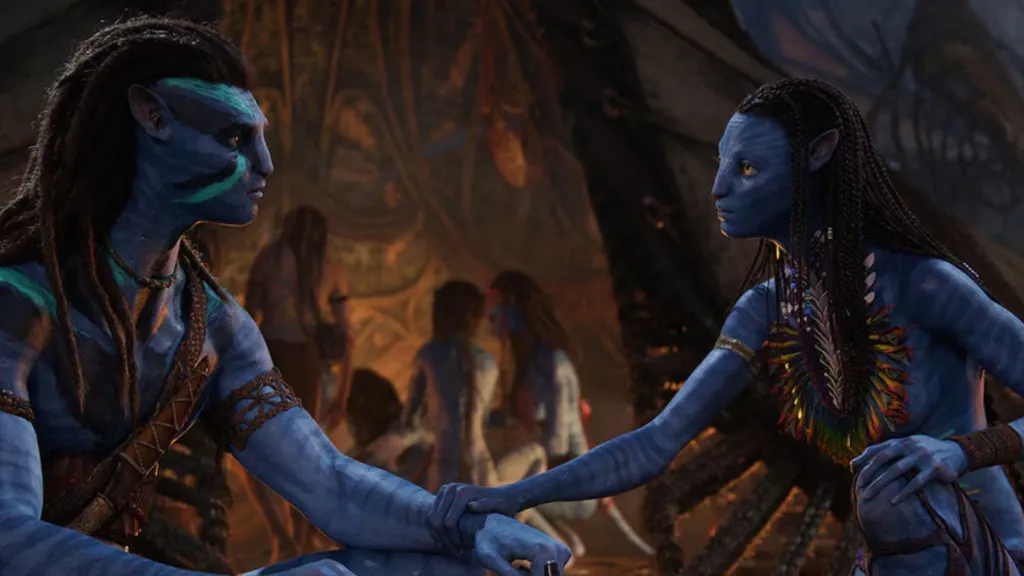
Here’s a perfect example of Cameron basically saying, “Okay, I’ve mastered the impossible, now I want to go further.” The Avatar franchise, which already has films confirmed through 2031, is firmly established in cinema, especially thanks to the first movie. But with its sequel, Avatar: The Way of Water, you get a sense of just how far Cameron is willing to go to keep delivering something jaw-dropping. In this follow-up, Jake Sully (Sam Worthington), Neytiri (Zoe Saldaña), and their kids are fleeing a new human threat.
Visually, the film goes even further than the first, with insane underwater work, improved motion capture, and a much deeper, more immersive Pandora. The story, though, moves less than it should. For a universe that broke records, it’s a little frustrating that this film doesn’t quite reach the same level as its predecessor. Everything looks stunning, but at the same time, it’s emotionally shallow in a lot of moments — the script gets stuck. With Avatar: The Way of Water, Cameron proves he can raise the technical bar again, but when it comes to narrative impact, not exactly.
5) Avatar
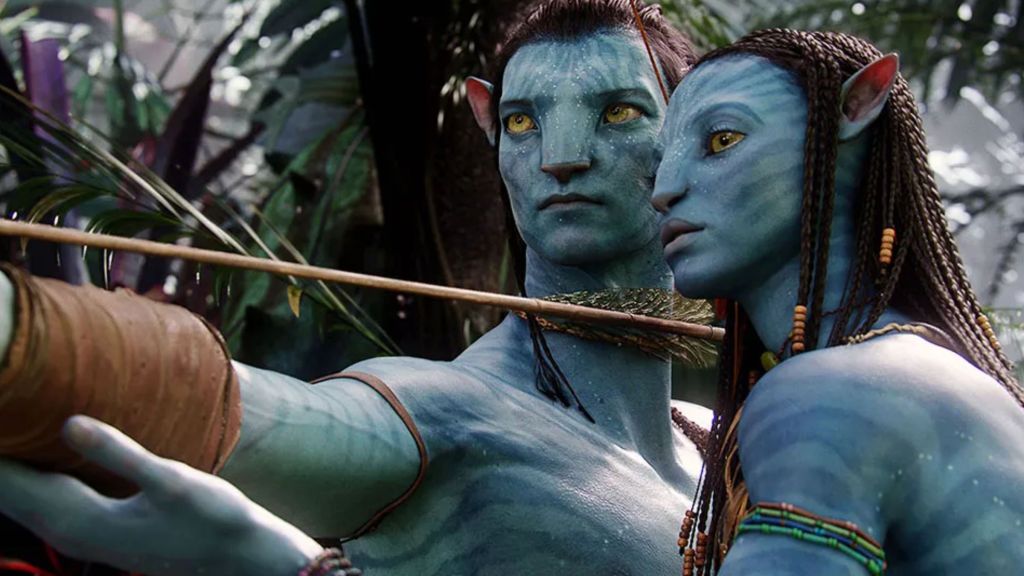
Today, there’s basically no one who hasn’t at least heard of Avatar, even if they’ve never actually seen it — and that says a lot about Cameron’s reach as a filmmaker. On paper, the story seems simple: a former Marine arrives on Pandora, meets the Na’vi, and gets caught in a conflict between colonization and survival. But that doesn’t take away from the fact that Cameron completely reinvented the blockbuster experience here. The world he created became an instant visual benchmark, 3D went global, and the film set a new standard for technical ambition in Hollywood. Simple story, massive execution, and only Cameron had the patience (and stubbornness) to pull it off.
To put it in perspective, before Avengers: Endgame even existed, Avatar had that level of cultural dominance that no one thought could be surpassed anytime soon. It’s a revolutionary film, but it doesn’t carry the thematic weight of the movies higher up in this ranking. As an experience, it’s unmatched; as a narrative, it’s more predictable. And that’s fine — it’s an interesting balance, just not quite as strong.
4) The Terminator
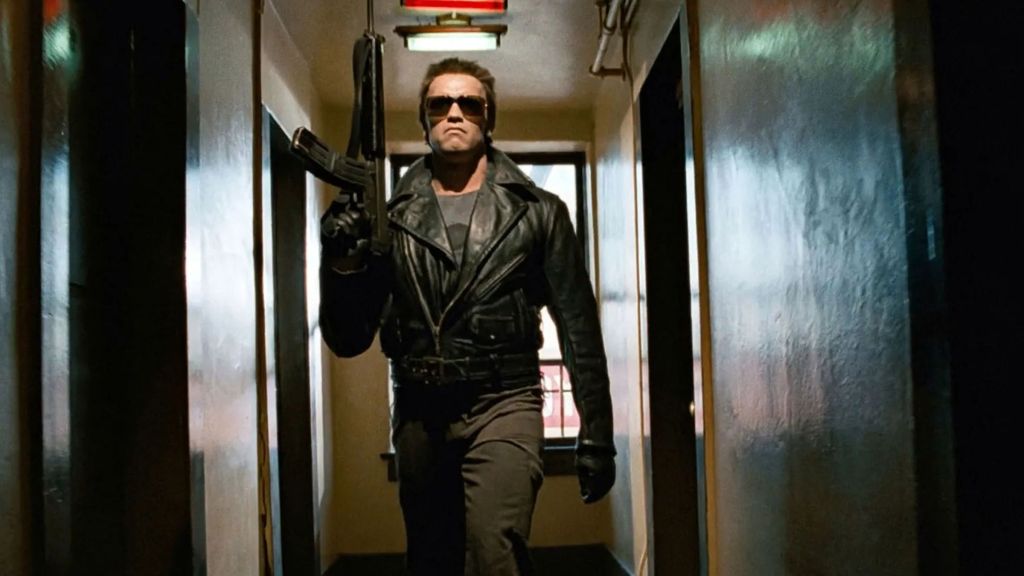
With The Terminator, Cameron finds his voice in an absurdly efficient way. This is a classic of cinema (especially sci-fi), where a killer cyborg travels back in time to kill the mother of the future leader of the human resistance. The concept is totally compelling, and the film delivers plenty of standout moments like the T-800’s (Arnold Schwarzenegger) iconic line (not to mention it spawned an entire franchise). It’s hard to even think of anything negative here, because it does so much with so little: tight pacing, relentless chase tension, and, most importantly, Sarah Connor (Linda Hamilton) starting one of the most important character arcs in the genre.
From start to finish, The Terminator isn’t trying to be massive, but it becomes massive thanks to its impact. It’s brilliant at what it sets out to do, but the truth is that Cameron was still growing here. It’s like a foundational brick for everything that came after, though later works refined, expanded, and transformed what this film planted. It’s enormous in the history of cinema, no doubt about it, but Cameron would go on to do even more.
3) Titanic
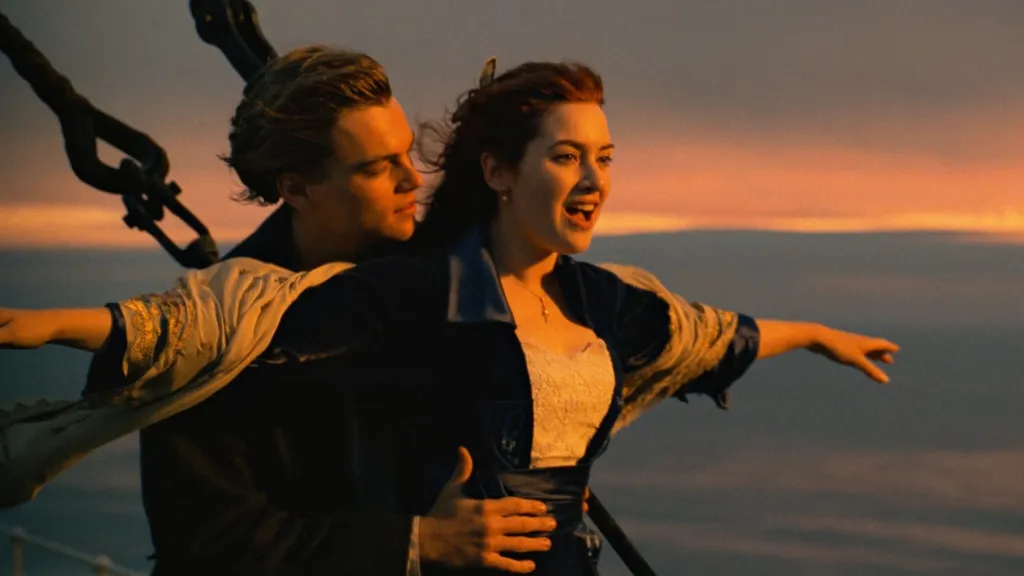
Talking about Cameron without mentioning Titanic is impossible. Some people still try to downplay it because it’s a romance, but you can’t deny the execution is flawless. The story of Jack (Leonardo DiCaprio) and Rose (Kate Winslet) works because Cameron knows exactly how to balance everything at this stage of his career — and we’re talking weight here, with personal drama and a completely epic disaster. When the ship starts sinking, the film hits another level: logistics, practical effects, and direction are completely in control. It’s a blockbuster that doesn’t apologize for being emotional, and it’s no wonder it’s part of the productions that changed cinema history.
This is a monumental film that cements Cameron as a top-tier director. Titanic is the most complete film of his career in terms of drama. Pulling off what this movie achieves on screen is extremely difficult (especially considering the level of detail Cameron packs in beyond the script and direction). It’s him operating with surgical precision on a massive scale. But when it comes to total reinvention, it’s not quite the top pick. That’s because two other films had an even bigger impact within a genre and continue to be references today.
2) Aliens
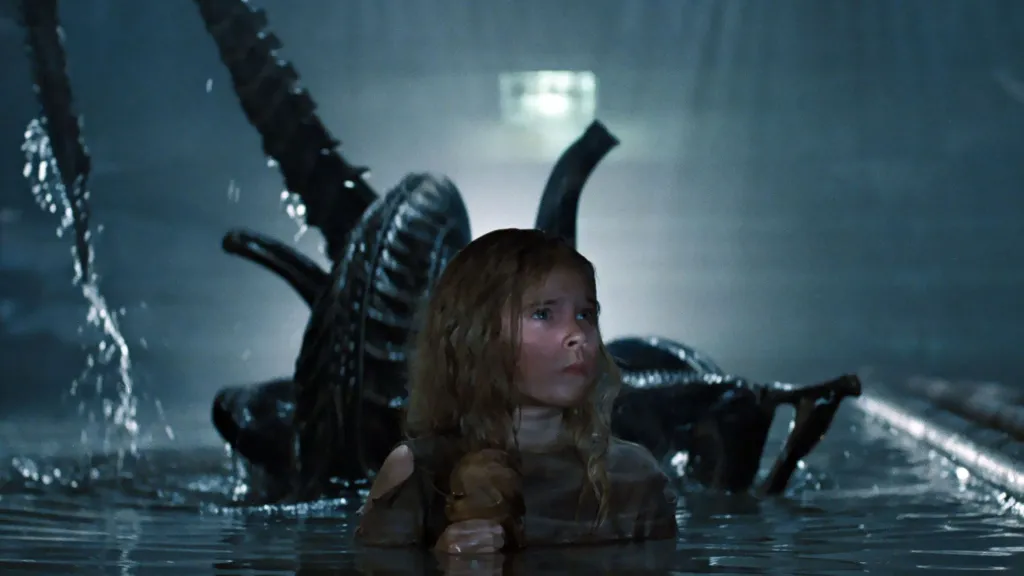
Let’s get straight to the point: Aliens is Cameron taking someone else’s franchise and saying, “Alright, now it’s my turn.” Ridley Scott’s original claustrophobic horror is turned into a full-blown war against an unstoppable threat. In the story, Ellen Ripley (Sigourney Weaver) wakes up to discover that the Weyland-Yutani Corporation has established a human colony on LV-426, the planet where the aliens were first found. When the colony stops responding, she agrees to return with a team to investigate. That’s when Ripley becomes an iconic protagonist, the marines deliver some of sci-fi’s best team dynamics, and the film hits the tone perfectly from start to finish.
Aliens has tension, action, and character all working at full intensity, never dropping the ball. It’s practically flawless within what it sets out to do, and easily one of the best action and sci-fi films ever made (and often considered one of the best in the entire franchise). Cameron really outdoes himself here. But did it change cinema as a whole? Not exactly. Could he have made an even more complete film, ticking all the boxes? Absolutely.
1) Terminator 2: Judgment Day

Any debate about mixing action and sci-fi in commercial cinema goes out the window when Terminator 2: Judgment Day drops. The sequel puts John Connor (Edward Furlong) under the protection of the T-800 while the T-1000 (Robert Patrick) — one of the most impressive visual effects creations and one of the greatest villains in the genre — hunts them down. But the real trick is the emotion: the bond between John and the T-800 feels genuine, and the film never loses sight of that. The action is massive, but it doesn’t drain the drama, and the drama never slows the pace. It’s an absolute balance. Cameron struggled with this in the past, but here he nails it.
While Titanic is a milestone in Cameron’s career, the truth is that Terminator 2: Judgment Day is his most complete film. Technically revolutionary, narratively solid, emotionally powerful, and culturally unforgettable. And the fact is that it’s not just the director’s best movie, but also one of the best in pop cinema. No other Cameron film hits that level of precision across so many areas at once. This is the peak.
Are you a James Cameron fan? What do you think of his movies? Let us know in the comments!
Most Viewed
-

Image Courtesy of A-1 Pictures -

Image Courtesy of Prime Video -

Image courtesy of Square Enix and Tactic Studios