The modern era of Hollywood blockbusters owes much to Robert Downey Jr.‘s portrayal of Iron Man, which kicked off the Marvel Cinematic Universe and helped sustain the franchise for over a decade. His Marvel tenure is so unprecedented that Downey Jr. is even returning as Victor von Doom in the upcoming Avengers: Doomsday. Yet, the scale of these comic book films often overshadows the earlier phases of Downey Jr.’s filmography, where the actor built a diverse portfolio across multiple genres. In fact, in the late 1990s and early 2000s, he often played supporting roles in everything from independent dramas to dark comedies. One of the most unusual entries from this timeframe even offers fans a glimpse into Downey Jr.’s work in the psychological thriller genre.
Videos by ComicBook.com
Netflix officially added Gothika to its streaming library today, September 1st, a movie that unites Downey Jr. with an impressive cast. Released in theaters in November 2003, the supernatural horror film was directed by Mathieu Kassovitz and produced by Dark Castle Entertainment on a substantial $40 million budget that was uncommon for genre movies over 20 years ago. The narrative centers on Miranda Grey (Halle Berry), a clinical psychiatrist working at the Woodward Penitentiary for criminally insane women, a job that can be emotionally and psychologically draining. After encountering a mysterious girl on a rain-slicked road, Miranda wakes up confined inside a cell within her own facility, accused of brutally murdering her husband, Douglas Grey (Charles S. Dutton). As she struggles to prove her sanity while experiencing terrifying supernatural phenomena, Pete Graham (Downey Jr.), a former colleague, treats her as her attending physician. Determined to look at things from a rational perspective, Pete offers a counterpoint to Miranda’s ghost stories, forcing the audience to question what’s real and what’s inside the woman’s head.
Does Gothika Still Hold Up Today?
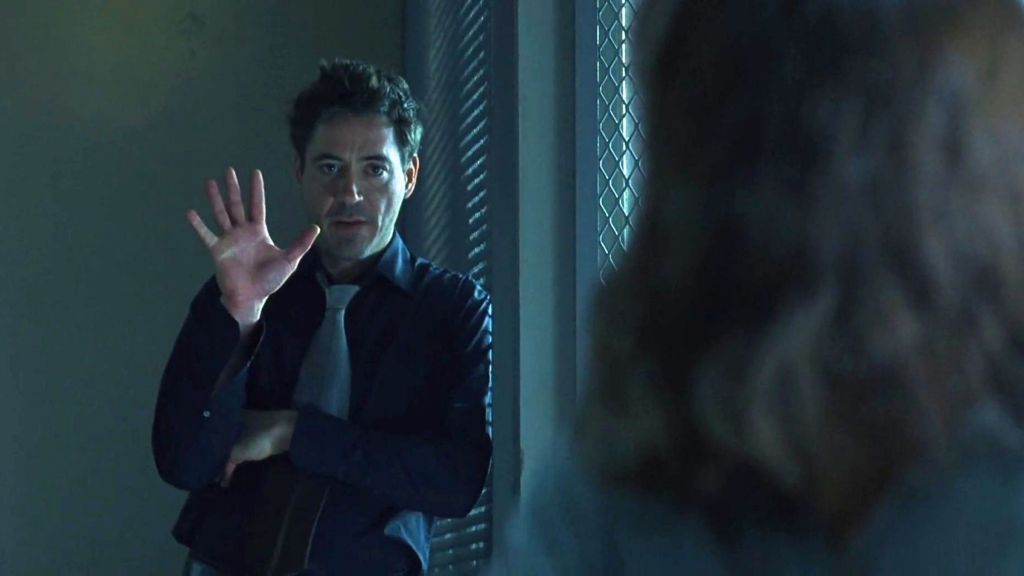
Gothika is a fascinating time capsule of early 2000s studio horror, using an aesthetic that defined the genre during that decade. For instance, Kassovitz saturates the screen with oppressive blue filters and dreary environments, turning the brutalist architecture of the Woodward Penitentiary into a claustrophobic trap. The cinematography by Matthew Libatique also captures the disorientation of Miranda’s descent into madness, blending sterile clinical medical procedures with supernatural hallucinations. That said, Gothika frequently abandons psychological dread in favor of loud jump scares and jarring visual effects, weakening a fantastic premise. On top of that, the script by Sebastian Gutierrez struggles to balance the supernatural elements with the murder mystery, resulting in a story that telegraphs its major plot twists way ahead of time and solves all loose threads by using coincidence and exposition.
The movie ultimately earned $141.6 million at the worldwide box office, proving becoming a success despite the awful reviews; Gothika currently holds a 15% approval rating on Rotten Tomatoes. That split can be explained by the cast. Berry was at the peak of her popularity, and her turn as Miranda Grey is genuinely unsettling. The movie also starred Penélope Cruz as Chloe Sava, Miranda’s fellow inmate who seems to know more than she tells about the paranormal events in the hospice. Plus, if you are a fan of Downey Jr., he plays the psychiatrist with a clinical detachment that avoids his trademark rapid-fire charisma, allowing you to see another side of the star.
More Movies
-

Image Courtesy of Marvel