When Gene Roddenberry created Star Trek, he envisioned it as a bold utopian glimpse of the future as it could be. But every good franchise needs a villain, and Star Trek initially stumbled a little. Most stories were essentially “one and done” – an idea pretty much baked into the USS Enterprise’s exploratory mission, which meant every story confronted a new threat.
Videos by ComicBook.com
That was how it began, of course. Star Trek Season 1 did introduce some pretty iconic villains; there’s a prototype Q called Tremayne, and who can forget the debut of the Romulans? But the Romulans were basically a twisted mirror image of the Vulcans. Star Trek was supposed to be boldly going where no-one had gone before, and that meant the real threats needed to be far more dangerous. And then, finally, episode 26 introduced something brand new.
The Klingons Made Their Debut 59 Years Ago Today
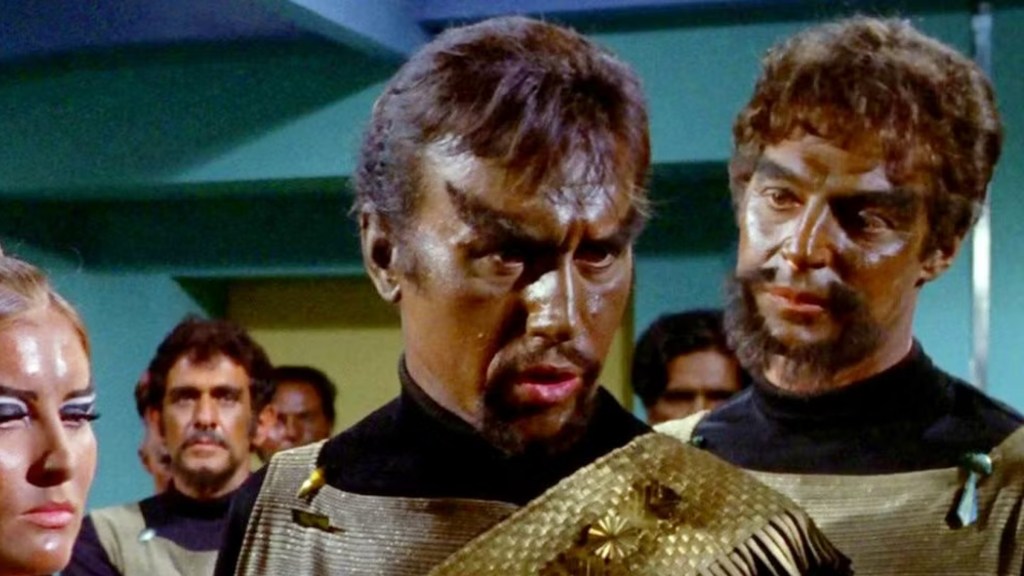
The Klingons made their debut in the Star Trek episode “Errand of Mercy” all the way back in 1967. Roddenberry envisioned them as the antithesis of the Federation, and described an utterly authoritarian culture in The Making of Star Trek: “Their only rule of life is that rules are made to be broken by shrewdness, deceit or power. Cruelty is something admirable; honor is a dispicable trait. They will go out of their way to provoke an incident with the Federation.” Their society was an absolute dictatorship, with those in power dedicated to personal gain.
Gene Coon, who penned the episode “Errand of Mercy,” was inspired by the real-world events of the Cold War. These early Klingons were heavily influenced by caricatures of communist Russia and China, and you get a strong Cold War sense running through Star Trek: The Original Series – a potential conflict between rival galactic superpowers, sometimes fought through proxies and carefully-orchestrated civil wars on other worlds, always on the brink of exploding into outright war.
Producer Robert Justman insisted that the Klingons should be irredeemable. “[L]et us never set up a situation whereby those adversaries of ours give any indication of ever being anything but highly aggressive and self-seeking opponents,” he wrote in one famous letter. But there was a catch; Roddenberry himself balked at this. He disliked the idea that any race should be inherently evil, and so Star Trek‘s great villains were guaranteed to evolve.
The Klingons Became Star Trek’s Greatest Villains… & Then Allies
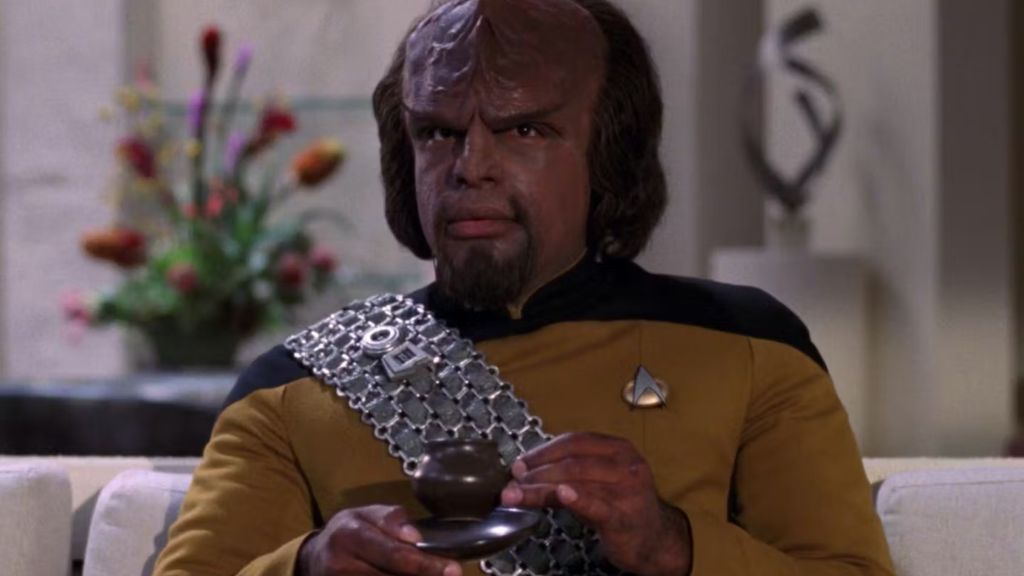
The original Klingons look rather like ordinary humans with a few ridges. The makeup was quick and easy to apply, one reason the production team liked using them as villains, but they became more elaborate and inhuman as Star Trek moved to the big screen (there are elaborate canon explanations why Klingon face ridges changed). Star Trek: The Motion Picture introduced a Klingon language back in 1979, but it was initially gibberish, with linguist Dr. Marc Okrand creating it for future films. This language was the first real hint Klingons were becoming something so much more.
The next stage in Klingon evolution really came in Star Trek: The Next Generation. Roddenberry initially resisted putting Klingons in at all, wanting this to be a whole new era with new races and enemies. Writer and Co-Producer Herb Wright won Roddenberry over by suggesting they put a Klingon on the Enterprise’s bridge, a smart way of showing how the galaxy had changed over the last century – and proof that Klingons were not irredeemable after all. “Forget everything you’ve ever read or heard about Klingons, Roddenberry famously told Worf actor Michael Dorn.
When modern viewers think of Klingons, they see them through the lens of Worf. The simple antagonism of Star Trek: The Original Series was replaced by a warrior ethos, one where honor and glory was sought above all else. The Klingons were still fierce and aggressive, even if they were now allies of the Federation, and The Next Generation – and Deep Space Nine – both enjoyed contrasting them with Starfleet.
The Klingons Are Still a Huge Part of Star Trek

Star Trek: Discovery seasons 1 and 2 fleshed out the Klingons quite a bit. Set earlier in the Star Trek timeline, it worked hard to bridge the gulf between the contrasting portrayals, with quite a few smart retcons. Season 2 ended with the USS Discovery blasted into the far future, the tail end of the 32nd century, where it initially seemed they were dealing with a galaxy without Klingons. The truth, however, was eventually revealed in Star Trek: Starfleet Academy, which featured the fate of the Klingon Empire.
The Klingon homeworld Qo’noS had been destroyed as a result of a galactic apocalypse known as the Burn. Reeling, the Klingons themselves struggled to endure for 120 years, until the Federation worked hard to grant them a new homeworld – and, by extension, a shot at survival. It’s a shocking twist, an unexpected resolution to the longstanding antagonism between Starfleet and the Klingons, but it nevertheless allowed the Klingons to continue while remaining true to themselves. And it all began 59 years ago today.
What do you think? Leave a comment below and join the conversation now in the ComicBook Forum!
More TV Shows
-
Courtesy of South Park Studios -
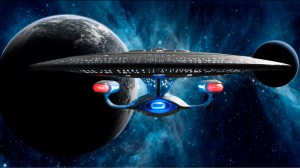
Image Courtesy of Paramount -
Courtesy of Paramount+ -

Courtesy of 20th Century Animation