The sci-fi genre has a massive catalog of productions, but when it comes to TV in particular, it has often been overlooked. That has been the case for a long time, dating back to when the genre was still finding its audience and wasn’t exactly mainstream. Because of that, when people talk about the greatest sci-fi shows ever made, it’s usually hardcore fans who remember the series that really deserve a place in that conversation. More often than not, the titles that come up are hits like Stranger Things, franchise-driven shows tied to Star Trek and Star Wars, or series that dominated during a specific period, such as Westworld or The Expanse.
Videos by ComicBook.com
But there’s a small group of series that never found the audience they deserved, and one of them still leaves me wondering how it ended up so underrated. It ran for multiple seasons, has an entertaining story, earned positive reviews, wrapped up with a satisfying conclusion, and yet almost nobody brings it up when the conversation turns to sci-fi.
Killjoys Understands What Makes a Great Sci-Fi Show
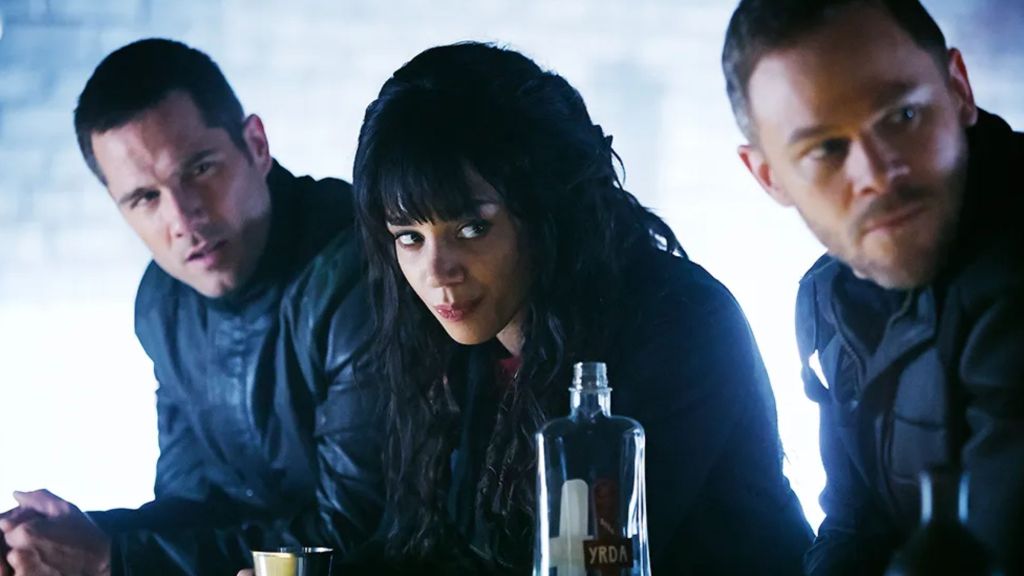
If you’re a fan of Firefly, you’ve probably heard of Killjoys at some point, since the two are often compared because of their overall style and tone. Premiering in 2015, the series follows three bounty hunters, Dutch (Hannah John-Kamen), Johnny Jaqobis (Aaron Ashmore), and D’avin Jaqobis (Luke Macfarlane), who work for an organization tasked with tracking down criminals across a planetary system known as the Quad. And at first, the story seems like it’s going to follow a familiar formula built around missions, space chases, and a different case every week. However, things get a lot more interesting once political conspiracies, secrets, and much bigger threats start coming into play.
But what stood out to me most was how the show manages to be pure entertainment without ever feeling shallow. These days, there’s a tendency to associate quality with extreme seriousness, as if a series has to be dark, grim, or incredibly complex in order to be taken seriously — especially within the sci-fi genre. Killjoys never falls into that trap. From the very beginning, it’s fun and full of action, but it never sacrifices strong storytelling in the process. Across five seasons, the episodes keep everything moving, the missions almost always contribute to the larger narrative, and there’s a real sense of progression. You never get the feeling that you’re watching something designed just to fill out a season (even when the main storyline takes time to move forward completely).

And sure, I wouldn’t call it perfect. Maintaining a level of consistency from beginning to end is incredibly difficult. One of the most common problems in sci-fi is expanding the mythology so much that the show loses sight of what made it compelling in the first place. Basically, the universe gets bigger, the lore becomes more complicated, and suddenly the characters feel secondary to everything surrounding them. After Season 3, I think Killjoys starts to suffer from that issue a little, becoming more convoluted than it really needed to be. As the story progresses, it shifts from only being about bounty hunters to involving power struggles and political manipulation. But on the other hand, it never completely loses itself because it still keeps its focus where it matters most: the central trio.
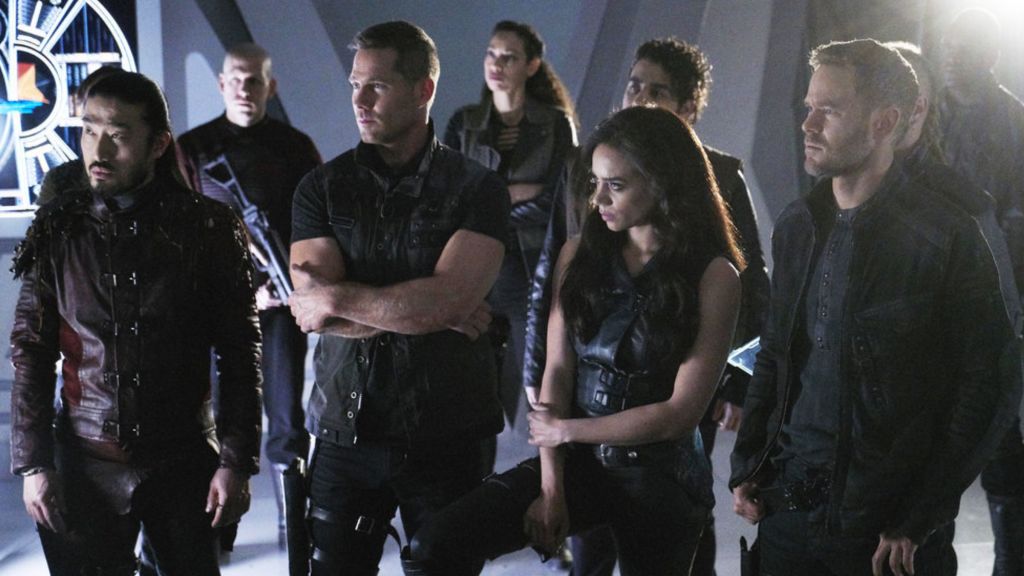
If the show works as well as it does overall, a huge part of the credit goes to the chemistry between Dutch, John, and D’avin. There are sci-fi series with bigger visual effects and more elaborate worlds, but very few create a core group that’s this easy to become attached to. Even when an episode doesn’t fully land, you’re still invested because the characters share a connection that elevates the experience. That dynamic helps prevent the story from becoming emotionally distant, even as the scope grows larger with each season. Killjoys always stays true to its identity, remaining a story about three people trying to survive, protect the people they care about, and deal with consequences.
And when I compare it to many shows that came after it, its consistency is impressive. That’s something I think is worth highlighting since the sci-fi genre is filled with examples of shows that started brilliantly before completely losing their way. So here, there’s a clear understanding of what story is being told and, more importantly, the series reaches its ending without feeling like a totally different version of itself. That might sound like a simple compliment, but any sci-fi fan knows how rare that actually is.
Why Is Killjoys So Forgotten?
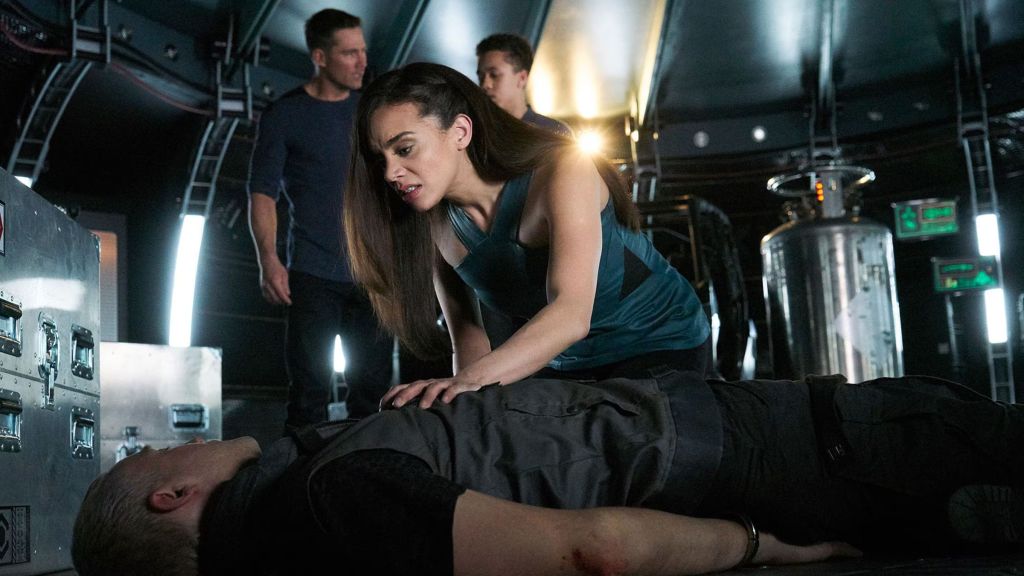
I still find myself wondering why so few people remember the show, but looking at it more closely, the most likely explanation is that Killjoys never received the same level of exposure as many of its competitors. It premiered during a period when sci-fi TV was becoming increasingly crowded, forcing it to compete against shows that were getting far more attention. At the time, Black Mirror and Stranger Things, for instance, were getting a lot more buzz because of their concepts and impact. And there’s also the marketing factor, since the show was a Canadian production that aired on Syfy, and realistically, it was always going to have a harder time breaking into the mainstream than some of its rivals.
It’s also possible that the balance between complexity and accessibility, which I mentioned earlier, played a role. Critical reception was positive, but there were also complaints that the story felt somewhat derivative or overly familiar. During its first season, some critics argued that the premise borrowed from ideas already seen in other space operas and that the universe itself wasn’t distinctive enough to stand out from the crowd. In other words, the show may have suffered because it wasn’t trying to reinvent the wheel. And it’s ironic as, even though that feels like a strength, it landed in a period where people were much more fascinated by complicated storylines that could fuel theories and endless speculation. Even though Killjoys tried to be complex, it still wasn’t quite enough.
Because it wasn’t revolutionary, it ultimately struggled. The reality is that audiences often gravitate toward shows that stand out through innovation, controversy, or spectacle rather than those that simply execute their ideas exceptionally well. So, my conclusion is that Killjoys may have arrived at the wrong moment. If it premiered today, in an era where many viewers are feeling burned out by overly dense storytelling and are actively searching for something fun, straightforward, and entertaining, I think the outcome would look very different.
Killjoys is available to watch on Prime Video.
What do you think? Leave a comment below and join the conversation now in the ComicBook Forum!
More TV Shows
-

cyclops and jean in "No Mutant is an Island"