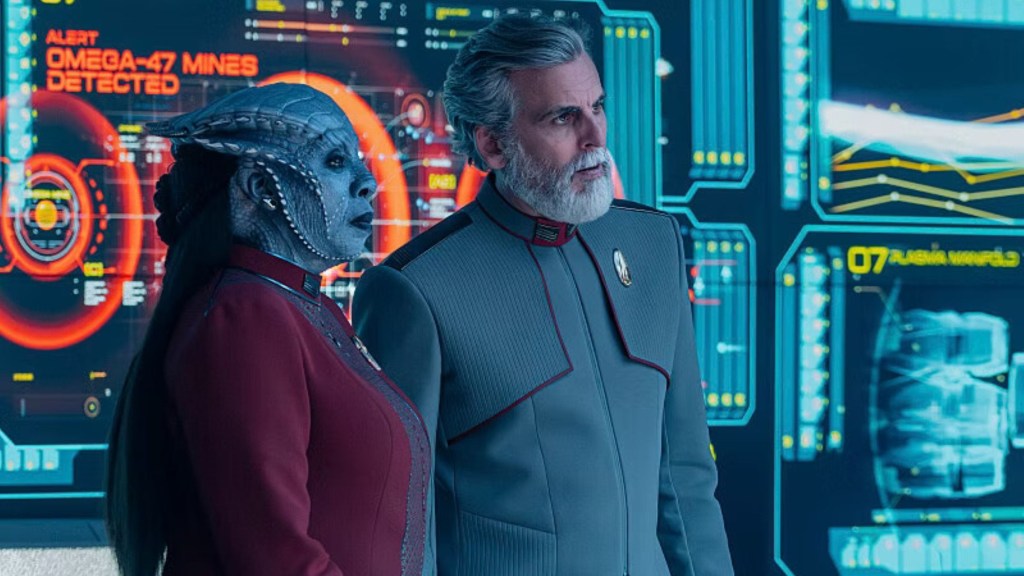
In the penultimate episode of Star Trek: Starfleet Academy, the Federation found itself in arguably one of the most high-stakes situations they have seen since the post-Burn era. The notorious Vanari Ral pirate, Nus Braka, has stolen experimental weapons using a volatile particle known as Omega 47 — a substance capable of shredding the very fabric of space and subspace itself – yikes. To make matters worse, he’s found a way to turn this ticking time bomb into a literal, well, ticking time bomb by fashioning the Omega 47 into remote-controlled, time-delayed mines.
Videos by ComicBook.com
And as if that wasn’t bad enough, the entire Starfleet armada (minus a heavily damaged Athena) are now trapped inside what is essentially a giant cage made up of said mines. Yep, Braka has well and truly played the Federation this time, getting them to recall all its vessels to Federation space, then surrounding the entire region with the mines. The devices are triggered by energy disturbances, meaning any ship attempting to cross the blockade risks detonating them and tearing open subspace and killing pretty much everyone in the sector.
Oh yeah – and when detonated, the particle renders warp travel impossible across that entire sector for millennia to come (it’s all good news today…). Suddenly, instead of being able to rise to meet the threat, the entire Federation fleet is boxed in. Under normal circumstances, the situation would seem more dire. But as Star Trek fans will know, there’s always been one obvious loophole to many a hopeless situation such as this: The U.S.S. Discovery.
The Star Trek Ship That Could Go Anywhere
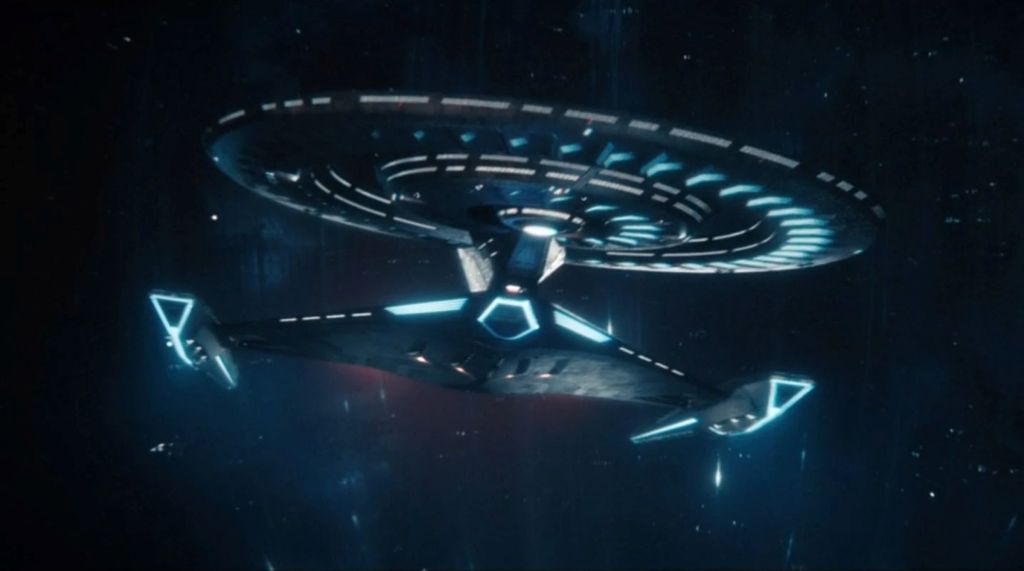
For nearly a decade now, (how time has flown) the USS Discovery has occupied a top spot when it comes to Starfleet ships. Ever since it was introduced in Star Trek: Discovery, the ship quickly became known as one of the most powerful vessels the franchise had ever introduced, proving itself amongst the elite in the world of starships thanks to a unique piece of technology – the spore drive.
Unlike conventional warp travel, this experimental propulsion system allows Discovery to jump vast distances across the galaxy almost instantly. No warp drive, no wormholes, just point A – B in the blink of an eye. There seemed to be no real limitations to Discovery’s power and what it could achieve with this handy piece of technology. That’s how it seemed – until now.
Now, nearly nine years after Discovery first debuted, in the series finale “Rubincon” Starfleet Academy has finally revealed one apparent weakness of the franchise’s most overpowered starship.
Nus Braka’s Perfect Trap
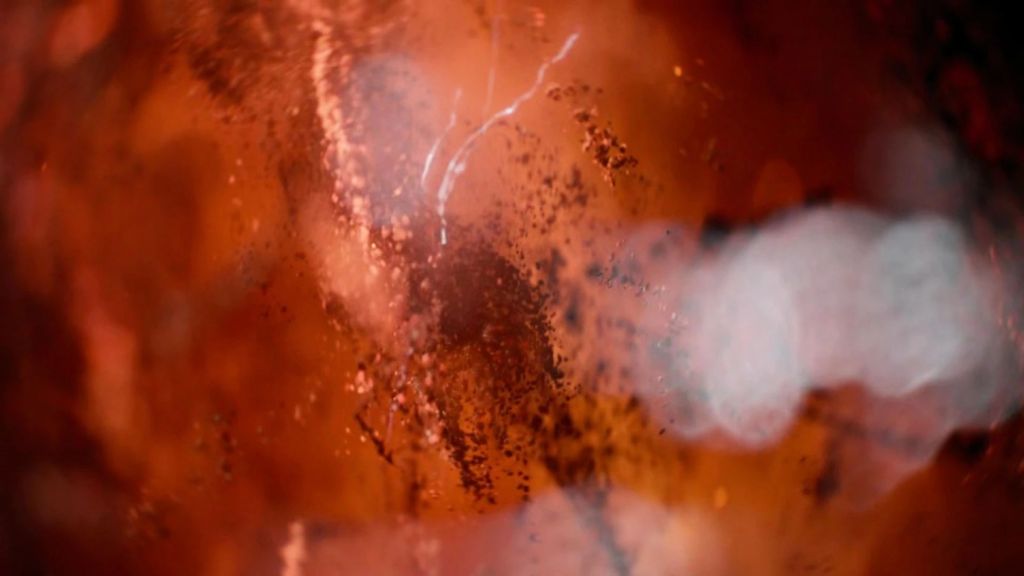
The USS Discovery’s defining advantage has always been its ability to supposedly bypass normal space entirely. The spore drive works by using the microscopic, biological web of fungal spores of an extradimensional organism (because what else…) that connects all points in space and time. Entering the sub-quantum mycelial plane, the ship can jump from one location to another without travelling through the intervening distance. The “Displacement-Activated Spore Hub” uses a reaction chamber to feed these (Prototaxites stellaviatori), spores, injecting them to power the vessel’s movement so it can shift between points in space nearly instantly, making it far superior in speed to conventional warp drive.
This ability not only allowed Discovery to travel faster and further than ever before but also meant the vessel could operate as something of an ultimate strategic wildcard. It could appear anywhere, almost instantly, without warning, making it the perfect vessel for a sneak attack.
Which is exactly why Braka’s blockade is so interesting. What happens when an unstoppable force meets an immovable object? If Braka’s mines react to disruptions in space and energy fields, can Discovery simply jump the perimeter through the mycelial network? The answer, as it turns out, is no.
In the series finale of what has proven to be a divisive yet well-executed debut series for Starfleet Academy, we learn that acording to Admiral Vance, the Omega mine’s energy fields are synchronized in a subspace frequency, so the spore drive still may not be able to get past them safely. Even though Discovery doesn’t rely on warp travel, its jumps still interact with the fabric of space — meaning the ship could theoretically trigger the mines the same way any other moving vessel that strays into the minefield might. For the first time, the Federation’s secret weapon and go to solution to seemingly impossible problems seemingly has limits.
A Much-Needed Balance
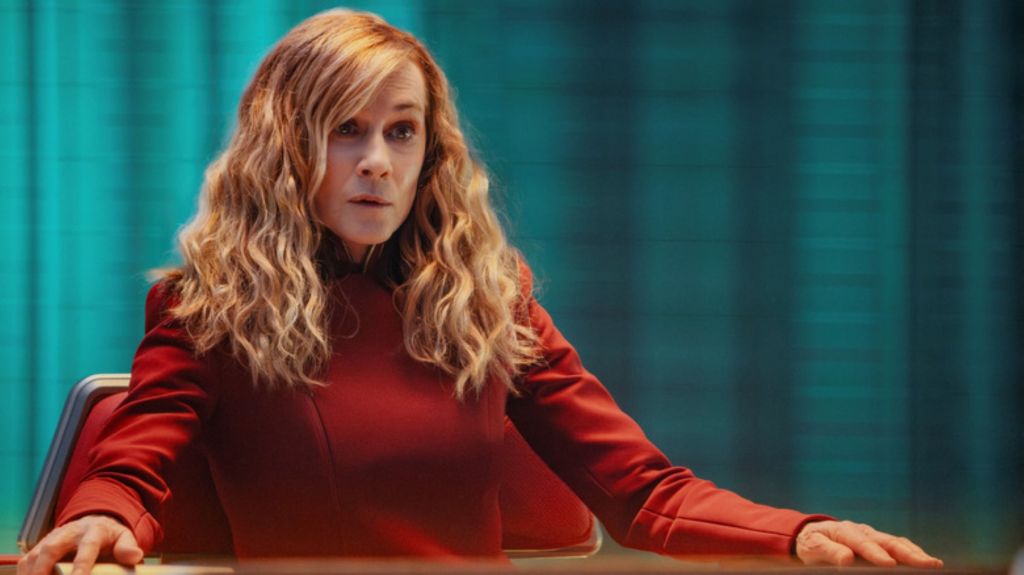
This newfound weakness, however minor it may seem (after all, there aren’t many ships that could get past a mind field of deadly weapons designed to detect their motion – it can probably be forgiven), may actually be the best thing that could happen for Discovery. For nearly a decade, the USS Discovery has occupied a strange place in Star Trek lore. Ever since the spore drive was introduced, writers have had to carefully dance around its implications. If you really think about it, a vessel that can instantly travel anywhere in the galaxy has the potential to render almost every storyline you can think of pointless. How can you convince an audience of the gravity of a situation involving blockades, impossible distances to deliver supplies, or high-stakes ambushes if one ship can simply teleport past all obstacles?
By introducing a threat so seemingly simple from Nus Braka, yet so ingenious that even Discovery can’t just easily overcome it, it restores a sense of stakes to the show. The Federation is suddenly far less of a well-coordinated elite militaristic force than it might seem, especially to those outside of the Federation.
Nus Braka puts the Federation on ‘trial’ for the destruction of his home and their many other apparent ‘crimes’ in a phoney televised court case broadcast to a makeshift jury of his followers under the guise of a fair democracy. Captain Ake is railroaded by Nus in to speaking on behalf of the Federation in their defence. She is forced to use all her leadership skills and experience to navigate the situation and eventually succeeds in convincing Nus’s spectators of the pettiness of his actions and vendetta against the Federation, showing him up as the petulant child with a grudge we all know him to be. The cadets succeed in neutralizing the Omega 47 (that was quick…) and the tantruming toddler ends up in custody where he belongs.
Suddenly, the Federation isn’t just relying on a miracle engine or special weapon to solve its problems – it has to think its way out, marking a return to Gene Roddenbury’s original vision for the show and Starfleet as a symbol of diplomacy and peace. As Ake points out to Braka, leadership isn’t all about might, but about making the difficult choices and staying calm under pressure. We’re not quite sure what Braka’s plan was for when he’d finally neutralised the Federation for good and was left sort of in charge of a galaxy in disarray without their stabilising presence, but in the words of King George, “it’s much harder when it’s all your call…”
Is This The End of Star Trek’s Cheat Code Era?
This also fits with the broader direction the franchise seems to be taking in this 32nd century. Although we are still tracking Starfleet and our team of cadets, Star Trek: Starfleet Academy is deliberately taking the time to build a wider picture of the post-Burn galaxy — one where exploring the new technologies, lingering political tensions, and different civilizations as they rebuild, matters more than just flaunting the impressiveness and happy explorations and adventures of any single starship or crew.
Discovery still represents one of Starfleet’s most remarkable achievements. But after nine years, Star Trek may finally have found a way to stop it from seeming like the be-all and end-all, and with this, found a change in direction to explore in the franchise at large, taking a much broader political view of what’s going on in the galaxy as a whole rather than being entirely Federation-centric.
And ironically, that might make Discovery more interesting and relevant than ever. It’s fascinating to reflect on how far the franchise has come in its 60th anniversary year as we watch Discovery make its triumphant cameo amongst a proud entourage of newly freed Federation ships at the end of this whirlwind of a series.
What do you think? Leave a comment below and join the conversation now in the ComicBook Forum!

Most Viewed
-

Image Courtesy of Studio Pierrot -

Courtesy of The Pokemon Company -

Image Courtesy of Netflix -

Images via Jasper Savage/Prime Video -
Image Courtesy of IDW Comics