Starfleet has put the name Enterprise on 11 ships across the main timeline and the Kelvin films, and Star Trek has put 60 years into building a reputation for destroying all of them. The math does not really support it, since only four were lost for good. The other seven were retired, mothballed, handed over to a museum curator, or in one memorable case seized by the Borg and then never brought up again in polite company. The name has been carried by a pre-Federation prototype, a refit Constitution held together largely by Scotty’s personal willpower, a Galaxy-class ship with a barber and a school aboard, and one 26th-century vessel the audience has only ever seen from the inside. Two of the survivors are currently parked in the same museum, which definitely has to make for an awkward staff meeting. The four that did die took wildly different routes to get there, and only one of them was destroyed on purpose by her own captain.
Videos by ComicBook.com
All four of those losses run the same play, and it is the reason so few people died on any of them. In every case the writers emptied the ship before they destroyed it, and the escape method changed each time. Kirk’s crew beamed down to a planet that was preoccupied with tearing itself apart. Picard’s crew separated the saucer and rode it into the ground. The Kelvin crew went out in escape pods while a swarm picked them off in flight. You’re about to read about every Enterprise that actually died, what killed it, and how almost everyone aboard walked away from it.
How Did Kirk Destroy the Original USS Enterprise in Star Trek III?
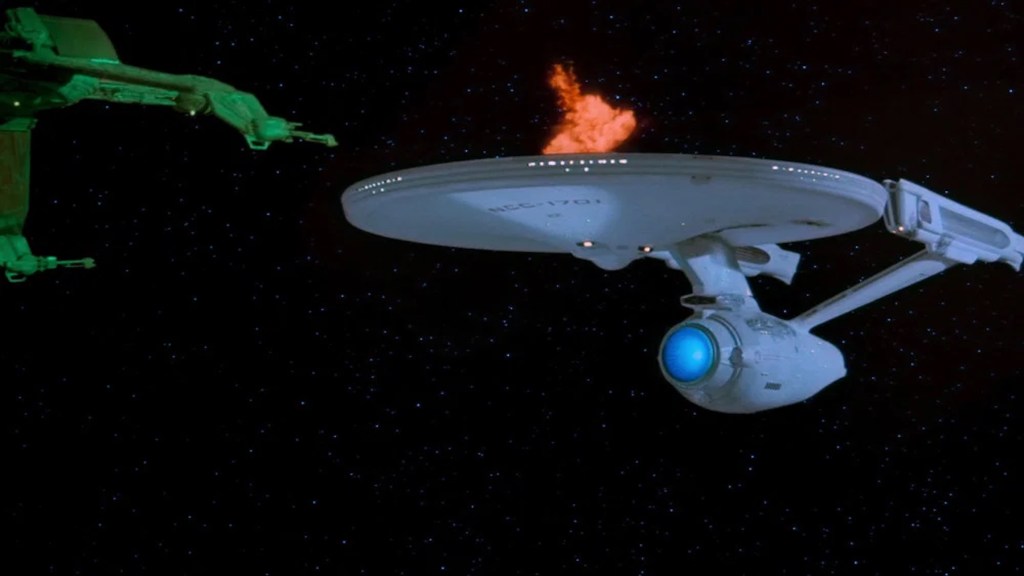
Kirk’s ship went out over the Genesis planet in Star Trek III: The Search for Spock, released June 1, 1984, and Starfleet had already written her off before the Klingons ever arrived. Fleet Admiral Morrow delivers that news with the warmth of a man canceling a magazine subscription, telling Kirk, “Jim, the Enterprise is twenty years old. We feel her day is over.” So Kirk steals her out of Spacedock with a crew of five and Scotty’s automation system, which Scotty had oversold with the line, “A chimpanzee and two trainees could run her.” The system held up until Kruge’s Bird-of-Prey decloaked. The Enterprise got two torpedoes off, the shield would not come up because the automation was overloading, and one Klingon shot near the bridge knocked the automation out entirely. Kirk’s assessment of the tactical situation was admirably brief. “So, we’re a sitting duck.”
Kirk faked a surrender to buy two minutes, then walked through the auto-destruct sequence at the bridge science station with Scotty and Chekov while McCoy and Sulu set beam-down coordinates in the transporter room. All five of them beamed down to the surface of the Genesis planet. Torg’s boarding party was standing on the bridge when the countdown ended. Kirk only got aboard Kruge’s Bird-of-Prey later, by killing Kruge and then impersonating him over the comm. Producer Harve Bennett defended the decision at the time. “The destruction of the Enterprise is also shocking, but it works,” he said. “Kirk really has no other choice, it’s the only solution to this non-win situation.” Bennett lost the argument he cared about more, since Paramount put the explosion in the trailers under the banner “The Death of the Enterprise” and spoiled the twist months early, but that didn’t hurt the money coming in. The film made roughly $76.5 million domestically on a $16 million budget, and its opening weekend beat The Wrath of Khan.
Why Was the USS Enterprise-C’s Death the Saddest in Star Trek History?
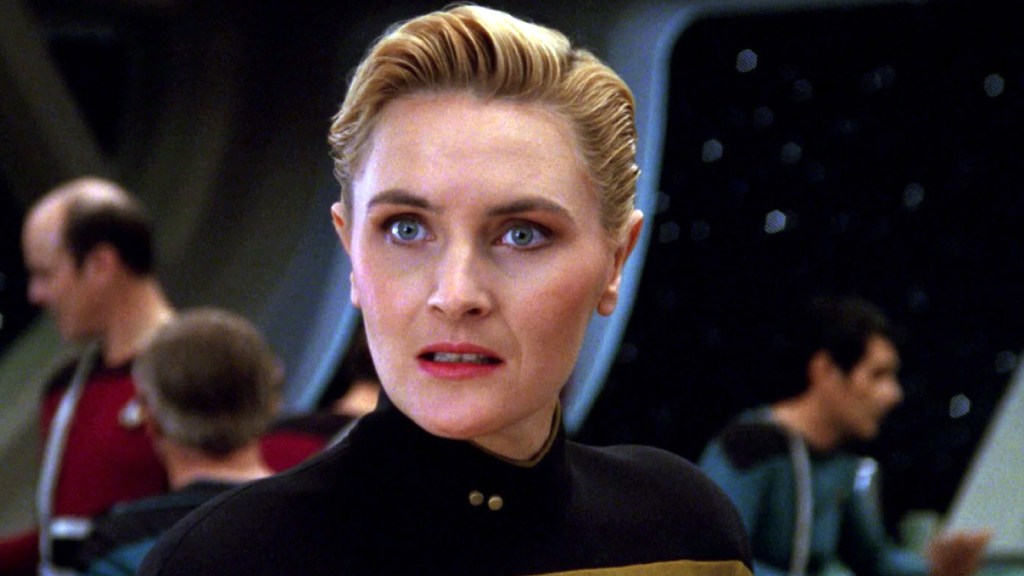
The Ambassador-class Enterprise-C answered a distress call from a Klingon outpost at Narendra III in 2344 and found four Romulan warbirds waiting. By the time the shooting stopped, the ship had taken major damage to her nacelles and hull and all but 125 of her crew were dead. Then the weapons fire tore open a temporal rift and threw the wreck twenty-two years forward, where the Enterprise-D found her in Star Trek: The Next Generation‘s “Yesterday’s Enterprise,” first aired the week of February 19, 1990. Her absence from history rewrote everything behind her. The Federation and the Klingon Empire had been at war for those two decades instead of building an alliance, and the Enterprise-D in that version of events was a warship keeping a military log where the ship’s log used to be.
Captain Rachel Garrett survived the battle only to be killed by a Klingon attack after arriving in 2366, which left Lieutenant Richard Castillo as the senior surviving officer and the man who had to volunteer his ship for a trip back through the rift that nobody returns from. Most of his crew did not survive at all, because going back to die on schedule was the assignment. Tasha Yar had never died at all in that timeline, and she asked Guinan for the truth, learned she had died a meaningless death in the correct history, and requested a transfer so she could take tactical on a ship she knew was finished. But the franchise didn’t just leave it there, because fast forward two seasons, and “Redemption II” revealed that Yar survived Narendra III, which left Denise Crosby in the unusual position of playing both a character and that character’s daughter. Of the four losses, the C is the only one the franchise has never gone back and softened, and it is the best thing Star Trek has ever done with a starship. A footnote for collectors. The filming model was redressed so many times over the years that it ended up relabeled as the USS Yamaguchi, and it sold at auction in 2006 for $40,000.
How Did Two Klingons Destroy Picard’s USS Enterprise-D in Star Trek Generations?
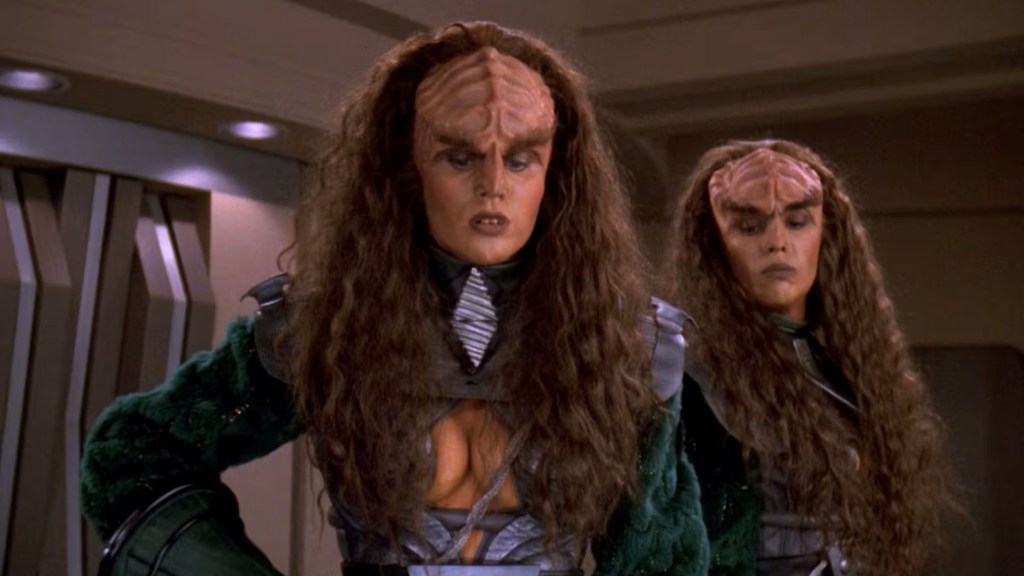
Picard’s ship was taken by two Klingon sisters and a stolen pair of sunglasses. In Star Trek Generations, released November 18, 1994, Lursa and B’Etor captured Geordi La Forge and rigged his VISOR to transmit whatever he looked at back to their Bird-of-Prey. Geordi then glanced at a console displaying the shield frequency, and one freeze-frame later the Duras sisters knew the Enterprise was running her shields at a modulation of 257.4 megahertz. They matched their torpedoes to it and fired straight through. The Enterprise still won the fight, since forcing the Bird-of-Prey to cloak dropped its shields for a moment and one torpedo finished it, but the damage had already ruptured the magnetic interlocks, and a coolant leak made the warp core breach unavoidable.
Riker ordered the stardrive section emptied into the saucer. La Forge and Doctor Crusher cleared their departments with roughly a minute to spare, and the ship went into an emergency saucer separation before the core let go. The shock wave from the exploding stardrive then punched the saucer into Veridian III’s atmosphere, and the landing gave Data the least Starfleet line in the franchise, a deeply felt “Oh, sh*t.” Casualties were light and canon never names anybody killed in the crash. The Nebula-class USS Farragut collected the survivors with help from a Miranda-class and an Oberth-class ship, and the saucer itself was later hauled off the planet so the pre-warp civilization on Veridian IV could not strip it for parts. Behind the camera nobody was mourning. Co-writer Brannon Braga was direct about the assignment. “I don’t know how else to say it except our dictum from the studio was to have fun,” he said. “So we did. We had fun destroying things.”
The miniature built for the crash ran about twelve feet by ten, and it survived exactly one take. ILM visual effects producer Mark Austin has described what happened after the saucer plowed through the lanscaped valley built for it. “There was this eruption of oregano!” he said. “Entire blooms of oregano went up into the air – you went outside and it smelt like a restaurant.” Director David Carson came away with something a little quieter, saying, “It’s a little beaten-up teddy bear. In the exit from the crashed ship, a little girl drops her bear and it gets trampled while everyone is trying to get out.” His daughter slept with it every night afterward until his kids wore it out. Generations opened to about $23 million on a $35 million budget and finished around $118 million worldwide. La Forge then took the next two decades to rebuild the ship bit by bit, and that rebuild is how the Enterprise-D came back in Picard season 3.
What Destoryed the Kelvin Timeline Enterprise in Star Trek Beyond?
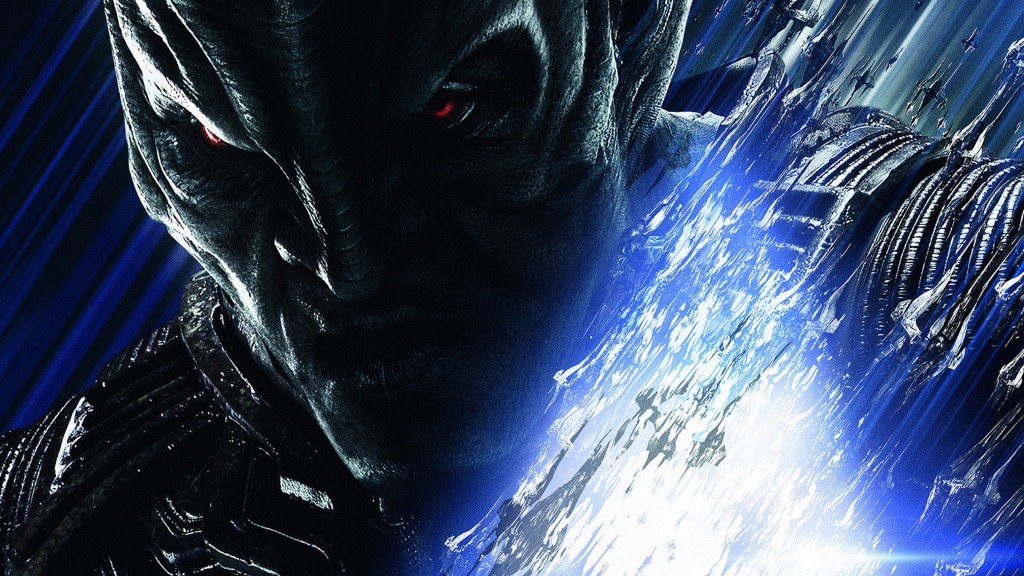
The 2009 timeline’s Enterprise got the ugliest death of the four and it was lost before the end of the first act. Star Trek Beyond opened in the United States on July 22, 2016, and the crew opens the film answering a rescue call from a survivor named Kalara, following her into a nebula near Altamid, and working out too late that she is bait. Thousands of small ships come out of that nebula flying in coordinated formation and take the ship apart piece by piece, shearing the nacelles off and boarding her while the bridge crew is still trying to identify what she is looking at. Sulu’s damage report is one of the bleakest lines in the franchise. “Systems are failing shipwide, captain. Emergency bulkheads are sealing, but structural integrity is at eighteen percent and falling, sir.” Kirk gave them the order without arguing about it. “Abandon ship, Mr. Sulu.”
Escape pods saved most of them, though the swarm picked plenty off in flight and Krall’s people took the rest prisoner. Kirk, Spock, McCoy, Scotty, and Chekov ended up scattered across Altamid separately, and the broken saucer crash-landed with enough thruster fuel in the tanks that Kirk could later ignite them and briefly lift the wreck off the ground to get himself and Chekov clear. The rescue came from a ship older than the Federation, since Jaylah had been living for years inside the USS Franklin, a ship missing for more than a century. The crew got it flying again and then broke up the swarm’s formation by blasting the Beastie Boys’ “Sabotage” at it. Getting to that point took a real fight behind the scenes. Simon Pegg co-wrote the film and plays Scotty, and he has opened up about the argument he had with director Justin Lin over it. “We had a stand-up row on the phone,” Pegg said. “A proper shouty row with each other. Me saying ‘no’ and him saying ‘yes.’” Lin has said the ship had become a comfort object. “Part of the deconstruction was that we needed to take the security blanket away, which is the Enterprise,” he said. Starfleet had a replacement Constitution-class hull already under construction at Yorktown and registered it as the Enterprise-A. The marketing gave the destruction away months early, exactly as it had in 1984, and Pegg has since blamed that marketing for the film’s box office, right down to the trailer spoiling the “Sabotage” needle-drop the crew had saved for the end. Beyond finished around $343 million worldwide on a $185 million budget.
Which Star Trek Enterprises Were Never Destroyed At All?
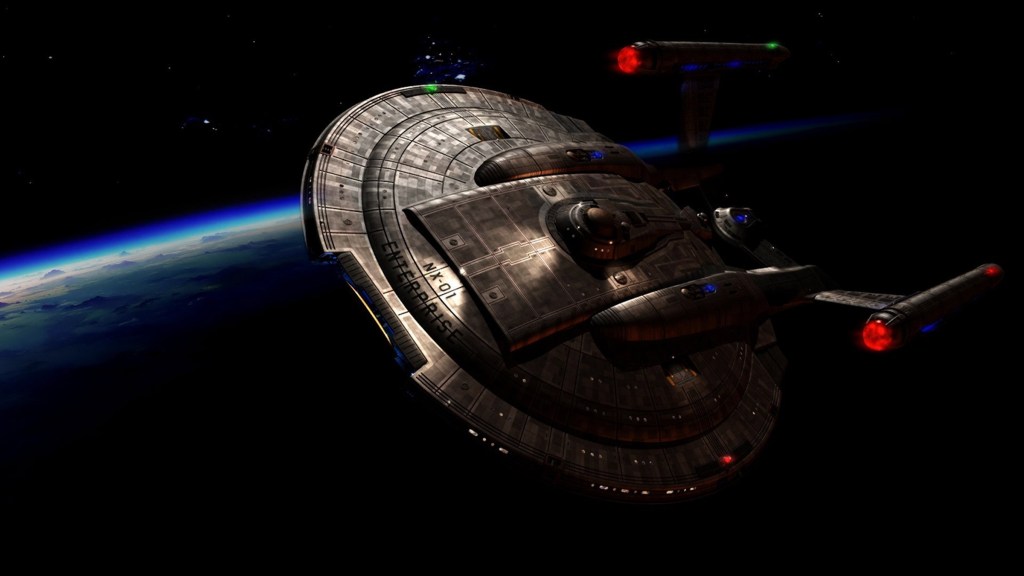
Seven ships carried the name and kept it. Archer’s NX-01 was retired in 2161 and converted into a museum piece, and the refitted version was still at the Fleet Museum in 2401. The Enterprise-A survived The Undiscovered Country and was ordered decommissioned instead of destroyed, and Picard season 3 put her in that same museum. The Enterprise-B took a serious beating from the energy ribbon on her maiden voyage in Generations and lost Kirk in the process, and then canon simply stopped tracking her, since nobody has ever established what became of the ship. The Enterprise-J is probably the strangest entry of the lot, because the audience only ever sees it from the inside. Daniels pulls Archer forward to the 26th century in the Star Trek: Enterprise episode “Azati Prime,” which aired March 3, 2004, and stands him in front of a viewscreen showing the Battle of Procyon V already in progress. The ship fighting that battle is the one under his feet, and nobody ever gets a clean look at the outside of it.
Then there is the Enterprise-E, which is either alive or extremely not. Worf ended up in command because Picard left in 2381, and the show has never said what became of the ship from there. The only word on it is Worf’s protest in Picard season 3 that it was not his fault. The franchise has committed to the joke, with the official Star Trek Logs account listing the details of the ship’s final mission as classified and showrunner Terry Matalas confirming ahead of the season that the E would not appear. The Enterprise-F, an Odyssey-class ship that began in the video game Star Trek Online, was commanded by Admiral Elizabeth Shelby and was already scheduled for decommissioning when the Borg seized her on Frontier Day and killed Shelby, and she was never shown being destroyed either. The Enterprise-G is the one with a future, a recommissioned Titan-A with Seven of Nine in the chair, and Matalas told ComicBook he wanted her built small on purpose. “This ship is definitely a Constitution-class throwback, and we wanted it to feel like a scrappy Enterprise,” he said. “It wasn’t as bulky as the E, and it wasn’t a battleship like the E or F. It was an underdog like Kirk’s ship was.”
How Many Times Has Star Trek Destroyed the Enterprise in a Timeline That Got Erased?
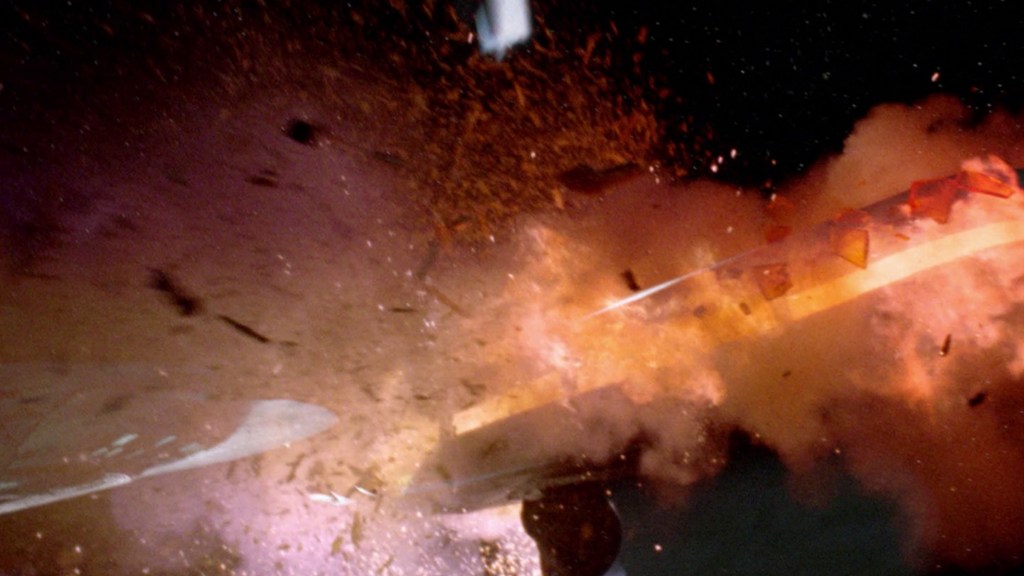
The reputation runs ahead of the record because the franchise keeps destroying the ship in timelines it plans to erase before the credits roll. There are enough of them to fill a supercut, and just about none of them count. TNG’s “Time Squared,” which aired the week of April 3, 1989, opens with a future Picard’s shuttle log showing the Enterprise-D coming apart in an energy vortex about six hours ahead of schedule, and that recording is the first time viewers ever watched the D die. “Cause and Effect,” which premiered March 23, 1992, is the extreme case. The USS Bozeman drops out of temporal distortion, clips the starboard nacelle, and sets off a warp core breach over and over while the crew slowly works out that they have been having this exact week for a while. Rob Legato’s team built large, deliberately low-detail Enterprise miniatures purely for smashing, plus a set of bare nacelles for the Bozeman, and the episode was originally meant to end with a montage of every crash back to back before the budget intervened.
“All Good Things…” managed it three times in one episode, since the 2364, 2370, and 2395 versions of the ship all lose warp containment inside the anti-time anomaly. The three-nacelle future Enterprise-D everyone remembers from that finale at least gets to blow up a Klingon cruiser before it goes. The harshest version belongs to the mirror universe in ENT’s “In a Mirror, Darkly,” which aired April 22, 2005. A dying Tholian prisoner signals for help, Tholian ships spin a web around the cloaked ISS Enterprise NX-01, and Captain Forrest orders his crew into the escape pods and stays aboard. The ship goes up in an antimatter containment breach and the Defiant later collects 47 survivors. Across each timeline the franchise has been willing to destroy, that is the only Enterprise whose captain stayed on the bridge by choice.