The past decade has turned science fiction into an incredibly profitable genre in prestige television. For example, The Expanse spent six seasons at the top of the critical conversation, drawing from James S.A. Corey’s nine-book saga with enough remaining material to sustain a decade of spin-offs at Prime Video. At the same time, Foundation gave Apple TV+ its flagship franchise by plundering Isaac Asimov’s seven-book series, and Silo quietly became one of the most-watched shows on the platform, anchored by Hugh Howey’s trilogy. Netflix also threw a nine-figure budget at Liu Cixin’s three-volume Three Body Problem, turning it into a popular TV show. The pipeline continues to grow, with Neuromancer, Consider Phlebas, and The Captive’s War all in active development, each backed by a deep stack of novels ready to feed multiple seasons.
Videos by ComicBook.com
Streaming platforms are drawn to expansive book series because they want source material that can be converted into years of content. However, the assumption that a single book cannot anchor an ongoing series undersells how much world-building the best standalone sci-fi contains. Several of these novels describe civilizations, technologies, and moral frameworks intricate enough to fill multiple seasons even without a second volume in sight.
5) A Song for a New Day

Sarah Pinsker published A Song for a New Day in 2019, two years before mass gathering bans became a lived global reality. The novel won the Nebula Award for Best Novel and earned immediate recognition for depicting a near-future America where public gatherings have been indefinitely suspended following a combination of terrorist attacks and pandemic disease, driving live music underground while a corporate virtual-reality platform called StageHoloLive swallows the entertainment industry whole. The story follows Luce Cannon, an indie musician who continues to perform in illegal basement shows, and Rosemary, a StageHoloLive employee hired to scout underground talent who has never attended a live event in her life.

What makes A Song for a New Day exceptional television material is its dual-protagonist structure and the institutional power of the corporation it critiques. StageHoloLive functions as a full media ecosystem with executives, talent departments, regional scouts, and algorithmic content strategies, exactly the kind of layered antagonistic infrastructure that drives multi-season prestige drama. Each of Pinsker’s two leads represents a different generational relationship to live performance, and the friction between those relationships generates enough dramatic tension to sustain far more than a single book’s worth of story.
4) Blindsight
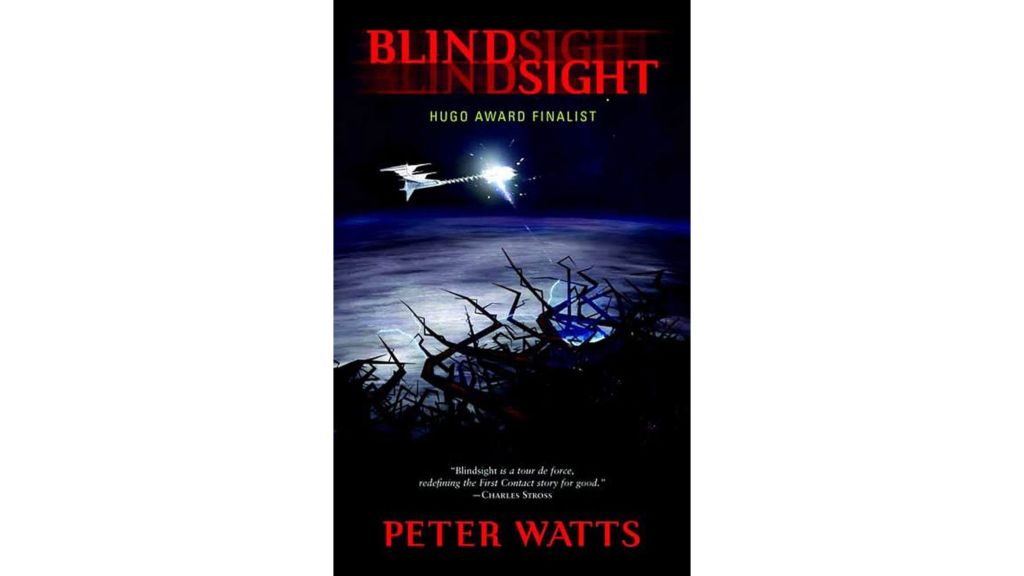
Peter Watts’ Blindsight earned a Hugo Award nomination, a Campbell Memorial Award nomination, and a reputation among hard sci-fi readers as one of the most ruthlessly intelligent first-contact novels ever written. The premise centers on a crew of posthuman specialists dispatched to the outer solar system aboard the Theseus after Earth detects signals from an alien object concealing itself in the Oort Cloud. The crew, comprising humans created and augmented by technology, discovers an alien intelligence vast enough to challenge every human assumption about consciousness itself.
Watts built Blindsight on the radical argument that consciousness is not a prerequisite for intelligence, and that self-aware organisms may in fact be at a competitive disadvantage against entities that function without it. That philosophical framework transforms the alien contact scenario into an existential crisis for the audience rather than a simple adventure narrative. The Theseus and its crew operate as a pressure cooker environment that prestige drama depends on, including limited space, conflicting agendas, and a threat that cannot be reasoned with. With shows like Pluribus becoming a hit by discussing similar philosophical questions, the time is ripe to adapt Blindsight.
3) A Fire Upon the Deep
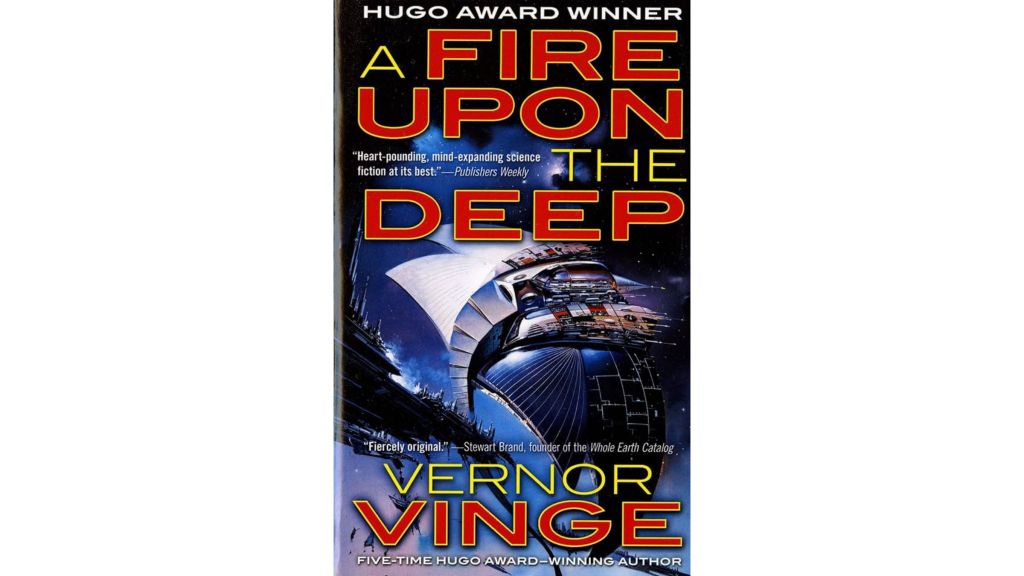
Vernor Vinge won the 1993 Hugo Award for A Fire Upon the Deep, sharing the prize with Connie Willis’ Doomsday Book in a year that demonstrated just how much sci-fi could stretch in a single awards season. The novel divides the galaxy into physical zones based on their capacity for intelligence. First, we have the Unthinking Depths at the galactic core, where conscious thought cannot function. Then, there’s the Slow Zone, where Earth and most human civilization sits. Finally, there’s the Beyond, where faster-than-light travel and superintelligent civilizations operate freely. The story kicks off when a human ship fleeing into the Beyond accidentally releases an ancient superintelligence called the Blight, setting in motion a war of cosmic stakes.
A Fire Upon the Deep follows the survivors of that ship’s crash landing on a medieval planet populated by the Tines, a pack-based species whose individual members function as neurons within a hive mind. Vinge spent years developing the Tines’ biology and social structure, producing an alien civilization detailed enough to carry its own series entirely independent of the galactic storyline. Furthermore, the structural ambition of A Fire Upon the Deep, which involves a political and military epic at an interstellar scale simultaneously running alongside an anthropological character study, is the kind of material that can become a streaming hit.
2) The Left Hand of Darkness

Ursula K. Le Guin won both the Hugo and Nebula Awards for The Left Hand of Darkness in 1969, making it one of the most decorated works in science fiction history. The novel follows Genly Ai, a human envoy sent to the planet Gethen to persuade its nations to join an interstellar confederation. Gethen’s population is biologically androgynous, and the novel uses that premise to interrogate every assumption about gender, politics, loyalty, and personhood that Genly carries from Earth. His relationship with the Gethenian politician Estraven, who risks everything to help him, constitutes one of science fiction’s most emotionally devastating character studies.
The anthropological richness of Gethen — its climate, its rival nations, its mythology, and its bureaucracies — could sustain multiple seasons before a writing room ran out of material from the novel alone, and the political structures Le Guin constructed are detailed enough to generate entirely original storylines grounded in her framework. Yet, while adaptations of The Left Hand of Darkness have been attempted, no one has managed to turn the book into a TV show.
1) Gateway
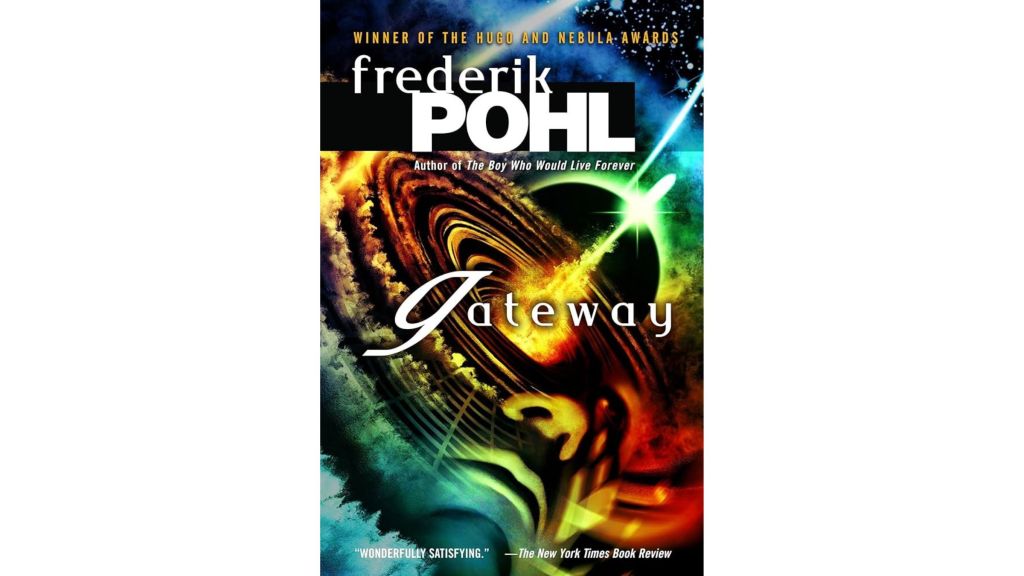
Frederik Pohl’s Gateway is the only sci-fi book to manage a clean sweep of every major award in a single year, collecting the Hugo, Nebula, Locus, and Campbell Memorial Award simultaneously. The story alternates between two timelines, with protagonist Robinette Broadhead recounting, in sessions with a robot psychiatrist, the events that made him spectacularly wealthy and permanently destroyed him, and those events themselves, set aboard the Gateway asteroid, where humanity has discovered hundreds of alien spacecraft left behind by the vanished Heechee civilization. Each ship is preprogrammed to fly somewhere, but no one knows where, and prospectors gamble their lives on departures that might end in riches or certain death, with no ability to choose their destination.
Gateway has been announced as a television series by Syfy with David Eick producing, then re-optioned by Skybound Entertainment, then announced again by Entertainment One, and has never made it to screen. That development history is evidence that the material is genuinely difficult to get right, but the book is just too good to ignore. For starters, the Gateway asteroid functions as a perfect series engine, giving writers a self-contained location, thousands of unexplored destinations, and a psychological thriller structure that wraps every departure in existential dread. So, while Pohl’s construction of Broadhead as a man whose success is inseparable from his ruin gives the story its emotional core, the Heechee civilization also provides unlimited world-building runway for a streaming platform willing to commit.
Which of these overlooked sci-fi novels do you most want to see get the prestige TV treatment it deserves? Leave a comment below and join the conversation now in the ComicBook Forum!
Most Viewed
-
Courtesy of Crunchyroll -

Images Courtesy of DC Comics