America harbors an enduring obsession with serial killers, a fascination that has firmly established these figures as recurring archetypes across all forms of fiction. This dark fixation originates from a collective desire to understand the absolute extremes of human behavior, which leads many creators to turn real-world atrocities into a framework for storytelling. It’s no wonder figures like Michael Myers and Leatherface weaponized the unpredictability of random violence to establish massive theatrical franchises, proving that audiences are consistently drawn to the spectacle of a predator hunting within civilized society. When it comes to TV, though, the expanded runtime of serialized broadcasting allows creative teams to meticulously dissect the psychological deterioration of these murderers over dozens of hours, replacing superficial jump scares with a mounting sense of dread.
Videos by ComicBook.com
The structural demands of television have facilitated incredibly nuanced character studies that challenge the viewer’s moral boundaries by occasionally framing the killer as a charismatic protagonist. With multiple episodes available, TV shows have also allowed great actors to embody the twisted worldview of serial killers in a way that film never could. It’s no wonder some of the best serial killer depictions in pop culture come from series.
7) Paul Spector (The Fall)
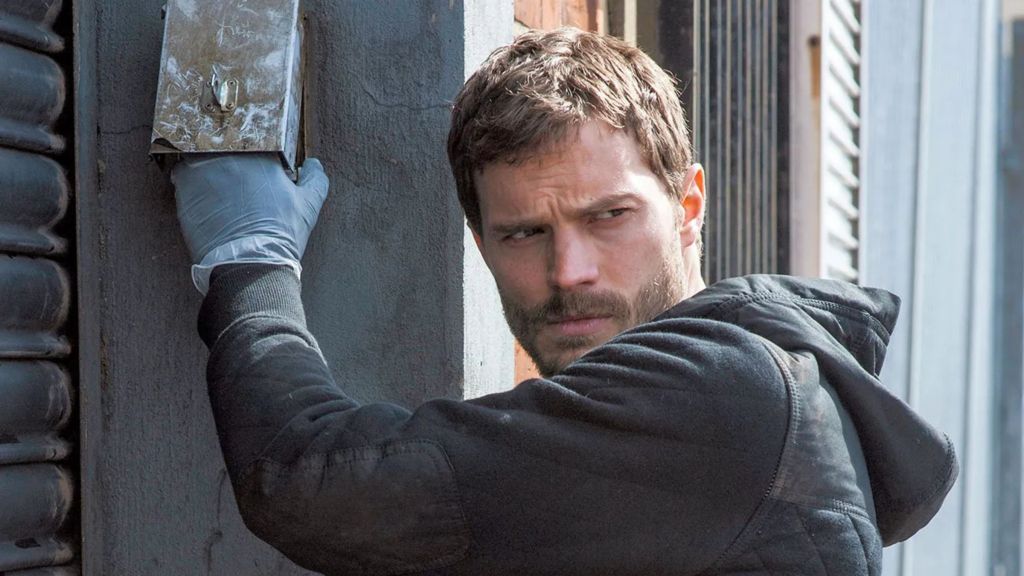
By hiding extreme violence behind the facade of a devoted bereavement counselor, Paul Spector (Jamie Dornan) anchors The Fall with a terrifyingly grounded depiction of a serial killer. The series structures his horrific actions as meticulous rituals that emphasize the vulnerability of domestic life, as Spector targets independent women in Belfast, studying their daily routines with a clinical precision that strips away the sensationalism often found in true-crime procedurals. This methodical approach is constantly juxtaposed with Spector’s mundane family chores, creating a profound sense of unease. If The Fall works as well as it does, it’s because Dornan delivers a restrained performance that highlights the killer’s ability to compartmentalize his psychological fractures. This duality forces the audience to confront the unsettling truth that evil exists comfortably within ordinary society, hiding in plain sight.

6) Errol Childress / The Yellow King (True Detective)

Operating as the horrific physical manifestation of a sprawling occult conspiracy, Errol Childress (Glenn Fleshler) serves as the elusive focal point of the critically acclaimed first season of True Detective. The overarching narrative revolves entirely around the mythological weight of The Yellow King, a moniker masking decades of systemic rot that poisoned the Louisiana bayou. When the investigation finally unearths this central figure, Fleshler provides a deeply unsettling performance, utilizing multiple distinct accents and a scarred visage to convey the fractured reality of an individual raised within an abusive cult. His brief screen time is maximized by the show’s oppressive atmosphere, culminating in a nightmarish final confrontation inside the labyrinthine ruins of Carcosa. The monumental footprint of The Yellow King continues to influence the franchise’s trajectory, as True Detective: Night Country explicitly tied its Alaskan research facility back to the Tuttle cult, proving the enduring legacy of this original threat.
5) Villanelle (Killing Eve)

As the flamboyant and unpredictable heart of Killing Eve, Villanelle (Jodie Comer) redefined the trope of the detached assassin by infusing her violence with a sense of playful theatricality. Unlike the stoic killers typically found in espionage thrillers, Villanelle views her murders as performance art, using her immense wealth to cultivate a lifestyle of luxury that contrasts sharply with the gore of her profession. As a serial killer, Villanelle lacks a traditional conscience, yet Comer imbues the character with a desperate, childlike yearning for connection that complicates the viewer’s perception of her psychopathy. Her obsessive relationship with Eve Polastri (Sandra Oh) drives the narrative forward, showcasing a mutual destruction pattern that blurs the lines between law enforcement and criminality. Even following the divisive series finale, the character remains a cultural touchstone for her subversion of gendered expectations os psy thrillers and serial killers alike.
4) Joe Goldberg (You)

The journey of Joe Goldberg (Penn Badgley) in You serves as a scathing critique of the “nice guy” archetype, weaponizing the conventions of romantic comedies to mask a predatory cycle of obsession and murder. By utilizing a constant internal monologue, the series forces the audience into Joe’s delusional perspective, where he justifies every act of stalking and homicide as a necessary step to protect the women he “loves.” This psychological intimacy makes his transition from a Brooklyn bookstore clerk to a wealthy London socialite, and eventually a high-profile public figure, feel like an indictment of societal privilege. Fortunately, the final season stripped away his remaining delusions of redemption, placing him in a prison cell where his only companions are the letters of fans who admire his depravity. The grim conclusion reinforced the show’s central thesis regarding the toxic intersection of social media, entitlement, and the romanticization of violence in modern culture.
3) Ed Kemper (Mindhunter)
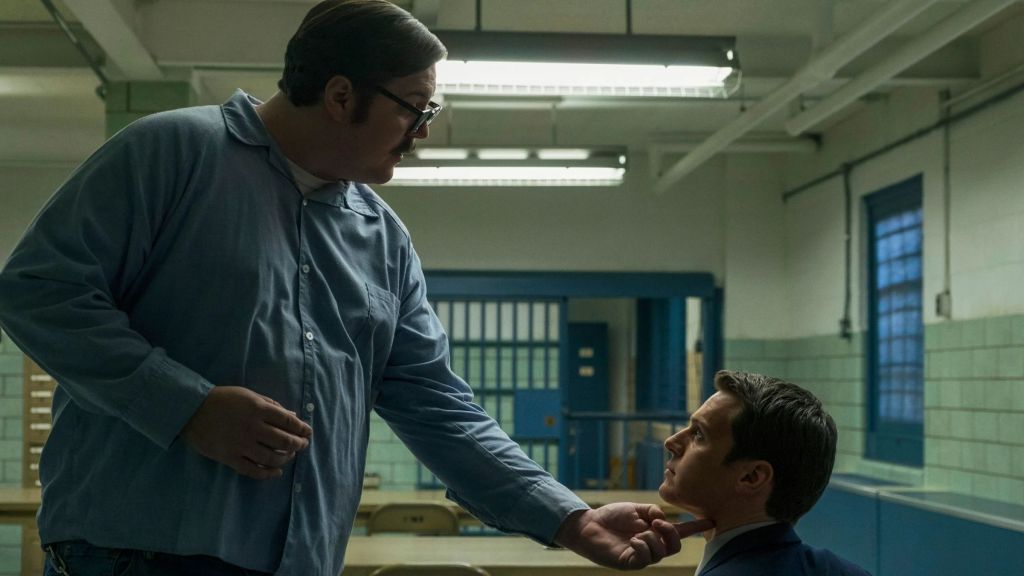
While Mindhunter features a variety of real-world monsters, Cameron Britton’s portrayal of Ed Kemper stands as the definitive high point of the series due to its unnerving accuracy and physical presence. Standing at nearly seven feet tall, Britton captures the “Co-ed Killer” with a soft-spoken civility that is arguably more terrifying than the crimes he describes. The tension in his scenes stems from the intellectual rapport he develops with Holden Ford (Jonathan Groff), as Kemper provides the foundational data for the FBI’s fledgling Behavioral Science Unit. On top of that, Kemper’s ability to articulate his own horrific motives with clinical detachment offers a rare glimpse into the mind of a predator who understands his own brokenness but still feels no remorse for it. Although Mindhunter was cancelled too soon, Kemper remains the most cited example of how to adapt true crime into serialized drama without resorting to caricature or hyperbole.
2) Hannibal Lecter (Hannibal)
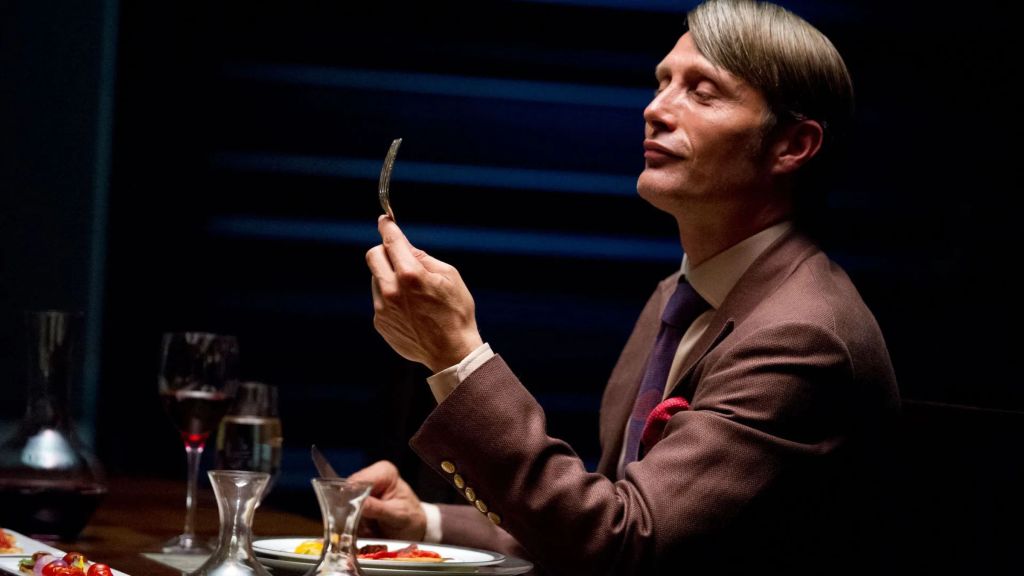
In Hannibal, Mads Mikkelsen delivers a performance that stands apart from the cinematic legacy of the character by portraying the cannibalistic psychiatrist as a predator who views the world through an aesthetic lens. That’s possible because the series moves away from the procedural roots of Thomas Harris’ novels to create a surreal, Lynchian landscape where murder is treated as a visual masterpiece. This version of Lecter is defined by his sophisticated manipulation of Will Graham (Hugh Dancy), a relationship that evolves into a dark romance centered on shared trauma and the rejection of societal morality. The show’s cancellation by NBC in 2015 has done little to diminish its standing, and the enduring relevance of Mikkelsen’s portrayal lies in the elegance with which he manages to make the act of consumption feel like a spiritual ritual, elevating the serial killer to a figure of tragic, albeit monstrous, grandeur.
1) Dexter Morgan (Dexter)
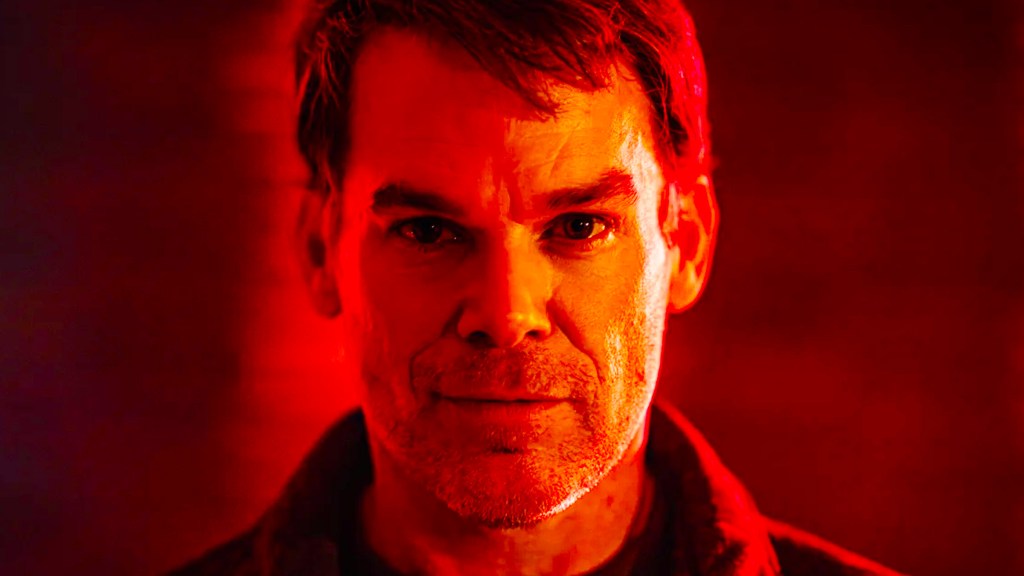
No character has impacted television serial killers more profoundly than Dexter Morgan (Michael C. Hall), the forensic expert who channels his “Dark Passenger” through a strict moral code. By only targeting other murderers, Dexter allowed audiences to root for a predator, a premise that sustained the original series for eight seasons and revolutionized the concept of the antihero. The franchise’s recent expansion confirms the character’s status as a foundational pillar of modern TV fiction. Following the revival of Dexter: New Blood and the prequel Dexter: Original Sin, the saga continued with Dexter: Resurrection, which premiered in July 2025 to massive viewership. This new chapter explores Dexter’s survival after his supposed death, thrusting him into a grittier urban environment where his past crimes finally collide with his present reality. With a second season of Resurrection already confirmed, the narrative of the Bay Harbor Butcher remains as vital and commercially dominant as ever, proving that the public’s fascination with his specific brand of justice is nowhere near exhausted.
Which iconic television serial killer is your favorite? Leave a comment below and join the conversation now in the ComicBook Forum!
Most Viewed
-

Image Courtesy of Crunchyroll -

Image Courtesy of TOHO -

Image courtesy of Marvel Studios -

Image Courtesy of Good Shepard Entertainment/Sony Interactive Entertainment