Dragon Striker premiered across Disney’s platforms on June 9, 2026, quickly climbing to the top of Disney+’s global charts on the strength of its anime-inspired take on magical soccer. The series did not premiere in the Middle East alongside the rest of the world, however, and reports soon linked the holdup to the relationship between Odward Stonegarden (voiced by Waylon Jacobs) and Casper Ferreiro (voiced by Stefan Trout), whose history as a couple is confirmed onscreen in the season finale. Neither Disney nor regional authorities issued an official statement explaining the delay, but the timing left little doubt about the connection. Disney has since confirmed that Dragon Striker will reach Middle Eastern audiences at a later date, meaning the setback is a postponement rather than a permanent ban.
Videos by ComicBook.com
Still, this is far from the first time a Disney production has run into this exact wall. Long before Dragon Striker‘s rocky rollout, the company had already spent decades negotiating with censorship boards across the Middle East, Asia, and elsewhere, and those negotiations have repeatedly ended in titles being pulled from release entirely rather than simply being delayed. Some of those bans even involved a government freezing the company’s entire business in a country over one film. Looking back at those cases shows just how often Disney’s global ambitions have collided with the content standards of individual nations, and how differently those collisions have played out depending on what was at stake.
7) Beauty and the Beast

Director Bill Condon confirmed ahead of release that the live-action Beauty and the Beast would include Disney’s first “exclusively gay moment,” a scene that fans imagine would be centered on LeFou (Josh Gad) and his infatuation with Gaston (Luke Evans). That moment amounted to little more than a three-second shot late in the film’s ballroom sequence, showing LeFou briefly dancing with another man.
Those fleeting seconds were enough to get the film banned outright in Kuwait. Malaysia’s Film Censorship Board went further before backing down, initially demanding Disney cut three separate scenes tied to the subplot and delaying the film’s release until the studio threatened to pull it from the country entirely rather than comply. Russia responded by slapping the film with a 16+ rating over what local officials called “gay propaganda,” while a single drive-in theater in Alabama canceled its own screenings in protest. The film’s global box office performance was barely dented by any of this, but the controversy set a template that Disney would run into again and again over the next several years.
6) Onward

In Onward, Officer Specter (voiced by Lena Waithe) delivers a single line referencing “my girlfriend’s daughter” during a casual conversation about parenting, a moment Waithe pitched herself during the character’s recording session. That sentence made Specter the first openly LGBTQ character in Pixar’s history, but it also became the entire basis for the film being banned in Kuwait, Oman, Qatar, and Saudi Arabia.
Russia took a different approach, dubbing the word “girlfriend” as “partner” rather than pulling the film from its theaters altogether. Meanwhile, Bahrain, Lebanon, and Egypt allowed the film to screen without any changes at all, meaning the exact same line was treated as disqualifying in some Gulf markets and as irrelevant in neighboring ones. The film still opened at the top of the domestic box office with a $40 million weekend, with a small line fortunately playing a minor role in Onward‘s success. Still, the whole debacle underlines how sensitive some markets can be to the most insignificant things.
5) Eternals

Marvel Studios prioritized a diverse roster of heroes for Eternals, a creative decision that ultimately resulted in the 2021 cosmic epic being completely banned from theaters across the Gulf region. Director Chloé Zhao expanded the franchise’s mythology by introducing an ensemble of immortal beings tasked with protecting humanity, prominently featuring Phastos (Brian Tyree Henry) as the cinematic universe’s first openly gay superhero. The narrative even includes scenes of Phastos living a domestic life with his husband (Haaz Sleiman) and sharing an emotional on-screen kiss before heading into a climactic battle.
Local censors of Saudi Arabia, Qatar, and Kuwait reportedly requested a series of cuts to the character’s arc, and when Disney refused to make them, the film was quietly removed from theater websites in all three countries just days before its scheduled November 11 release date. The film was still released in the United Arab Emirates, Jordan, Lebanon, and Egypt, though those versions stripped out intimate scenes between any characters, gay or straight, illustrating how inconsistently the region’s censorship standards were applied even within the same rollout.
4) Doctor Strange in the Multiverse of Madness
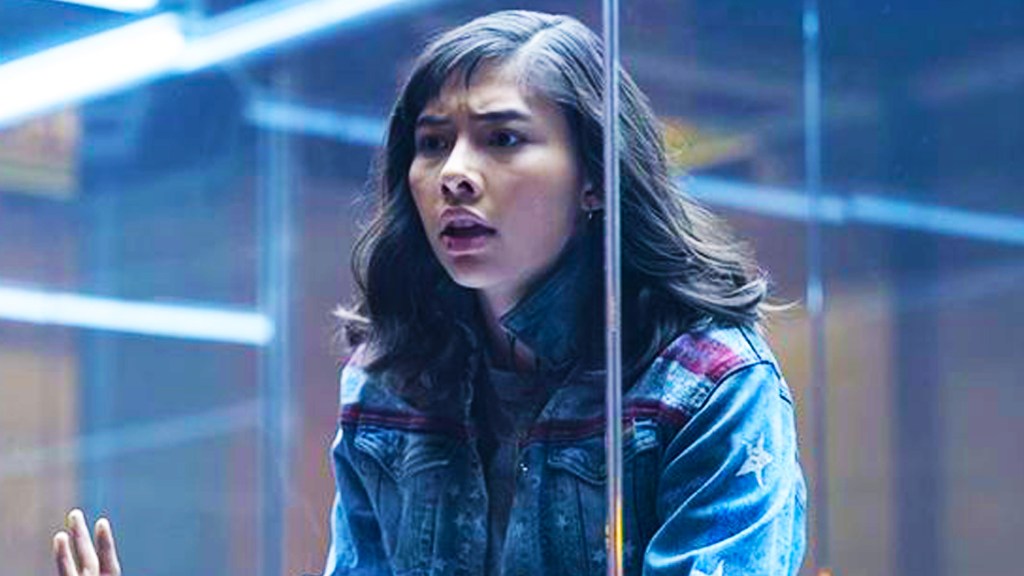
A twelve-second flashback sequence featuring America Chavez (Xochitl Gomez) standing alongside her two mothers prompted multiple Middle Eastern territories to ban Doctor Strange in the Multiverse of Madness. Saudi Arabia’s general supervisor of cinema classification, Nawaf Alsabhan, told reporters at the time that the issue was not Chavez’s own sexuality but the specific reference to her having two moms, and that the ban would lift immediately if Disney agreed to the trim. Disney refused to authorize the cuts, arguing that the parental dynamic is an essential catalyst for the dimension-hopping teenager’s powers and is deeply rooted in her comic book origins.
The situation grew more complicated when reports indicated China was also unlikely to screen the film, though for an unrelated reason tied to a background shot referencing a Chinese-language newspaper critical of the government. That combination made Doctor Strange in the Multiverse of Madness one of the rare Disney titles to face exclusion from major markets on two entirely separate fronts. Despite losing access to millions in potential ticket sales due to the rigid censorship, director Sam Raimi’s horror-infused superhero adventure still managed to gross over $955.8 million worldwide.
3) Lightyear
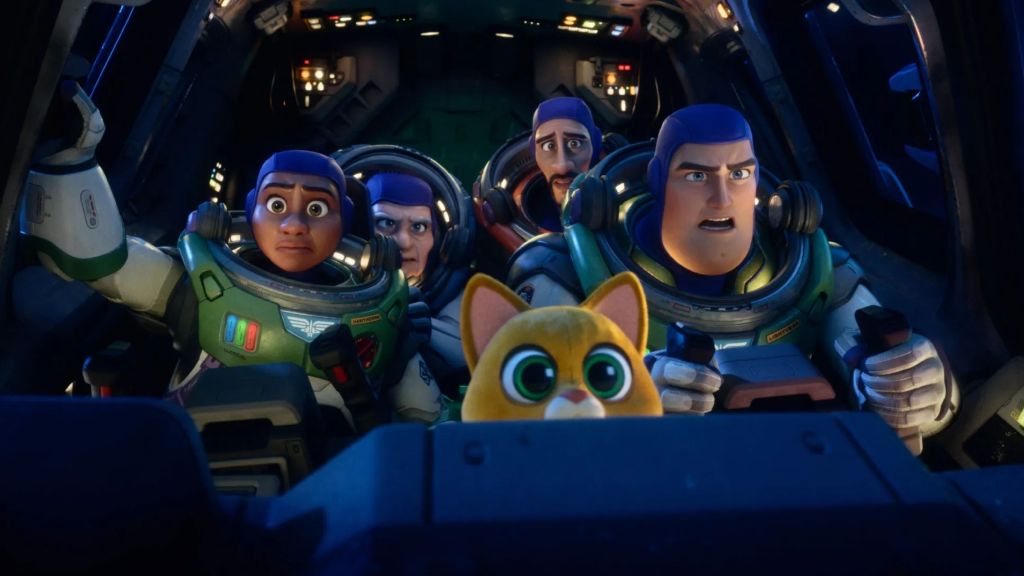
Pixar’s Toy Story prequel became the most widely banned Disney release tied to LGBTQ content, shut out of theatrical release in 14 countries across the Middle East and Asia, including the United Arab Emirates, Saudi Arabia, Egypt, Lebanon, Malaysia, and Indonesia. The ban traced back to a brief kiss between Alisha Hawthorne (voiced by Uzo Aduba) and her same-sex partner, a scene that had originally been cut from the film before Pixar employees publicly criticized Disney for censoring “overtly gay affection” in its productions.
Once the scene was reinstated, the UAE’s Media Regulatory Office revoked the film’s already-approved release license, citing a violation of the country’s media content standards, and the other 13 markets followed with bans of their own. Following the Middle East ban, China declined the film as well, meaning Lightyear lost access to some of the largest box office markets in the world before it even opened domestically. Star Chris Evans, who voices the title character, called the situation “frustrating” in press interviews, noting that he hoped a same-sex kiss would eventually stop being newsworthy at all rather than triggering bans across more than a dozen countries at once.
2) The Owl House

The Owl House triggered aggressive international censorship for the same reason it became critically acclaimed: shattering network precedents by organically developing a romance between human teenager Luz Noceda (voiced by Sarah-Nicole Robles) and her former rival Amity Blight (voiced by Mae Whitman). In the series, creator Dana Terrace delivered a highly serialized, dark fantasy narrative following Luz as she navigates the demonic Boiling Isles, eventually falling in love with her big nemesis. Sadly, the groundbreaking representation resulted in the animated series being banned entirely from the Disney+ streaming library across the Middle East and several Asian territories.
The inability to monetize The Owl House conflicted with the corporate imperative for universal viewership. The production of The Owl House was shortened to three extended specials for its final season. Although the premature conclusion was officially attributed to the show’s older-skewing demographic, the severe international broadcasting hurdles undeniably complicated its long-term viability under a massive corporate umbrella demanding global syndication.
1) Kundun

No Disney production has ever triggered consequences as severe or as long-lasting as Martin Scorsese’s Kundun, a biographical drama about the 14th Dalai Lama’s flight from Chinese-occupied Tibet. China’s government objected to the project before filming had even wrapped, with a Chinese Film Bureau official calling it “an interference in China’s internal affairs,” and the fallout arrived almost immediately after release. Then-Disney CEO Michael Eisner later admitted to The New York Times that “all of our business in China stopped overnight,” a blanket freeze that extended far beyond a single theatrical ban to threaten the company’s entire commercial relationship with the country.
Disney’s response involved direct damage control at the highest level, with Eisner personally meeting Chinese premier Zhu Rongji in 1998 to apologize and reportedly agreeing to buy distribution rights to Chinese films and hire a Chinese performance group to help promote Mulan in Europe as goodwill gestures. Scorsese himself has remained barred from entering China ever since, and Disney still keeps Kundun locked away in its vault decades later, making it unavailable on any home video format or streaming service. No other title on this list came close to threatening Disney’s entire operation in a single market.
Which Disney ban do you think was the most unjustified? Leave a comment below and join the conversation now in the ComicBook Forum!
More TV Shows
-

image courtesy of hbo max -

Image courtesy of Warner Bros. Animation