When people think about espionage, most minds immediately go to the same movies and TV shows, usually packed with action-heavy plots, brilliant agents, and missions wrapped up at the last possible second. The problem is that, especially in the TV format, this perspective ends up hiding a much more interesting side of the genre: stories that focus on the dirty work, the bureaucracy, the mental toll, and the weight of decisions. Over the years, several excellent series never became breakout hits or sparked the online discussion they deserved, yet they treated espionage as a slow, thankless, and grounded process (and even when leaning into more classic structures, they stood out for their attention to detail).
Videos by ComicBook.com
That’s why this list highlights 7 great spy shows that, to this day, continue to slip past both fans and general audiences. Instead of repeating the usual, obvious titles, the focus here is on productions that did almost everything right but never received attention proportional to their impressive quality. They’re absolutely worth discovering, and just as worth recommending.
7) The Agency: Central Intelligence

The main reason The Agency: Central Intelligence doesn’t get talked about much is simply that it doesn’t try to hook viewers with big twists or flashy action set pieces — and that won’t work for everyone. The series follows Martian (Michael Fassbender), a CIA agent pulled out of a long-term deep-cover mission and dropped back into the middle of the agency’s strategic decision-making. As a result, unresolved personal relationships start bleeding directly into the job. Overall, it’s spy in “conference room mode,” far more interested in how an agency functions and in questions of hierarchy, choice, and consequences.
That kind of approach naturally pushes away viewers who come to the genre looking for classic adrenaline. At the same time, it’s exactly what places the show in an interesting spot within TV espionage. Despite its institutional focus, The Agency: Central Intelligence trusts its audience, avoids over-explaining, and isn’t afraid to be dense when it needs to be. In the end, it’s a show that gets overlooked not because it lacks quality, but because it demands more attention than the average viewer is usually willing to give.

6) Berlin Station

This is one of those shows that almost everyone who watches ends up liking — and then that’s it. Berlin Station quietly joins the long list of underrated productions. The show follows Daniel Miller (Richard Armitage), a CIA agent newly assigned to Berlin, tasked with uncovering who’s leaking classified information to the press. But what sounds like a straightforward mission then becomes more complicated in an environment where no one trusts each other. From there, the series builds a constant back-and-forth of suspicion, surveillance, and shaky alliances within the agency’s own station.
And even if it initially feels like just another spy setup, Berlin Station‘s real strength lies in how it treats the genre as a continuous job filled with mistakes, internal conflicts, and decisions that are constantly testing ethical boundaries. There’s no exaggerated glamour here, and definitely no clear-cut heroes. The focus is on people trying to survive inside a system that demands absolute loyalty. And maybe because it lacks an obvious hook, the show was mostly overlooked — which is ironic, considering how well it nails the fundamentals of the genre, and how much that should count.
5) Condor

Condor tries to approach the spy genre in a noticeably different way than most shows out there. It starts from another point of view by focusing on an analyst rather than a field agent, which is intriguing on its own. The story follows Joe Turner (Max Irons), an idealistic young man who works analyzing data for the CIA, only to see his life completely turned upside down when an internal conspiracy leads to the death of his coworkers and makes him a target. It’s a spy thriller built around the idea that he has to learn the rules of the game on the fly, despite having no real preparation for it.
What makes Condor interesting is that constant sense of improvisation. Joe isn’t a super-spy, and the series never pretends that he is. Instead, it leans into paranoia, tension, and the idea that institutional intelligence can be just as dangerous as an external enemy on a mission. The show knows exactly what it wants to be and executes it extremely well. The only reason it never fully broke into the mainstream conversation is that it doesn’t have a single “iconic moment” that pushed it into the spotlight.
4) The Night Manager

Out of everything on this list, The Night Manager is probably the one you’ve already heard of — or maybe not. That’s because it does get remembered by fans of the genre, but the conversation rarely goes beyond that, keeping it stuck in a very specific niche. The story follows Jonathan Pine (Tom Hiddleston), a former soldier who works as a hotel night manager and ends up being recruited to infiltrate the inner circle of a powerful arms dealer. It sounds like a classic setup, right? And it is, but just executed with far more care than many similar shows.
Where the production really shines is in how it plays with espionage’s double game. Pine has to become part of a corrupt system in order to bring it down from the inside, while the institutions supposedly on the “right side” make compromises that are far from clean. The Night Manager was fairly well received, but when it does come up, the praise usually leans more toward the cast and the production values than the story itself. And overall, it rarely makes it onto lists of the genre’s best, mostly because it doesn’t try to reinvent the wheel — it just spins it very well.
3) Counterpart
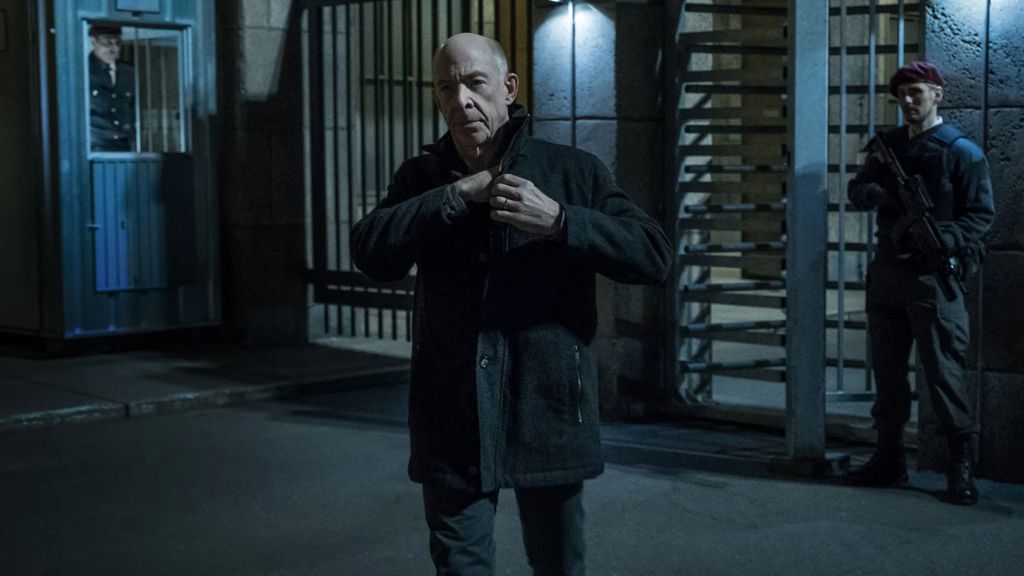
If there’s one show on this list that truly defines “underrated,” it’s this one. And yet, if you’ve watched it, chances are you’ve recommended it to someone with that classic disclaimer: “trust me, it’s worth it.” Counterpart follows the life of Howard Silk (J. K. Simmons), an apparently insignificant employee at a spy agency who discovers the existence of a parallel world, where every person has an alternate version of themselves. From there, the story slowly evolves into an intelligence conflict between two politically opposed worlds. It’s a must-watch for fans of the genre, but especially for those who also enjoy sci-fi.
In this case, the reason it’s talked about so little is actually pretty simple: it doesn’t fit neatly into one box. It’s not action-driven, it’s not pure sci-fi, and it’s not traditional spy — it’s a blend of all three, and one that works surprisingly well. Very few shows use genre storytelling to explore identity, radicalization, and personal choice as effectively and consistently as Counterpart does. Yes, it can be dense and occasionally slow, but it asks for patience and rewards anyone willing to commit to the experience.
2) The Old Man

At first, The Old Man looks like a basic man-on-the-run story, but it doesn’t take long to make it clear that it’s aiming for something else. The series follows Dan Chase (Jeff Bridges), a former CIA operative living in isolation until he’s forced to confront enemies from his past. So what initially feels like a classic “hunt for the old spy” setup suddenly shifts into something more character-driven, focusing less on constant tradecraft and more on memory, consequence, and the long shadow of old decisions. That choice gives the show its rhythm and makes the experience far more layered and intriguing.
The Old Man treats espionage as something that doesn’t age well — period. There’s no nostalgia here, only physical, emotional, and moral wear and tear. The show avoids romanticizing the past or turning its conflicts into the kind of spectacle the genre is known for. And much like The Agency, that may be exactly why it never fully broke through. It’s rarely recommended, but it easily stands as one of the most mature takes on TV espionage lately. It may not be for everyone, but it absolutely deserves far more recognition than it gets.
1) Patriot

It almost feels like a crime that Patriot isn’t talked about more, especially because it’s such a grounded series — one that openly admits not every spy story is about efficiency or success. The show follows John Tavner (Michael Dorman), an agent assigned to a serious international mission who has to operate under a completely mundane cover, all while dealing with depression, anxiety, and a system that only cares about results. And the contrast between the weight of the mission and the absurdity of the cover isn’t just played for laughs, because it becomes a core part of the storytelling. This is where spy blends with comedy, but just as much with drama, given that the show is actually interested in saying something meaningful.
Patriot isn’t about executing plans with flawless precision. It’s about enduring the psychological toll of failing over and over, and how exhausting and uncomfortable that can be. Don’t expect a polished, heroic spy figure here — what you get instead are repetitive tasks and a dry sense of humor that often borders on awkward. There’s no easy catharsis or victories, just a growing sense of accumulated burnout. Like many shows that try to push a genre into new territory, it never appealed to the majority. But if you give it a chance, you’ll quickly realize you’re watching one of the smartest spy shows TV has ever produced.
Were you already familiar with any of these shows? Leave a comment below and join the conversation now in the ComicBook Forum!
Most Viewed
-

Image Courtesy of TOHO -

Image Courtesy of Crunchyroll -

Image Courtesy of Marvel Comics -

Image courtesy of Marvel Studios