The trend of resurrecting dormant television properties shows absolutely no signs of slowing down. We are currently bracing for a massive wave of returning favorites, with a Malcolm in the Middle reunion, a revival of the medical comedy Scrubs, and even a new Buffy the Vampire Slayer series currently in development. While these headlines generate buzz, they also spark a fair amount of dread among audiences who have been burned before. High-profile misfires like Netflix’s live-action Cowboy Bebop, which was canceled after less than a month, or the divisively received Gossip Girl sequel, serve as painful reminders that name recognition does not guarantee quality. It is easy to view this constant recycling of intellectual property as a sign of creative bankruptcy, a safety net for executives who prefer the guaranteed attention of an established brand over the risk of an original idea.
Videos by ComicBook.com
However, dismissing every remake as a soulless cash grab ignores the instances where a new creative team manages to strike gold. History has proven that revisiting a familiar world can yield incredible results if the creators have a distinct vision that justifies the return. Sometimes, a premise was ahead of its time and simply needed modern technology or social sensibilities to flourish. Other times, a shift in genre can unlock narrative depth that the original never touched. The following television shows defied the odds and the skeptics, stepping out of the shadow of their predecessors to become the definitive versions of their respective stories.
7) The Tick

Ben Edlund’s blue-clad superhero The Tick has seen multiple iterations, including a beloved 1994 animated series and a short-lived 2001 live-action show. Still, the 2016 Amazon Prime Video version strikes the perfect balance between parody and pathos. The series follows a meek accountant named Arthur Everest (Griffin Newman) who becomes convinced that a supervillain thought to be dead is actually running the city. He finds an unlikely ally in The Tick (Peter Serafinowicz), an invulnerable and confused hero with no memory of his past and a penchant for dramatic speeches. While previous versions focused heavily on slapstick and absurdity, this iteration grounds the humor in a surprisingly dark reality where collateral damage and trauma are very real consequences of superhero battles.

The brilliance of The Tick lies in its ability to deconstruct the genre while still functioning as a compelling superhero adventure in its own right. Serafinowicz delivers a performance that is both hilarious and oddly touching, portraying the hero as a force of chaotic good who genuinely cares about his partner. Furthermore, the show gives Arthur a complex emotional arc, treating his mental health struggles with respect rather than using them as a punchline. This depth allows the series to deliver high-stakes action sequences that feel significant because the audience is invested in the people inside the costumes.
6) Voltron: Legendary Defender
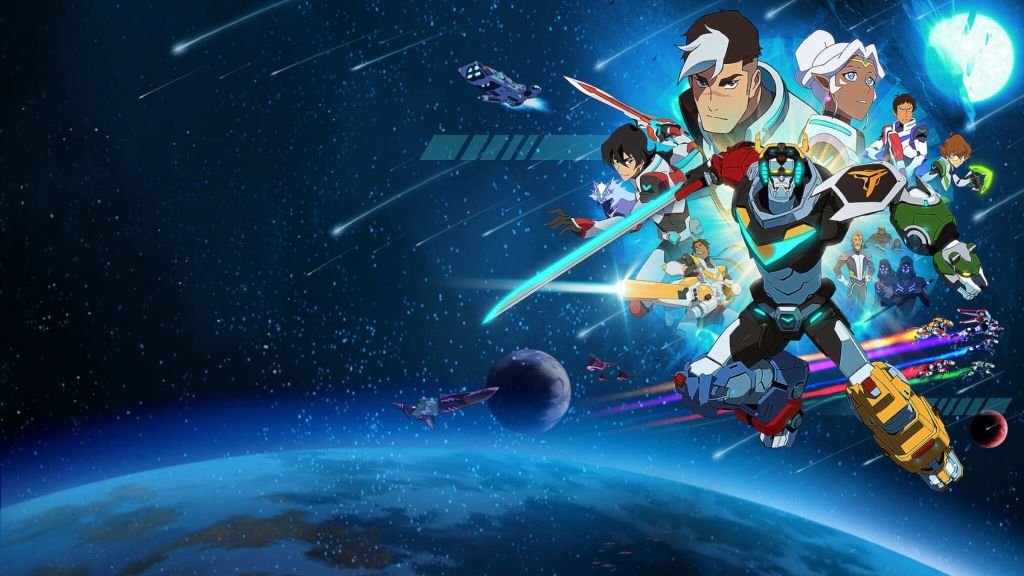
The original 1980s Voltron was a patchwork production created by splicing together footage from unrelated Japanese anime series, resulting in a show that was iconic but often narratively disjointed. Netflix and DreamWorks Animation revitalized the franchise with Voltron: Legendary Defender, a series that kept the giant robot action while building a coherent and expansive space opera around it. The story centers on five space pilots—Shiro (voiced by Josh Keaton), Keith (voiced by Steven Yeun), Lance (voiced by Jeremy Shada), Pidge (voiced by Bex Taylor-Klaus), and Hunk (voiced by Tyler Labine)—who discover the Lions of Voltron and must unite to defeat the Galra Empire.
The showrunners of Voltron: Legendary Defender utilized the freedom of streaming to tell a serialized story with genuine character growth and complex villain motivations. The animation is fluid and dynamic, blending traditional 2D art with CGI to create combat sequences that feel weighty and exhilarating. Beyond the visual upgrade, the series explores themes of war, sacrifice, and the blurred lines between good and evil. Finally, characters who were one-dimensional archetypes in the 80s are given rich backstories and personal struggles, making their eventual victories feel earned. As a result, Voltron: Legendary Defender honors the nostalgia of the original while providing the narrative substance that modern audiences expect from prestige animation.
5) Queer Eye
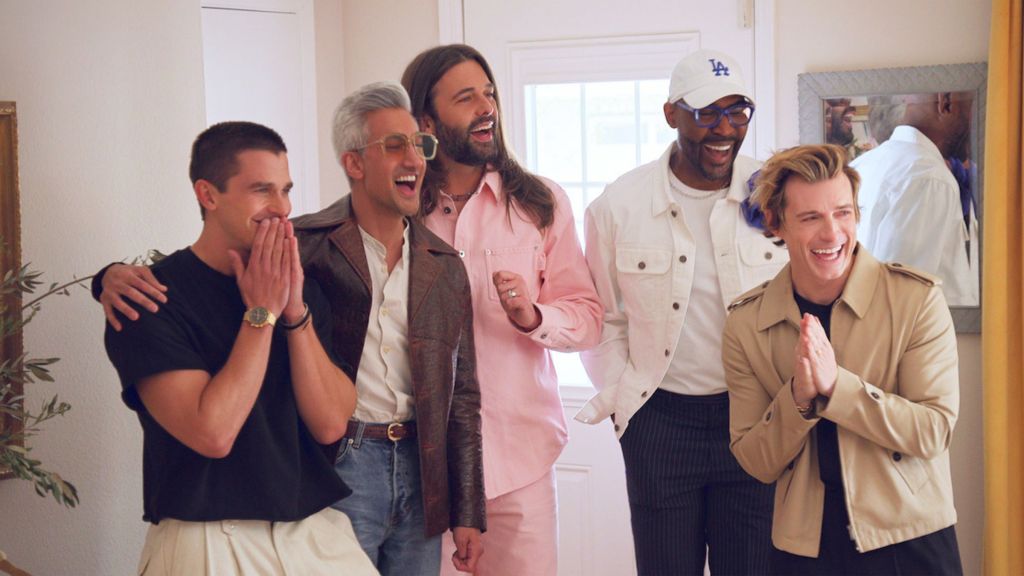
The early 2000s reality series Queer Eye for the Straight Guy was a cultural milestone, but it largely focused on surface-level aesthetics and the novelty of tolerance. The Netflix revival, simply titled Queer Eye, shifts the focus from tolerance to acceptance and from external makeovers to internal healing. The new Fab Five, comprising Antoni Porowski, Tan France, Karamo Brown, Bobby Berk, and Jonathan Van Ness, travel to conservative areas of the United States to help people who are often marginalized or struggling with self-worth.
While the original show was primarily about buying better clothes and getting a haircut, Netflix’s Queer Eye uses the makeover format as a vehicle for intense emotional therapy. The hosts engage in difficult conversations about politics, religion, and identity with their subjects, creating moments of genuine human connection that bridge social divides. The chemistry between the cast members is infectious, and their genuine empathy transforms the show into a tear-jerking exploration of what it means to be happy. By focusing on mental health and self-love, Queer Eye transcends the makeover genre to become a powerful advocate for kindness and inclusivity in a polarized world.
4) DuckTales

Rebooting one of the most cherished cartoons of the late 1980s was a risky move, but the 2017 version of DuckTales surpassed the original by treating its characters like a real family. The series sees Scrooge McDuck (voiced by David Tennant) reuniting with his nephew Donald Duck (voiced by Tony Anselmo) and grandnephews Huey (voiced by Danny Pudi), Dewey (voiced by Ben Schwartz), and Louie (voiced by Bobby Moynihan) for a series of globe-trotting adventures. Unlike the original series, where the triplets were interchangeable troublemakers, the new show gives each brother a distinct personality and role within the dynamic.
The writers of DuckTales constructed a serialized mystery involving the disappearance of the boys’ mother, Della Duck (voiced by Paget Brewster), adding an emotional weight that was entirely absent from the earlier iteration. This overarching plot drives the character development and reinforces the theme that family is worth more than all the gold in the Money Bin. Plus, the animation style pays homage to the comic books of Carl Barks while utilizing modern techniques to create fluid action scenes. With a voice cast that brings incredible energy to every line, DuckTales proves that a children’s cartoon can be smart, adventurous, and emotionally resonant for viewers of all ages.
3) One Day at a Time

Norman Lear’s original 1975 sitcom One Day at a Time was groundbreaking for its depiction of a divorced mother, but the 2017 reimagining breathes new life into the format by filtering it through the lens of a Cuban-American family. The series follows Penelope Alvarez (Justina Machado), an Army veteran and single mother raising her two children, Elena (Isabella Gomez) and Alex (Marcel Ruiz), with the help of her eccentric mother, Lydia (Rita Moreno). The show retains the multi-camera setup and laugh track of a traditional sitcom, but it uses that comfortable structure to tackle heavy contemporary issues like PTSD, immigration, racism, and LGBTQ+ identity.
Machado delivers a powerhouse performance that anchors One Day at a Time, seamlessly switching between comedic frustration and dramatic vulnerability. The relationship between the three generations of women is the heart of the narrative, exploring how culture and tradition clash with modern American life. It’s also worth noting that the remake refuses to offer easy answers to the problems it presents, respecting the intelligence of its audience while still delivering consistent laughs.
2) The Office
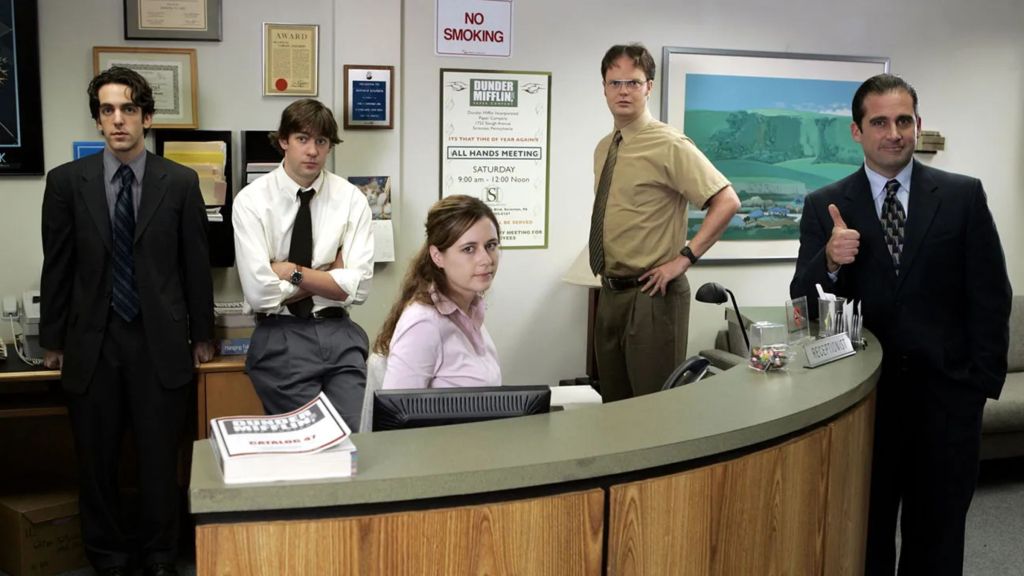
It is rare for a remake to eclipse the cultural footprint of its predecessor, especially when the original is a critically acclaimed British comedy created by Ricky Gervais. However, the American version of The Office managed to do exactly that by expanding the world of Dunder Mifflin and allowing its characters to evolve over nine seasons. While the first season closely mimicked the cynical tone of the UK series, The Office quickly found its own voice by softening the edges of Michael Scott (Steve Carell). Writers realized that for an American audience to invest in a long-running series, the boss needed to be well-meaning despite his incompetence. This shift allowed the show to build a genuine warmth that the original intentionally lacked.
In addition, the romance between Jim Halpert (John Krasinski) and Pam Beesly (Jenna Fischer) became one of the most compelling love stories in television history, while the ensemble cast of The Office turned supporting oddballs into beloved figures. The sheer volume of episodes allowed for deep dives into the lives of characters like Dwight Schrute (Rainn Wilson), creating a rich tapestry of office life that felt like a second home to viewers.
1) Battlestar Galactica
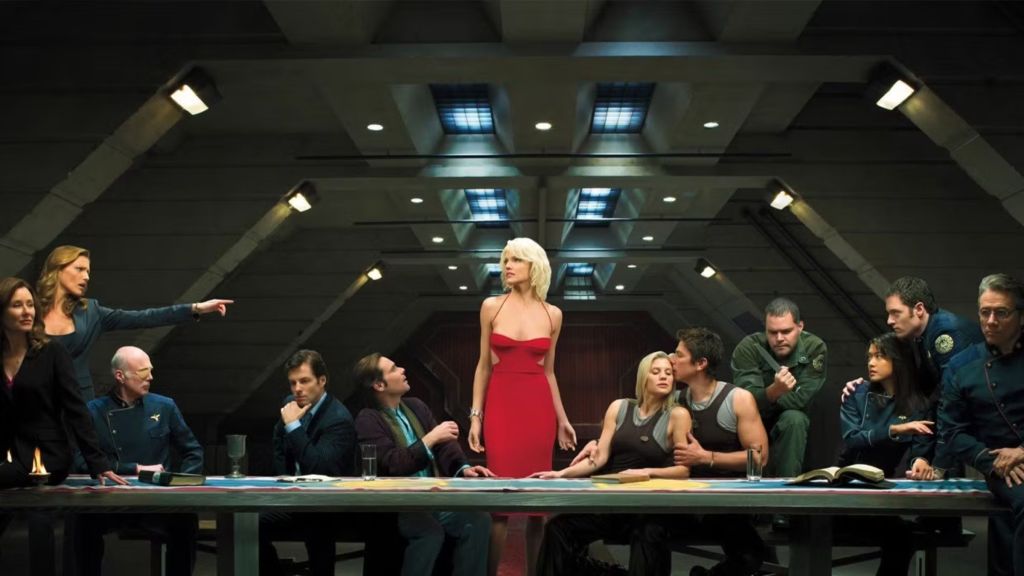
The 1978 Battlestar Galactica was a fun but campy attempt to capitalize on the Star Wars craze, featuring disco-inspired outfits and robot dogs. Ronald D. Moore’s 2004 reimagining stripped away the cheese and rebuilt the concept as a gritty military drama focused on the extinction of humanity. The miniseries and subsequent show open with a nuclear genocide carried out by the Cylons, forcing the last remnants of the human race to flee across the stars in a ragtag fleet led by Commander William Adama (Edward James Olmos) and President Laura Roslin (Mary McDonnell).
The genius of the Battlestar Galactica remake lies in its decision to make the Cylons look exactly like humans, introducing a layer of paranoia and espionage that permeates every interaction. The show used its sci-fi setting to process the trauma of a post-9/11 world, exploring torture, religious extremism, and the erosion of civil liberties during wartime. Because of that, characters are deeply flawed and make catastrophic mistakes, stripping away the moral absolutes of the original series. By grounding the space opera in visceral realism and complex political philosophy, Battlestar Galactica set a new standard for science fiction television that few shows have matched since.
Which of these remakes do you think improved the most on the original concept?
Most Viewed
-

Image Courtesy of Prime Video -
CREATOR: gd-jpeg v1.0 (using IJG JPEG v80), quality = 88 -

Image courtesy of Lucasfilm