After nine years, five seasons, and 42 episodes, Stranger Things has come to an end. The final episode, “The Rightside Up,” delivers a conclusion that splits its time between Upside Down mythos and battling Vecna with focusing on its core characters and aiming to give them all emotionally satisfying sendoffs. Whether it successfully pulls that off is up to each respective viewer, with Stranger Things‘ finale dividing fans, but there’s a lot to discuss and plenty of questions to dive into. Warning: Spoilers follow from this point on.
Videos by ComicBook.com
Stranger Things‘ ending episode packs a lot in to its runtime of two hours, eight minutes, including the truth of Henry Creel’s origins, where we learn that he was influenced by, and working with, the Mind Flayer all along, and that both the Flayer and Vecna have to be defeated (which, of course, they are). Along the way, Eleven’s sister, Kali, is killed, and Eleven’s own fate is left ambiguous: did she die with the Upside Down’s destruction, or did she really escape and find a new, peaceful life away from Hawkins? Speaking with Netflix Tudum, the show’s creators, Matt and Ross Duffer, broke down the finale and some of the biggest moments from it.
What Happened To Eleven & Why Her Fate Is Left Ambiguous
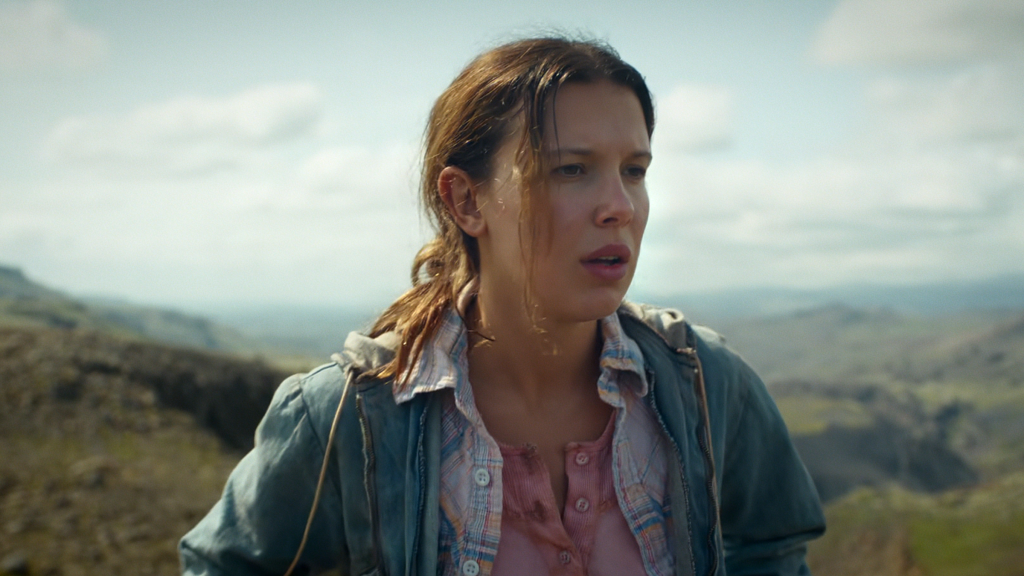
Eleven’s fate is the biggest unanswered question from Stranger Things‘ ending. While it initially seems as though she died, Mike offers up a more hopeful theory of escape that he and the other characters choose to believe, and audiences are invited to believe it as well. There is, however, no right or wrong option in what viewers think happened to El, as the Duffers wanted to leave it ambiguous. Whether she lived or died, though, there was never a scenario where she was with them in Hawkins at the end, as they explained:
Matt Duffer: “What we wanted to do was confront the reality of what her situation was after all of this and how could she live a normal life. These are the questions that we’ve been posing this season that Hopper just doesn’t even want to think or talk about. Mike’s obviously talked about it a lot, but it’s sort of this fantasy version that would never work. There are two roads that Eleven could take. There’s this darker, more pessimistic one or the optimistic, hopeful one. Mike is the optimist of the group and has chosen to believe in that story.”
Ross Duffer: “There was never a version of the story where Eleven was hanging out with the gang at the end. For us and our writers, we didn’t want to take her powers away. She represents magic in a lot of ways and the magic of childhood. For our characters to move on and for the story of Hawkins and the Upside Down to come to a close, Eleven had to go away. We thought it would be beautiful if our characters continued to believe in that happier ending even if we didn’t give them a clear answer to whether that’s true or not. The fact that they’re believing in it, we just thought it was such a better way to end the story and a better way to represent the closure of this journey and their journey from children to adults.”
Matt Duffer: “And the reality is, if Eleven is out there, the most that they could hope for is a belief that it’s true because they can’t be in contact with her. Everything falls apart if that were the case. So if that’s the narrative, this is really the best way to keep her alive. And it’s about Mike and everyone finding a way to move past what’s happened.”
The showrunners also point to her speech to Hopper earlier in the episode, which ties into this. While he had given her his own monologue, El reflected this back to him: the importance of her ending wasn’t so much what happened to her, as it was that she made the choice.
Why Henry Creel Didn’t Turn Against The Mind Flayer & Why They Connected It To The First Shadow

Outside of El, the other big twist in the finale is that Henry was influenced by the Mind Flayer from a young age, after an encounter in the mysterious cave. Henry’s origins, the cave, the briefcase, and the Mind Flayer are all story beats that are taken from and connect to The First Shadow, the Stranger Things stage play. The Duffers felt it was important to bring that into the show, with Matt saying:
“When we were talking about the play and trying to figure out what story would be worth telling, we thought Henry’s story was the most interesting one in which we didn’t have enough time to fully explore in the show. We always knew we were gonna have the moment where you see the moment that he connects with the Mind Flayer. But we were interested in what happens after that moment, his struggles in terms of whether he fights off or embraces the Mind Flayer. And we thought that was rich territory for the play to explore, and it was a way of continuing his story and giving the audience a little more insight into his backstory without making it essential viewing for Season 5, because it is its own standalone piece.”

Once that reveal is done with, it seems for a moment as though Henry might be redeemed. Will encourages him to resist the Mind Flayer, to help them fight against it. However, Henry has no interest in doing so. He states that he believed and agreed with the Mind Flayer that the world was broken, and that they did everything together. The Duffers wanted to leave it somewhat ambiguous as to whether young Henry had really decided this, but ultimately realized he could not be redeemed, as Ross discusses:
“We did discuss with the writers’ room if he could have a Billy [Dacre Montgomery] moment where he turns against the Mind Flayer [in a] Darth Vader-type situation. But the more we talked about it with the writers and with Jamie [Campbell Bower], he’s gone so far at this point to get here, he has to justify everything he’s done. And the only way to justify that is to go, ‘I chose this, and I believe in this still.’
“Even though he is shaken by seeing this memory, he’s too far gone at this point to turn against the Mind Flayer. But we wanted to leave it up to the audience in terms of whether young Henry did choose this or whether it was simply the Mind Flayer controlling him from beginning to end. But ultimately, in terms of where Henry goes, it doesn’t matter because he chooses the side of the Mind Flayer at the end of the day.”
The Main Group’s Endings (Including What Movie Lucas & Max Were Watching)

Each of the main group gets their own specific sendoff in what’s essentially an extended epilogue reminiscent of The Lord of the Rings: Return of the King. Dustin goes off to college but remains friends with Steve, Will moves to a new town and gets a newfound sense of acceptance, Lucas and Max settle down together, and Mike becomes a writer.
Ross Duffer: “[There were] discussions with ourselves and also with the other actors, and everyone had very specific ideas of where their characters would end up. We wanted them to continue the journeys that they had all started. So, of course, Dustin’s going to continue seeking knowledge. But we wanted to show that bromance is going strong with Steve because they had a bumpy Season 5.”
Matt Duffer: “Mike’s a storyteller, so to us, it makes sense that he would continue to tell stories. And with Will, we like the idea of him going to a bigger city where he would be more accepted in a situation like that. We wanted each of the characters to find happiness but in their own specific ways.”
Ross Duffer: “[Max and Lucas] had a movie date that had been planned for a very long time, so it was nice to finally get to see them go to that film.”
Matt Duffer: “And they’re watching Ghost… We filmed it. It was a very romantic scene from Ghost, but then it just kind of took away from their own moment. But that is the movie they’re seeing.”
The creators also explained that they had planned the final scene, which is the group playing a final game of D&D, for a very long time, and that “it felt right to go full circle.” That was, of course, the exact way the show began, and it ended in the same fashion to represent them growing up and leaving childhood behind, with a new generation of kids coming in.
Why Steve Stays In Hawkins But Nancy, Jonathan & Robin Don’t

As well as the younger group, there’s also a sendoff for the older generation who are saying their own goodbyes. Steve remains in Hawkins, coaching little-league and teaching Sex Ed., Jonathan and Robin are off at college, and Nancy drops out to take a trainee job with The Boston Herald. For Steve, the creators felt that it was natural he’d be the one to stay in Hawkins, and that having kids would be in his imminent future. As for the others, Ross Duffer said:
“For Nancy, we never want her to take the obvious path. Even in Season 1 when she’s going down the trajectory that all these suburban girls go down, Nancy obviously has proven to be much more independent than that, which is one reason she and Jonathan aren’t together at the end. She’s still trying to find herself and what she wants from the world, so that’s why we wanted to give her that ending. For Robin, Smith College was Maya’s suggestion. And then Jonathan at NYU, we set up that he’s been wanting to go to NYU for a very long time. That’s all the way back to Season 1. So it made us happy to see him finally realize his dream.”
Why Stranger Things’ Finale Teased Steve’s Death & Had Jonathan Save Him

If there is any character Stranger Things fans have long been worried about dying, it’s Steve Harrington. The fan-favorite has been at the top of death prediction lists for years, and the finale plays with this idea: he falls off the radio tower, only for Jonathan to be the one to catch him and pull him back up. For the Duffers, this wasn’t designed to toy with the emotions of viewers worried about Steve, but more about his and Jonathan’s relationship, as Matt explained:
“It wasn’t designed to torture fans who are terrified that Steve is gonna die. I’ve never really understood why they’re so worried about Steve dying. Really, it was about him and Jonathan coming together, and that’s why that moment is in there. We wanted those two to find common ground by the end of the series, and it leads to that conversation they have in the Abyss where they finally open up about their feelings and their conflict as it relates to Nancy. And Joe [Keery, who plays Steve] and Charlie Heaton, who plays Jonathan] in real life are very close, and we wanted to tap into that bromance and have that reflected on screen in some way. We wanted the least likely person to save Steve.”
Why Joyce & Hopper Decide To Leave Hawkins

The kids aren’t the only ones leaving Hawkins behind, as the newly-engaged Joyce and Hopper also decide it’s time to relocate. Hopper is offered a job as the chief of police in Montauk, which was originally going to be the setting for the show before the Duffers opted for a fictionalized place instead. It felt right to the Duffers to give them a fresh start, given everything they’ve been through:
We knew they had to have their final date at Enzo’s. That final scene with them had been planned for quite some time. It’s very difficult what Hopper went through, especially with Eleven, and we liked the idea of him and Joyce having an opportunity to start a new chapter in their lives. David [Harbour] liked the idea of sort of a Dickensian ending for those characters. More than I would say is typical, we really talked a lot with all the actors to make sure they were content with where their characters ended up. That was important to us.
What Happens To Erica, Murray, And Mr. Clarke
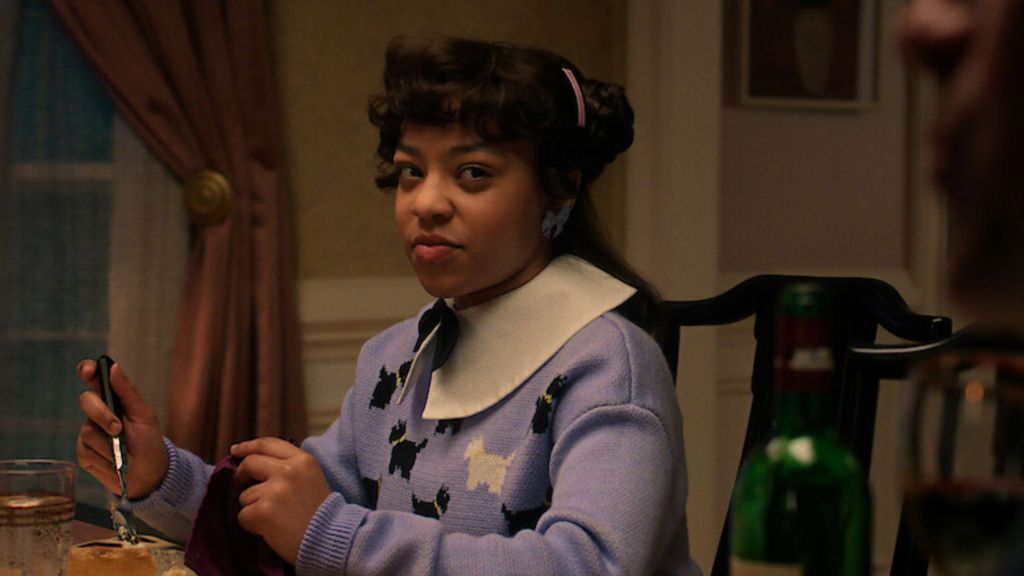
Not every Stranger Things character factors into the ending in a major way, and there are some characters we don’t get to revisit as much, nor learn where they’re headed. These include Erica, Murray, and Mr. Clarke, though for the first and third of those, they’ll still be at the school in Hawkins.
Matt Duffer: “I do like that Murray and Mr. Clarke have bonded. But I think Murray’s doing his own weird stuff, and Mr. Clarke is likely still teaching. I think at his heart he loves educating kids.”
Ross Duffer: “Obviously, no one’s concerned about Erica. She can take care of herself. She’s gotta go through high school now, but she’s just so tough.”
Matt Duffer: “She’s absolutely going to be valedictorian. That is for sure. What happens beyond that, I don’t know. She can go where she wants to go.”
One character whose fate isn’t clearly addressed in the episode, nor by the Duffers, is that of Robin’s girlfriend, Vickie. We don’t learn what happens to her after the battle with Vecna is over, but in her radio speech, Robin mentions “overbearing” partners, suggesting they broke up at some point in the 18 month time jump.
Why Stranger Things Ends With David Bowie’s “Heroes”
Stranger Things has a long history with the song “Heroes.” The show used Peter Gabriel’s version of it in Season 1, when Will’s body was found, and then again at the very end of Season 3 as Eleven reads Hopper’s letter. But for the credits of the series finale, they finally used the original David Bowie version of the song, which was the idea of one of the show’s stars:
“And it was actually Joe Keery who suggested that we do the David Bowie version, which we’ve never used on the show, for the end. Once Joe said that, we immediately knew that was the right song to end the show on because it is in some ways an anthem for Stranger Things. But to use the original Bowie version just felt right and fitting for the conclusion.”
All five seasons of Stranger Things are now streaming on Netflix.
What did you think of Stranger Things‘ series finale? Leave a comment below and join the conversation now in the ComicBook Forum!
Most Viewed
-

Image courtesy of Hulu -
Courtesy of TOHO Animation -
Image Courtesy of Madhouse