The nineteen seventies were a time of experimentation for Marvel Comics, and that sometimes meant characters would debut in the least expected places. Such was the case for Marvel’s muck monster the Man-Thing, whose first appearance was in Conan the Barbarian spin-off magazine Savage Tales. Like Rocket Raccoon’s debut in a Marvel Preview whose cover story was the censorship-pushing Satana, a sword-and-sorcery magazine is about the last place you’d expect for Marvel to debut a modern era-set horror character. It marked the beginning of a strange decade that would see this tragic hero pop up in the most unexpected of settings, crossing over with some of Marveldom’s biggest names – and helping to introduce one of its most enduring cult favorites. The bizarre world of Man-Thing is the pinnacle of Bronze Age Marvel Comics, zig-zagging between the off-beat and the mainstream. Man-Thing was always lurking just at the edge of the Marvel Universe, and no matter how many times he appeared, never lost his eerie, uncanny effect on readers.
Videos by ComicBook.com
The decision to introduce Man-Thing in Savage Tales was more or less incidental, but had a dramatic side-effect: it made Savage Tales #1 into one of the most sought-after key issues of the Bronze Age. Magazines are, by their nature, scarcer to begin with then comics. Their print runs are lower, consequently, the number of copies in circulation is lower. As a result, when there’s a reason for demand to outpace that limited supply – like a first appearance – prices skyrocket, turning even a relatively minor character’s debut into a high-cost key. The most startling examples are in Deadly Hands of Kung-Fu, which introduced heroes White Tiger and Jack of Hearts during its thirty-three issue run. Comparatively obscure characters in the Marvel Universe, these first appearances command an inordinately high pricetag because of their rarity. Man-Thing, a much more recognizable character, is therefore worth hundreds in any condition – especially a high-grade copy like this graded 7.0 on auction through Heritage.
How Man-Thing & DC’s Swamp Thing Grew Apart from Their Shared Roots
At this point, the shared beginnings of Man-Thing and DC’s Swamp Thing is practically the stuff of comic book legend. Readers in the seventies were quick to spot the similarities between the two characters, who had almost literally the exact same origin story. Both were scientists working in the swamps of the American Gulf Coast, who, after an act of sabotage, are seemingly killed in a violent lab explosion. But the chemicals they were working with preserve them, transforming Ted Sallis into the macabre Man-Thing, and Alec Holland into Swamp Thing. Swamp Thing’s debut in House of Secrets #92 hit shelves in April 1971. Savage Tales #1 was released in February of that same year. It wasn’t nearly enough time for Swamp Thing creator Len Wein to have copied Gerry Conway’s story. So what happened? Several things.
Wein and Conway were living together at the time, and acknowledge that there may have been conversations about “what are you working on?” in which one described to the other their plans for a swamp-set horror comic. As alcohol was likely involved, neither men remembered in perfect detail who said what. Conway would also state in interviews that Stan Lee suggested the general concept for Man-Thing, inviting Conway to fill in the character’s backstory and particulars. Conway acknowledged similarities to yet a third character, the Heap, who appeared in comics during the late 1940s, and who was likely a shared influence over his Man-Thing and Wein’s Swamp Thing. However, virtually as soon as Man-Thing and Swamp Thing went beyond their first appearances and spun off into their own comics, the similarities ended.
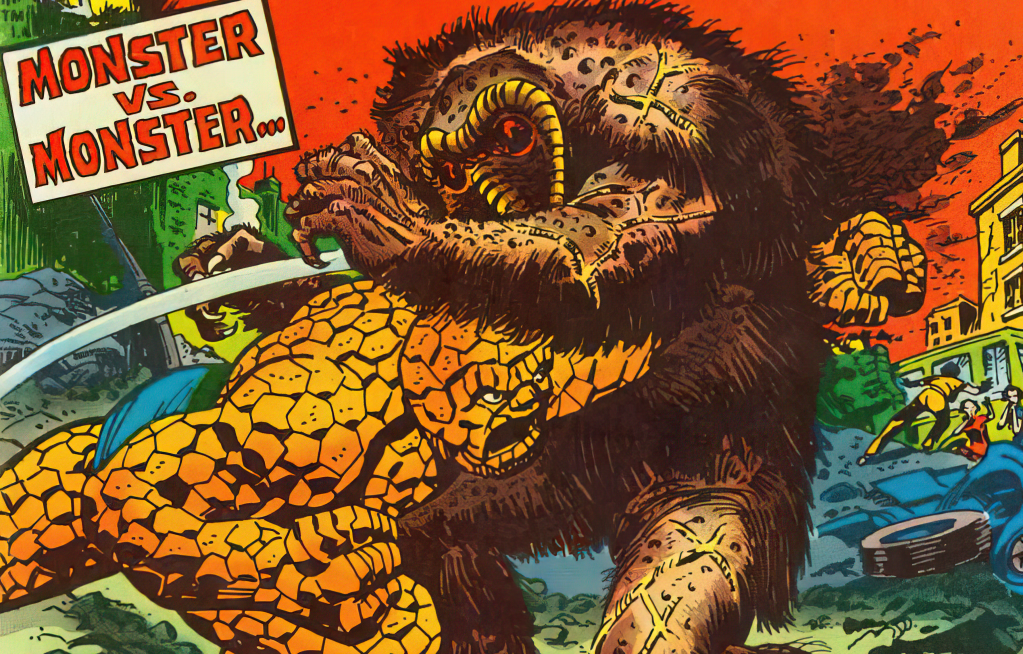
Len Wein, workin with artist Berni Wrightson, turned Swamp Thing into a dark, brooding gothic horror. Man-Thing, under the pen of the eccentric Steve Gerber, turned into something much weirder. Gerber’s Man-Thing was the guardian of the “Nexus of All Realities,” hidden in the mystic swamps that had birthed him. In the pages of Adventure into Fear and Man-Thing, Gerber imagined all kinds of strange threats spawned by the otherworldly swamp, including the pirate Captain Fate, the deluded Mad Viking, and the cult favorite Foolkiller. Gerber’s work was satirical, political, and often totally surreal. Its sensibility bordered on the absurd, especially when Adventure into Fear #19 introduced a cigar-chomping denizen of “Duckworld,” an alternate dimension where ducks evolved to become the dominant species. Intended as a one-off character, “Howard the Duck” became Gerber’s signature character, and Marvel’s most surprising hit of the seventies. From 1972 to 1975, Man-Thing was everywhere, a guest-star in titles like Daredevil, Master of Kung Fu, and the inaugural issue of the much-loved Thing team-up book Marvel Two-in-One.
Gerber stayed with Man-Thing until its cancellation after twenty–two issues, culminating in an ahead of its time meta story where Gerber writing the Man-Thing comic becomes a part of the comic’s narrative. Though the cancellation relegated Man-Thing to a guest star in other comics, he remained a fixture, appearing in Iron Man, Fantastic Four, and, in a full-circle moment, several issues of Howard the Duck. The best of these Bronze Age guest spots were Man-Thing’s appearances in Marvel Team-Up, pairing him with the amazing Spider-Man, and as a member of the “Legion of Monsters” in Marvel Premiere #28, alongside Morbius, Ghost Rider, and Werewolf by Night. The issue is a favorite with collectors for its premise and its striking cover by Ed Hannigan, even if the story within failed to live up to the promise of either.
Why the Seventies Remain the Definitive Decade for Marvel’s Man-Thing
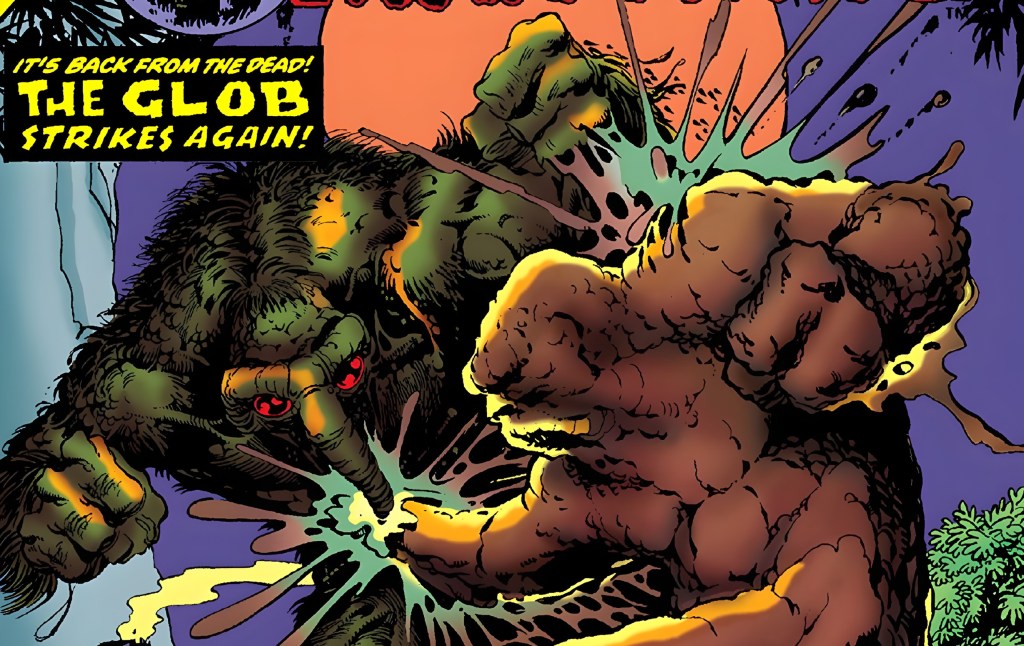
Positive response to Man-Thing’s regular guest appearances led to a new title for the character in 1979. Its first three issues were plotted by Michael Fleisher, replaced by Chris Claremont after overwhelming negative response. Claremont was the regular writer for this second volume until its cancellation after eleven issues; he would also bring Man-Thing (as well as villain D’Spayre) into Uncanny X-Men, teaming up with Cyclops in issue #144. Like many of Marvel’s Bronze Age horror characters, Man-Thing’s appearances grew infrequent as the eighties progressed, owing to changing tastes from readers and writers alike. A one-shot Marvel Fanfare story in 1983 would be the character’s last for nearly three years, after that, he continued to be relegated to infrequent guest appearances until 1997, when he was once again given his own comic. His origin was retold in a 2008 mini-series, and around the same time he’d return to prominence as a member of the Thunderbolts (beginning in issue #144 of that title).
Although revived relatively frequently (most recently in a Werewolf by Night one-shot and an Uncanny X-Men storyline), Man-Thing has never returned to his Bronze Age prominence, an era where it felt like he was everywhere – including his own monthly title. The character’s greatest recent fame has come from the Marvel Cinematic Universe, which introduced its take on the character in 2022’s Werewolf by Night Halloween special. A fan favorite among the divisive Multiverse Saga, this special helped to introduce the character to a wider audience, as well as reminding many longtime comic fans how much they liked him. The special caused a brief spike in price for Savage Tales #1, which has stabilized in the years since. Graded copies are highly sought after, especially scarce high grade copies like the one on auction at Heritage. At the time of writing, it’s only attained a price of a little north of one hundred dollars, but will likely finish for several times that.
Who’s your favorite Marvel horror character? Leave a comment below and join the conversation now in the ComicBook Forum!
More Collectibles
-
Images Courtesy The Pokémon Company and Fanatics Collect