The open-world genre has blossomed over the past decade or so, especially with the advent of genre-defining titles like Breath of the Wild and Elden Ring. We’ve gone from climbing an endless array of towers and clearing more bandit camps than one person should ever be subjected to, to venturing out to distant locations because we feel inspired to. Exploration has become more engrossing, worlds more varied and rewarding, and quest guidance less intrusive. We truly are in a golden age of open-world design, something perhaps best evidenced by even Ubisoft altering its approach and ditching its exhausted tropey formula.
Videos by ComicBook.com
However, that being said, the open-world genre has a little more growing to do and a few teething problems left to iron out. Specifically, open-world games need to stop feeling so bloated, so frustratingly large, and so tediously expansive. In case you missed it, that’s three different ways of saying open worlds need to be smaller. The difficulty is that developers, especially within the AAA scene, seem to believe that players want ridiculously sized open-worlds and that bigger always means better. Well, I’m here to tell you that size truly doesn’t matter, and that a smaller world may actually be more pleasurable to explore. My proof is an underrated open-world RPG from 2025 called Atomfall, a game I simply cannot begin to recommend enough.
Atomfall’s World Proves Size Isn’t Everything
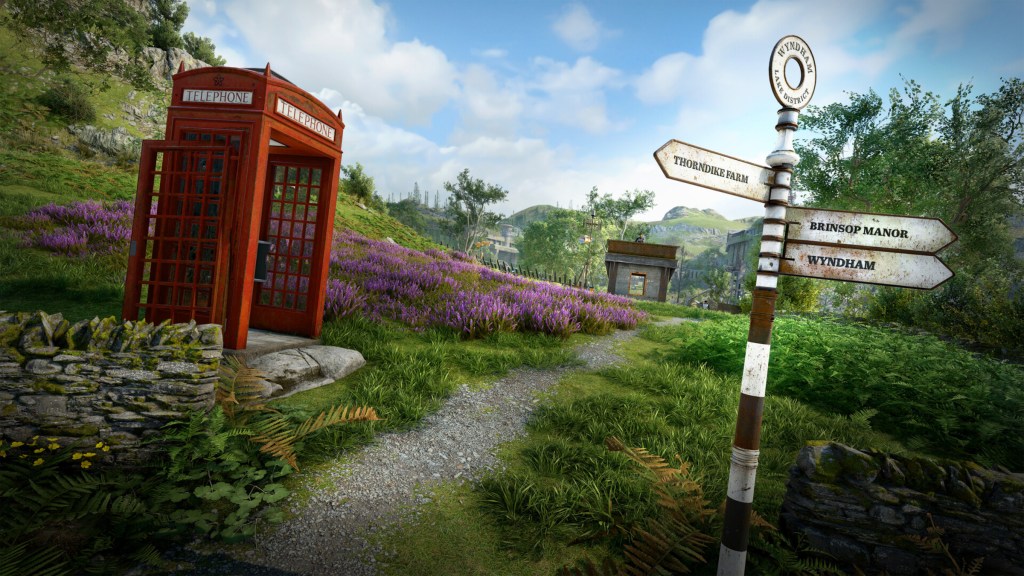
Despite being commercially successful enough to warrant a sequel announcement, I’d argue that Atomfall is a tad underrated. It garnered a staggering number of players at launch, but many of those came from Xbox Game Pass players, and the consensus toward its blend of survival open-world shenanigans and Fallout-esque mystery narrative was a tad lukewarm. That’s not to say it wasn’t well-received, but you don’t find many people discussing it passionately, either positively or negatively, today. Atomfall disappeared from the zeitgeist as quickly as it had appeared, a fate I believe is unfair given just how good it is and how well it revolutionizes the open-world genre.
I mention this because I believe that, as a consequence of its inability to drum up the same levels of hype as some of its contemporaries, the aspects of open-world game design it so brilliantly improves upon will be overlooked. Sure, Atomfall isn’t technically a fully open-world video game, but that’s partially the point. Rather than delivering one seamless expanse for players to bound across, Rebellion split Atomfall’s cult-infested countryside into several open regions connected via loading screens. These smaller maps are more detailed as a result, easier to navigate, better support the game’s lack of handholding, and, more importantly, cater to a more dramatically varied map as one biome doesn’t have to seamlessly blend into the next.
Indeed, I’d argue that as a direct consequence of Atomfall utilizing smaller open-world spaces packed with a plethora of mysteries, unique POIs to uncover, phenomenal environmental storytelling, and recognizable landmarks, it achieves the status of being a game that feels like Fallout. Comparisons between the two were made ad nauseam before launch, but it is this element that cements the connection the most, at least in my opinion. Regardless, the smaller spaces ensure that Atomfall doesn’t fall prey to the endless bloat afflicting the open-world genre today.
Open-World Games Need To Start Getting Smaller
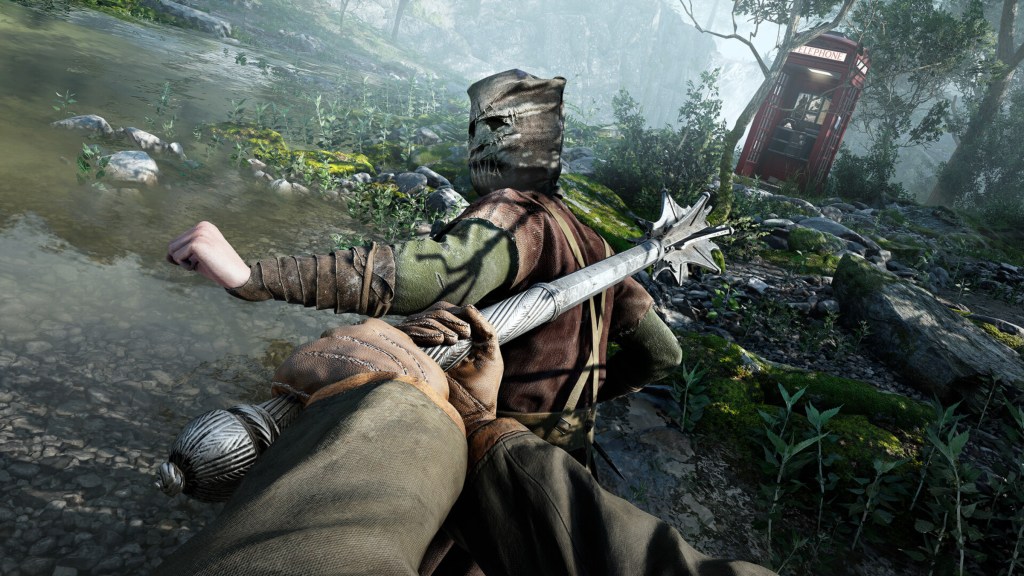
I think it is time that we return to the semi-open-world model and ditch the sprawling expanses popularized by the Far Cry and Assassin’s Creed titles. There’s nothing wrong with the occasional vast swathe of land to venture across, especially within the right context. If a game can pull off a setting as compelling and rich with things to see as Elden Ring, or as one as tranquil and fun to explore as Breath of the Wild, then the size and potential for bloat are justified. However, outside of those circumstances, open worlds tend to feel a tad indulgent, boring, and empty. Simply put, it is harder to populate a huge empty space with enticing and enjoyable activities than it is a smaller one.
Atomfall’s use of semi-open-world spaces works so efficiently because it ensures you’re not endlessly trawling through barren expanses in search of a new intriguing landmark in the distance. They’re all over the place thanks to the truncated map size, so you’re constantly drawn in any one direction, even despite the limited field of view. Avowed, its fantasy counterpart, used a similar model to great effect, as that game’s world is a genuine joy to explore in large part thanks to its concise nature bringing together everything remotely interesting.
As aforementioned, I’m all for the big worlds if you can justify the endless travelling or make it fun. However, when the majority of open-world titles come with a fast-travel option, because without it, exploration would get tedious after 60 hours, it baffles me that we bother keeping it in. Atomfall’s smaller yet densely detailed open worlds feel like clear proof that not only can the genre thrive even when condensed, but that there are tangible benefits to AAA games being smaller. This is compounded by the fact that budgets are ballooning to exorbitant degrees, which makes the production of an enormous open-world game, especially from a AA team like Rebellion, all the more impractical. By shrinking the world size, you not only have a greater chance of producing a significantly more compelling game world, but you’re also likely saving on costs.
It appears to me that there’s an obsession with huge open worlds in games because, on a technical level, they’re incredibly impressive. Only video games can offer such interactive expanses, so it feels as if there’s a need to push for them to somehow justify video games as an art form or at least a technical marvel. However, this is coming at the expense of player engagement and even time. When every RPG release is an enormous, 100+ adventure, bloated and stretched beyond reason simply to accommodate a bigger world map, we’ve no time to experience anything else coming out.
I’m still yet to beat Crimson Desert, a game I love, because of just how big its map is. The size of the world should, of course, be decided on a case-by-case basis. For Atomfall, it made sense for it to be smaller to better deliver the mysterious atmosphere, and for Crimson Desert, a planet-sized map makes sense because the world and exploration are its biggest assets. However, perhaps it is time we re-evaluate our stance on, at the very least, the worth of semi-open worlds and begin popularizing them in game development. At the very least, I’m sure we can all agree that sometimes, smaller is, indeed, better.
Do you think that open-world games need to be smaller? Leave a comment below and join the conversation now in the ComicBook Forum!
More Gaming
-

Image Courtesy of AdHoc Studio -

Courtesy of IllFonic