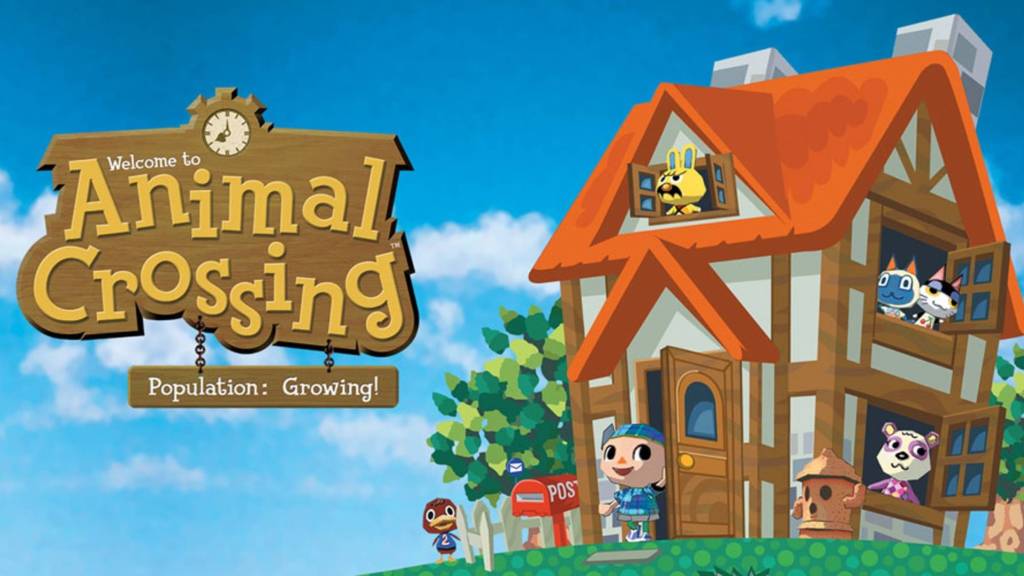
I find it somewhat baffling that not only are so many games celebrating a significant anniversary this year, but Animal Crossing specifically is turning 25. I’ve been playing Animal Crossing for much of my life, invested a considerable amount of time into each and every one of its villages, befriended and made meaningful connections with a myriad of its colorful characters, and spent countless nights being inspirited by the warmth and cozy nature of its wonderfully dreamlike structure, atmosphere, and pacing. Even now, I find myself woozy with nostalgia as I listen to Wild World’s soundtrack and reminisce about my time spent dawdling around my village with a smile plastered across my then youthful face.
Videos by ComicBook.com
However, as much as Animal Crossing’s storied legacy has given me some of my fondest video game-related memories, I also can’t help but reflect on its growth, or perhaps lack thereof, and how it has transitioned from being one distinct and unique experience to a homogenization of everything the cozy genre represents. It is a shame that, after 25 years, it feels as if Animal Crossing has regressed rather than innovated on its original winning formula, but it also isn’t hard to see the trajectory that has led the series to its unfortunate downfall. Fortunately, it isn’t too late for Nintendo to turn things around and save this series that has meant so much to me and millions of others.
Animal Crossing Has Lost Touch With Its Origins
The foundation on which Animal Crossing is built is that of communication. It is a core tenet within the series, one that has driven its main gameplay loop and seen so many players come back time and time again. That communication, of course, extends to that of your character and the digital inhabitants of your generated village. However, it also extends to the communication we share with those in the outside world and how Animal Crossing can assist with it. This was the belief on which creators Katsuya Eguchi and Hisashi Nogami designed Animal Crossing, the key principle that has produced such an enduring legacy.
Eguchi and Nogami didn’t merely want to create yet another virtual world for players to inhabit. They wanted players to come away from having immersed themselves within it and discuss everything they had seen and done with friends and families. Eguchi stated in a 2003 interview that he hoped that “players talk with each other about what the animals said, what they were thinking that day, what they did,” and, to encourage conversation, especially among the game’s younger audience, they would convey challenging ideas through the use of the villagers. This is, ultimately, what gave Animal Crossing its defining personality, ensured the first game in the series became one of the greatest GameCube games of all time, and led to so many of its nuanced villagers becoming fan favorites.
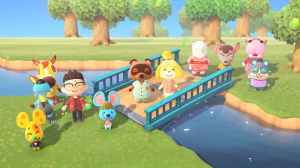
In order to convey said challenging concepts, the team had to give each villager a personality through which they could believably and naturally discuss them. That level of intricacy led to villagers not only feeling distinct but also often like real people with meaningful things to say. Of course, not every Animal Crossing villager is a budding philosopher, but even those who existed purely to deliver comic relief or offer the village a bit of lighthearted levity still felt layered. However, this original concept, this dedication to the core theme of communication, both internally and externally, has long since been forgotten as Animal Crossing veers closer to becoming a more traditionally gameplay-driven video game.
Animal Crossing’s Villagers Have Become Meaningless
One would imagine that after 25 years, Animal Crossing would feel like a significantly more innovative experience. That is, partially true, at least on a mechanical level. Animal Crossing’s gameplay has never been at the forefront of the experience, especially in the earlier entries. Sure, there was always plenty to do, but the game was designed to be experienced in incremental chunks, one played over weeks, months, even years, rather than in a handful of hours. You couldn’t and shouldn’t attribute a set amount of hours to beat it, as one simply cannot beat Animal Crossing.
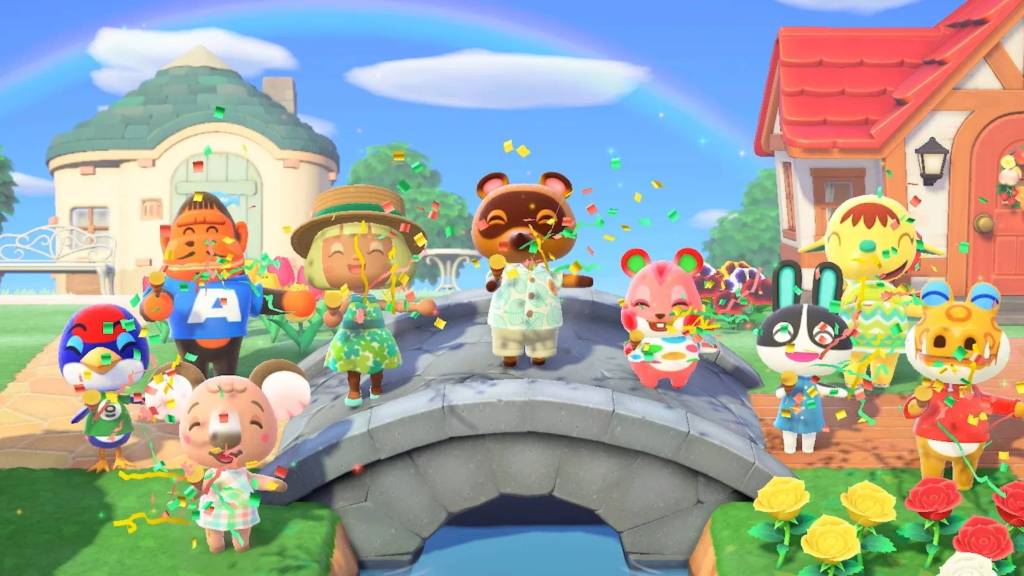
However, over time, that philosophy has changed somewhat. Whereas in previous entries, Animal Crossing existed to deliver that aforementioned idea of communication, merely allowing players to exist within a digital world and converse with its inhabitants, more recent games in the series have put a much greater focus on an accomplishable goal. This is the philosophy that defines New Horizons, a game that introduced crafting, deepened the city-building mechanics from New Leaf, added Nook Mile Points to collect, achievements to complete, and a slew of landscaping options that allowed you to ostensibly design the entire island. There is so much more to do in Animal Crossing: New Horizons, and so it is technically an innovative evolution over its 2001 predecessor.
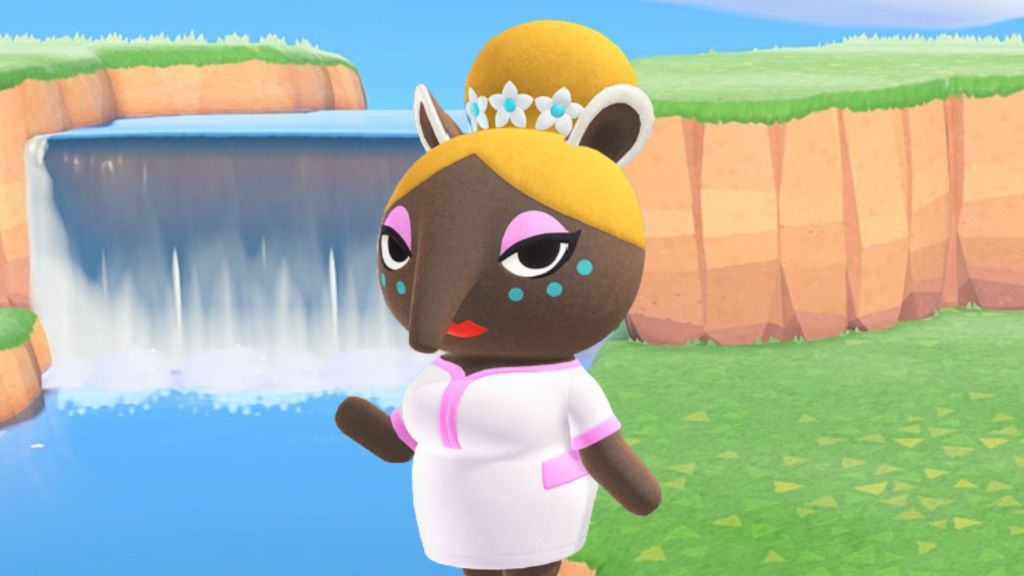
However, by adding so much to do, by focusing more on the gameplay and giving players more reasons to hang about, more ways to beat the game, New Horizons has robbed the series of its core purpose. The significantly reduced focus on villagers means that they’re far less nuanced in New Horizons, delivering the same tired and generic lines over and over again, having little personality of their own, and frustratingly never getting angry at you, no matter how hard you try. There’s no bite, no consideration for those challenging concepts Eguchi and Nogami spoke about all those years ago. Animal Crossing: New Horizons is as much an Animal Crossing game as Minecraft, Rust, Day Z, or any other number of survival crafting games are.
This, in my opinion, is what ultimately makes New Horizons the worst Animal Crossing game, because, aside from utilizing its namesake, it barely represents the core experience established with the N64 and later GameCube entry. This isn’t exclusive to New Horizons either. The series has experimented with this push for a greater focus on gameplay since City Folk, and has even produced spin-off entries that further diminish the role of the villagers and the theme of communication, such as the much derided Amiibo Festival and the slightly better received yet still divisive Happy Home Designer. That is to say that this degrading of Animal Crossing’s identity has been a long time coming. Fortunately, I believe it is still reversible.
Animal Crossing Can Improve After 25 Years
I have felt somewhat disillusioned by Animal Crossing since the release of New Horizons and, for some time, believed it to be unsalvageable. However, after reflecting upon the series’ legacy, I have come to the realization that there is still potential for Animal Crossing to return to its roots while offering the level of mechanical innovation that New Horizons strove to deliver. After all, as much as I found the inclusion of so much meandering busywork in New Horizons to detract from the series’ original purpose, I can nevertheless appreciate that it appeals to a large group of fans.
Many are excited for Animal Crossing’s inevitable Switch 2 reveal, and I especially am eager to discover how Nintendo best utilizes the new hardware to deliver a groundbreaking cozy sim experience. The increased power of the Switch 2 shouldn’t just be able to deliver a better visual experience, but also a more robust simulation, one that better attempts to emulate the experience Eguchi and Nogami set out to create. Should Nintendo focus more on the personalities of each villager and attempt to make them feel as distinctive and complex as they have been in the past, then the Switch 2 Animal Crossing game will surely be a far bigger success, at least when it comes to accomplishing the aforementioned goal.

The villagers are a core part of the Animal Crossing experience, and shouldn’t be pushed into the background, especially not for the introduction of mindless tasks. Animal Crossing’s simulation should be where most of the innovation lies, where the complexity and richness of the experience are delivered. Nintendo should be focusing on making the world of the next Animal Crossing game feel substantially more alive and less like a static sandbox. It can then still implement all of the fundamental gameplay mechanics that have persisted through each entry, as well as the sense of progression New Horizons introduced for those who want that.
Animal Crossing has meant so much to me for so long, just like Pokémon, another first-party Nintendo franchise suffering from a sharp decline in quality. I don’t state that it has gotten worse merely for the sake of ruffling a few feathers or garnering some arbitrary clicks. I do so because I lament what could have been and long for what should be. Animal Crossing deserves to be so much better, especially after 25 years. It should still encapsulate the complexity of those earlier games, deliver the sense of community its creators strived for, and offer a safe, cozy space through which we can unwind and feel at home. Animal Crossing will still be that for so many, and I am exceptionally happy that is the case. I merely wish it could feel like that once again for me, and any other like-minded individuals who believe the series has, across its 25 years on this planet, lost its way a little.
Do you think Animal Crossing needs to change? Leave a comment below and join the conversation now in the ComicBook Forum!
Most Viewed
-

Image courtesy of Sony -

Image Courtesy of A-1 Pictures -

Image courtesy of Warner Bros. Pictures