Modern RPGs have grown larger, more ambitious, and feature-rich thanks to enormous worlds, cinematic storytelling, and player-driven narrative. But Dragon Age: Origins did something at the very beginning of the game that no RPG has utilized, and this was the best introduction to a world. BioWare understood something that many modern RPGs could stand to learn: a great adventure becomes more compelling when players experience why their character belongs in its world before asking them to save it. This 2009 RPG approached character creation differently, turning a decision that many games treat as background information into the beginning of the story itself.
Videos by ComicBook.com
Rather than immediately throwing players into a grand conflict, Dragon Age: Origins offered six distinct origin stories that established the protagonist’s background, relationships, and place in Thedas. A Human Noble, City Elf, Dalish Elf, Mage, Dwarf Noble, or Dwarf Commoner became more than just an off choice. Players experienced their character’s origins firsthand before being thrown into the larger world-saving epic. This helped me, and so many other players, become more invested in their character, and few RPGs have managed to do so since.
Dragon Age: Origins Made Character Creation Part of the Story

The brilliance of Dragon Age: Origins is that its opening hours give players a reason to care about their character before the central conflict takes over. A Human Noble experiences the privileges and responsibilities of a powerful family, while a Dwarf Commoner begins life at the bottom of a rigid social hierarchy. A Mage faces the restrictions imposed by the Circle of Magi, where magical abilities are subject to strict rules. These gave your first a major impact on the story and established early on your character’s strong identity as well as set up the world of Thedas.
Players don’t just learn these details through reading paragraphs or a lengthy cinematic but rather experience it through gameplay. The Human Noble witnesses the vulnerability hidden beneath privilege, while the City Elf encounters the prejudice that shapes everyday life for elves living under human authority. Each origin offers its own supporting characters, conflicts, and immediate stakes. By the time the protagonist becomes a Grey Warden, players have already experienced a small but important part of the world from the inside that leads into the larger narrative.
This approach also makes replaying Dragon Age: Origins more enticing. Choosing another background doesn’t merely change the protagonist’s appearance or dialogue options, but completely changes the opening. Locations and characters are different, and BioWare designed the origins to influence subsequent dialogue, story events, and certain narrative branches, giving players reasons to revisit the game with a different character. Few character creation systems achieve so much narrative work before the main adventure has properly begun.
Baldur’s Gate 3 Shows the Potential, but Origins Still Tops It

Larian Studios’ Baldur’s Gate 3 demonstrates that modern RPGs understand the appeal of protagonists with established histories. Its seven Origin characters, including Shadowheart, Astarion, Gale, and Lae’zel, have their own motivations, personalities, and connections to the central narrative. Players can experience the adventure through these characters or recruit them as companions, with decisions shaping their individual stories. You can also create your own Tav and come up with your own narrative history.
However, Baldur’s Gate 3 approaches this idea differently from Dragon Age: Origins. Its Origin or custom characters enter the adventure through the shared opening sequence, rather than each receiving an extended, playable introduction to their lives before the central journey. Playing as Astarion, for example, lets players experience his story from his perspective, but it doesn’t provide the same kind of separate, playable prelude that establishes the protagonist’s life before the main narrative begins. There is character-specific content, but much of it happens offscreen.
I would have loved to see games like Baldur’s Gate 3 embrace the same opening that Dragon Age: Origins did. A game with multiple playable protagonists could let players experience each character’s home, relationships, personal struggles, and first encounter with the wider conflict. These introductions wouldn’t need to last several hours, nor would every character require an entirely separate campaign. Even a compact opening chapter could establish why a character makes certain decisions and what they stand to lose. Dragon Age: Origins should be a lesson for modern RPGs, even ones that have achieved great success on their own.
Modern RPGs Should Make Players Earn Their Connection to the World
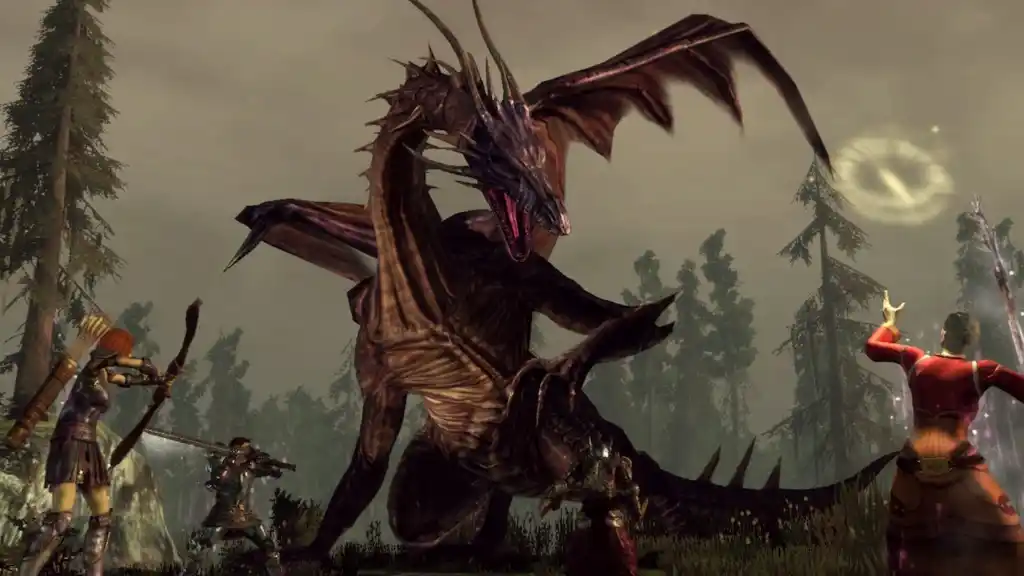
One of the biggest challenges facing open-world RPGs is establishing an emotional connection before the player has spent dozens of hours exploring. Large maps, extensive quest logs, and cinematic introductions can create an immediate sense of scale, but scale alone doesn’t make a setting feel personal. Dragon Age: Origins takes a more grounded approach by introducing players to a small corner of its world first. Players meet people, encounter local problems, and discover the social structures affecting their character.
This structure also makes the transition into the main story more effective. When the introduction converges with the main narrative and the player joins the Grey Wardens, they bring their own sense of understanding to the plot. The world becomes more personal because you existed before the world relied on you to save it. Although the different beginnings eventually lead toward a shared narrative, their differences help explain why players might interpret the same events in different ways.
Modern RPGs don’t need to copy Dragon Age: Origins exactly to learn from its design. But I’d love to see more openings take this approach and establish the stakes before making them your responsibility. Developers should consider whether players would benefit from experiencing a character’s history instead of merely reading about it. Dragon Age: Origins showed that a protagonist’s background could be an actual gameplay experience, not just a selection made in a character creator, and more RPGs should take this idea seriously.
More Gaming
-

Courtesy of Rockstar Games -
Image Courtesy of Bethesda Softworks