When I was younger, my laptop could barely run Avalanche’s seminal open-world action game, Just Cause 3. It was to my dismay that the chaos and carnage unfolding on my screen as I blew up endless arrays of explosive barrels and zipped through the air on my grappling hook ran at around 10 frames a second. Yet, despite the poor performance, I found myself completely and utterly entranced by the experience and sunk more hours than I would ever dare to nowadays into it.
Videos by ComicBook.com
I’ve recently been reflecting on this memory, and it made me curious to see what Avalanche had been up to since Just Cause 3 was released, and indeed what it had produced before it. Sadly, in 2025, Xbox quietly and unfortunately canceled Avalanche’s highly-anticipated game, Contraband, despite it once being advertised as a big exclusive for the platform, rendering its recent efforts redundant. Yet that wasn’t the cancellation that caught my interest, as a recent interview about Avalanche’s ill-fated fantasy RPG, AionGuard, showcased not just how ahead of the curve the studio once was, but also the industry’s bizarre fear of ambitious fantasy games.
Avalanche’s AionGuard Was Allegedly Just Like Crimson Desert
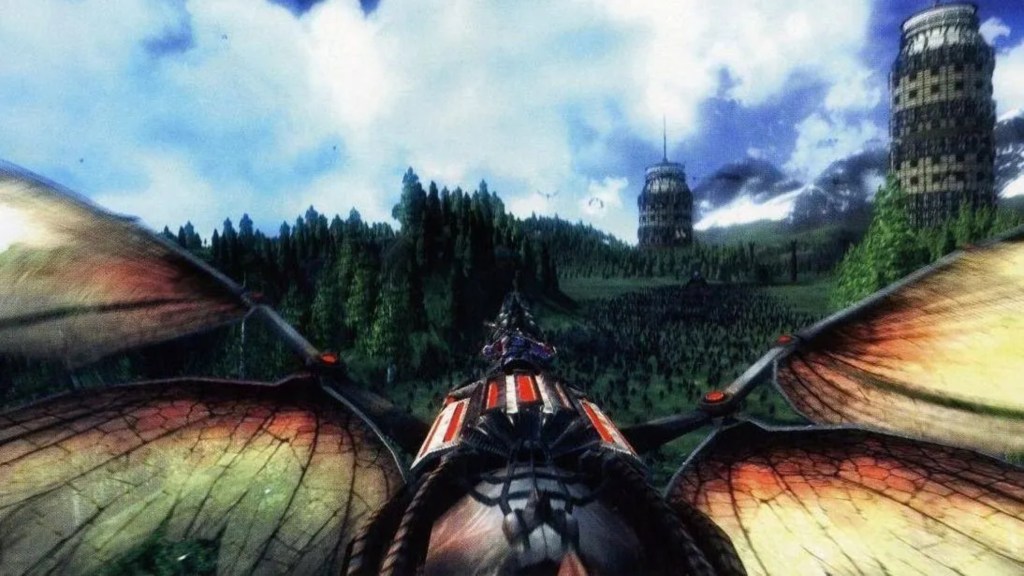
Avalanche’s co-founder, Christofer Sundberg, recently spoke to PC Gamer about a canceled project the studio had been working on in the 2000s titled AionGuard. I personally have no memory of it, despite the game being rather heavily marketed, even garnering a huge spread in an issue of the popular UK gaming magazine, Edge. Yet, the way Sundberg talks about it, AionGuard sounded like it was going to be not just an ambitious fantasy RPG, but an experience well ahead of its time.
Sundberg told PC Gamer that AionGuard “had everything that [he’d] seen from Crimson Desert in the plans for that game.” The few pieces of marketing materials that were released for the game showcased players riding on dragons, and Sundberg revealed that it involved conquering strongholds in massive battles akin to the scale seen in the Just Cause games. It isn’t hard to see the comparisons between Crimson Desert’s vast sandbox and what Avalanche was trying to achieve all the way back in 2009. Sadly, according to Time Extension, who spoke with the former VP of Disney Interactive Studios, Martin Alltimes, Disney pulled funding from the game, leaving Avalanche with no other options.

We’ll never get to play AionGuard, nor have the chance to see if it could have become one of the greatest fantasy games of all time, and that’s a genuine shame. There was clearly potential here, and Avalanche’s ambition and commitment to impressive scope and scale would likely have led to something pretty incredible. However, Avalanche’s grand ambitions weren’t really the problem here, as it seems like Disney simply altered direction after a change in leadership and pulled funding from its more adult-oriented projects. Nevertheless, its cancellation reminded me of another famously ambitious fantasy game that was pulled long before it had the chance to prove itself, and that got me thinking about the industry’s apparent reticence to produce fantasy RPGs.
AionGuard’s Cancellation Illustrates An Unwillingness To Make Fantasy RPGs
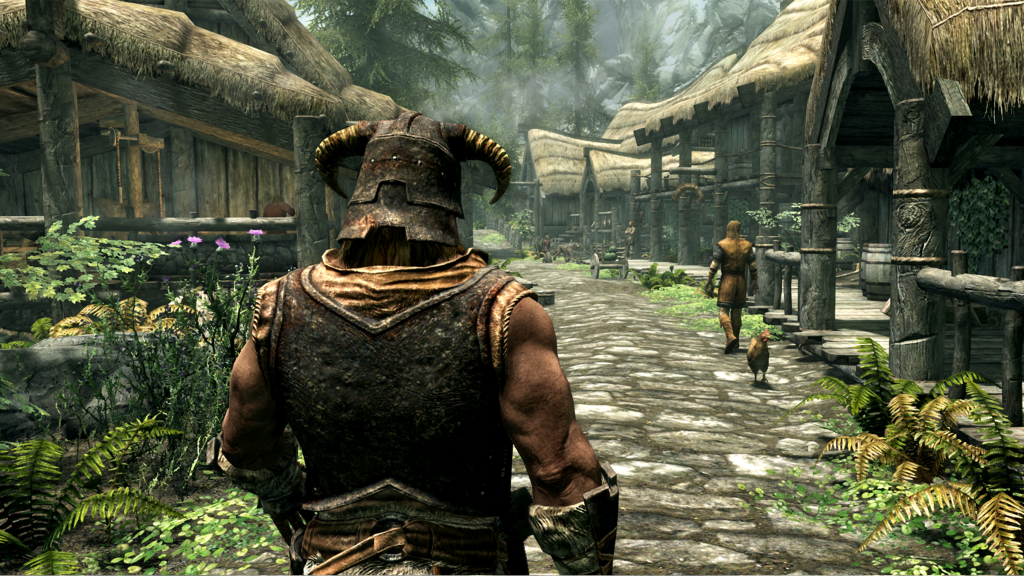
In the early 2000s, around when AionGuard was in active development, fantasy RPGs were all the rage. We saw everything from ambitious AAA open world titles like Oblivion and Fable to AA games like the Elder Scrolls killer, Two Worlds, and Kingdoms of Amalur. However, after a certain point, the industry just stopped making open-world fantasy RPGs, choosing instead to focus on more grounded or even sci-fi experiences. Sure, we still got the occasional fantasy RPG, with The Witcher 3: The Wild Hunt and Dragon Age: Inquisition satiating fans during the 2010s. However, the frequency at which we got them diminished significantly, especially within the AAA scene.
Even Bethesda, which, until 2011, had been the predominant purveyor of this specific type of experience with its Elder Scrolls series, seemed to abandon it in favor of Fallout and later Starfield. Over 15 years have passed since Skyrim was first released, and we’re likely still several years away from The Elder Scrolls 6 materializing. It isn’t as if there weren’t developers trying to create fantasy RPGs during this time, but whenever one did, it would seemingly be cancelled for one reason or another. One of the most heartbreaking game cancellations came in the form of PlatinumGames’ Scalebound, an epic action-focused fantasy title that sadly never saw the light of day due to clashing visions, a change in console generations, and a lack of developer experience.
One can’t even necessarily blame budgetary constraints, as it isn’t as if the open world genre as a whole ceased to exist. Rather, it felt like between 2010 and 2020, despite the overwhelming success of Skyrim, the industry simply felt there wasn’t the room for fantasy RPGs as there once had been. Far Cry, Assassin’s Creed, and later linear narrative-driven games popularized by PlayStation’s first-party studios became all-consuming. It baffles me that this was the case, especially considering not just the potential fantasy open-world RPG games held, but also the general popularity of the genre as a whole. Fortunately, things appear to be changing, at least ever so slightly.
Fantasy RPGs May Finally Be Making A Comeback
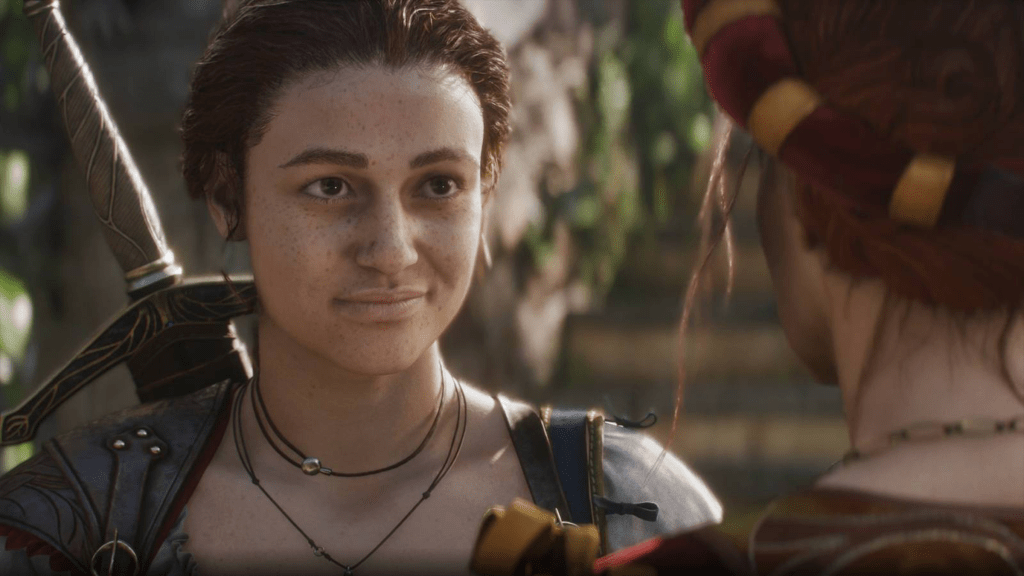
To be clear, it isn’t as if fantasy RPGs disappeared entirely. Between 2010 and 2020, we got the aforementioned Inquisition and Witcher 3, in addition to Dragon’s Dogma, Dark Souls, and the Lord of the Rings Shadow of series. However, there was a distinct absence of the tentpole fantasy franchises that once dominated the genre, and the diminishing presence of AA developers meant that the likes of Gothic, Two Worlds, and Kingdoms of Amalur disappeared almost entirely. Furthermore, developers from Korea, China, and Japan, who took inspiration from their own cultures rather than Western fantasy tropes, began to dominate the industry, leading to a rise in anime-inspired gacha games and the likes of Black Myth: Wukong.
Of course, things are changing somewhat. While the industry has gotten significantly more diverse, and for the better, offering a vast swathe of experiences that were simply not possible back in the 2000s when AionGuard was at the height of its development, we are seeing a slight return to the fantasy RPG as it was once known. Fable is making a comeback in 2026 with the Playground Games-developed reboot, and Dragon Age: The Veilguard saw that iconic series return, even if it didn’t go too well; Baldur’s Gate 3 popularized the CRPG genre again and brought back an appetite for D&D and Tolkien-esque fantasy, and The Witcher is getting a new trilogy set to release over six years; Crimson Desert has also showcased how popular sprawling fantasy worlds can be, and even Assassin’s Creed has gradually begun to embrace its fantastical elements a little more.

Still, we’re a long way off the fantasy RPG-dominated heights of the early 2000s, and I suspect we’re unlikely to ever return to that era. That is perhaps why the loss of AionGuard hurts so much, as games like it from studios like Avalanche typically don’t get made these days. Perhaps if we can return to an era in which AA development was more viable, where games didn’t cost $300 million to make, where games didn’t need to play it safe as the return on investment wasn’t so astronomically high, and where the ambitious likes of AionGuard were possible, then we may see the fantasy RPG genre as it was in the early 2000s rise once again. However, sadly, I somehow doubt that will ever be the case, at least any time soon.
What do you think of AionGuard’s cancellation? Leave a comment below and join the conversation now in the ComicBook Forum!
Most Viewed
-

Courtesy of Eight-Bit -

Courtesy of Crunchyroll -

Courtesy of Kadokawa / Shosetsuka ni Naro -

Image Courtesy of Marvel Comics -

Image Courtesy of Netflix