Back in 1983, Sega did something different with its arcade games by using the relatively new technology of LaserDiscs to store most, if not all, of a game’s graphics. This was a notable achievement in video game design when the first LaserDisc game, Astron Belt, debuted in Japanese arcades in May ‘83. This was the same year that games like Pole Position were dominating arcades worldwide, but Astron Belt was very different. Instead of being limited to a handful of colors and rudimentary graphics, LaserDisc games featured full-motion video and real-time 2D graphics.
Videos by ComicBook.com
To call LaserDisc games innovative doesn’t come close to describing their capabilities. Using a LaserDisc in this manner proved revolutionary, and several outstanding games followed, including Dragon’s Lair, Space Ace, and Mad Dog McCree, to name a few. These functioned as interactive movies, where a player input controls at specific points, often indicated by a highlighted object, which triggered a specific clip. These came with almost no delay whatsoever, and LaserDisc games appeared to be the next wave in arcade gaming. Despite this, the concept fizzled out after some daring innovations, and it disappeared.
LaserDisc Games Nearly Took Over the Industry
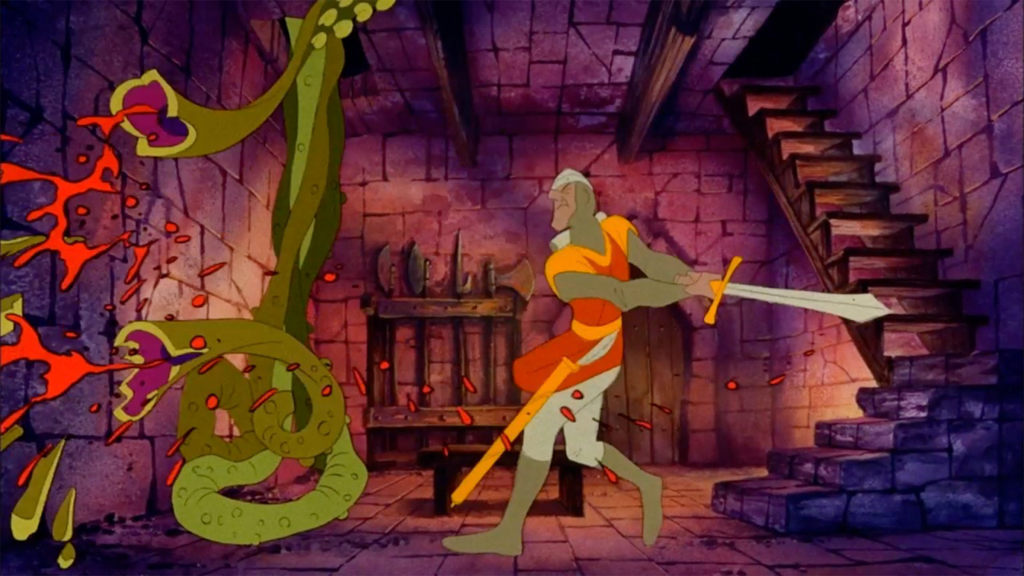
When arcades started offering games like Space Invaders and Pac-Man, few could have imagined that, only a few years later, they’d be playing interactive movies. Still, that’s what happened, and the novelty of these games’ design made them incredibly popular. There’s a scene in Stranger Things Season 2, where the kids scrounge for quarters to go to their local arcade to play Dragon’s Lair, which is how I remember the ’80s. It was the first game to cost two quarters, and while it’s incredibly difficult, it’s also a blast to play. It also didn’t hurt that legendary animator Don Bluth animated the game’s film.
More games followed, including Space Ace, which Don Bluth also animated, and these were ported to numerous systems in the years that followed. Other notable titles include Firefox, Cliffhanger, Cube Quest, Cobra Command, and many more. Sega continued innovating with its LaserDisc games when it released Time Traveler in 1991, the first arcade cabinet billed as a holographic one. It displayed an image above a flat, black glass that appeared to be a proper hologram, and because it was derived via full-motion video on a LaserDisc, it looked amazing. That said, the game wasn’t great, but as a concept, it was innovative.
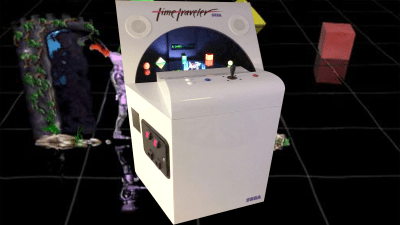
While these innovations were popular at the time, LaserDisc games faded into obscurity and are now gone. There are numerous reasons for the decline, the most obvious being the introduction of digital storage media and more robust optical disks such as CD-ROMs and DVDs. These employed similar mechanics but diverged from the full production value of earlier examples like Space Ace. Another reason was cost: LaserDisc players weren’t cheap, and it wasn’t inexpensive to produce an entire animated movie or live-action film for a single game that pulled in $0.50 per play. Being too expensive and difficult to maintain was ultimately what brought down LaserDisc games.
LaserDisc Games Had Their Time in the Sun
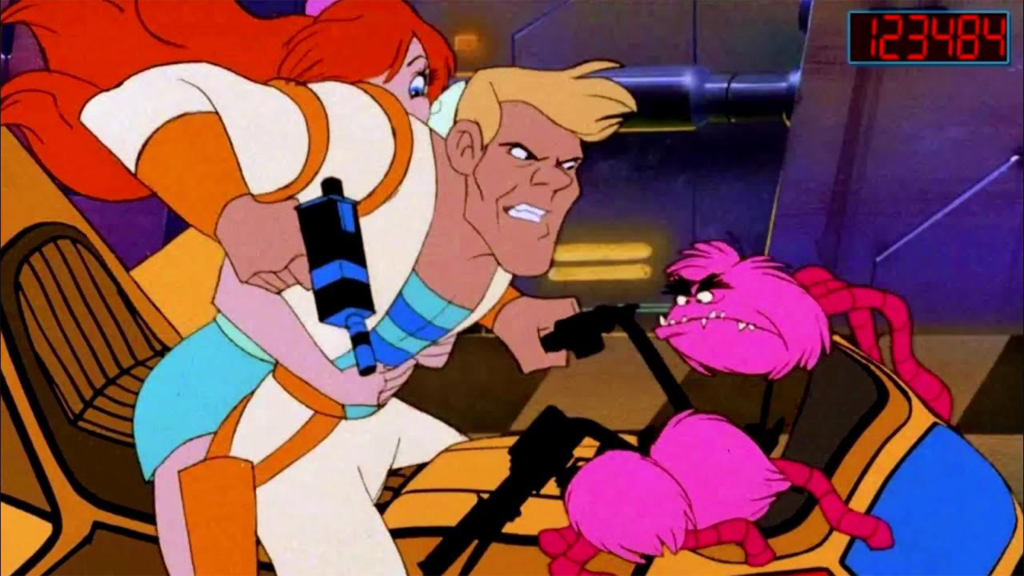
While they were incredibly innovative, many LaserDisc games were well-produced and entertaining, but they came and went relatively quickly. Modern games have adopted some of their base premises as full-motion video became easier to integrate into new titles. Still, it’s more common today for cutscenes to be rendered in CG rather than fully filmed productions, so that aspect has largely disappeared. This kind of thing happens in video games; a new technology comes along, completely changes how people think about the media, and then it’s replaced, or the public loses interest. At least there are plenty of modern re-releases of some exceptional LaserDisc games, so they haven’t entirely disappeared.
What’s your favorite LaserDisc game? Leave a comment below and join the conversation now in the ComicBook Forum!
More Gaming
-

Image Courtesy of Xbox Game Studios