The Pokemon series has remained one of the largest and most popular franchises in video game history for decades, and it has seen a lot of change over the years. Each Generation typically added and removed things, keeping the experience fresh while staying true to the core gameplay loop. However, one of the biggest changes happened to Pokemon 13 years ago, and I honestly can’t say if it was for the best. This change came with Pokemon X and Pokemon Y, where Kalos and the 6th Generation, and while myself and many fans were thrilled to see it on launch, looking back leaves me less sure it was the right choice.
Videos by ComicBook.com
13 years ago, Pokemon X and Y left the 2D visuals behind and fully embraced 3D graphics for the first time when it came to the mainline games. There’s certainly no denying the incredible success Pokemon has enjoyed since Pokemon X and Y. Subsequent generations have introduced hundreds of new creatures, expanded the possibilities of exploration, and experimented with everything from open-world environments to entirely different approaches to catching Pokemon. But the company has shown the 3D transition to be incredibly lazy, both in how it feels in modern games and in the reusing of old models.
Pokemon X and Y Changed the Franchise Forever
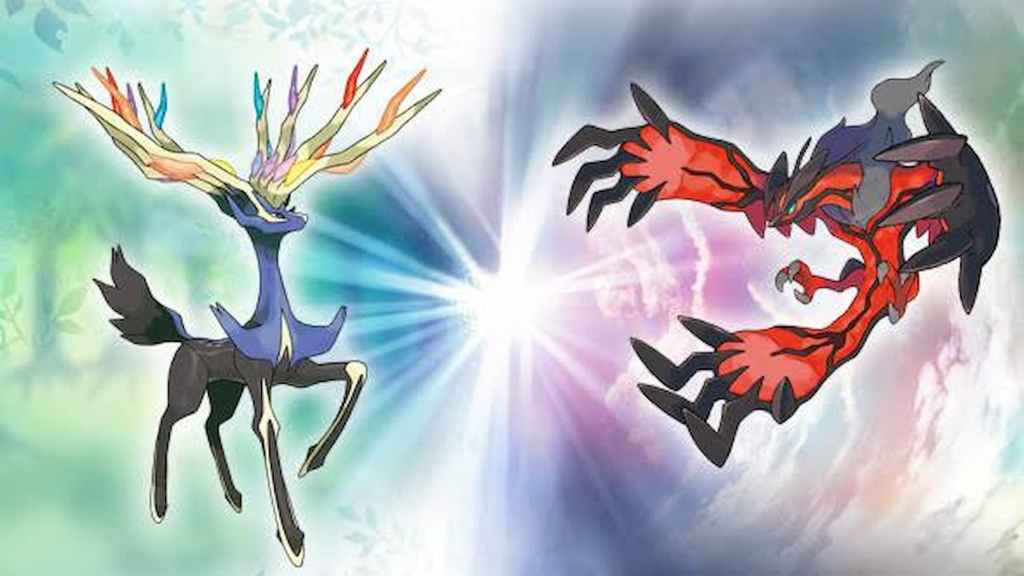
When Pokemon X and Y launched on October 12, 2013, they became the first mainline Pokemon games to feature fully 3D Pokemon models. This was an enormous technical achievement, allowing players to see their favorite creatures from different angles while introducing more elaborate battle animations. For longtime fans who had grown accustomed to static or lightly animated Pokemon sprites, seeing these creatures brought to life in three dimensions was genuinely exciting.
However, that transition also introduced a problem that has followed the franchise for years. Many of the models introduced in Pokemon X and Y established the visual foundation for subsequent games, with familiar poses and animations continuing to appear across multiple generations. Although Game Freak has updated models, textures, and animations over time, certain Pokemon still look remarkably similar to their Nintendo 3DS counterparts. This has advantages, particularly when dealing with a roster containing more than 1,000 creatures, but it also says something about Game Freak’s development practices.
One frequently discussed example is Typhlosion, whose older sprites emphasized the flames erupting from its neck. In Pokemon X and Y, its standard battle model often appeared without those flames, making the Fire-type Pokemon look noticeably less intimidating. Although later games have made improvements, it highlights the issues with 3D models, especially when they are recycled rather than rebuilt. The transition sometimes sacrificed the exaggerated expressions and distinctive poses that made individual Pokemon so memorable.
Pokemon’s Older Sprites Had More Personality

There’s something special about returning to Pokemon Black and White and watching Pokemon move through their animated battle sprites. Unlike the earlier generations, which largely relied on static images during battles, the fifth-generation games featured constantly moving creatures with distinct animations. This often feels like the sweet spot for me and other fans. The sprites weren’t perfect, and some of the animations looked awkward, but it felt like the best modern interpretation of Pokemon’s original look.
What makes these older designs so appealing is how effectively they communicate each Pokemon’s personality. Consider Feraligatr, whose aggressive stance and exaggerated features make it appear genuinely threatening, or Dragonite, whose cheerful expressions help reinforce its friendly appearance. When I look at today’s 3D models, that personality is replaced with a static idle animation that really isn’t any different between any Pokemon. These improved in some areas, but ultimately feel lifeless compared to what we had.
The frustrating part is that Pokemon has already demonstrated how effectively it can combine detailed environments with traditional sprite-based artwork. Pokemon Black and White combined environments with dimensional depth while still being pixel-art. Game Freak could have continued refining them alongside its newer visual approach. My dream game would be seeing these classic sprites and visuals but with modern technique, almost similar to Square Enix’s HD-2D art style.
Pokemon Needs to Bring Back 2D Sprites, Even if It’s Just for One Game

I’d love to see Game Freak experiment with a modern 2D game. It could forego the current open-world format of Pokemon Scarlet and Violet and the upcoming Pokemon Winds and Waves and go back to a more linear adventure. The company could even remake Pokemon X and Y but use a 2D style, similar to how Pokemon Diamond and Pokemon Pearl transitioned from 2D to 3D in their remakes. Players could explore Kalos and see the world and its characters in a completely new way.
Square Enix has already demonstrated the appeal of combining traditional pixel art with modern graphical effects through games like Octopath Traveler and Triangle Strategy. Their environments incorporate lighting, depth, and visual effects while retaining the charm of classic role-playing games. Pokemon could pursue a similar approach without necessarily copying that exact aesthetic. Game Freak and The Pokemon Company could even experiment with a spin-off to test the waters.
None of this means Pokemon should abandon 3D graphics entirely. Pokemon Legends: Arceus and Pokemon Legends: Z-A have been an absolute blast, and a large part of that is thanks to their 3D visuals. But when I want to replay old games, I am always drawn to sprite-based pixel-art titles even if they feel dated. But now, thirteen years after Pokemon X and Y changed the series forever, Pokemon has an opportunity to embrace both approaches rather than treating one as a replacement for the other. Sometimes, looking toward the future means recognizing what made the past so special.
More Gaming
-
Courtesy of Midway -

Image courtesy of Keen Games