The network test for The Duskbloods showed off a lot of what makes FromSoftware’s latest game work, including how it approaches battle royale formulas in its online matches. Called Dusk Battles, these eight player competitions are hardly as straightforward as something like Fortnite or Call of Duty: Warzone, encouraging players to be creative in the pursuit of a singular resource — Virtue. Players are eliminated between match Phases based on their level of Virtue, but it’s the variety in which Virtue can be gained that make the PvEvP game’s style so interesting.
Videos by ComicBook.com
Dusk Battles are divided into four Phases in The Duskbloods, with players able to select unique Bloodsworn characters and Kin allies before a match begins. Throughout Phase 1, players are expected to explore maps and face off against enemies, bosses, and even other players, collecting Virtue in the process. In between Phases 1 and 2, three players are eliminated, while the interim period between the third and fourth phases will “cull” two more players. During Phase 4, the last four players with the highest Virtue duke it out in a free-for-all PvP fight to determine the match’s victor.
The Duskbloods Battle Royale Multiplayer Matches Revolve Around Players Collecting Rare Virtue

To not be cut in the first Phases of a Dusk Battle, players need to reach a Virtue quota as they play, but there are no clear answers for collecting this resource at first. Unlike something like Elden Ring Nightreign, Virtue is in-game “currency” with plenty of variations, with multiple types that can be collected to boost your overall Virtue score by the time Phases end. Since everything is tied into Virtue, you have no penalty for dying, you just loose an opportunity to gain Virtue that another player might gain instead.
This makes the game less PvP focused, instead treating character death as a way to prevent others from getting an upper hand. For example, killing a randomly generated boss on a Dusk Battle map grants you a big amount of Repulsion Virtue, but only to the player that lands the killing blow. You could wait for another player to reduce a boss’ health, then eliminate that player and steal the boss kill to gain the Virtue they would have received. The variations of Virtue is what makes it so interesting, as it comes in several shapes and sizes.
Players can pursue different tasks tied to Virtue to collect it in varied ways, from killing enemies to solely hunting other players in tense PvP encounters. Since the multiplayer of The Duskbloods depends on Virtue, which type you go after is crucial to your overall strategy for reaching the last Phase of a Dusk Battle. Among the Virtue you can pursue, here are a few examples:
- Repulsion Virtue – Defeat bosses of all kinds, including Trespasser threats on the map.
- Commendation Virtue – Perform small feats, such as killing a big number of standard enemies or collecting more of a certain item more than anyone else.
- Flame Virtue – Discover a purple throne with a corpse on it and be the first person on the map to touch it. This Virtue is only obtainable once, making it the rarest.
- Sigil Virtue – Complete character specific tasks based on what Bloodsworn character you’re playing as in a match.
- Sword Virtue – Defeat other players at Ritual Sites in PvP conflicts between Phases.
- Pledge Virtue – Activate golden symbols at Ritual Sites by activating other player Pledges, stealing their Virtue in the process.
- Event Virtue – Complete specific tasks based on random events that happen on the map during a Dusk Battle.
Multiple Types Of Virtue Encourage Various Gameplay Approaches Rather Than Clear Answers
Traditionally, battle royale games tend to devolve into mindless PvP conflicts that are determined by who found the best gear on a map or who got the jump on someone else. The Duskbloods‘ Virtue-focused approach is a hard shift in another direction, as player goals aren’t necessarily rewarded by hunting down other players alone. You might want to put your efforts solely on gaining Repulsion Virtue by slaying bosses, designing your entire Bloodsworn build into high stagger damage to make boss battles fast and effortless.
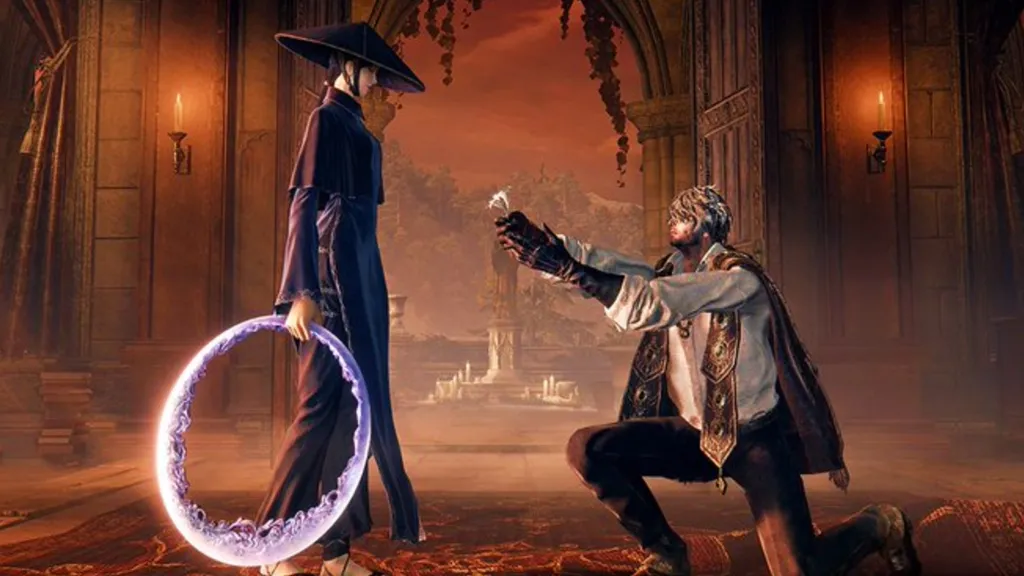
On the other hand, you could forge temporary Alliances with another player to fulfill Sigil Virtue requirements, teaming up with someone else to gain other types of Virtue easier. Although Alliances share Virtue, it adds an extra layer to the strategy of The Duskbloods every match, making each game feel unique. For example, one source of Virtue is the Sigil of Love, which requires you to propose marriage to a rival character to possibly become “lovers” with that player. Having this as an option completely changes how you engage with a Dusk Battle, offering something different than constant PvP conflict.
Emergent Strategies Instead Of Forced Conflict Makes Competition Feel Natural When It Happens

The nature of Virtue makes it a resource everyone is desperate to have, making those “culling” sections between Phases feel far more competitive than the other parts of a Dusk Battle. Although PvP was possible in Phases, it was less valuable than pursuing easier types of Virtue. As a result, this turns the final PvP struggles to steal Virtue or gain just enough to be ranked above another player into intense battles, with victory feeling very satisfying.
Gaining a little bit more Virtue than your opponent to stave off elimination for another Phase is a great feeling, built up by the tension of the resource’s importance. Among FromSoft’s large collection of games, I feel like the Virtue system in this one is likely the most innovative when it comes to their attempts at multiplayer in Soulsborne-style titles. The competition in The Duskbloods is certainly chaotic, but it feels like a natural progression of the pursuit of Virtue, with clearly defined goals leading to less randomized outcomes that oftentimes make the battle royale genre frustrating.
More Gaming
-

Courtesy of NetherRealm Studios -

Courtesy of Rockstar Games