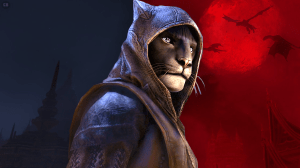
We’ve seen it happen all too often. A game gets announced with a flashy reveal, fans get excited, and the developer goes into crunch mode. Yet, no matter how much hype there is, some games fall into the trap of becoming vaporware: fascinating projects with ambitious premises that seem destined to never release. That was the case for this bizarre, half-mythical RPG focused on cats. Players only ever caught glimpses of scattered concept art, cryptic posts, and tiny hints about a project that seemed too weird, too ambitious, and too experimental to ever see the light of day.
Videos by ComicBook.com
But now, Mewgenics has an actual release date after being revealed 14 years ago. Edward McMillen is no stranger to weird, but a sprawling, turn-based cat-breeding roguelike RPG seemed so out of left field that fans aren’t surprised it’s been stuck in development for this long. When the game releases on February 10th, 2026, it has the potential to be a genre-bender with enough systemic depth to reshape the future of roguelike design.
Mewgenics Might Be One of the Weirdest Games (In a Good Way)
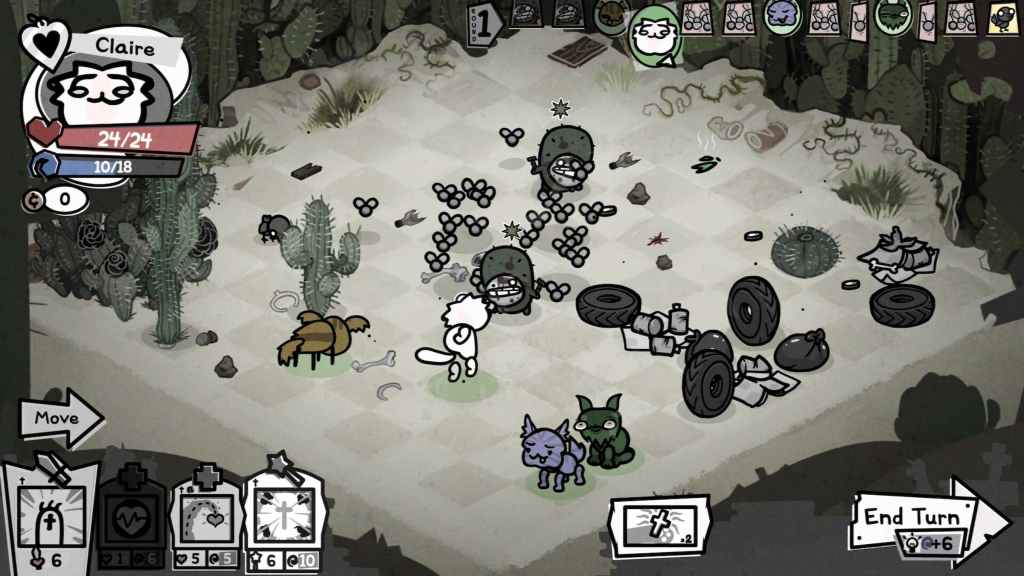
Mewgenics has always worn its weirdness proudly. Even in its earliest forms, the game mixed tactical RPG combat with genetics management, permadeath, unpredictable mutations, and what can best be described as weaponized cat chaos. But years of iteration have transformed it into something far bigger than a novelty. This is a roguelike where your team isn’t just a collection of units, but one where you breed, mutate, upgrade, fuse, and evolve your cats in dozens of unexpected ways to create the purrfect feline force.

Each cat has traits. Traits influence personality. Personality affects combat. Combat yields mutations. Mutations feed back into breeding. Every run becomes a bizarre, branching simulation of feline evolution gone off the rails. There are over 1000 abilities and 900 items to consider while also keeping track of environmental effects. One moment you’re carefully planning synergies; the next you’re trying to manage a cat with spontaneous combustion issues and a hereditary tendency toward kleptomania. Mewgenics has so much variance thanks to these odd cats that every run feels different.
The real magic is how responsive the game feels. Because nearly every trait, quirk, and mutation interacts with others, even small decisions spiral into unpredictable yet meaningful outcomes. In a genre packed with run-based variety, Mewgenics aims for something deeper. And it works because it’s so unapologetically strange.
Binding of Isaac Proved McMillen Makes Weird Work
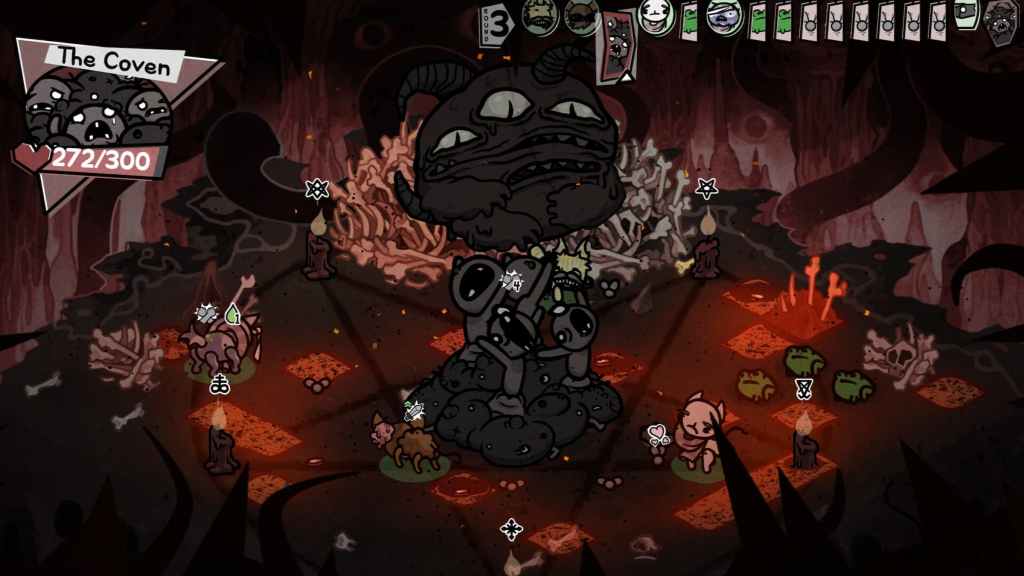
To understand why Mewgenics is generating so much excitement, you have to look back at The Binding of Isaac. When it launched in 2011, it started as a Flash experiment: a dark, twisted roguelike full of religious symbolism, grotesque humor, and wildly unpredictable item interactions. It went on to become one of the most influential indie games ever made, inspiring entire subgenres and proving that weird, deeply personal game design can resonate with millions.
McMillen has always thrived at the intersection of chaos and meaning. His games are built around surprising outcomes, emergent moments, and player-driven storytelling. Isaac wasn’t just popular because it was hard; it succeeded because every run felt like a strange, fragile accident, one only you experienced because of the changing nature of the game.
Mewgenics feels like the natural evolution of that design philosophy. It’s built from the same DNA: massive item pools, extreme build variety, surprising synergies, and a core belief that players create their own stories through systemic interactions. But where Isaac expressed that chaos through items and combat, Mewgenics expresses it through living creatures with personalities, genetics, emotions, and flaws.
The result is a game that feels more alive than anything McMillen has made before. These cats aren’t just pawns but characters. They’ll develop histories as they pass traits onto their offspring. They’ll grow and evolve. It’s Isaac, but with consequences that stretch across generations instead of a single run.
Roguelike Games Could Be Changed Forever Because of Cats
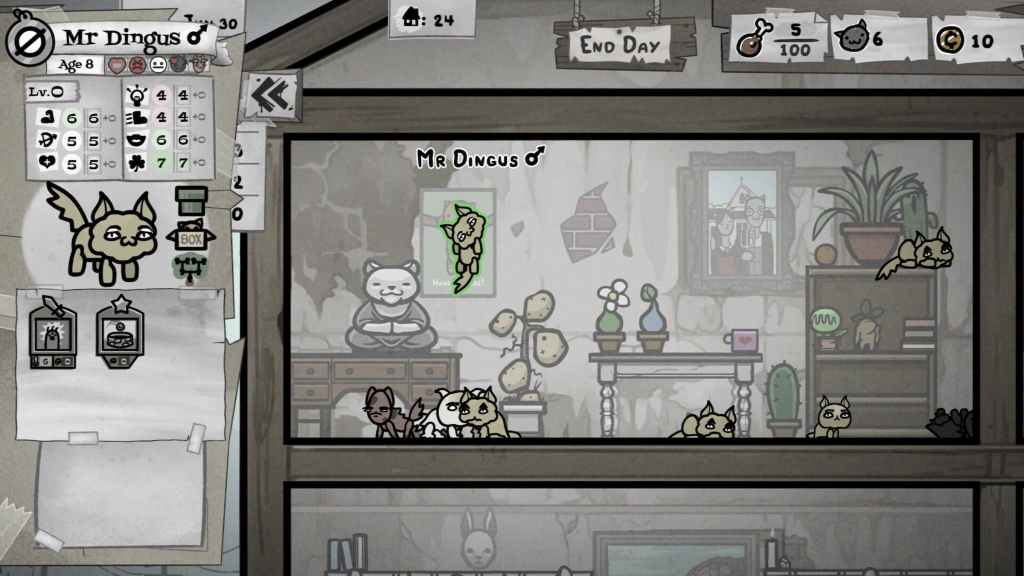
The roguelike genre has exploded over the last decade. Hades, Dead Cells, Slay the Spire, Darkest Dungeon, Risk of Rain, Rogue Legacy, and dozens more have turned procedural design into a mainstream powerhouse. But with growth comes imitation, and many modern roguelikes lean on similar formulas: random loot pools, skill-based combat, nonlinear progression, and meta upgrades.
Mewgenics could shake that formula in a way the genre hasn’t seen in years. Instead of focusing on loot, the game focuses on legacy. Instead of unlocking weapons, you alter genetics. Instead of optimizing a build, you optimize evolution. The result is a roguelike where diversity doesn’t come from item pools but from breeding possibilities.
If the game delivers on its promise, it could inspire a new wave of roguelikes, where characters aren’t static builds but changeable organisms shaped by player decisions. This goes beyond replayability. And because Mewgenics has been in development for 14 years: scrapped, rebuilt, redesigned, restructured, and finally arriving, it has an astonishing degree of depth.
No two runs will be identical, not because the game rolls random numbers, but because the ecosystem of traits is nearly limitless. This level of systemic variety is rare even in top-tier roguelikes. And it could become the benchmark for future developers looking to make their games feel truly unpredictable.
What do you think? Leave a comment below and join the conversation now in the ComicBook Forum!
Most Viewed
-

Image Courtesy of Ufotable -

Image Courtesy of Crunchyroll -

Image Courtesy of Toei Animation