2026 saw both a new mainline Resident Evil and Silent Hill, which are two of the most prestigious horror franchises in the industry. But horror games are known for thriving with low budgets, meaning there are a ton of smaller scary titles that haven’t gotten as much buzz as their costly counterparts. And many of these games can still hold their own against the genre titans, even if they’re not as flashy.
Videos by ComicBook.com
Here is an unranked list of seven of 2026’s more underplayed or underrated horror games that are perfect for the Halloween season.
7) Tenebris Somnia
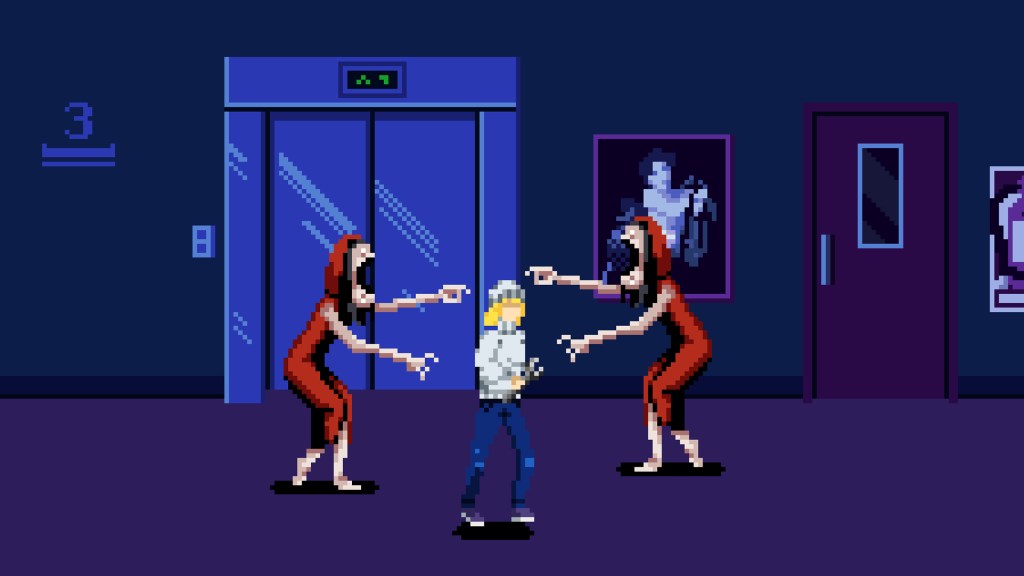
New Blood InteractiveTenebris Somnia is easily the weirdest game on this list. While most of the other games here can reductively be compared to Resident Evil in some way — and, to be fair, Tenebris Somnia has some Resident Evil-like threads in it — this title from Saibot Studios is a strange blend of live-action cutscenes and 2D retro horror that gives it its own style. And as incongruent as those styles might seem in theory, they gel beautifully in practice.
The throwback visual style only amps up the scares, as the lack of detail makes everything less real and more dreamy. The crunchy, shrill sound effects can also be jarring and often provide quite the jump scare when opening a new door. These parts contrast nicely with the well-shot live-action cutscenes that use solid practical effects and clever use of darkness to do a lot with a little. And while some of the full-motion sequences might initially seem as though they were made with generative AI, Saibot, thankfully, said it doesn’t like AI slop. It is still about hunting for keys and solving occasionally obtuse adventure game-like puzzles, but it has a lot of style and that carries it rather far.
6) Silver Pines
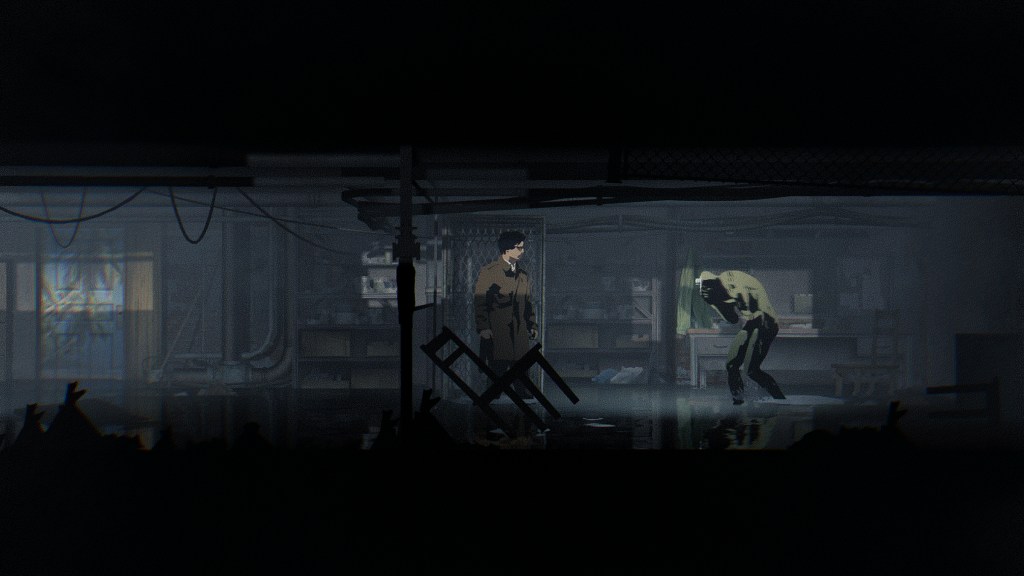
If Silver Pines sounds like it could have been an alternate name for Twin Peaks, that’s presumably on purpose. This Lynchian Metroidvania-ish game has the spooky, Pacific Northwest feel of David Lynch’s work and all the bizarre characters that comparison entails, which is pretty unique for the genre. While players will still be bumbling around a foggy town hunting for keys, figuring out clever logic puzzles without waypoints or overbearing hints, and managing scarce resources like just most other horror games, the wrapping helps set it apart.
The rotoscoped animation also plays a sizeable role in Silver Pines‘ charm because it gives the game such a distinct look. The PS1-esque visual style has its place, but it is notable when a non-AAA horror title opts to go down a different path with its visuals. Silver Pines does the standard throwback horror tropes well enough, yet it’s the presentation that takes up a peg.
5) End of Abyss
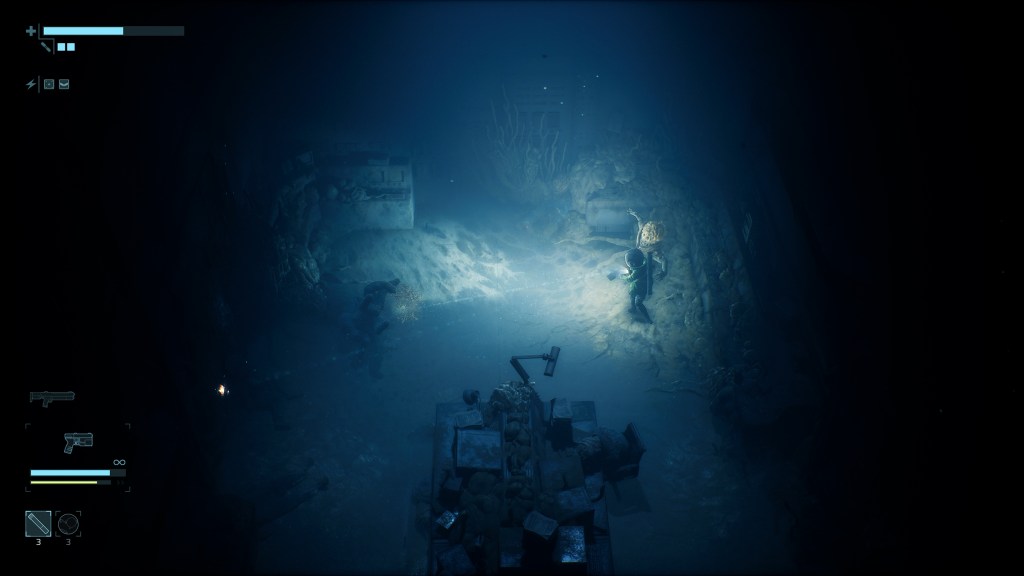
Because of its eerie vibes and fixed camera angles, End of Abyss is like a mix of the Little Nightmares games and old-school Resident Evil, an unorthodox pairing that ends up being a natural one. Tiptoeing around the facility’s haunted halls in order to track down keys and upgrades works well enough and is bolstered by its detailed locales and blue tint that makes everything feel that much colder. And even though the economy isn’t balanced well, the camera angle doesn’t limit gunplay but instead allows it to have a different feel when compared to many of its ilk. Players aren’t locked in place and will utilize a dual-stick control scheme that makes accurate shots a little easier to pull off, both of which separate it from the aforementioned retro Resident Evils.
End of Abyss launched in a rough state with its various bugs that made progression a headache in all sorts of ways. However, developer Section 9 Interactive has been heavily patching the title to the point where many of its earlier woes have been addressed. It seems as though more updates are coming, but these changes have allowed the game to better realize its potential.
4) RetroSpace
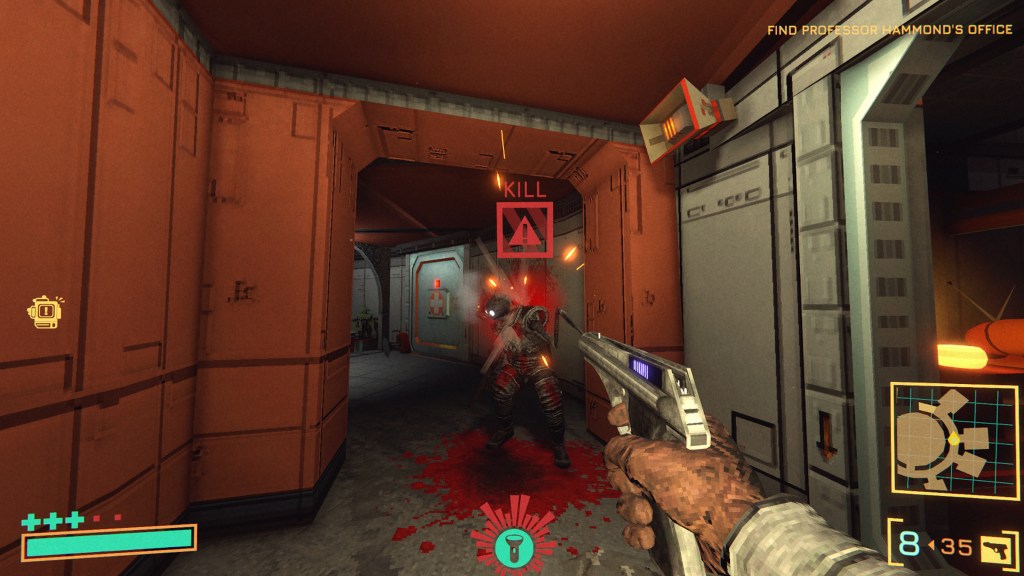
RetroSpace is the least horror-like game on this list, but it is adjacent to the genre, given its closeness to games like Prey and BioShock. Players are trapped on a mysterious vessel in space that has seen better days, and navigating its dark halls can be rather tense, although hardcore players probably should crank up the difficulty to truly feel the heat.
Problems often have multiple solutions, and it is up to players to figure out how to progress. Cautious players may stumble across a key that opens the door, while those who are more adventurous might come across a nifty vent that completely bypasses the need for a key. Even though the utter lack of direction can be frustrating — there are no mission markers here — the game’s more open immersive sim nature can often work in the game’s benefit because of how that process more intently engages the player. It’s not as deep of an immersive sim as its influences, but there’s just enough going on here. Of course, this spooky ship is also littered with odd bug-like humanoids who lurk in the dark. So even though it isn’t a straightforward horror game, it can still be rather tense.
3) Heartworm
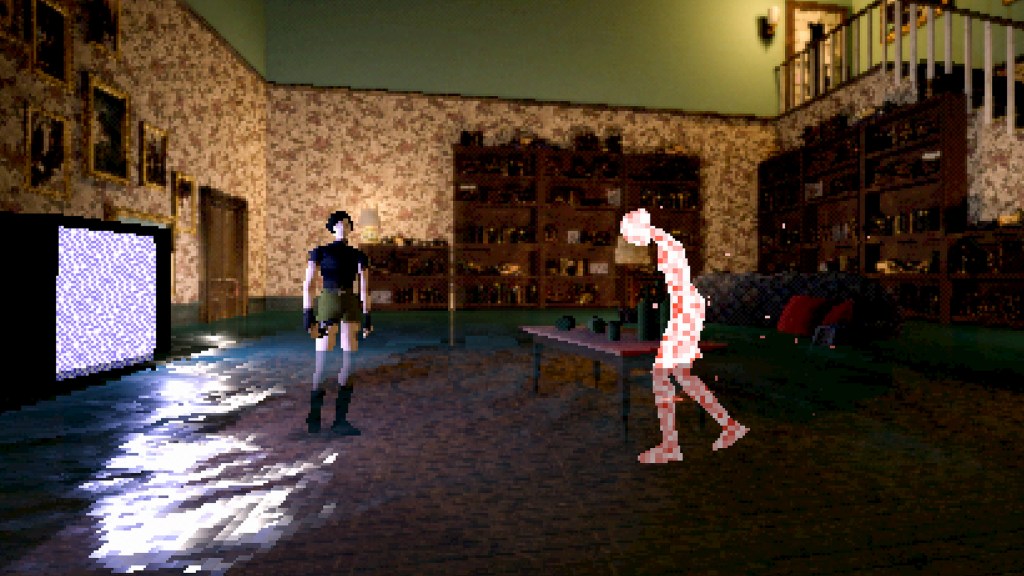
Heartworm is one of the many games reminiscent of the original Resident Evil trilogy, particularly when played with the optional tank controls and retro filter. But it is more than a rehash of genre tropes.
Heartworm‘s more human story and otherworldly feel evokes the Silent Hill games, while its weaponized camera calls in the Fatal Frame series. Instead of being about taking down a corrupt corporation hellbent on unleashing a deadly virus, Heartworm deals with grief and death. And instead of using a gun to dispose of its staticky threats, players point and aim a camera at them. There’s even an option to use an over-the-shoulder camera à la Resident Evil 4 or a fixed camera angle like the PS1 Resident Evil trilogy, although shooting a camera is much less satisfying than shooting a gun. Even with that slight shortcoming, its ability to take on more serious topics and provide some thick atmosphere without dragging on for too long both make Heartworm is a solid survival horror experience.
2) Ground Zero
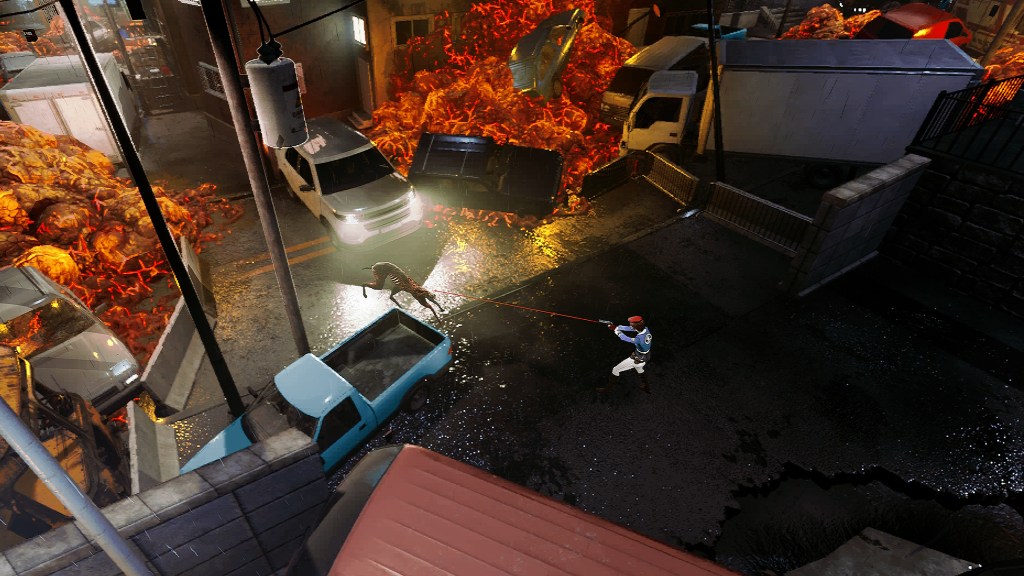
Ground Zero is yet another old-school horror game in the vein of the PS1 era of Resident Evil. There’s no getting around that and its selection of pre-rendered backgrounds. But it’s still got enough of its own flair and doesn’t feel like a mere retread.
For one, Ground Zero‘s South Korean setting is one wrinkle that changes the tapestry just enough, especially as one of its heroes is of South Korean descent. Gameplay-wise, though, its unique aiming gives players more control over how they blast infected beasts. Players aim manually but with a fixed camera angle, which is hard to adjust to, but yields more precision for those who master it. It even has a parry for those who want to get up close. With these two tricky mechanics, Ground Zero is able to evoke the terror that comes from the more clumsy parts of the retro Resident Evil games but allows for a sense of mastery those games couldn’t quite achieve. It is, however, let down by its length that diminishes the urge to replay it and experience its harder settings.
1) Reanimal
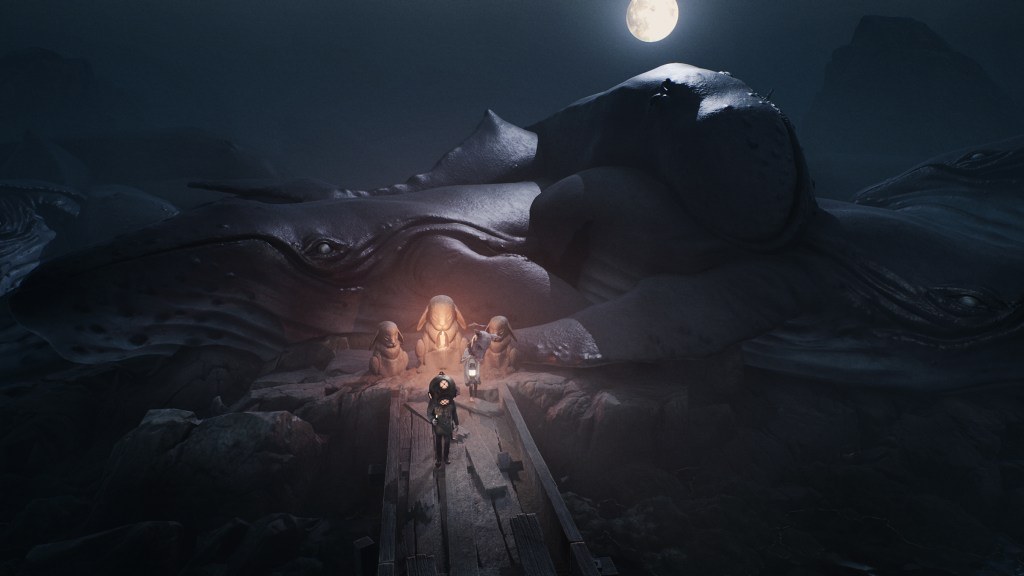
Reanimal is the second game on this list with a connection to the Little Nightmares series, but Reanimal‘s connection is more direct, as it is from the same team that developed the first two entries. And this DNA is clear right from the jump, given the camera angle, highly detailed diorama-like visual style, and how it stars children.
But these similarities don’t mean Reanimal is just a carbon copy of Little Nightmares. It is instead the best and most confident version of that formula with its stronger variety and more bombastic set pieces. Players are tasked with running between cover to avoid a sniper, piloting a tank, throwing harpoons at waterlogged freaks, perusing around a lake with a boat, running away from giant monsters, and more. It’s a tightly wound experience that’s never downright scary but always atmospheric and fitting of the season.
Which one of these smaller horror games have caught your eye? Are there any other smaller and more recent horror games that aren’t listed here? Tell us in the comments.
More Gaming
-

Courtesy of Bandai Namco