
Like any good TCG, Riftbound’s Champions come with their own strengths, flaws, strategies, and quirks, if luck of the draw is on your side. Riot Games has deliberately designed its League of Legends trading card game so that different Legends reward different play styles, experience levels, and, frankly, appetites for chaos. Some are built to teach you how the game works. Others? They’ll make your brain hurt, but hopefully while hurting your opponent.
Want more like this? Get the latest drops, ratings, reviews, and more with the ComicBook Gear Review newsletter — straight to your inbox.
Videos by ComicBook.com
Following a full hands-on game at PAX East 2026 and conversation with Jon Moormann, Senior Game Designer on Riftbound, here’s a breakdown of the best Champions for every type of player… from the person who just picked up the game because they love Arcane, to the grinder already eyeing Summoner Skirmish brackets.
The Beginner Pick: Jinx
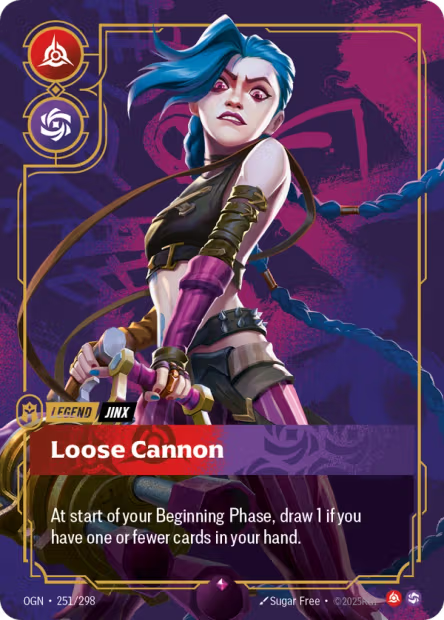
Best for: New players, League fans who’ve never touched a TCG, or anyone who wants to just play cards and have fun
If you walk into your local game store, hand someone a Riftbound deck, and want them to actually enjoy themselves, give them Jinx. She’s been the go-to recommendation since Set 1, because her core ability is one of the clearest, most satisfying feedback loops in the game.
When Jinx has one or fewer cards in hand, she draws an extra card at the start of your turn. That’s it. The ask couldn’t be simpler. Just play everything in your hand. Get it all out there. The deck rewards aggression and action, which means new players rarely feel stuck wondering what to do. The answer is almost always “play more stuff.”
The deeper layer, which reveals itself naturally as you get comfortable, is Jinx’s relationship with discard effects. A lot of her supporting cards let you discard from your hand to generate superpowered plays like spells that hit harder and units that enter the battlefield with buffs. You’re literally incentivized to empty your hand, and the cards around her give you interesting ways to do it.
“It goes very fast,” Moormann told me. “And she’s a very good way to learn how Riftbound works.”
The Competitive Entry Point: Vi
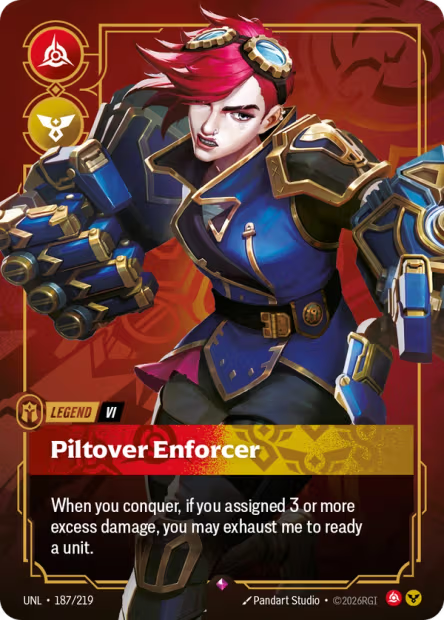
Best for: Players ready to think strategically, fans of big moments and power plays, and former Hearthstone or Pokémon TCG players looking to level up
Vi is where Riftbound starts showing its teeth. Her deck (which was the deck that I got to play in the Unleashed demo) is built around buffing your units to massive power levels and overkilling enemies by wide margins. Winning combats is fun, but the thrill of Vi comes from winning them so decisively that your battlefield effects chain together and the whole deck explodes in one glorious turn.
The Unleashed expansion gives Vi players access to some scary tools. The Arena Kingpin enters play ready (not exhausted like most units) and hands out +3 power buffs. Stack that onto an already-beefy unit and you’re threatening to one-shot things that looked safe only a turn ago. The battlefield Trapping Grounds pairs great with Vi’s conquest playstyle, generating Bird tokens whenever you deal enough excess damage (which is exactly what Vi is trying to do anyways).
Vi’s learning curve comes from figuring sequencing out. That means knowing when to attack, when to hold back and bolster, and how to read your opponent’s mana before committing. You need to constantly understand everything that is going on, but Vi rewards players who are starting to think a turn or two ahead. She punishes pure improvisation, but you’ll probably at least lose with her in ways that teach you something for your next match.
The Puzzle Box: Vex
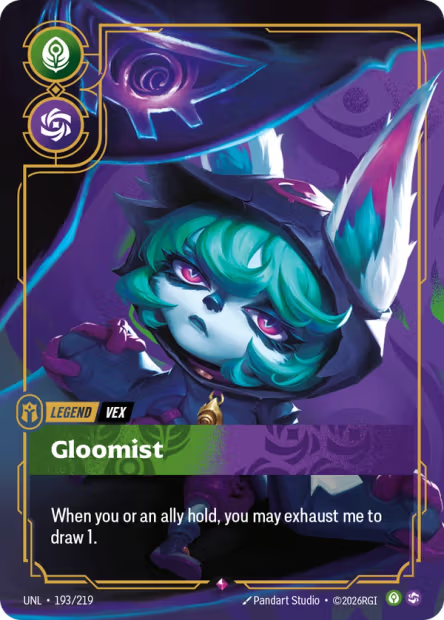
Best for: Control players, fans of disruption and denial, or anyone who enjoys making their opponent’s life miserable
Vex is the deck that made me feel like I needed a flowchart. Her playstyle is all about control. Stun your opponent’s units so they can’t deal damage, protect your base, and grind out points while the other player stares at their exhausted board wondering what just happened.
Her signature spell, “Shadow,” summons her one and only friend as a unit, which arrives ready and immediately stuns something at action speed. Her other tools follow the same pattern: “Existential Dread” stuns a unit for free (thanks to Vex’s cost-reduction ability), “Skyward Strike” can split its two effects to both move an enemy unit AND stun everything across different targets for maximum disruption. In our PAX East game, Moormann used that split to trigger two separate combats simultaneously, leaving me scrambling on both fronts.
The payoff for mastering Vex is watching a perfectly timed stun chain completely unravel your opponent’s best turn, which is ultimately how I lost my game with Moormann when I was only one turn away from a win. The ask is that you keep track of a lot of moving pieces from spell timing to stun windows to combat priority. Vex is arguably not a beginner deck. But she’s an incredibly satisfying one once you know how to use her.
The Set-Defining Newcomer: Ivern (Unleashed)
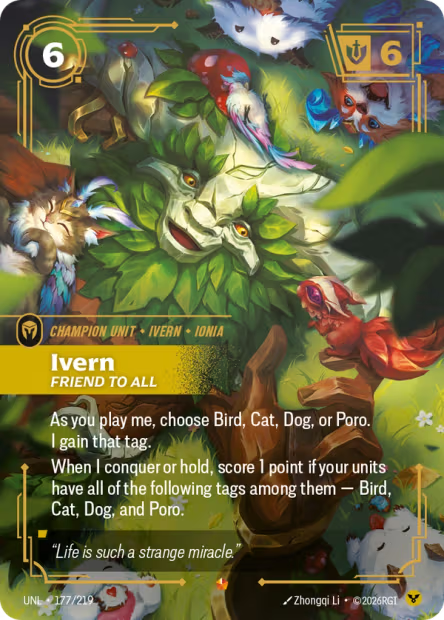
Best for: Flavor-first players, anyone who loves a theme deck, and League fans who main support or jungle
If Unleashed has a mascot, it’s Ivern. And the story of how he ended up in the set is all thanks to Moormann. After all, Moorman is (by his own admission) a deeply committed Ivern main. When the design team landed on a jungle theme for Set 3, he saw his moment. “This is Ivern’s time,” he said.
The challenge was fairly mechanical. Ivern’s in-game League identity is passive and pacifist, which isn’t an obvious fit for a card game built around combat. So the team asked a different question: who is Ivern as a character? Well, he’s a gentle giant who befriends every creature in the forest. And that became the deck’s entire design philosophy. Ivern in Riftbound is about assembling an army of pets: dogs, cats, birds, and burrows working together. It’s cozy, thematic, and according to Moormann, “It’s a lot of fun to play.”
Ivern won’t be the most powerful deck in the room. But if you’ve ever wanted to win a card game by sending a battalion of woodland creatures into battle, he’s your Champion.
The Jungles of Runeterra Are Calling
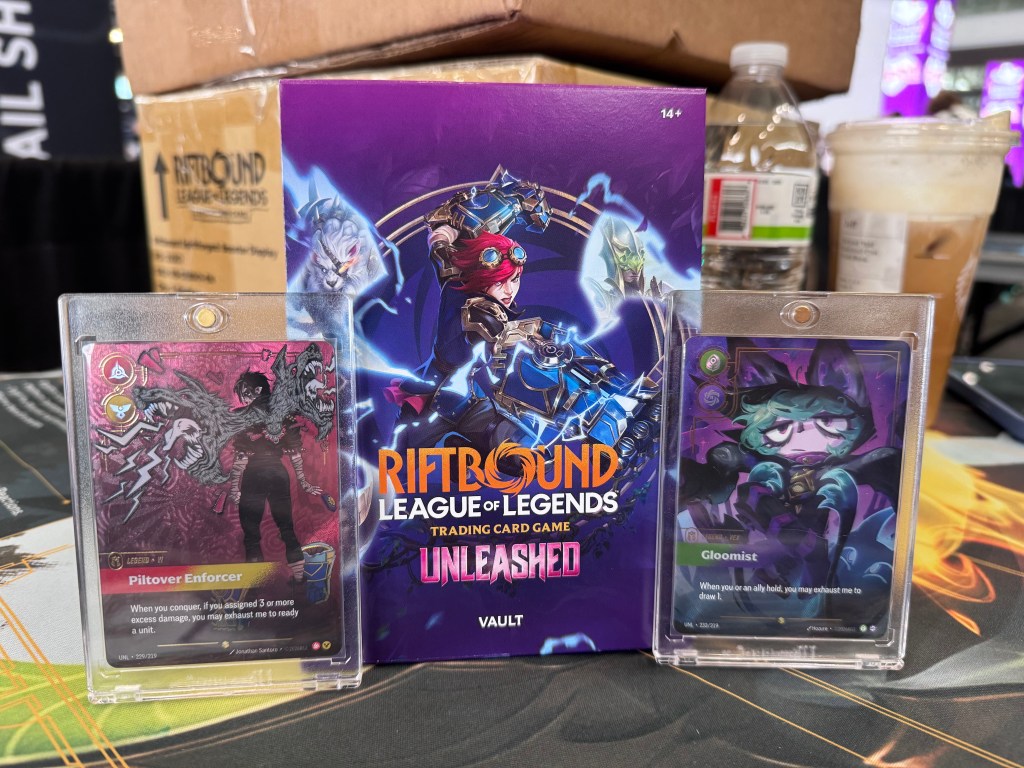
Riftbound has done something pretty impressive. It’s built as a game with a competitive ceiling that doesn’t punish you for being new. Jinx is the door. Vi and Vex are the first rooms inside. Ivern is the reminder that sometimes the best reason to play a card game is because the cards make you smile. There’s something for everyone here, and if you’re new to TCGs, Riftbound: Unleashed is a great starting place.
Riftbound: Unleashed is available May 8, 2026, with Summoner Skirmish tournament windows opening May 25 and June 22, 2026.
Whether you’re cracking your first booster pack or chasing Regional Qualifier points, there’s a Legend with your name on it.
More Gear
-

LEGO Star Wars Executor Super Star Destroyer -
Avengers: Doomsday Bitty POP! new figures and sets -

BoxLunch BOGO 30% off sale items -

Lara Croft: Legacy of Atlantis figure from McFarlane Toys -

Funko's new pre-orders include Marvel, Star Wars, Adventure Time, and more. -

LEGO new October releases -

New Funko Pre-Orders Sept 30 -

PlayStation 5 box for God of War Laufey
