
League of Legends was never really a game that captured me within its talons like other gaming franchises did. I played it YEARS ago, and fully understood the appeal. So much so, in fact, that that’s exactly why I didn’t play it. I knew that if I started fully committing to League, I’d become obsessed. I did that with World of Warcraft. I couldn’t afford to do the same with League… at least, not at that time in my life.
Want more like this? Get the latest drops, ratings, reviews, and more with the ComicBook Gear Review newsletter — straight to your inbox.
Videos by ComicBook.com
Fast forward to today, and League of Legends is an absolute powerhouse of a franchise, with everything from comics and TV shows to spin-off ways to play within its universe. That last element is especially poignant with me. I could very much still fall into playing League of Legends in the traditional sense. But after watching competitive players duke it out on the Arena Stage at PAX East 2026, I decided that 2XKO was my true entry point (as a big fan of fighting games). But just hours after making that decision, I had my appointment with Jon Moormann, Senior Game Designer of Riftbound—League of Legends’ answer for tabletop TCGs. I was hooked, as if ensnared by Ivern’s roots. The release of Riftbound: Unleashed couldn’t come soon enough.
And that day is here! Riftbound: Unleashed launches on May 8, 2026. The Riftbound team sent us some samples to check out, and while I didn’t hit every one of the cards I am chasing, Riftbound: Unleashed has undoubtedly sunk its teeth into me even deeper.
TL;DR—My Quick Verdict
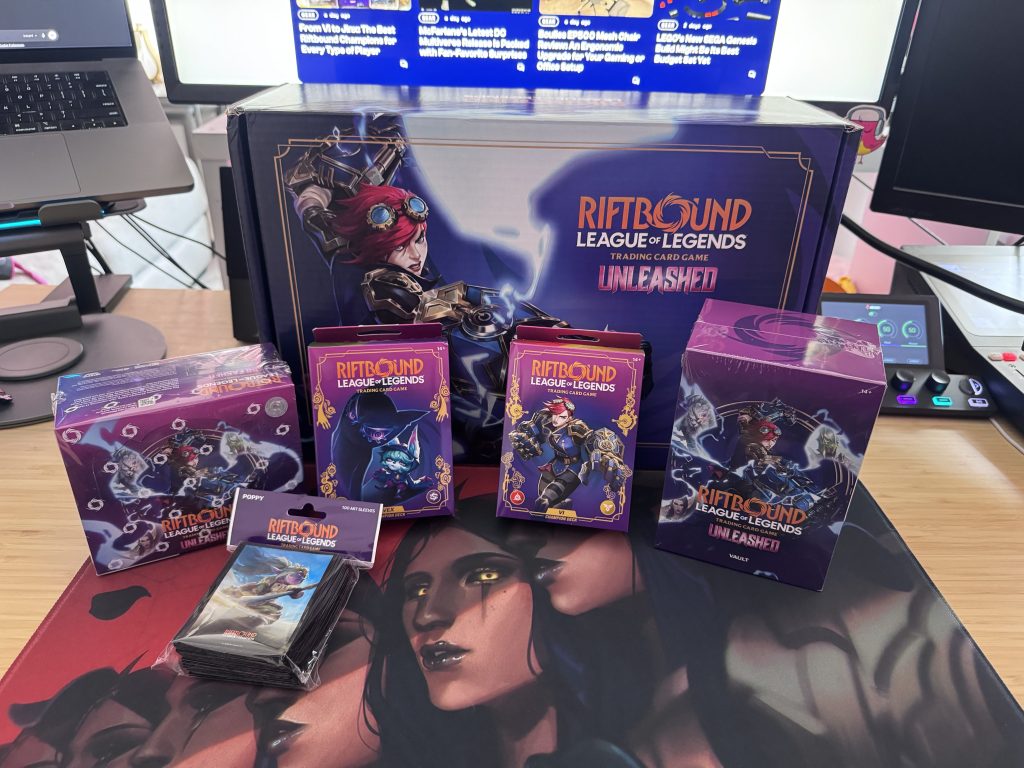
Riftbound: Unleashed is a great entry point for anyone with even a passing interest in League of Legends or TCGs in general. It’s the rare card game you can learn in a single sitting and still be improving at months later. That said, if you’re looking for a fully self-contained experience right out of the box, know that deck-building has a learning curve and some Champions ramp up in complexity faster than others. Its biggest strength is threading the needle between accessibility and depth, while its biggest caveat is that your experience varies significantly depending on which Champion you start with. Some decks are welcoming, others will make your head spin.
Riftbound: Unleashed at a Glance
- Best For: League of Legends fans curious about TCGs, lapsed TCG players looking for a new game, or anyone who wants a game that’s easy to learn but has competitive depth.
- Set Size: 219 base cards (238 including Overnumbers)
- New Mechanics: Ambush, XP, Hunt
- Champion Legends: Kha’Zix, Lillia, Diana, Ivern
- New Tokens: Baron Pit, Birds (with Deflect), Reflections, Sprites
- New Rarity: Ultimate Rarity—Baron Nashor appears in fewer than 1% of packs
- Available Products: Booster Box (24 packs), Vault, Vex Pre-Con Decks, Playmats, Sleeves
What Is Riftbound: Unleashed?
Did you notice the mentions of “talons,” “roots,” and “teeth” in the intro? Because that was very much by design.
Unleashed is the third set in the Riftbound: League of Legends Trading Card Game, and its entire identity is rooted (quite literally) in the deep jungles of Runeterra. This expansion leans hard into League’s rich jungle lore, introducing the four Champion Legends of Kha’Zix, Lillia, Diana, and Ivern. It’s a roster built around stealth, ambush, and the untamed wild, and that thematic throughline extends all the way down to the mechanics and card art (which is gorgeous).
The set introduces three major new mechanics. Ambush lets certain units crash into combat mid-showdown as a surprise reaction, perfect for champions like Kha’Zix, who thrive on catching opponents off guard. XP is a resource you accumulate and spend for unique benefits, feeding into a Levels system that evolves cards over the course of a game. And Hunt rewards conquering and holding onto battlefields, giving more aggressive players a consistent engine to power up. Together, these three systems layer onto Riftbound’s existing framework without feeling like a wall of new rules, surfacing surprisingly naturally through play.
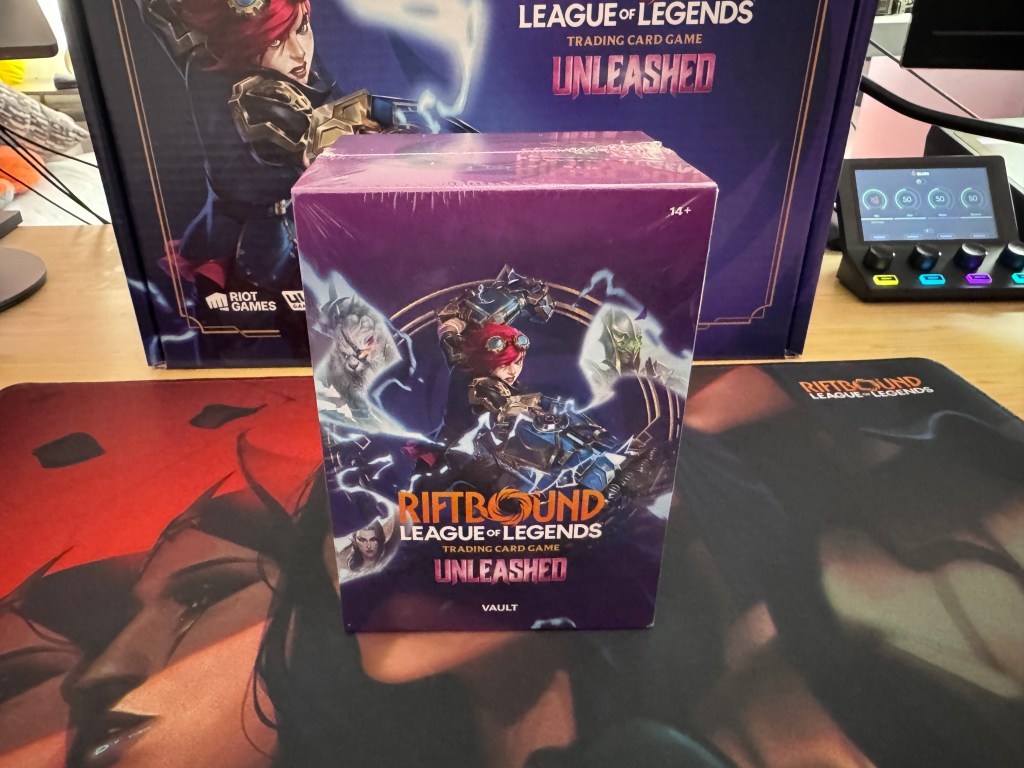
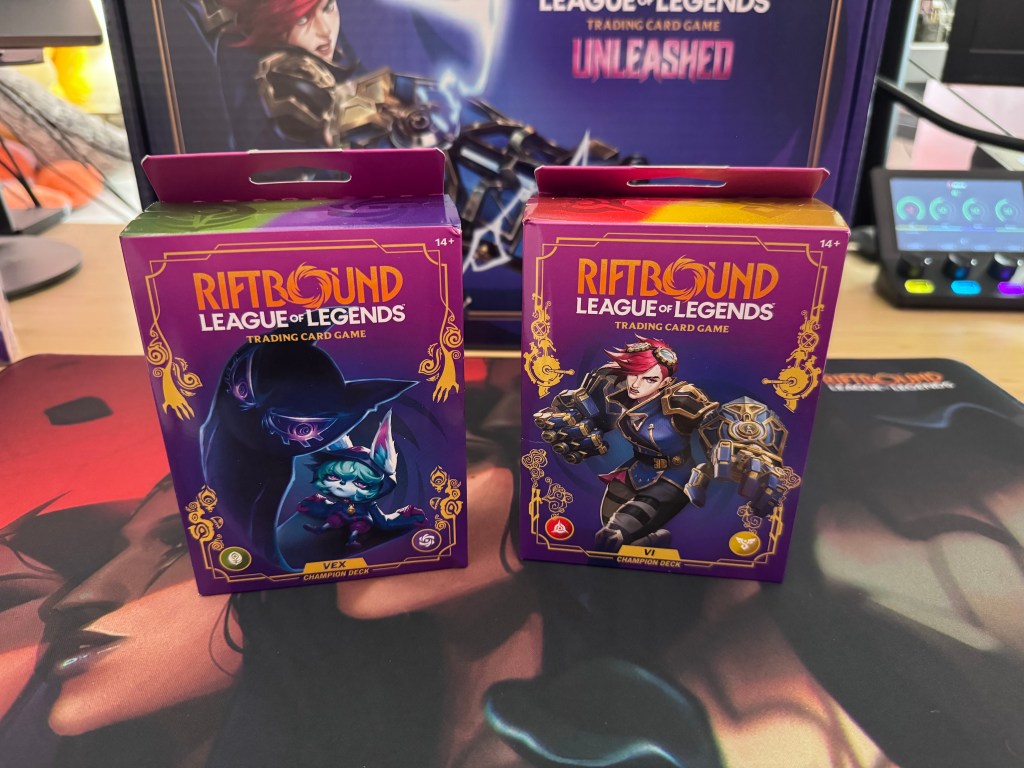
The product lineup for the set is solid. The Unleashed Booster Box comes with 24 packs, while the Unleashed Vault (the newest product type in the lineup akin to something like Pokemon TCG’s ETBs) bundles six booster packs, 36 basic runes, three full-art tokens, and two card dividers into a single package designed to let players create, play, and store decks right out of the box. Pre-constructed Vex and Vi Champion Decks are also available for accessible entry, alongside playmats and card sleeves featuring four of the set’s Overnumbered card designs.
Performance & Real-World Experience
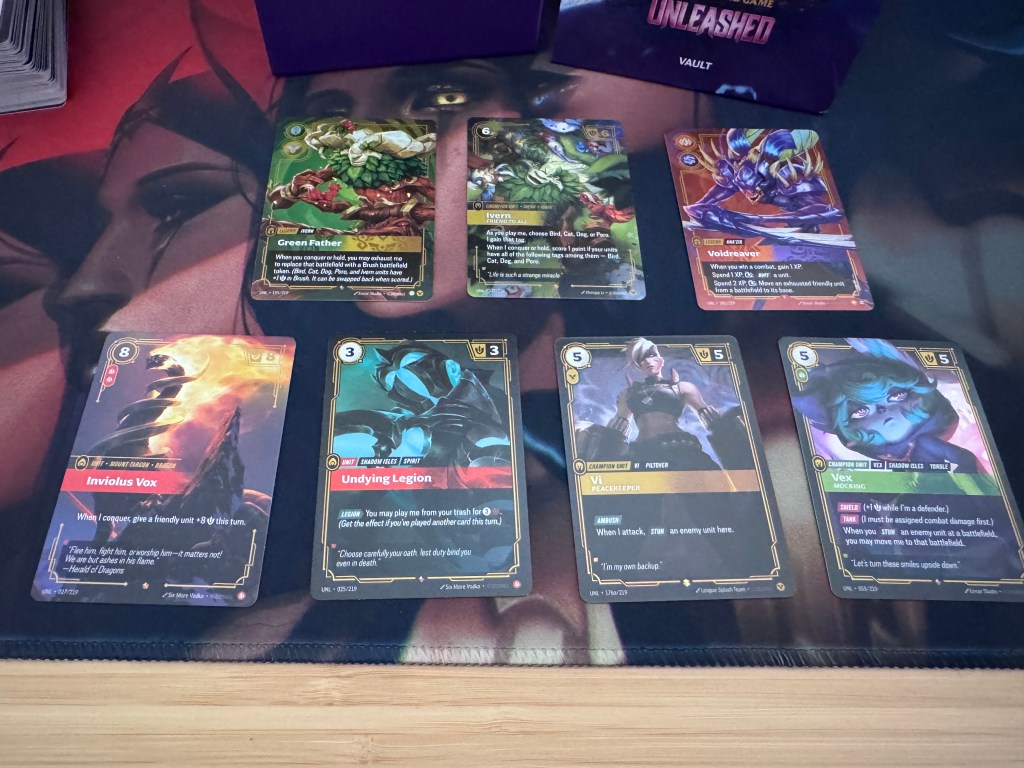
PAX East 2026, I played a full game of Riftbound: Unleashed against Senior Game Designer Jon Moormann, using the Vi and Vex showcase decks. I played Vi. I lost, but I had a blast doing it. Following that hands-on session, the Riftbound team sent me Unleashed samples to crack open at home. My first pull? Ivern himself. Not a bad start.
The XP system is the standout addition in Unleashed. During my PAX demo, my Moss Stomper unit started as a three-power threat, and by the time I’d racked up enough XP through my Hunt cards, it had evolved into a four-power unit with Deflect. Not a bad start for a newbie. Moormann had to exhaust extra resources just to target it with spells.
The Hidden mechanic (which lets you pay one power to place a spell face-down for a surprise activation later) added a level of psychological tension I didn’t expect from a game I was picking up for the first time. When Moormann flipped one mid-combat to stun two of my units simultaneously, I felt it. I previously saw the potential for that in Riftbound’s marketing videos, but experiencing that moment for myself sold me on the card game’s potential for mind games and dramatic table turns.
The Learning Curve is Still Very Real
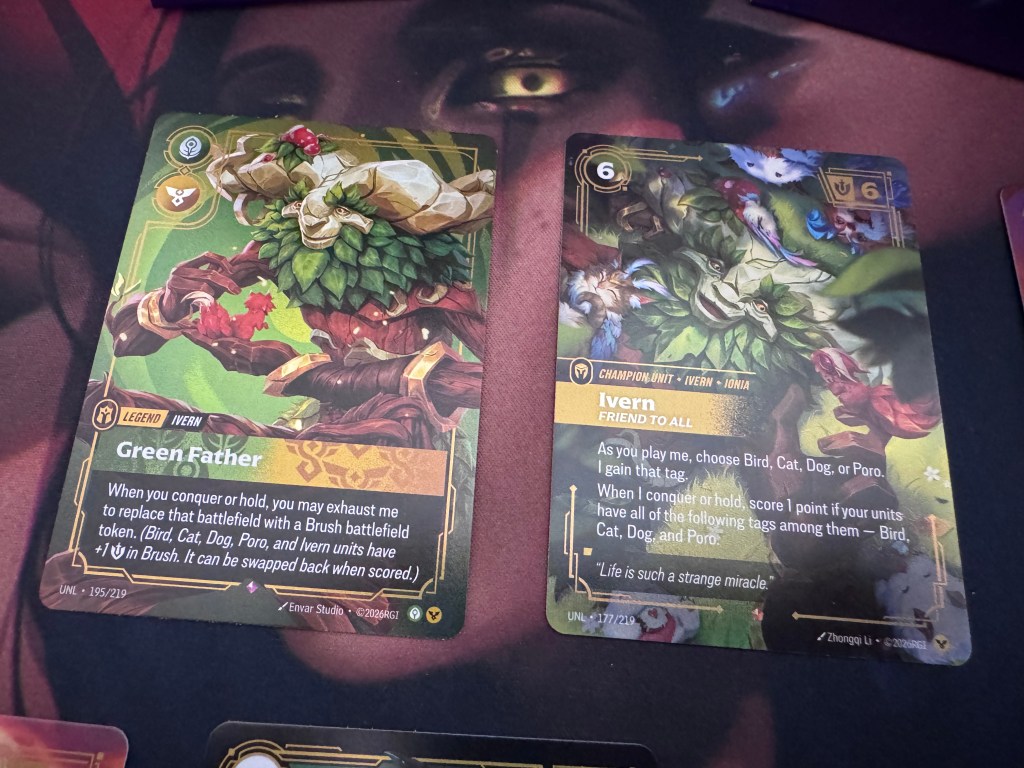
The skill ceiling climbs steeply depending on which Champion you pick. Vex, for instance, is a control deck centered around stuns and disruption. And while she’s deeply rewarding once you understand her, the number of moving pieces (spell timing, stun windows, combat priority) can be overwhelming for new players. I still don’t get it. It makes sense for the longevity and competitive nature, but the game doesn’t exactly announce this gap outright. Someone handing the Vex pre-constructed deck to a complete newcomer might be setting them up for a frustrating first session.
Riot Games’ promise with Riftbound has always been to build a TCG that League players can walk into without prior TCG experience, while still keeping the depth that competitive players demand. Unleashed doubles down on that promise. The new mechanics add texture without overloading the system, the jungle theme is thematically coherent from Champion design to token types, and the pull rates feel exciting without being predatory—in terms of my “impressive” pulls, I only had a handful of duplicates. And the “Learn-to-Play” tip cards that come with every pack is a nice touch for new players.
Finally, if you’re new to TCGs entirely, the prospect of building your own deck from scratch can feel like staring into the void. It’s nearly impossible to truly know which cards synergize with your Champion or how to balance your power curve. The good news is that Riftbound has a helpful community built around it. Whether you’re hunting Reddit threads or YouTube deck techs, there’s no shortage of content to guide you toward your first build. You don’t have to figure it out alone. And, really, researching can only make you a better deck builder and, inevitably, a better player. That’s what I’m banking on, at least.
The Bottom Line
I came into Riftbound: Unleashed as someone who has actively avoided League of Legends for years because I knew it would consume me. Now? I’m thinking about deck builds in the shower. That is the highest possible endorsement I can give.
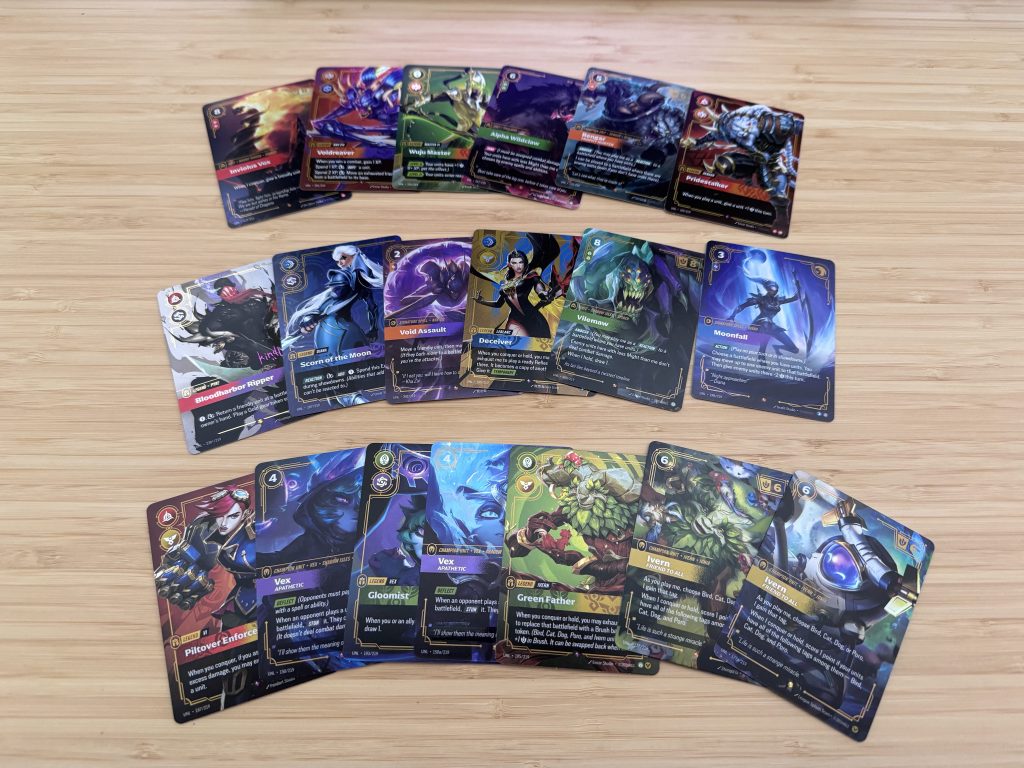
The Unleashed expansion is the only version of Riftbound that I’ve known, but I have been able to jump right into the fray. The jungle theme is cohesive and fun, the new mechanics provide plenty of strategic depth, and the product lineup makes it easier than ever to get a friend to the table. Baron Nashor lurking as an Ultra Rare in fewer than one percent of packs gives pack-cracking collectors a perfect reason to join in, and the card art across the set is consistently stunning, as evidenced by the Overnumbered cards I was lucky enough to pull.
The only real caveat is to be mindful of which Champion you hand a newcomer first. The space between Jinx’s intuitive aggression and Vex’s layered control is significant, and that difference can make or break a first impression. Start with the right Legend and Riftbound can click immediately. Start with the wrong one and you might need a flowchart.
Riftbound: Unleashed is worth your money, time, and (I guess if you’re anything like me) worth the risk of a new obsession. Summoner Skirmish constructed tournaments open May 25 and June 22, 2026. Welcome to the jungle.
More Gear
-

J.R.R. Tolkien leatherbound novels -

Joker and Harley Quin animatronics from HalloweenCostumes.com -

LEGO sale kits October 2026 -

The Odyssey Premium 4K Box Set -

8BitDo Retro Joystick and Mechanical Keyboard -

One Piece's Monkey D. Luffy Maximatic Plus Statue -

Woot shirt deal 5 for $29 -
Dungeon Crawler Carl Softcover
