When James Cameron released The Terminator, it was a unique, groundbreaking sci-fi horror movie that spawned an incredibly successful franchise. While the movie franchise became a huge time-travel story, and as much action-adventure as anything, the first movie was a straight-up horror movie, with a robot from the future trying to kill a young woman, barely any different than a movie with Michael Myers or Jason Voorhees in it. What made it special was a mix of the time-travel aspects, the future that included a nuclear fallout that helped robots take control, and the appearance of Arnold Schwarzenegger in what was the biggest breakout role of his career.
Videos by ComicBook.com
However, Harlan Ellison threatened to sue for copyright infringement. His claims were that the movie had too much in common with his short story, “Soldier from Tomorrow,” and an episode of The Outer Limits he wrote called “Soldier.”
What Was Harlan Ellison’s “Soldier” About on The Outer Limits?
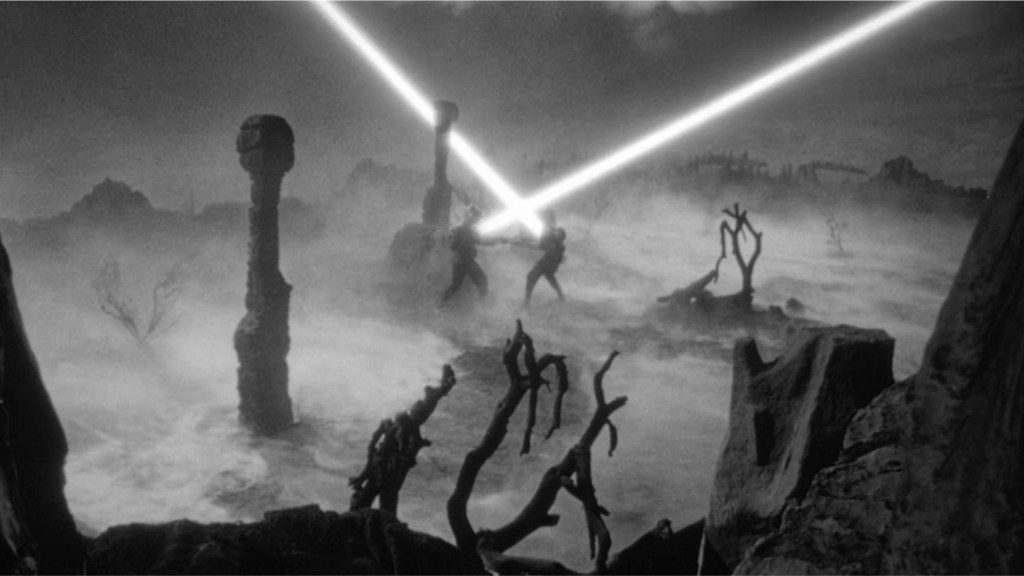
When it debuted on ABC in 1963, many people called The Outer Limits a rip-off of The Twilight Zone. The latter was an anthology series that featured sci-fi, horror, and fantasy stories, most with twist endings and moral lessons for the characters. While The Outer Limits was also an anthology series, it was almost purely sci-fi, and the second season included several hard sci-fi stories that played into the fear of technology and the future. The show highly influenced future sci-fi television and movies, including shows like Star Trek and the rise of dystopian movies in the 1970s.
“Soldier” was The Outer Limits Season 2 premiere episode. Written by Harlan Ellison, who is also the writer of one of Star Trek’s greatest episodes, “The City on the Edge of Forever,” the episode “Soldier” is based on the author’s 1957 short story, “Soldier from Tomorrow.” That original story, published in Fantastic Universe, follows a soldier from thousands of years in the future who was conditioned to only fight and kill his enemies. He then time travels to the present day, where he is “civilized” by a government agent and a philologist, and goes on a lecture tour to warn about the upcoming Armageddon.
When Ellison wrote The Outer Limits episode “Soldier,” he changed things up somewhat. In this story, two soldiers from 1,800 years in the future are hit with an energy weapon. One ends up stuck in time limbo, and the other ends up in the present-day (1964) United States. The soldier, Qarlo, is trained only to kill the enemy, but he is found by a philologist named Tom Kagan. Tom is able to work with Qarlo and help “tame” him. However, when the second soldier finally materializes in 1964, he hunts down Qarlo to continue their battle, and the two soldiers from the future kill each other. The moral question is whether Tom had tamed Qarlo enough that the soldier killed his enemy to protect Tom and his family, or if the programming was too strong to break.
Harlan Ellison Ended Up With Credit on The Terminator
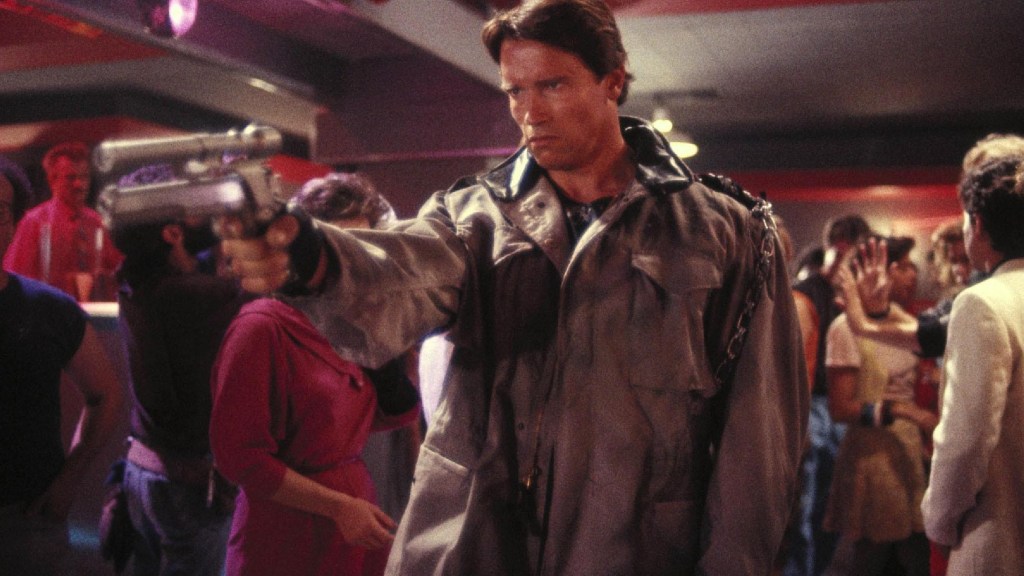
Other than the time travel, there seemed to be little to connect “Soldier” to The Terminator. However, Ellison saw enough in the two to sue for plagiarism. According to Ellison, he liked The Terminator, but since both stories saw a soldier sent back in time to save someone in the past, he said James Cameron ripped off his story. There are obvious differences. Qarlo was accidentally sent back in time and was a killing machine who was taught to care for people. Kyle Reese (Michael Biehn) was specifically sent back in time to protect Sarah Connor (Linda Hamilton), and she didn’t need to “tame” him in any way. His only goal was to stop the Terminator, who was sent to kill her. Neither soldier from the future in “Soldier” was sent to kill the philologist or his family.
Regardless, the studio, Orion, didn’t want to deal with the litigious Harlan Ellison and agreed to settle with him for an undisclosed amount of money and by adding his name to the credits of the film in its later prints. James Cameron was against the entire agreement, but he was told that if he didn’t agree, he would have to pay all damages if they lost the lawsuit to Ellison. Cameron later said he had no choice and was then given a gag order so he couldn’t tell the truth about the lawsuit.
Interestingly, this wasn’t the only time that Harlan Ellison threatened to sue someone for adapting the story without his permission. He also threatened to sue Marvel Comics over The Incredible Hulk #286 for a story written by Bill Mantlo. Jim Shooter, who was editor-in-chief at the time, said Mantlo ripped off Ellison, and he convinced the author to settle out of court for an amount equal to what Mantlo was paid, a credit correction, and a lifetime subscription to everything that Marvel published.
More Movies
-
Image Courtesy of HBO -
Image Courtesy of Marvel