Terminator: Dark Fate was supposed to be the movie to revitalize the Terminator movie franchise. Instead, it killed it. At least for the moment. As the series likes to tell us, there is no fate but what we make, and Terminators will never stop until you are dead. However, even the return of Linda Hamilton and Edward Furlong, along with hot newcomers Mackenzie Davis, Gabriel Luna, and Natalia Reyes, directed by Deadpool‘s Tim Miller, couldn’t prevent the inevitable, for a franchise fans were rapidly losing interest in. That it brought back political subtext and introduced new villains after two lackluster action sequels made no difference.
Videos by ComicBook.com
How did this happen? Terminator and Terminator 2: Judgment Day are universally acclaimed classics of sci-fi action. They made James Cameron a household name, gave Arnold Schwarzenegger his catchphrase, and introduced concepts like Skynet that Gen-X’ers still reference. Actors like Robert Patrick and Michael Biehn owe their careers to those two movies. But once Cameron stopped, the trouble started.
The First Two Terminator Films Summed up Their Decades
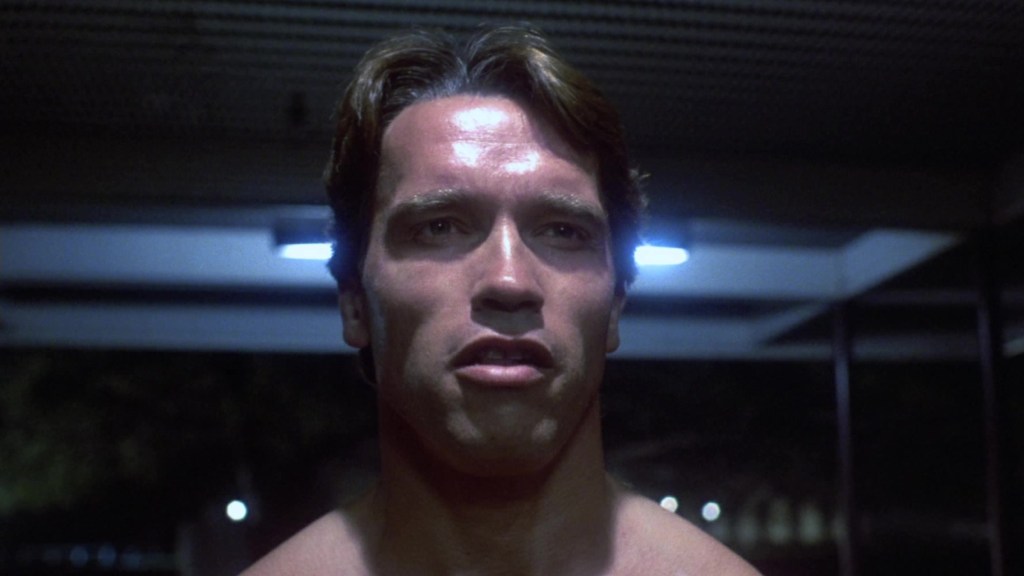
The original Terminator came out in 1984, with a revitalized Cold War stoking nuclear attack fears anew. Pop culture was full of songs about mutually assured destruction, and movies about various types of post-apocalypse, from The Road Warrior to The Day After. TheTerminator drew on those fears without taking strict political sides: robots were going to start a nuclear war, drawing on common fears that computer error would initiate a lunch and end the world. The movie ends with that threat still imminent and assured; only the Terminator cyborg has been destroyed, as Armageddon still looms.
Coming out in 1991, Terminator 2: Judgment Day arrived to a world that had just seen the end of the Cold War. A conflict of ideologues many had assumed would inevitably end in war instead ended in peace, with enemies now allies. Reflecting this mood shift, the Schwarzenegger Terminator returned as a good guy this time, and actually prevented the nuclear war from happening. The ending was pointedly left open just in case anyone ever wanted to make more, but the story had a satisfying conclusion: Cyberdyne no longer had the tech it needed to make the evil AI of Skynet, and future savior John Connor was alive and well.
Terminator 3 Was Still Zeitgeist-y but More Divisive

Releasing in 2003, Terminator 3: Rise of the Machines entered a post 9-11 world. Reality had rewritten the post-Cold War happy ending, and so did the Terminator series. We weren’t as afraid of Russian ICBMs; in the new War on Terror era, it was lone wolf suicide bombers with radioactive materials that scared us. This atomic age might be survivable, but not if you were near the random target, which encouraged a different kind of paranoia. The Internet was becoming ubiquitous, and the ascent of “war-bloggers” declaring they would replace the mainstream media, while calling for a clash of civilizations between Islam and the West, was just a taste of where the divisiveness would go.
T3 addressed all of this, with Skynet essentially creating itself through an online virus, and finally winning by nuking humanity at the end of the movie. It was a memorable ending, but a divisive movie. Some fans resented the erasure of T2‘s happy ending; others missed Cameron’s touch. From there, the property seemed to have only one place to go.
Terminator Salvation Had the Future War Fans Thought They Wanted
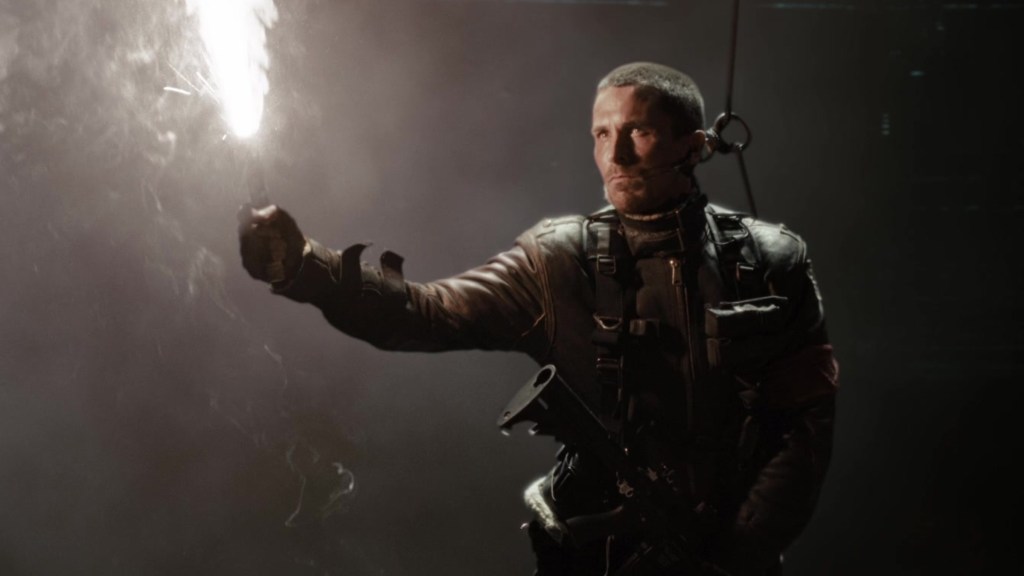
Throughout the first three Terminator movies, fans saw glimpses of a future war between man and machine, with video games fleshing it out even more. Some called for a movie to show more of this section of the story, and the fourth Terminator film, Salvation, tried to deliver. Schwarzenegger wasn’t available for more than a digital cameo due to being elected governor of California; director McG hoped that newly hot action heroes Christian Bale and Sam Worthington would make up for it. Despite some decent action, and a fun hook — death row convict Worthington volunteers for a special program, then suddenly wakes up in a post-nuke world — an atrocious ending sunk it. Viewers who’d accept giant robots of all shapes and sizes drew the line at a battlefield heart transplant meant to evoke The Wizard of Oz‘s Tin Man.
So when it came time to do more sequels, Terminator tried to pull off a trick that had worked for the Halloween franchise — ignoring the parts people didn’t like. That might have worked, had they come up with anything that fans liked better. Instead, we got Terminator: Genisys.
The New Rule: Only the First Two Terminator Movies Count
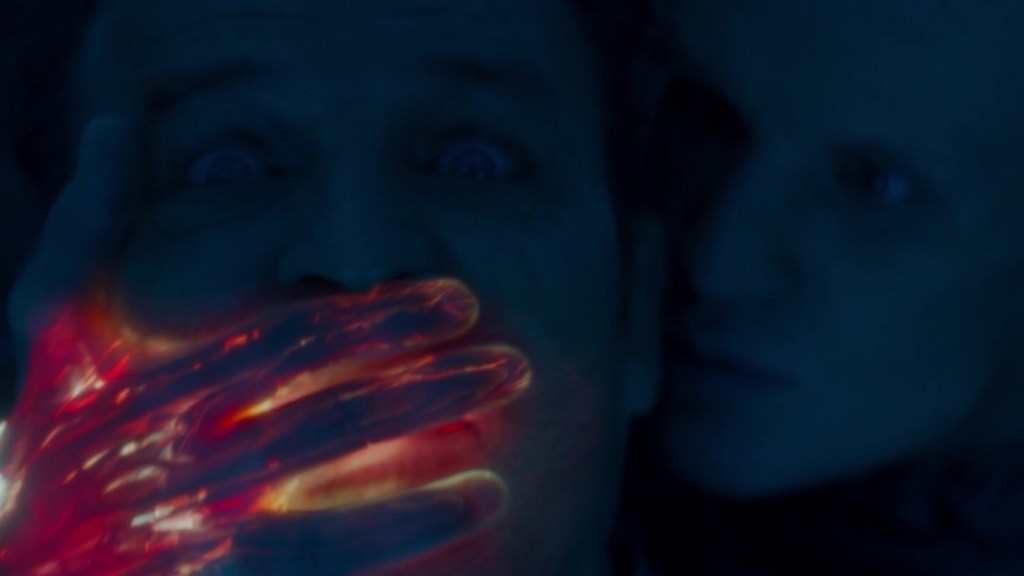
On TV, a spinoff entitled The Sarah Connor Chronicles followed the events of Terminator 2, ignoring part 3. The movies followed suit with Genisys, a film that also vaguely hinted that the timeline was being rewritten — now ex-Governor Schwarzenegger opens the movie by showing up in the past to kill his younger self, as the T-1000 now gets sent back earlier, and looks like Byung-Hun Lee. Then comes an even bigger swerve — adult John Connor (Jason Clarke), the kid supposed to grow up and save us from the robots, is the new villainous T-3000. Matt Smith appeared as Skynet in human form; had Genisys gotten sequels, this character was going to create a Terminator multiverse, one in which all continuity, potentially including the TV show, existed simultaneously.
That didn’t happen. Fans hated the John Connor twist, and while Emilia Clarke got decent notices as the new Sarah Connor, Jai Courtney was no Michael Biehn. When sequel time came around again, it was back to ignoring all but the first two, one more time.
Terminator: Dark Fate Was a Good Sequel, Too Late
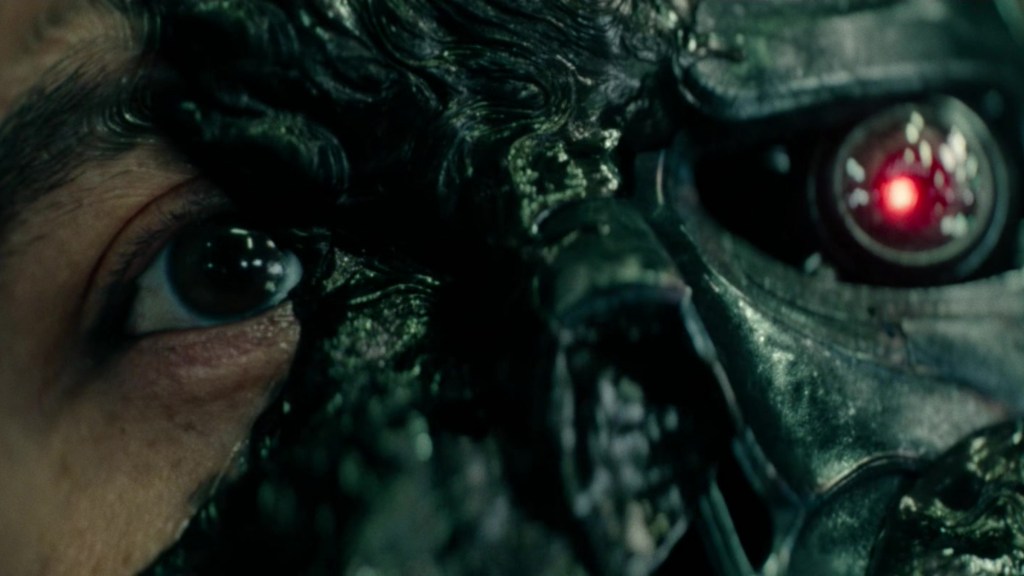
With the promise of a story that had input from James Cameron, a returning Linda Hamilton, and a new storyline that accepted Skynet’s defeat but replaced with a new AI called Legion. The T-1000 that had mimicked a cop in order to gain access to everything was now replaced by the Rev-9, which disguised itself as a border patrol agent. The new savior of the future would be born to a Mexican mother named Dani, who has to cross the border to be safe. An original Terminator actually kills John Connor in the ’90s, and then, left with no more directives, slowly develops humanity over the years. Director Tim Miller knew how to stage great action. The final product scored 70% with critics and 82% with audiences on Rotten Tomatoes, and that’s with it being, by almost every conceivable metric, politically “woke.”
The box office just wasn’t there, and it finished with only $62 million domestic, making it the lowest-grossing sequel. Perhaps fans were just tired of new timelines and constant reboots, or just never, ever wanted the happy ending of T2 to be undermined or reversed in any way. Those who saw it mostly liked it, but those who felt burned by Genisys never saw it.
The Future Is Still Viable
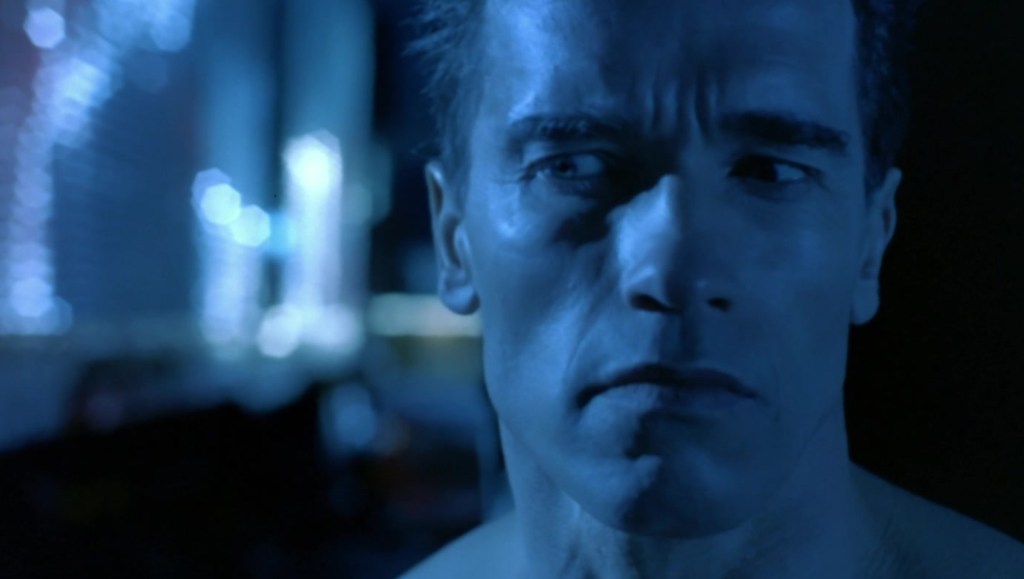
In 2024, Netflix tried a reboot with the anime series Terminator Zero, set in Japan, with an alternate-timeline premise that technically allows all continuities to count, but mostly focuses on new characters. It was weird and creative and well-reviewed…and not renewed. James Cameron, meanwhile, still talks about writing a new one, now that AI is here. Yet some would say there’s some irony, as Cameron appears to have embraced generative AI for some of his 4K Blu-ray remasters. The guy who warned us about it is getting hooked on it himself. Dark Fate should continue to find fans on streaming, but unless the next script tales yet another crack at the whole multiverse idea, it’s not likely to get a sequel. It should have.
Where does Dark Fate rank for you? Tell us in comments, and “we’ll be back” to look at them.
More Movies
-
Liliane Lathan/FilmMagic via Getty Images