Famously, the DeLorean time machine in Back to the Future has to go 88 miles per hour in order to travel through time. However, it’s a bit of a mystery as to why that is. The time travel in Back to the Future is mostly a vehicle in order to explore Marty’s relationship with younger versions of his parents, meaning that the scientific backing of the DeLorean doesn’t matter all that much. Yes, the DeLorean’s flux capacitor and 1.21 gigawatts are important parts of the narrative, but they aren’t backed by actual science.
Videos by ComicBook.com
However, the team behind Back to the Future had to decide on 88 miles per hour for a reason. Fans have proposed countless scientific explanations as to why 88mph is necessary for time travel, causing some viewers to wonder if the writers considered this during the production of the film. Interestingly, there is a different explanation that has been known for over a decade now, yet the films never explicitly explain it themselves.
Back to the Future Writer Bob Gale Has Explained Why They Chose 88MPH
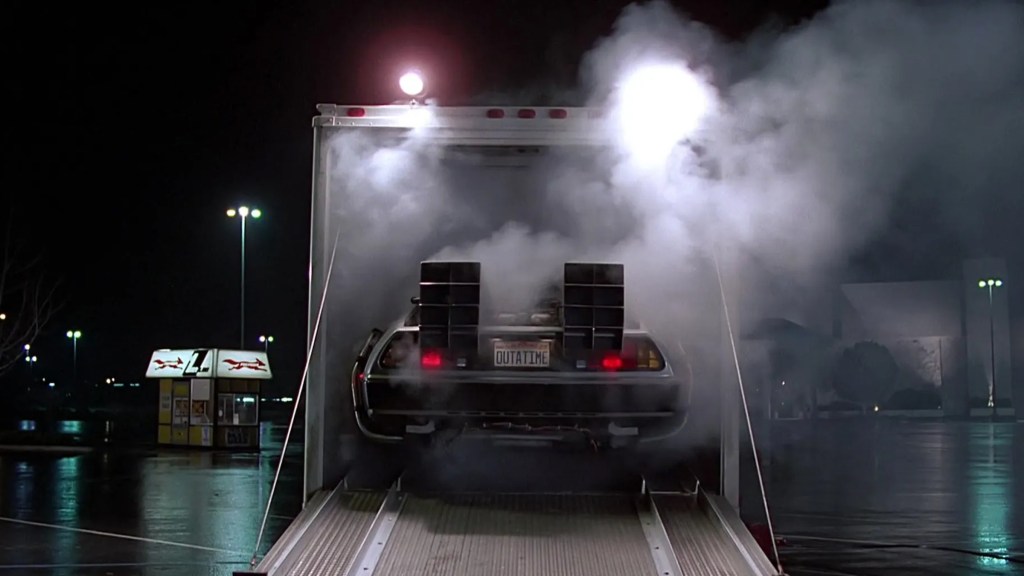
Director Robert Zemeckis and screenwriter Bob Gale co-wrote Back to the Future, leading to the masterpiece’s release in 1985. The duo has been incredibly protective of the franchise in the years following the trilogy’s conclusion, with them often being credited as the reason why a Back to the Future reboot or legacy sequel hasn’t happened yet. Luckily, their love for Back to the Future has led them to answer all kinds of questions about the films. They have further explained the alternate Back to the Future timelines, how the time travel works, bits of lore, and behind-the-scenes facts, including why the DeLorean has to go 88mph in order to time travel.
In a 2015 interview with Bob Gale, the writer was asked why he chose 88mph for the film’s time travel. According to Gale, there are two reasons. Firstly, “we wanted it to be a speed that somebody wouldn’t accidentally drive at.” For example, if the DeLorean had to drive 65mph in order to time travel, someone completely out of the loop could accidentally do it while behind the wheel due to that being a common speed limit. The specificity of 88mph solves this problem. It is much faster than the average person would ever drive, and it isn’t a round number like 85mph or 100mph.
That definitely narrows things down, but it still leaves a lot of options. Even just limiting things to 76mph through 100mph, that still leaves 20 options that don’t end in a five or a zero. So, the reason that they went with 88mph specifically is that “it’s easy to remember.” According to Gale, “Everybody remembers 88 miles an hour. Maybe you’d remember 89 miles an hour. I don’t know, 88 just had the right ring to it.” The repeating digits give 88mph a memorability that most of the other options didn’t have. While this may seem like a minor detail, it is clear that the writers were right, as 88mph is one of the most iconic numbers in film history.
So, as it turns out, this bit of DeLorean history has nothing to do with the science of time travel. Instead, it simply has to do with the aesthetic of the speed. Zemeckis and Gale were looking for something memorable, and in ruling out all of these other options, they succeeded.

Back to the Future’s 88MPH Speedometer Was Actually An Illegal DeLorean Modification
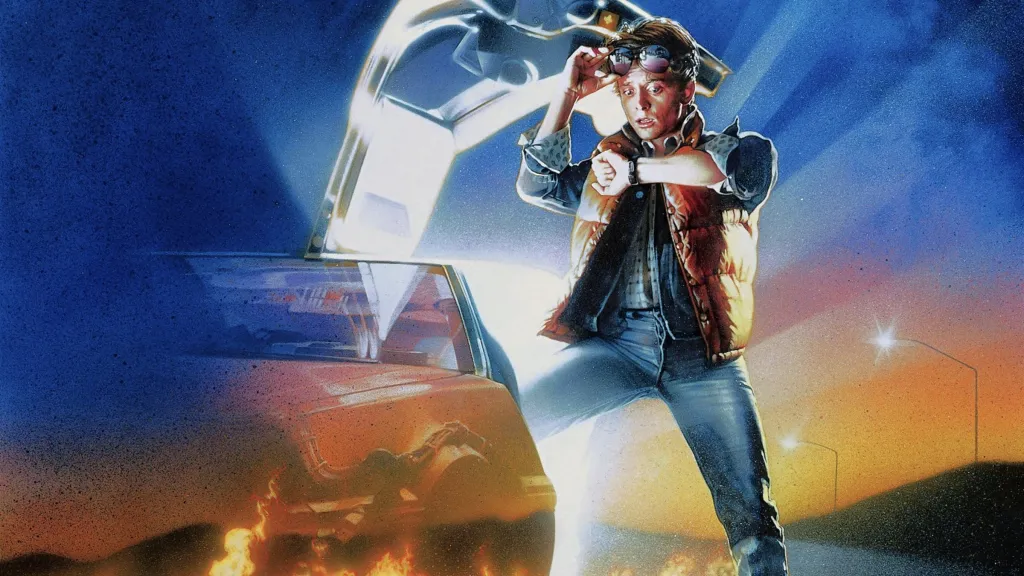
Another interesting tidbit regarding this choice of speed is that it was actually illegal at the time of the DMC DeLorean’s release. In 1979, the National Highway Traffic Safety Administration passed a regulation requiring that automobile speedometers could not exceed 85mph (via govinfo.gov). This was a continuation of policies from the 1970s that attempted to regulate speed, such as a famous push to limit highway speeds to 55mph nationwide. This standard was revoked in 1982, meaning that if Back to the Future had used a different vehicle released during the year that the movie was set, the speedometer wouldn’t have been a problem.
However, the DeLorean was manufactured between 1981 and 1982, meaning that it would have been impacted by the regulation. So, a special speedometer had to be added to the vehicle for Back to the Future, including a digital display that features the iconic 88mph reading. It is surprising that this issue didn’t influence the writers to use a lower number, like 77mph, although it is entirely possible that it didn’t even occur to Gale and Zemeckis at the time of the film’s writing.
What do you think? Leave a comment below and join the conversation now in the ComicBook Forum!
More Movies
-

Courtesy of Universal Pictures -

Image Courtesy of Marvel -

Courtesy of Columbia Pictures