Leonard Nimoy’s relationship with Star Trek was always complicated. His iconic character Spock may be synonymous with the franchise, but Nimoy clashed with William Shatner; Captain Kirk may have been the lead, but Spock was the breakout star, and the two actors had a strained professional rivalry. Making matters worse, by the time the original series had ended, Nimoy had also started to clash with Gene Roddenberry.
Videos by ComicBook.com
And then, in 1970, Spock sold beer. No, I’m not kidding here; by 1975, Spock’s face was pretty much everywhere. But Nimoy drew the line when he learned Paramount had licensed his face in a series of suggestive Heineken ads. It all led to a lawsuit, when Nimoy learned Paramount had stopped paying him for licensing of his face years ago. And then, incredibly, this lawsuit almost changed Star Trek history – and led to the creation of a Spock replacement.
Gene Roddenberry Had to Create a Spock Replacement For Star Trek

Paramount didn’t initially intend to take Star Trek to the big screen. Rather, execs wanted Roddenberry to work on a new show called Star Trek: Phase II, intended to launch alongside a new television network. Sets were built, scripts were commissioned, and actors were hired. Original cast members were set to return, including William Shatner. But there was just one problem: Leonard Nimoy didn’t want to do it. His relationship with Roddenberry had deteriorated because the Star Trek creator didn’t support the lawsuit, and he was only offered a secondary role – appearing in the Phase II pilot and two out of every 11 subsequent episodes.
In public, Nimoy insisted it was time for his career to move on; he wanted to head to theaters, rather than continuing as a TV star. Roddenberry accepted this, and came up with a Spock replacement; a full-blooded Vulcan named Xon. David Gautreaux was even hired for the part; fans weren’t exactly supportive, and he received letters threatening to poison him. But then, incredibly, plans changed at Paramount. The new network was dropped, which meant there wasn’t a home for Phase II. The pilot episode felt big enough to be a movie. And then, in 1977, Star Wars proved just how big sci-fi could be at theaters.
By this point, Paramount had already shelled out $500,000 on the show. That may not seem like much, but adjusted for inflation, it’s equivalent to roughly $2.7 million in today’s money. Little surprise, then, the studio pivoted to turning Star Trek: Phase II into Star Trek: The Motion Picture, hiring director Robert Wise as director.
Why Leonard Nimoy Returned to Star Trek
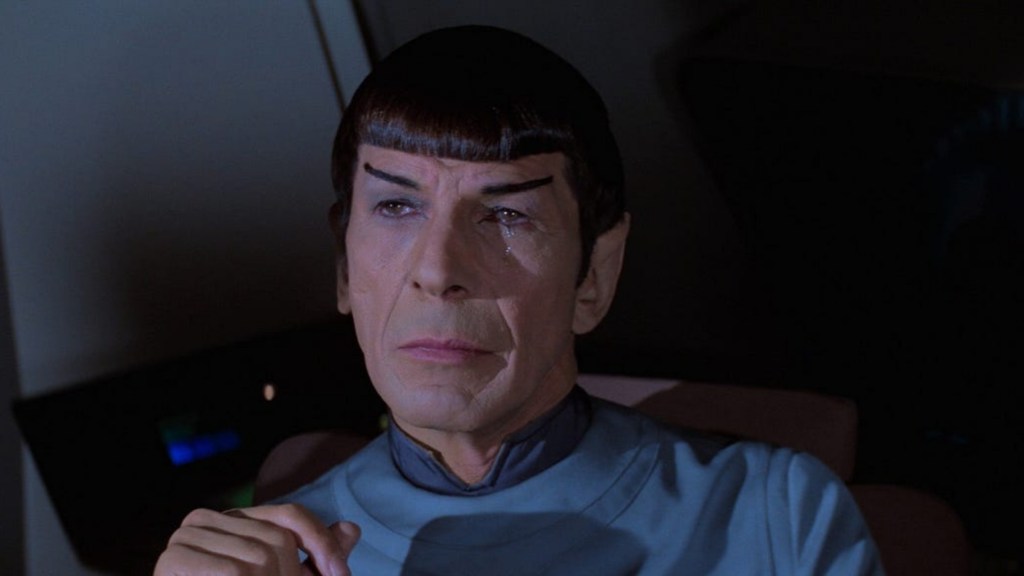
Wise wasn’t a Star Trek fan, but his wife and father-in-law were, so he agreed to take the job. It didn’t take him long to realize Nimoy’s Spock was absolutely essential, and Paramount executive Jeffrey Katzenberg arranged to fly out to New York to watch a showing of Nimoy in the Broadway show Equus. As THR recounts, Katzenberg met several times with Nimoy over the next few days, attempting to persuade him. Nimoy refused to move, even when Katzenberg suggested he should take the job while continuing the lawsuit; Nimoy believed that would lack integrity.
And so, after Katzenberg met with Nimoy, Paramount paid up. With the lawsuit settled, Nimoy realized he’d now been trapped; he’d said he wanted to move to the big screen, and now Star Trek was offering him the chance. What’s more, he realized he’d be answering fans for years. “How could I answer those questions?” he said later. “I didn’t like the script? I hated Gene? I was angry at the studio? I would be carrying that negative **** around with me for the next five years at least.” And so, reluctantly, Leonard Nimoy returned for Star Trek: The Motion Picture.
For his part, David Gautreaux doesn’t seem to have minded too much. At his request, the character of Xon was scrapped completely rather than just appearing in a diminished role; Gautreaux himself played a background commander, while Roddenberry shelved the idea of Xon for future use if necessary. He seems to have always been interested in the idea, with most commentators viewing The Wrath of Khan‘s Saavik as a gender-swapped Xon. Incredibly, Spock’s replacement later became the inspiration for a very famous character indeed: he was the initial inspiration for The Next Generation‘s Data.
What do you think? Leave a comment below and join the conversation now in the ComicBook Forum!
More Movies
-

Image Courtesy of Marvel