A global pop culture phenomenon, the Star Wars franchise launched in 1977. The universe began with A New Hope, a film that took entertainment by storm, and the world of a galaxy far, far away has been growing ever since. The franchise’s space opera stories have been released in a wide variety of media forms, everything from films and television series to video games and theme park attractions. Multiple projects are currently in various stages of development or production, with the tenth episode in the “Skywalker Saga” reportedly in development now, with Jon Watts eyed to direct. Star Wars is truly one of the most expansive and fleshed-out fictional universes in existence.
Videos by ComicBook.com
One of the less discussed forms of media in the franchise, however, are the novels, both canon and non-canon. The first foray into written media was the novelization of the first film, authored in 1976 by ghostwriter Alan Dean Foster but credited to director George Lucas. In total, there have been 331 canon novels authored by many different authors covering all eras of the timeline, with more still to come. Generally, these novels have been firmly within the science fiction genre and followed the tones and themes of the films. But on some occasions, the books have drifted into other genres and tones. One such genre change came from Death Troopers.
Star Wars Gets Scary With Horror
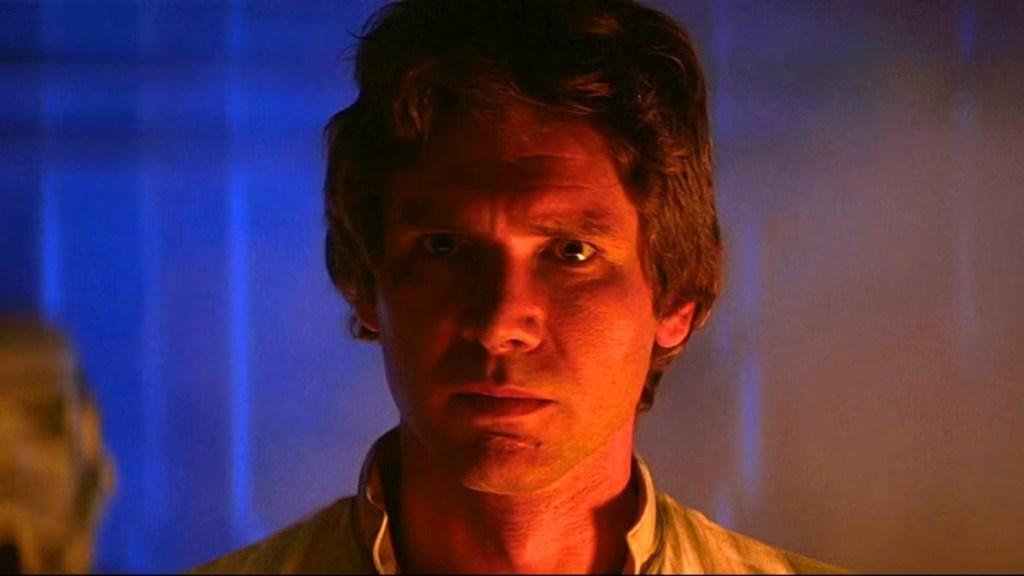
In 2009, Star Wars forayed into the horror genre with the novel Death Troopers. Written by Joe Schrieber, the story was inspired by horror films like The Shining and Alien. It takes place shortly before the events of A New Hope, and it features Han Solo and Chewbacca, alongside an array of original characters. The iconic duo has been arrested and held prisoner aboard the Imperial prison barge Purge. The ship breaks down in a desolate area of space. Nearby, a Star Destroyer known as Vector is also adrift and appears to be abandoned. Part of the crew is sent to the other ship to scavenge for parts, but half didn’t return. Those who did carried with them a dangerous virus known as Blackwing. The crew of the Vector had been transporting it when the container sprung a leak, and they became infected. The virus quickly spread through the crew, turning them into zombies.
The returning crew members would soon become zombies themselves following their exposure. Those who weren’t infected were forced to kill those who were, as well as vaccinate those who weren’t, if they hoped to escape the stranded barge. They wouldn’t find out until later that the virus made the infected incapable of dying, returning them to life whenever someone tried. The survivors also had to solve the mystery of what Blackwing truly was, though they wouldn’t like the answer. In the end, they were able to get to a working shuttle. Han Solo and Chewbacca did what they do best and piloted it away to safety. The novel ends with the shuttle landing on Tatooine, home of the Mos Eisley Cantina, where Han and Chewie went to get the Millennium Falcon back, which would lead into the events seen in A New Hope that put Luke Skywalker and Obi-Wan Kenobi in their path.
The Novel Was a Major Departure From Typical Star Wars Stories

Death Troopers was a major departure from the stories that Star Wars fans had become accustomed to. Their typical space operas had been family-friendly fare. Some normal franchise tropes were present, such as Imperial forces being terrible shots, deaths not being gory, and scenes being only mildly scary on occasion (such as the trash compactor scene in A New Hope). Everything was always very mild and not like something you would see in something like a horror film. In Death Troopers, the story went full-horror. There were many brutal deaths described. A juvenile Wookiee even had its head blasted open. The zombie-fied crew members ate human flesh. Blisters had to be cut open to prevent the virus from claiming the character’s life. In an interesting twist, the zombies became better shots. For longtime fans of the franchise, this could be a shock to the system. But for horror fans, the villain being a more successful killer would be fairly normal.
Star Wars fans are immensely passionate and have high standards, with both the prequel and sequel trilogies being very divisive. Changes can be embraced, or received negatively. But with Death Troopers, the reception was mixed but more towards the positive side. The novel has 3.72 stars on Goodreads. Fantasy Book Reviews gave it an eight out of ten. One reviewer labelled it the most divisive novel of the franchise, an understandable assessment given the subject matter. Some are critical of the somewhat stereotypical nature of the zombie storyline. It is reminiscent of any number of zombie storylines, and even bears some similarities to the origin story of the Reavers in the Firefly film Serenity (2005). But the book and its author should be commended for being willing to take risks by switching genres to introduce something into Star Wars canon that had never been done before, just as George Lucas took a chance on his idea back in 1977.
Have you read Death Troopers? Leave your thoughts on it in the comments.
More Movies
-
Courtesy of Paramount Pictures