It was the 1990s, and American cinema was at an all-time high—especially for filmmakers who were exploring new frontiers. They were movie pioneers on the verge of charting into new territory. These writers and directors created characters with style, dialogue that stuck with you, and contemplative stories. There was one filmmaker whose signature style was established by making ordinary conversations strangely entertaining. His characters could talk about the most ridiculous things, and you’d still hang on every word. Beyond characters’ conversations, he added a healthy dose of gritty violence, comedic satire, and crime-noir elements.
Videos by ComicBook.com
That filmmaker also had a habit of borrowing from the movies he enjoyed watching. And this filmmaker was known for watching plenty of films—especially while he worked at Blockbuster. Crime pictures, martial arts films, anime, and other corners of cinema all found their way into his work. Some saw that as a lack of originality. Others saw a director who knew exactly what he liked and had the talent to make it work. One particular film brought all those influences together and became a defining hit of the decade. It also gave a fading Hollywood star a second shot at the big time.
Pulp Fiction Made Quentin Tarantino a Household Name
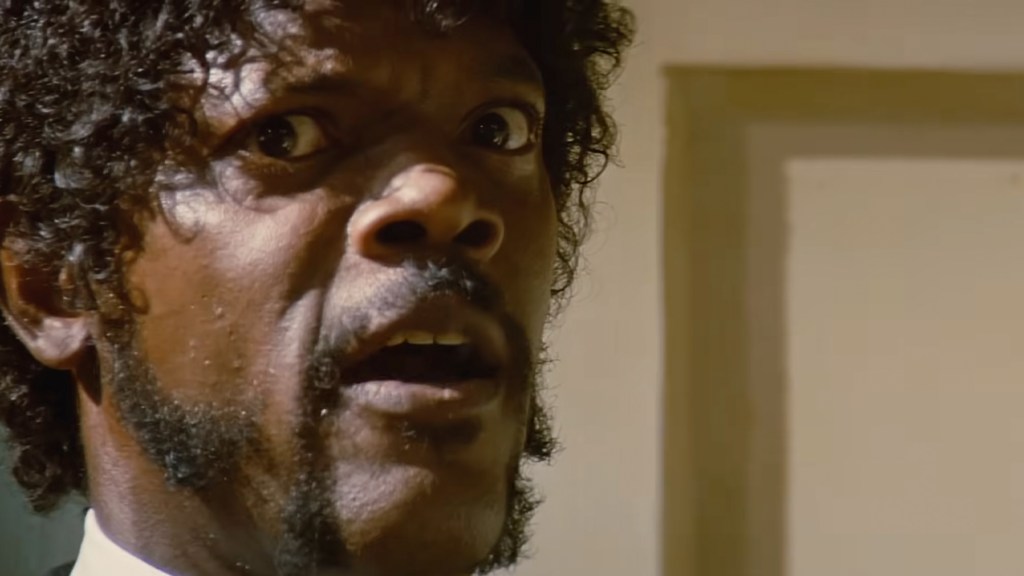
After Reservoir Dogs, Tarantino came back with Pulp Fiction, and this time Hollywood couldn’t ignore him. Travolta, who hadn’t had a hit like this in years, was suddenly cool again. Jackson could make Jules’ conversations about almost anything worth watching. Thurman gave Mia Wallace that strange mix of boredom and danger, while Bruce Willis brought some old-school toughness to the picture. And then there’s the dancing. Or the burger talk. Or Vincent and Jules discussing foot massages like they’re solving a national crisis. You never quite know which scene you’ll remember most, and that’s part of what makes the movie such a good time.
The thing I always liked about Tarantino was how much he clearly loved movies. Vincent and Jules can spend what feels like forever talking about burgers, and I’m perfectly happy to sit there and listen. Most directors would hurry through that stuff to get to the next big scene. Tarantino knows the conversation is the scene. Of course, plenty of filmmakers were doing interesting things with crime stories before he came along. He just had a knack for taking familiar ingredients and making them feel exciting again. Look at Kill Bill. I loved that movie, especially the anime sequence. I was already into anime back then, when it wasn’t nearly as mainstream as it is today. Tarantino pulled from Japanese films, martial arts movies, and animation, and he made a wild revenge story out of it. Was it entirely original? No. Did I care? Not really. He was having fun with the movies he loved, and it made me want to explore them, too.
John Travolta Got the Career Comeback He Needed
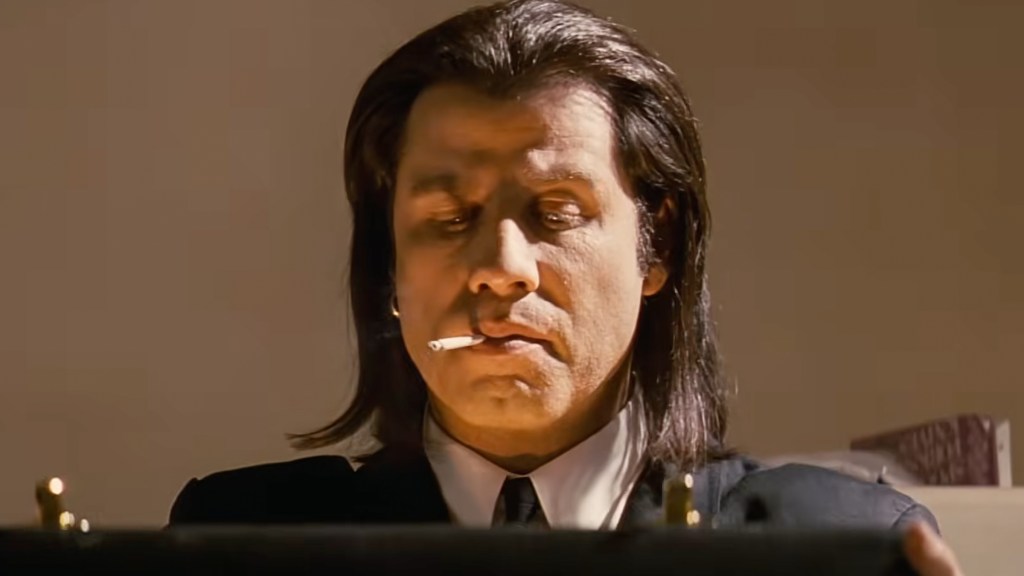
Travolta was a huge star in the ’70s. Saturday Night Fever and Grease made him a household name, but his career had cooled considerably by the early ’90s. He needed a good role, and Tarantino gave him one. Vincent Vega wasn’t your typical action hero. He was a hitman who could be cool one moment and completely ridiculous the next. Travolta played him with an easy charm that made the character hard to forget. His chemistry with Jackson was a highlight, and the dance scene with Thurman became one of the movie’s most famous moments. It was a comeback nobody could have planned better.
Travolta earned an Oscar nomination for the performance, and his career picked up again. That’s one of the great things about casting. Sometimes, a director sees something in an actor that everyone else has stopped noticing. Tarantino had a knack for that. He also had a knack for making people curious about the movies that inspired him. I remember being a fan of anime before it became as popular as it is now. So when Kill Bill came along with its animated sequence and obvious love of Japanese cinema, I thought it was pretty great. Sure, Tarantino borrowed heavily from other films. That was never hard to spot. But he made those influences exciting, and he got people talking about them. Pulp Fiction did the same thing for crime movies. Thirty-two years later, it still has that same scruffy charm. And Travolta? He got one of the best second acts in Hollywood. Check out this trailer to get a feel for the film if you haven’t seen it already.
If you were living during this era, chances are, your interest in this film would be piqued—especially if you were a cinephile. In the end, Pulp Fiction proved that you don’t need an original recipe to cook up a cinematic masterpiece—you just need the right ingredients, a little attitude, and a taste for trouble. Tarantino took a handful of old Hollywood tricks, tossed them into a briefcase, and made the whole world wonder what was glowing inside. And if anyone still thinks borrowing from other movies is a crime, well, Jules and Vincent would probably like a word with them—preferably over a Royale with Cheese.
More Movies
-

Courtesy of Summit Entertainment -
Image Courtesy of Paramount Pictures