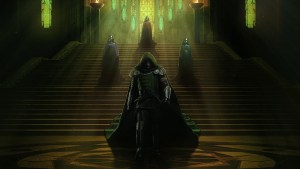
Warner Bros. Animation has quietly become the most reliable Batman studio on the planet, which makes its blind spot easier to see. The catalog is deep, the batting average is high, and the strongest entries hold up against anything in the live-action canon. The problem is not the filmmaking and it is not the voice work. The problem is the source list. The same ten books keep coming back around: Year One, The Killing Joke, The Long Halloween, Hush, A Death in the Family, The Dark Knight Returns, and now Knightfall, which arrived as the first film in a three-part adaptation with Anson Mount under the cowl and Michael Mando as Bane. That is seven adaptations drawn from a publishing history that runs to more than eighty years and several thousand issues, and the repetition is starting to show in the films themselves, which increasingly have to distinguish themselves through style rather than through story.
Videos by ComicBook.com
The shelf is emptier than it looks from outside. Absolute Batman is an animated series with Scott Snyder running it. Court of Owls already got a partial pass in Batman vs. Robin. Between the films in production and the ones already made, the obvious candidates are close to picked clean, and the studio is going to need somewhere new to look fairly soon. What is left on that shelf are four of the most acclaimed Batman stories ever printed, none of which has been animated even once, and each of which happens to solve a problem the animated films keep running into. Three of them have never been adapted in any medium at all, which is the part worth sitting with given how thoroughly this character has been mined.
Each entry below names the book, the reason it has never been made, and the specific thing animation can do with it that live action cannot.
4) Arkham Asylum: A Serious House on Serious Earth Is The One Book Only Animation Can Actually Do
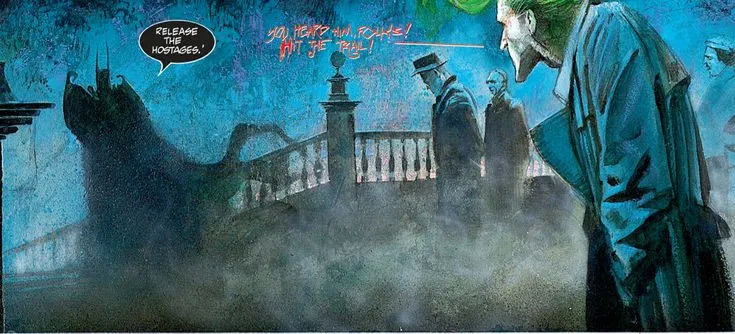
Grant Morrison and Dave McKean’s 1989 graphic novel sold close to half a million copies by 2004, which made it the best-selling original graphic novel in American superhero comics, and the figure has since passed six hundred thousand worldwide. It has never been animated. It has been circled repeatedly: Heath Ledger named it as a reference point for The Dark Knight, the 2009 video game took its setting while its creative director openly called the book itself unadaptable to a game, and director Jay Oliva wanted to make an animated version before leaving Warner Bros. Animation in 2017. Morrison has talked about returning to that world for a sequel, though nothing is in production.
The reason it belongs in animation and nowhere else is McKean’s art. The book has no consistent visual style. Pages shift between painting, photographic collage and near-abstraction, and Batman is often barely a legible figure inside them. Live action would have to flatten all of that into a single lens. Animation would not, and Into the Spider-Verse has already proven that a house style can be the adaptation rather than a coat of paint on top of one. The one thing a producer would have to get right is the framing: the book’s psychiatric material is a product of 1989 and needs a modern hand, which is a writing problem, not a reason to leave the most formally ambitious Batman comic ever made sitting on the shelf. This site has made the case that it is too dark for live-action, and that is precisely the argument for putting it somewhere else.
3) Batman: Year 100 Won Two Eisners And Has Never Been Adapted In Any Medium
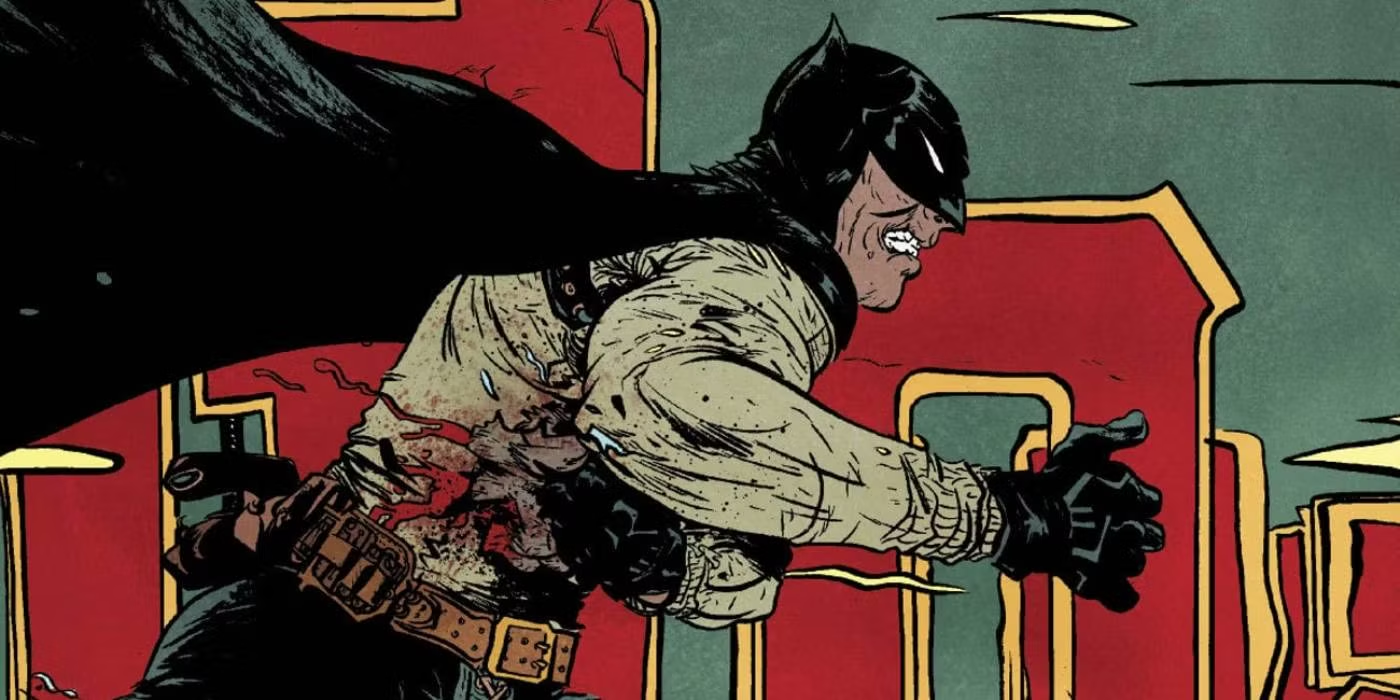
Paul Pope wrote and drew this four-issue miniseries in 2006, and it took home two Eisner Awards the following year, for Best Limited Series and Best Writer/Artist. It has never been adapted. It has never been optioned. It is arguably the cleanest available property on this entire list, and the reason it works as an animated feature is simple: the book is about a body in motion. Pope’s Gotham is a surveillance state in 2039, a federal agent has turned up dead, and the men hunting Batman cannot work out whether he is a copycat, a legend or something that has genuinely been alive for a hundred years. Captain Gordon, grandson of the commissioner, is stuck in the middle of it.
What makes the comic sing is that Pope draws a Batman who sprints, who gasps for air through a respirator, who takes a beating and has to keep running anyway. There is no gliding and no posing. Every page is kinetic in a way that a static medium has to work very hard to sell, which means the adaptation gets to do the one thing the source can only imply. At four issues, it is also the smallest lift here. That matters, because compression has been the recurring complaint about the Knightfall films, which are trying to fit a sprawling multi-year crossover into three features. Year 100 fits in one, with room to breathe.
2) The Black Mirror Is The Best Argument That Batman Was Never Just Bruce Wayne
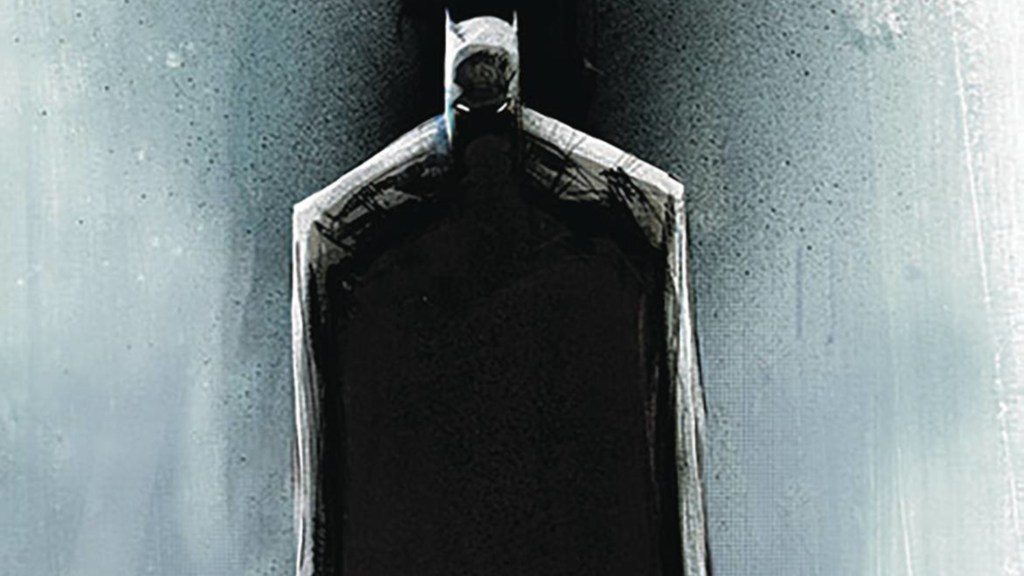
Scott Snyder, Jock and Francesco Francavilla ran this through Detective Comics #871 to #881 across 2011, and it averages 8.7 out of 10 from 126 reviews on Comic Book Roundup. This site ranked it fourth on its list of the best Batman comics of the 21st century. It has never been animated. The hook is that Bruce Wayne is not in the suit. Dick Grayson is Batman while Bruce runs Batman Incorporated, and the case takes him into a black market where Gotham’s collectors buy and sell the weapons of dead supervillains, then into something much worse when James Gordon Jr. comes home. Every animated Batman film to date has assumed the man under the cowl is Bruce.
This is the story that tests the premise, and it does it without a gimmick, because Grayson is a genuinely different detective: lighter on his feet, worse at hiding what he feels, and far more useful to a story that runs on interviews and mistakes. It also happens to be built exactly right for a feature. The cast is small, the geography is tight, and the plot is a detective story with a clean spine rather than an event with fifty moving parts. Warner Bros. Animation has spent thirty years building the audience that would show up for a Dick Grayson Batman. It has never once given them the story that would pay it off.
1) No Man’s Land Got Pitched As An Animated Series Twice And Got Rejected Both Times
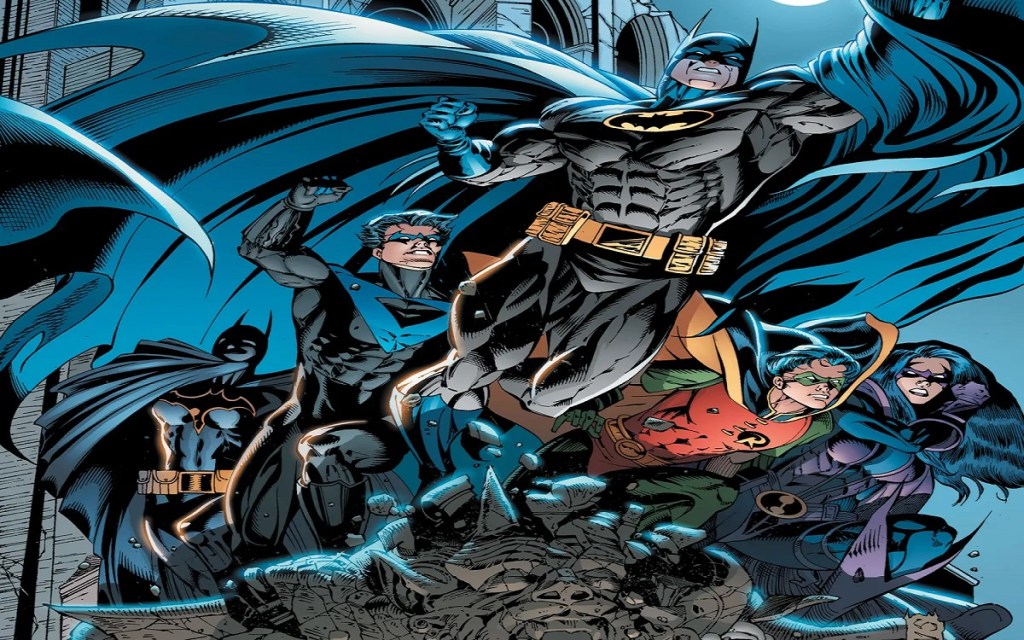
This is the one with receipts. James Tucker, who went on to produce a large chunk of the modern DC animated slate, pitched No Man’s Land to Warner Bros. Animation as a series in the late 1990s and pitched it again in the mid-2000s. Both times the studio passed, and the second time it went with Batman: The Brave and the Bold instead. The 1999 event is the one where an earthquake levels Gotham, the federal government cuts the city loose from the United States, and what is left divides into territories held by whoever can hold them. Batman disappears for months. Oracle becomes the nervous system of the whole operation. Cassandra Cain arrives. Jim Gordon has to stop being a cop and start being a government.
Its size is the reason it kept getting turned down and it is also the reason it should be a series rather than a film, which is the honest way to pitch it. The demand is not theoretical, either. The Dark Knight Rises borrowed its shape, Gotham built a season out of a loose version of it, The Penguin name-checked it, and animated Batman: Hush director Justin Copeland said in 2019 that a live-action version was the one he wanted to make, told from Cassandra Cain’s point of view. Everybody keeps orbiting it. Nobody has landed. It is the only Batman story that is genuinely about a city rather than a man, and that is worth a slate slot.
None of this is an argument that the Knightfall trilogy should not exist, or that Absolute Batman is the wrong series to greenlight. It is an argument about what happens next. Warner Bros. Animation has spent three decades proving it can adapt anything, and it has spent most of that time adapting the same shelf, while whole corners of the DC library have never had a shot. Four books with two Eisners, a best-seller record and a top-five modern ranking between them have gone untouched, and one of them has been turned down twice by the studio best equipped to make it. The catalog is not running out of Batman stories. It is running out of Batman stories it has already told.
More Movies
-

Image Courtesy of Warner Bros. -

IMAGE COURTESY OF UNIVERSAL -

IMAGE COURTESY OF WARNER BROS.