The 1990s were a great decade to grow up watching sci-fi movies, but there were some really, really bad movies that failed on a bunch of levels. For every Terminator 2: Judgment Day, Jurassic Park, or The Matrix, there were dozens of films trying to cash in on state-of-the-art technology, resurrect a dying franchise, or convince audiences that virtual reality would change the world. Some of those movies were better off sitting on the shelves at Blockbuster. There was also a turning point in special effects during the decade that led to some awkward transitions in film. CGI was quickly replacing traditional practical effects, and Hollywood seemed determined to use CGI whether the film needed it or not. It’s just a shame that some of the most amazing effects from the early 90s seem to have been done on a computer that could barely run Windows.
Videos by ComicBook.com
I don’t think every movie has to age well to be enjoyable to watch. It can be a lot of fun to revisit absurd science fiction movies from the past, especially those that hilariously get their predictions of the future wrong. But nostalgia can only go so far with a film. Watching these five sci-fi films from the 1990s today is a different experience than watching them through the innocent eyes of a kid.
5) Free Jack (1992)

When I was a kid, the idea of a race car driver being thrown into the future sounded exciting. Watching Freejack as an adult raises some serious issues. In the distant future of 2009, humanity has mastered time travel. Rather than using it to learn about history or advance civilization, wealthy individuals kidnap people from the past and steal their bodies. Apparently, inventing time travel is easier than developing replacement organs. Emilio Estevez plays Alex Furlong, a race car driver who is snatched from the moment of his apparent death. Anthony Hopkins portrays the dying billionaire who wants his body, Mick Jagger as bounty hunter Victor Vacendak, and Rene Russo as Alex’s former fiancée.
Based on Robert Sheckley’s Immortality, Inc., Freejack had the makings of a compelling thriller about the wealthy exploiting everyone else. Instead, it focuses on car chases and explosions rather than exploring its premise. Even though Jagger’s bizarre performance is entertaining, he cannot save the film. I can overlook a lot of ridiculous science fiction concepts, but if you’ve perfected time travel and the best application you can think of is stealing someone else’s body, I have some questions.
4) Virtuosity (1995)
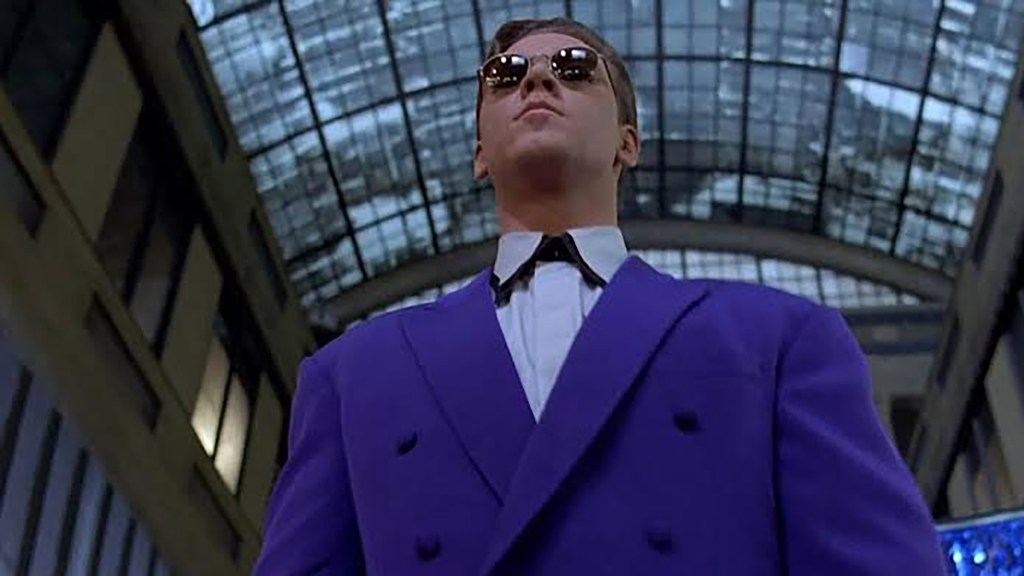
In 1992, Brett Leonard’s The Lawnmower Man checked out virtual reality, and while its CGI hasn’t aged well, I’ll give it credit for being a pioneer. Three years later, when Virtuosity brought the director back, we were just starting to get computers in every classroom, and realistic virtual reality seemed like a day dream. It now feels like someone watched Terminator 2: Judgment Day and thought, “Let’s do this with a smarmier bad guy.”
Denzel Washington stars as Parker Barnes, a former cop on the trail of SID 6.7, an artificial intelligence developed from the personalities of over 150 serial killers. Oddly enough, this isn’t so different from training modern-day AI on human-generated material. If you gave ChatGPT the court transcripts of 150 serial killers and asked it to make a personality, this is what you’d get. Things that seemed clever in the mid-90s now seem dated and embarrassing, like Washington’s explanation of the internet-style emoticons he uses to track the killer. For his part, Crowe literally chews the scenery and steals the film. SID’s body is made of silicon and can regrow itself, so he eats glass. Then he’s smashing through glass panels in the final fight, surrounded by the stuff that keeps him alive. Barnes finally takes him down by destroying his control module. Of the five movies, Virtuosity is the most watchable of this list, almost entirely on the back of Russell Crowe’s Sid 6.7. I mean, check out the trailer that sells him as the highlight:
3) Highlander II: The Quickening (1991)

The original Highlander was an amazing mixture of fantasy, action, and mythology, with immortal warriors fighting over the centuries until only one was left standing. Then Highlander II: The Quickening decided the immortals were aliens from the planet Zeist, erasing much of the original’s appeal. I hadn’t seen the original theatrical cut until recently, and it’s as bad as everyone warned. Growing up, I’d only seen the 1995 Renegade Version on home video, so I couldn’t understand why the sequel was so despised. Now I understand. Christopher Lambert returns as Connor MacLeod, who lives beneath an artificial shield that protects the Earth after the ozone layer collapses. Michael Ironside eats up his role as General Katana, and Sean Connery, who died in the first film, returns as Ramirez. Aside from the changes to the mythology, the sequel is just plain poor filmmaking. Not even Sean Connery’s return from beyond the grave is enough to make the sequel a good film. The Renegade Version doesn’t fix all of its flaws, but removing the alien backstory makes it easier to swallow.
2) RoboCop 3 (1993)

When I was twelve, I was genuinely excited about RoboCop 3. RoboCop was getting a jetpack and battling robot ninjas. My childhood brain thought this sounded like the greatest film ever made. My adult brain recognizes that Frank Miller isn’t nearly as good a writer as I once thought, and Fred Dekker directed a pile of dookie. The original RoboCop was a brilliantly violent satire of corporate greed, privatized law enforcement, and the dehumanization of American society. By the third film, Peter Weller had been replaced by Robert John Burke, the violence had been reduced to PG-13 levels, and the franchise had taken on a more cartoonish tone. Nancy Allen returned as Officer Anne Lewis, but the sequel killed her. RoboCop 3 follows Murphy as he helps residents resist Omni Consumer Products’ forced removal of their neighborhood. Three movies in and Murphy still needs to learn OCP is bad? Frank Miller’s story about cyborgs vs. robot ninjas should have been peak cinema. Instead, RoboCop 3 should be buried beneath a mountain of unsold VHS tapes.
1) Judge Dredd (1995)

Judge Dredd, starring Sylvester Stallone, had the potential to become a seminal film in the 1990s comic book genre. It is based on a British comic strip from 2000 AD and takes place in a future where judges act as police, juries, and executioners. Stallone portrays Dredd, who is framed for murder by Rico (Armand Assante). The frame-up never made sense to me. Dredd and Rico were allegedly created using the same genetic material, which explains why Rico’s DNA implicates Dredd. But how does a future justice system based on DNA records fail to recognize that two people share the same genetic profile? Why don’t Stallone and Assante look alike?
The production design is stunning, from Mega-City One to the Lawmaster motorcycle and robotic enforcer. Unfortunately, Rob Schneider’s comic relief clashes with the plot, and Stallone spends the majority of the film without his helmet, despite the fact that Dredd famously never takes it off in the comics. The filmmakers understood how the world should look, but not the main character. Dredd represents an authoritarian system, which the comics frequently mock. The 2012 film Dredd, starring Karl Urban, recognized this. Stallone’s version is visually stunning, but it is ultimately a generic action film. Though Stallone screaming, “I am the law!” remains a memorable moment, there aren’t enough of them to make this film worth remembering.
There are clearly more ’90s sci-fi movies that missed the mark. What do you think? Is there a movie you loved in the ’90s that doesn’t hold up now? Let us know in the comments below.
More Movies
-

IMAGE COURTESY OF NETFLIX -

Image Courtesy of Paramount