When Stranger Things first came out, it sounded like a show that had been made specifically for me. ’80s nostalgia? Check. Dungeons & Dragons? Check. Kids on bikes? Check. A little The Goonies, a little Stand by Me? Perfect. Mysterious government experiments and some creepy supernatural nonsense thrown in for good measure? Sign me up. So it seemed like something I should watch right away and binge all night. Except…I didn’t.
Videos by ComicBook.com
I didn’t immediately jump on the Stranger Things bandwagon when everyone else did. I tend to sit back when everyone hypes up something into the greatest thing ever made. I don’t necessarily hate something because it’s popular either, but I also don’t want to like something just because everyone else does. I experience things with as much of an open mind as possible. More importantly, I possess my own personal standards based on what I know I like and, more importantly, why. So, I decided to wait until the first season cooled off.
And… nearly ten years later, I finally watched season one. A decade is a tad bit late, but I went in completely neutral. And if you’re a Stranger Things fan, you might not completely agree with what I’m about to say—and that’s okay. Besides, I’ve only watched the first season so far. But if the creators said they were influenced by The Goonies and wanted adults to also enjoy the show, then why did it feel so off-base?
Why Stranger Things Doesn’t Feel Like a Classic ‘80s Kids’ Adventure

And this is where my confusion with Stranger Things really starts. The show very obviously wants to evoke that classic ’80s kids’ adventure movie. You have the bikes, the small town, the group of boys, and the missing kid. They even added D&D, a mysterious girl, and the weird science stuff into the mix. Then, there are adults who don’t understand what’s happening and, of course, young people investigating something they absolutely should not be getting involved in.
In The Goonies, the group is the whole focus of the movie. They’re unabashed, funny, and competitive. As a self-proclaimed crew, they experience moments of stupidity, bravery, triumph, and fear. They can also be annoying and constantly bouncing off each other’s personalities. At the heart of the story, they feel like real children who have accidentally wandered into an adventure. And this is after they have to deal with the fact that everyone living in the Goon Docks is losing their home to foreclosure and being forced out by a wealthy land developer. I enjoy this movie so much that I really do hope there can be a Goonies 2 since Josh Brolin has discussed it.

The Stranger Things kids, meanwhile, are often sitting around discussing a dimensional gate, a tear in time and space, alternate dimensions and government experiments. I’m sitting there thinking: You’re twelve. Goof off for five minutes. But they rarely do – especially the deeper the horror gets. That’s understandable, I understand what the show is doing. The protagonists have to investigate the mystery, so naturally they need to understand enough of the supernatural plot to move the story forward. But it creates this weird disconnect where I’m watching a bunch of 12-year-olds calmly grasping concepts that would make most adults stare blankly at a wall. That’s when I realized what was bothering me: they often felt more like tiny genre protagonists than actual kids.
And it’s not just the main group of young characters. Nancy, Steve, and Jonathan all seem ridiculously serious too. While they do experience some typical teenage life-defining moments, everyone is constantly arguing, having heated discussions or trying to figure out the next piece of the mystery. Binging the season made this particularly noticeable. I kept thinking, when was the last time these guys actually played or laughed? I can remember the D&D session. I can remember the fear. I can remember the arguing. But the kids rarely seem to just…be kids. And that made the experience monotonous for me.
Stranger Things Has the Retro Nostalgia, But Not the Childhood Fun
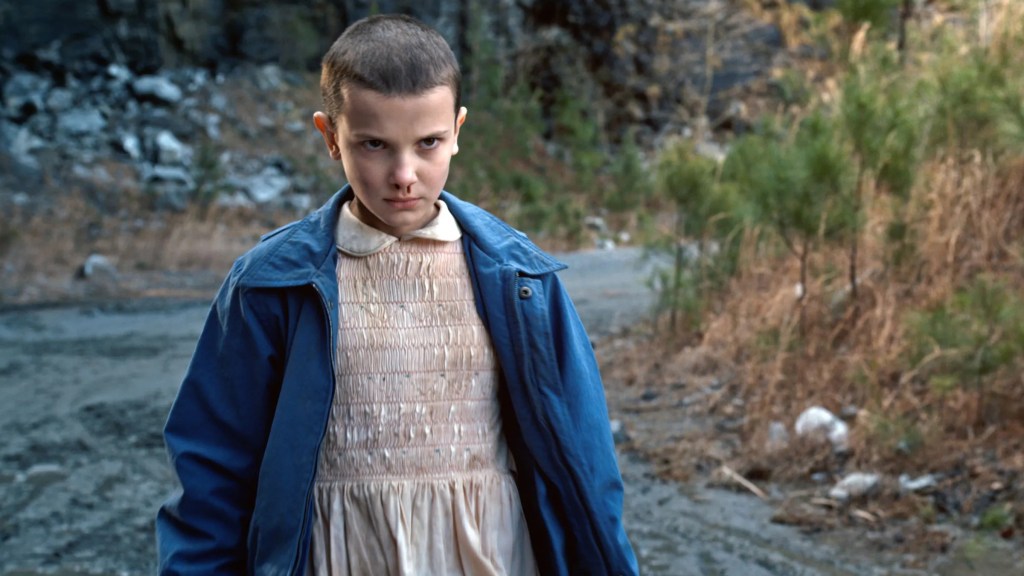
For something that looks so much like a nostalgic childhood adventure, Stranger Things is surprisingly depressing. There’s a missing child. Grieving parents. Government experimentation. Child abuse. Monsters. Institutional cover-ups. Adults who have completely failed to protect the children. And underneath all the bikes and Christmas lights is this looming dread that something is profoundly wrong. To me, that feels more like Akira meets Twin Peaks than The Goonies and Stand By Me.
Twin Peaks also portrays an idyllic American small town with something deeply disturbing lurking underneath it. Akira gives you young people caught up in terrifying scientific and supernatural forces that the adults unleashed. Then Stranger Things takes those ideas and puts them in an ’80s Spielberg/Amblin adventure skin that’s supposed to be full of wonder and charm. And honestly, I think that’s the show’s biggest tonal contradiction.

Stranger Things is full of ‘80s nostalgia for sure, but I don’t believe it’s really all that interested in the experience of being a kid during that time. That’s an important distinction. That’s why the central characters sometimes come across more like symbols of what kids in ‘80s adventure movies were like. And maybe that’s why I kept feeling like something wasn’t working. And I’m not the only one who has questioned the show, especially since the Stranger Things legacy has been taking hits lately.
The Goonies crew are scared, but they’re still having fun. They’re creating their own entertainment. They argue about stupid things. They get distracted. They show off. They misunderstand things. They panic. They get excited. And just like people at that age, they don’t fully realize the seriousness of their situation. It’s all really an adventure to them.
The central characters in Stranger Things are mostly scared because the world is genuinely terrifying. That’s certainly a valid creative choice. In fact, I understand why the creators went that direction. But I think there’s a difference between kids taking a terrifying situation seriously and kids behaving like miniature adults because the plot requires them to take everything seriously. I wanted more of the former. Instead, I kept getting the latter.

Here’s the annoying part: I don’t hate Stranger Things. There are things I genuinely like about it. The atmosphere is immersive. The aesthetic is obviously excellent. The central mystery is compelling enough to keep you watching. And let’s not forget to mention Winona Ryder’s performance. She brings an intensity and desperation to the show that totally fits. The haunting music is hard to forget. And I also recognize that I’m judging the show based almost entirely on Season 1.
I’m hoping the characters evolve in more interesting ways as the series goes on. In every season of Stranger Things, there are 3 things that always happen. But I’m wondering if the fundamental issue I’m noticing about the characters will change. I also understand they’ll grow up and can’t be kids forever but that’s a discussion for another time.
So now I’m left with the question: Do I watch the rest of it? Probably. But I don’t feel the need to binge every season immediately. For now, I’m standing at the gate. Not the interdimensional one. The Netflix one. And I’ll probably walk through eventually, and hopefully it won’t take another decade to do so.
More TV Shows
-
Courtesy of Paramount -

Image Courtesy of Marvel -
Courtesy of South Park Studios