It hasn’t been long since Stranger Things ended, with the finale sending fans into a frenzy. From the beginning, the Duffer Brothers kept saying they already knew everything that would happen in the final moments of the story, but as soon as the new documentary One Last Adventure – The Making of Stranger Things 5 dropped on Netflix, those words basically went out the window. The writers might have had a sense of how to close the overall arc, but when it came to one particular character, there was still a massive question mark about what to do. Eleven was always the central piece of the whole show, yet the ending of her arc was left open for fans to interpret. Was that a good decision? It might have worked if the goal was to please (or upset) certain viewers, but from a narrative and character-building standpoint, not so much.
Videos by ComicBook.com
There’s an irony that’s hard to ignore when a show that always knew exactly how to manipulate emotions chooses to end its story by betting on indecision. Stranger Things built its identity on clear choices, well-defined archetypes, and direct emotions, even when it leaned into subtle exaggeration here and there. The problem is that at the one moment that was supposed to be definitive, the show seemed afraid to commit to a choice, and the new Netflix documentary shows exactly why. And it’s hard not to walk away frustrated by the reason.
One Last Adventure – The Making of Stranger Things 5 Showed That Eleven’s Arc Lacked a Clear Vision

The idea of making a documentary about the behind-the-scenes process of the final season of Stranger Things was meant to celebrate the end of a long journey. And in many ways, it does that — seeing the cast say goodbye, look back on the start of the series, and acknowledge its impact is emotional. But on the other hand, much of it revealed some uncomfortable truths and only gave more fuel to criticisms that have been all over social media.
Among many negatives like plot holes, lack of spectacle, and overall inconsistencies, Eleven’s ending became one of the biggest topics of debate. Some people liked it, but a large portion of fans weren’t thrilled with leaving the fate of the show’s protagonist up in the air. And the documentary actually made things worse by revealing that the ambiguity wasn’t just an artistic choice — it was because no one wanted to commit to a definitive decision. And that’s problematic.

What we saw in the finale with her character was that she sacrifices herself to save Hawkins and her friends, being taken away with the Upside Down. It’s a very emotional, symbolic moment, especially when we see Mike try to convince her otherwise. But in the show’s final scene, the gang is together playing D&D, and Mike, still struggling with Eleven’s absence, spins a theory that she’s still alive and hiding from everyone. This ending leaves it up to the other characters and the audience to decide what they choose to believe.

In the documentary, it’s shown that to reach this conclusion, the Duffer Brothers debated heavily whether the character was alive, dead, or something in between, as if that uncertainty itself was a virtue. The problem is that instead of enriching the experience for fans as a way to understand the creative process, it actually made the finale feel weaker in hindsight. Not because the ambiguity of Eleven’s arc is inherently invalid, but because it became clearer than ever that it didn’t come from narrative necessity — it came from creative hesitation. And when that happens, the emotional impact simply doesn’t hold up. In other words, Stranger Things spent nearly ten years building to a finale that ended up happening out of pure indecision; what we saw of Eleven’s fate wasn’t intentional storytelling, it was uncertainty about what to do with her.
The writers’ room had a few scenes early on to show that the Duffer Brothers were running out of time and under constant pressure. The series had already gone into production with filming, but the script for the final episode still wasn’t finished. To help the audience understand some details, Ross Duffer explained that the central idea for the series finale was to raise expectations so that the audience would really believe Eleven was going to sacrifice herself. Episode 7 already makes it clear that she heard Kali’s offer and might have agreed. But in the writers’ room, that idea didn’t sit well with Matt Duffer. Paul Ditchter, one of the writers, suggested it would be interesting if fans were left wondering throughout the episode. Matt, on the other hand, explicitly stated that the goal was for viewers to think that Eleven really survived. But Ross kept pushing that it didn’t need to be so definite — and that’s how the idea of leaving everything ambiguous came about.

“No. If she comes back and has, in a moment with Hopper… if she comes back and has this moment with Hopper and gets in the van, I feel she has clearly made a choice to live,” Matt argued. “No. Not necessarily,” Ross retorted. Much of this debate continued, especially because the priority was to meet fans’ expectations while also surprising them — and that’s no simple task.
They also debated whether Eleven really needed to leave Hawkins, and much of that came from how they interpreted the character, claiming she represented magic and therefore needed to exit so the others could move on with their lives. Basically, if Eleven stayed with everyone, the other characters would never have to face their own challenges or grow up, because her very existence solves most situations. But the question that remains is: really? Because over five seasons, we saw her arc focused on learning to be human, building connections, and experiencing friendship, love, and belonging — none of which aligns with her being a magical force or symbolic figure.
Why Eleven Deserved a More Honest Ending in Stranger Things

The argument that Eleven represents the magic of Stranger Things is heavily emphasized in the documentary. So the idea seemed to be that giving her a simple, human, or even domestic ending would somehow diminish her symbolic importance. But on closer thought, that logic completely ignores who the character actually was in the story. She didn’t start as a myth or near-divine figure. She began as a traumatized child, used as an experiment, and denied any normal life. Turning her into just a symbol at the end doesn’t elevate her — it reduces her.
If there’s one thing many fans agree on, it’s that it would have been ideal for Eleven to finally have a normal life. Denying that turns her goodbye into a symbol of abstract magic. It would’ve been far more satisfying for her to live free of danger, without powers, surrounded by the gang, experiencing the life she always deserved, instead of disappearing as though her own humanity wasn’t enough to carry the narrative. And no, that wouldn’t have been a “lesser” ending; it would’ve been the most honest possible conclusion to an arc defined by violence, control, and loss of identity. It’s understandable that she was different from everyone else, but over time, Eleven screwed up, got lost, acted impulsively, doubted herself, felt insecure, and had to learn how to live with other people. Her strength always lay in that imperfect humanity, and that’s exactly why ending her as a magic icon contradicts her own construction.
The Duffer Brothers might believe she represents that, but they never actually built her that way. And if she has flaws in character, then she needs growth — and her growth is precisely not being exceptional until the last second, like many expected she would be (and like she herself, on some level, believed she had to be). It’s about humanization, choices, autonomy, and integration into the world. And that aligns perfectly with the core idea of Stranger Things as well, where real strength comes from facing your fears, living with others, and finding humanity even in the most extraordinary situations.
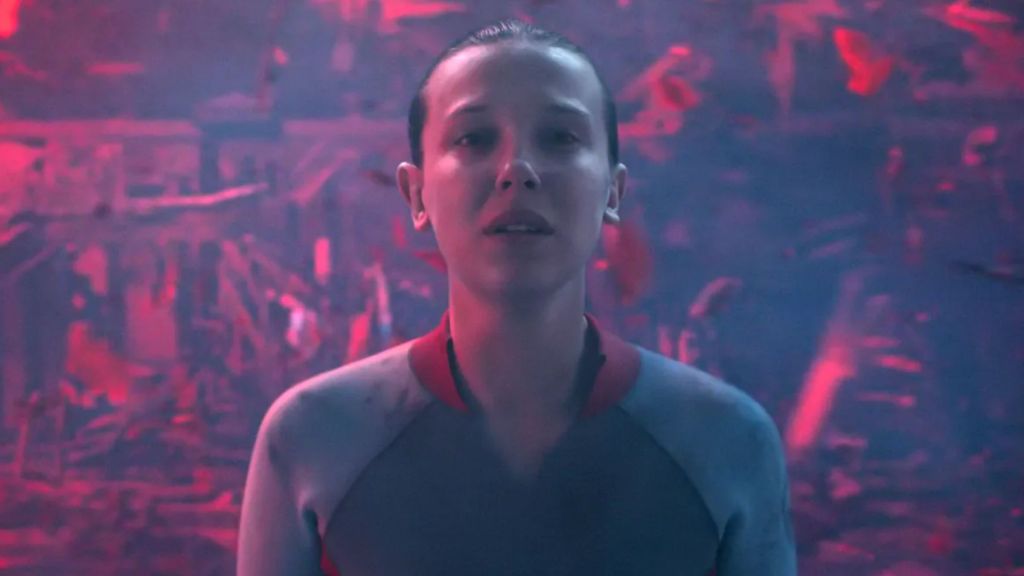
So when you watch One Last Adventure – The Making of Stranger Things 5, it’s hard not to feel that Eleven’s ending was practically shaped to keep the audience talking, but not to provide narrative closure. Ambiguity became a tool for engagement, not meaning. It’s the kind of choice that works great for fueling theories, explainer videos, and endless debates, but fails when it comes to the lasting emotional impact the series always promised. And it’s not that Stranger Things had a truly terrible series finale when it comes to Eleven, but it could’ve been better. After all, after five seasons with this character, the least the audience deserved was a clear answer (even if that answer was painful).
Unfortunately, in this context, ambiguity no longer feels bold — it feels like a lack of conviction. For a character who spent her whole life fighting to be seen as human, ending as a symbolic enigma might just be the most unfair ending of all.
What do you think? Leave a comment below and join the conversation now in the ComicBook Forum!
Most Viewed
-

Courtesy of Crunchyroll / Sony Pictures -

Image Courtesy of Ufotable -

Courtesy of TOHO Animation -

Image Courtesy of Netflix