If you grew up in the ’80s, there was a good chance you developed a dangerous habit: watching television without knowing what the shows were exactly. There wasn’t a website or an app to give you summaries. No algorithm knew that you had an obsessive interest in spaceships, aliens, and people wearing trench coats. You just flipped around until something caught your eye. Sometimes that meant Star Trek. Sometimes it meant The X-Files. And sometimes you landed on a show so strange that you weren’t entirely sure whether it was real or something your childhood brain had invented after eating too much cereal.
Videos by ComicBook.com
The ’90s were especially good at producing those shows. Some became cultural landmarks. Others disappeared almost immediately, taking their bizarre premises, questionable special effects, and surprisingly good ideas with them. That’s what makes revisiting them now so much fun. You aren’t necessarily looking for the next Star Wars. You’re looking for that feeling of stumbling onto something and thinking, “Wait a minute. How did I never hear anybody talk about this?” These five forgotten sci-fi series have exactly that energy.
5) Space Rangers (1993)
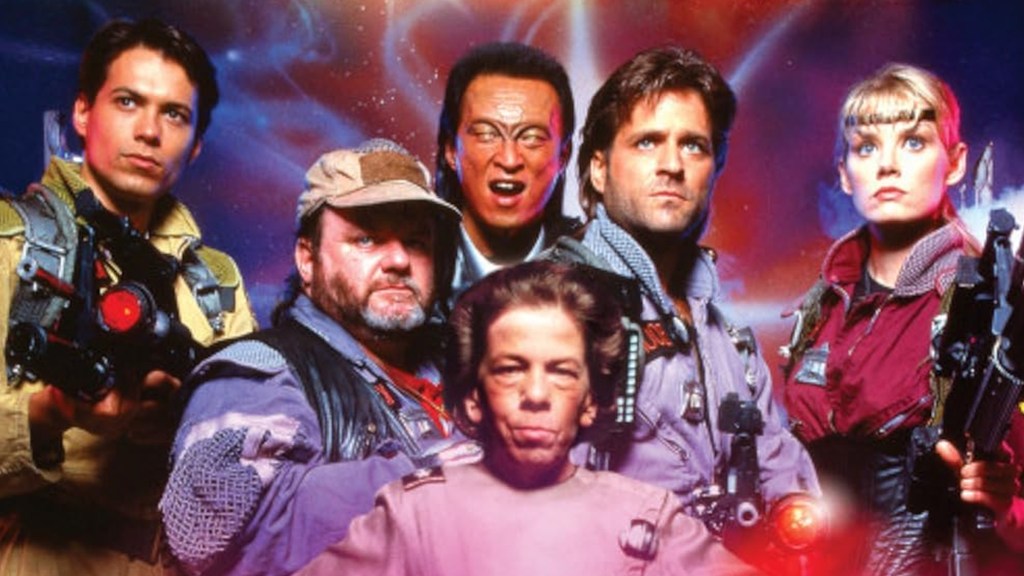
Remember when television decided space could basically be the Old West? Space Rangers did. The setup is wonderfully ’90s: Captain John Boon and his team are law enforcement officers on the frontier world of Avalon, where apparently being a cop wasn’t difficult enough without adding aliens, hostile planets, criminals from other worlds, and several thousand light-years of distance from home. It only lasted six episodes, which feels almost unfair now. There was enough material here for a much stranger little cult classic.
The show had that particular early-’90s television charm where the future is clearly futuristic, but everyone still behaves like they’re working a regular job. Space cops clock in. Space cops deal with paperwork. Space cops chase criminals. Somewhere, presumably, somebody is still complaining about the coffee in the break room. That’s what makes Space Rangers so easy to enjoy now. It isn’t trying to be the definitive vision of tomorrow. It’s a space western with a badge, a beat-up attitude, and just enough weirdness to make you wish CBS had given it another shot.
4) Earth: Final Conflict (1997)
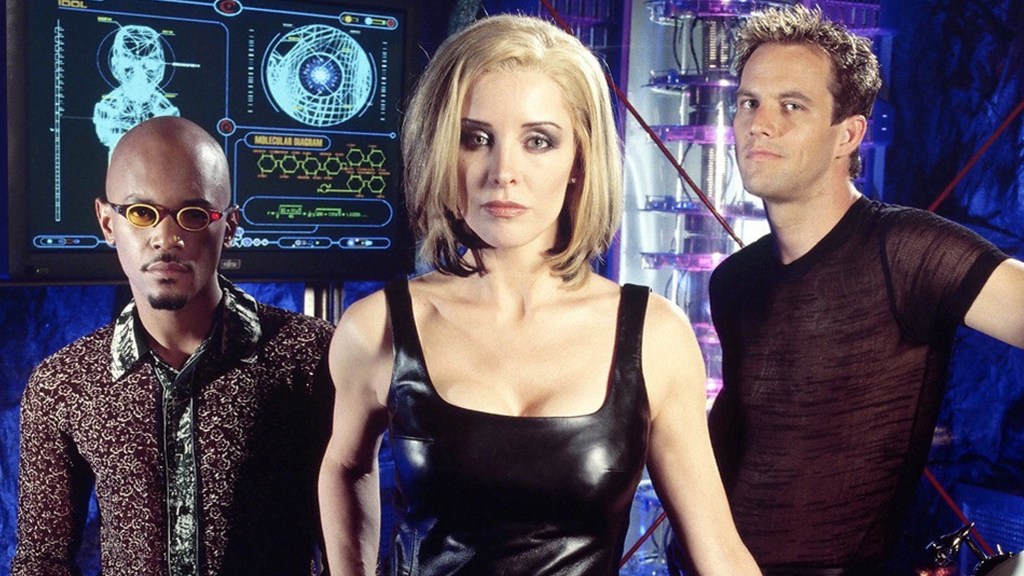
Earth: Final Conflict had a pretty good sales pitch for the end of the world. There were aliens who peacefully arrived on Earth and presented themselves as benevolent benefactors, giving humanity access to incredible technology. Thanks to that setup, suddenly disease, poverty, and war didn’t seem quite as impossible to solve. The aliens, called the Taelons, weren’t interested in blowing up cities or harvesting humans for food. They wanted to help. Which, honestly, should have been reassuring. Instead, it made everything considerably more complicated. Eventually, it’s discovered that the Taelons were facing genetic extinction and were at war with a rival race called the Jaridians. The Taelons also had their own reasons for using Earth, including experimenting on humans and using CVIs to control them.
The series, developed from ideas by Gene Roddenberry, followed William Boone, a former soldier who found himself caught between the Taelons and the growing number of humans who didn’t entirely trust them. That tension gave the show its real hook. These weren’t obvious villains twirling their mustaches in orbit. They were offering humanity things it desperately wanted, while Boone and others slowly began questioning what the Taelons expected in return. Earth: Final Conflict eventually ran for five seasons, but that basic idea is still what makes the early episodes worth revisiting. Sometimes the most unsettling science-fiction story isn’t about aliens who want to destroy us. It’s about the ones who have a very convincing reason to stay.
3) Total Recall 2070 (1999)
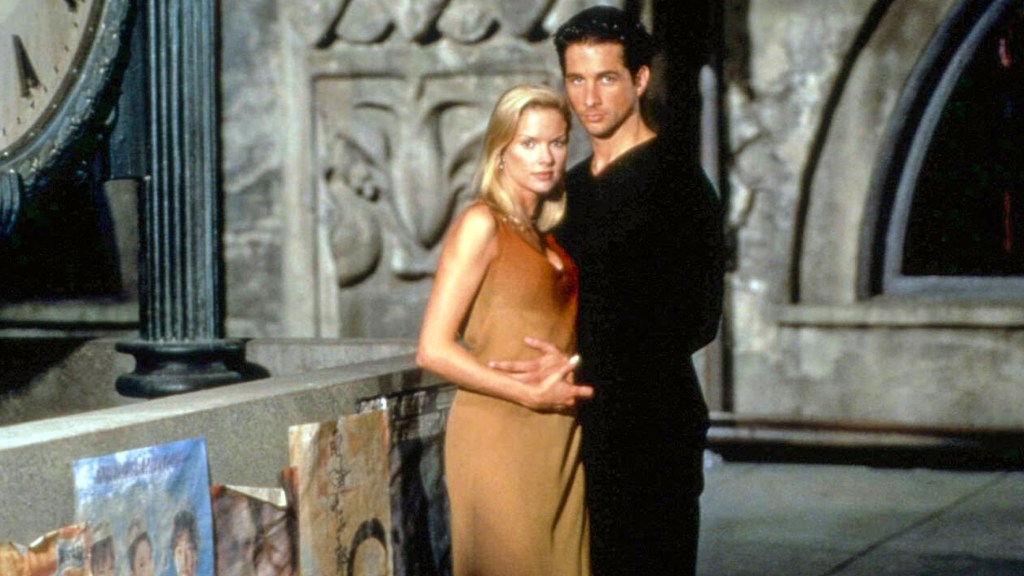
There’s a particular kind of ’90s sci-fi noir that feels made for cyberpunk-obsessed fans. Total Recall 2070 is that kind of show. It arrived in 1999, right when the decade was running out of time to squeeze in one more gloomy cyberpunk nightmare. Fortunately, the show made it on the air and got its shot. Detective David Hume works futuristic cases with Ian Farve, an android partner, while the series throws memory, artificial intelligence, corporate power, and human identity into a volatile cocktail.
Although the same memory-implanting corporation Rekall exists, the story does not connect to Arnold Schwarzenegger’s 1990 movie. And it is darker than the title might lead you to expect. The show also revels in the chilly, paranoid side of the future. The streets are wet. The corporations are suspicious. The technology is probably going to ruin somebody’s life. You know the formula—and it’s the perfect one if you like cyberpunk noir. If you missed Total Recall 2070 the first time around, don’t feel bad. A lot of people did. That’s practically the show’s theme.
2) Dark Skies (1996–1997)
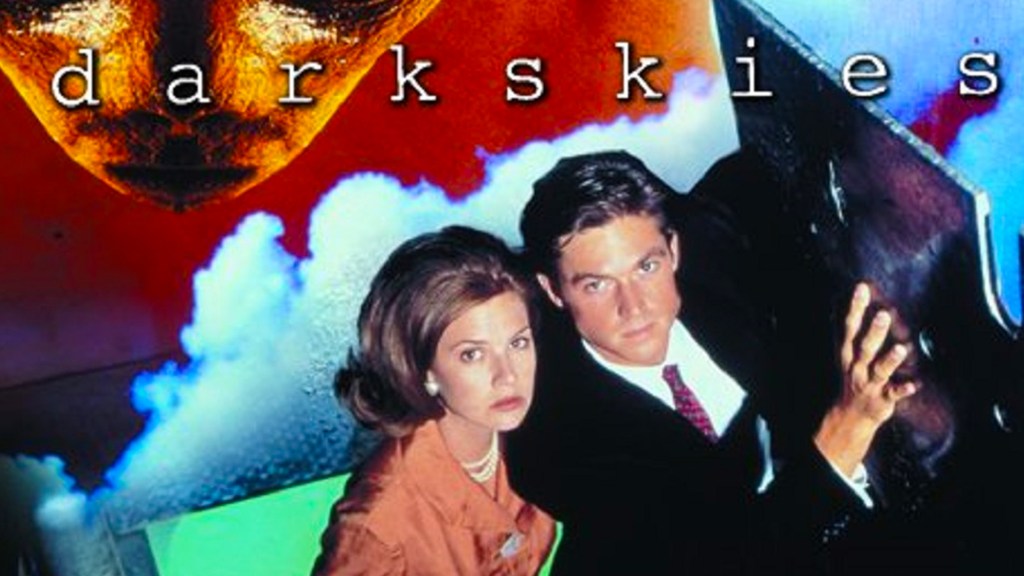
Imagine what it would be like if aliens had been secretly manipulating human history for decades. Not just Roswell. Not just a few unexplained lights in the sky. History. The whole shebang. That was the completely outlandish idea behind Dark Skies. On the surface, it was easy to see the similarities with The X-Files. But instead of modern agents, it’s about a young couple during 1961. John Loengard and Kimberly Sayers move to Washington, D.C., and begin their new lives. John works as a congressional aide to Congressman Charles Pratt, while Kimberly works at the White House as an assistant to First Lady Jacqueline Kennedy.
From there, things get completely unhinged. John starts noticing clues that eventually lead him to believe aliens have been influencing Earth’s recent history since the 1940s. He and Kimberly end up becoming a team bent on discovering and exposing the truth. Sound familiar? But the conflict is not that simple. The aliens are known as the Hive. And lurking in the background, there’s also a secret government organization called Majestic-12 that is already fighting the invaders—while trying to keep everything under wraps. John and Kimberly have to juggle their investigation, the Hive, Majestic-12, their relationship, and their survival—whew. The really fun part is how the show rewrites real 20th-century history as part of the alien conspiracy. Events involving John F. Kennedy, the Cuban Missile Crisis, NASA, Roswell, the Beatles, and other famous figures are given secret alien-related explanations.
1) Alien Nation (1989–1990)
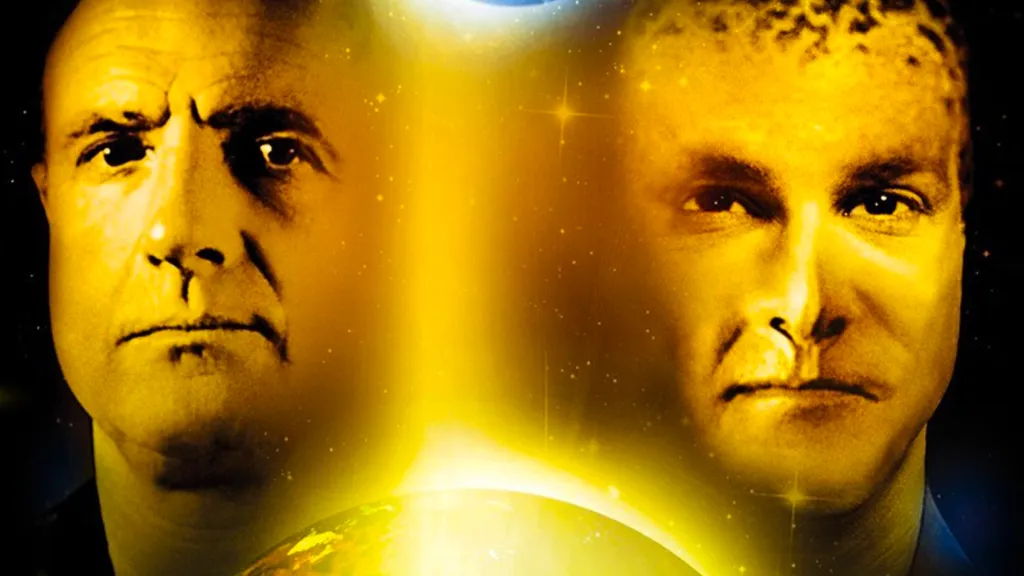
Most alien stories are about the arrival, the invasion, and the war. Alien Nation bypassed all of that and was interested in the morning after. That’s the clever part. An alien race known as the Newcomers has already settled on Earth and become part of everyday life. You could take a look around and see that the Newcomers have jobs, families, homes, and neighbors. They’re also dealing with all the mundane problems that come with trying to build a life somewhere new. They aren’t hiding in an enormous spaceship waiting to conquer us. They’re going to their daily jobs on Earth. They shop at the same stores as humans and buy things. They argue with each other. They raise their alien children among humans. And, naturally, one of them is a police detective partnered with a human detective named Matt Sikes. It’s the perfect unlikely pair.
Alien Nation took an expansive idea and an enormous philosophical question, then whittled it down into a buddy-cop show at its core. And it did a great job balancing it all. Underneath the police stories, Alien Nation was dealing with assimilation, prejudice, and culture. Audiences got to see the uncomfortable business of two different species living alongside each other, even when they look different and don’t share the same history. Sometimes it was funny. Sometimes it was surprisingly serious. Sometimes it was just plain weird. That’s exactly why it holds up. The aliens weren’t really the point. The point was what happened when the aliens stopped being aliens and became your neighbors.
That’s why these forgotten sci-fi shows still linger, even after decades of better-known aliens, bigger budgets, and shinier futures pushed them into the background. There are also fans who’d say some of these deserve to be iconic sci-fi shows. They weren’t really predicting tomorrow; they were taking the fears, dreams, and strange little anxieties of their own time and sending them into the dark. And somewhere in that darkness, the ’90s are still broadcasting.
More TV Shows
-

Image Courtesy of Marvel -

Courtesy of South Park Studios