2026 has already been a remarkably phenomenal year for video games, despite a few notable failures. For every Highguard, we’ve gotten a Crimson Desert, Pragmata, Saros, Cairn, Mewgenics, Resident Evil 9, and so on and so forth. Suffice it to say, if you love video games, then 2026 has absolutely delivered, and the year is not quite over. The crucial aspect that has defined 2026 over previous years is innovation, as many of the aforementioned titles and beyond have delivered experiences that have genuinely surprised us, something that has helped imbue the medium with a little bit of much-needed magic and spectacle.
Videos by ComicBook.com
Perhaps the best evidence of this newfound penchant for innovation (I’m aware previous years had innovative titles, but 2026 is truly packed with them) is the latest game from developer Digixart, the same folks behind one of the most underrated games of the past five years: Road 96. This new title, Tides of Tomorrow, is pushing the proverbial envelope when it comes to single-player, narrative-focused, choice-heavy video games, helping to usher us into a new era of meaningful consequences and storytelling. It may just be 2026’s most exciting game, at least in my opinion, and thus far, and I really wish more people were talking about it, as I’ve never seen another title achieve what Digixart has managed to do.
Tides Of Tomorrow Connects Players Like Never Before
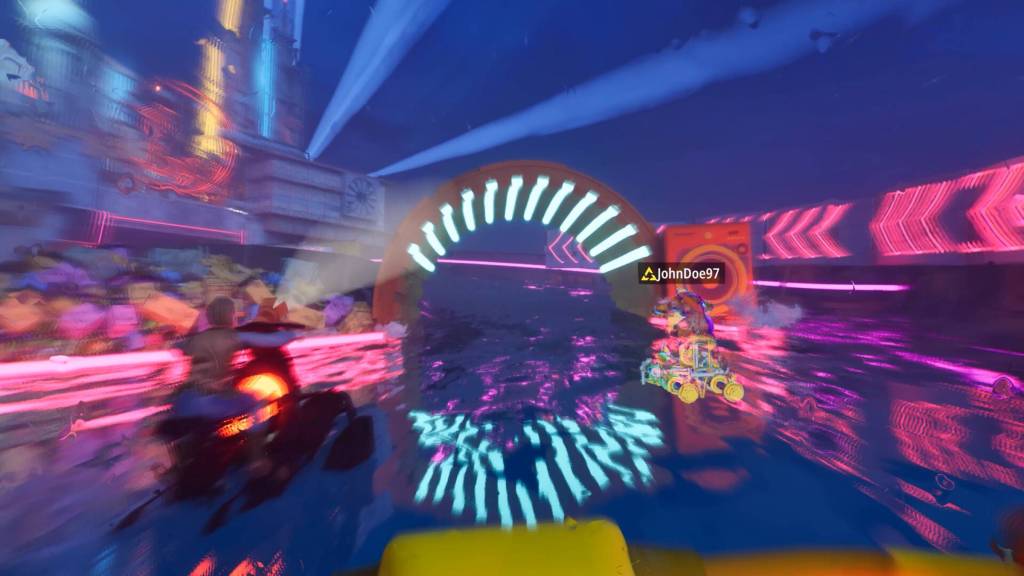
Tides of Tomorrow is like no single-player game I’ve ever played. Sure, it has shades of titles like Detroit: Become Human and the aforementioned Road 96, if only by the very nature of its choice-driven experience inherently aligning with those titles. However, beyond the superficial and expected, Tides of Tomorrow’s novel and immensely innovative Online Story-link mechanic completely alters the way one approaches every facet of its design. While you’ll make decisions as you would in any other choice-based single-player adventure, their consequences have real meaning, not just on the story, but on future players as well.
Tides of Tomorrow sees you following in the footsteps of other Tidewalkers, players, friends, or even the developers who’ve gone before you and made all the choices you’re about to. You can tap into visions that showcase which choice the Tidewalker you’ve chosen to follow made, and how their decision affected the story. It is then up to you to either make the same choice or attempt to right their wrongdoings. This extends even to the resources you gather, as any left behind go to the Tidewalker that follows you, as do any resources gained by picking certain choices. Ostensibly, your actions directly impact the playthrough of the next player.

Tides of Tomorrow basically takes the concept of leaving behind ladders and ropes for other players in Death Stranding and expands it to be not only significantly more impactful but also an unavoidable feature. The implementation of the Online Story-link feature ironically elevates a single-player experience by incorporating the involvement of every other player. Sure, it’s a mechanic that only really works within this very specific context, but it is nevertheless an incredibly ingenious innovation on an otherwise tired formula. It sounds as if there’s the potential for it all to be a tad messy, but in context, this works surprisingly flawlessly, promotes endless replayability, and is woven naturally into the narrative as well. It’s hard to fault Tides of Tomorrow’s ambition, something that is perhaps unsurprising considering the folks behind it, and frankly, that’s what already makes it one of the best games of 2026, at least in my opinion.
Tides Of Tomorrow Reminds Us Why Single-Player Story Games Are So Important
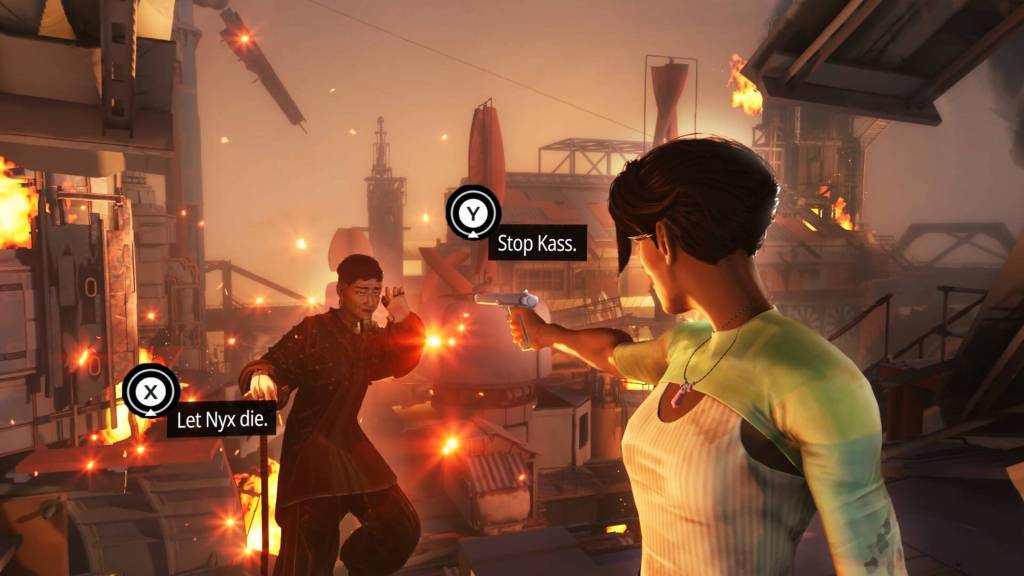
It felt as if my many playthroughs of Tides of Tomorrow would ingratiate me more toward the multiplayer experience and develop a greater appreciation for experiences that are community-led. However, while I certainly enjoyed those aspects, I found that I reflected more on the value of the solitary story experience rather than the communal one. That’s not to say that the multiplayer component of Tides of Tomorrow isn’t effective. My gushing over its immensely impressive implementation should indicate otherwise. Rather, I realized that Tides of Tomorrow only works because of our collective history with single-player adventure games and the conversations we’ve had with one another as a direct result of the impact their stories had on us.
The desire to see another player’s path and choices in Tides of Tomorrow comes from the same place as our need to look up Reddit threads on the latest episode of a TV show. We’re curious about the way others interacted with the same media, and ironically, that simply isn’t possible in an experience that is simultaneously shared, at least to the same extent. One’s experience of Tides of Tomorrow is still unique; it is still a story ultimately shaped by you, your moral compass, and your decisions, something that is only possible because of its status as a single-player experience. You can have a meaningful impact on the story, and your actions can have consequences because it is designed to be shaped by the individual, not the collective.

Without decades of sharing our experiences in worlds curated for the individual and thus learning about the numerous ways others approach art and media, Tides of Tomorrow simply wouldn’t work. That being said, I can see how the integration of communal aspects, such as the Online Story-link mechanic, can help enhance the solitary gaming experience going forward. It worked to such great effect with Death Stranding, and it completely elevates an already phenomenal narrative in Tides of Tomorrow. This also illustrates exactly why indie games are more important than ever, as only within a space unrestricted by limitations and stockholders can new and exciting ideas be born. Although that very much feels like an article for another time. The important takeaway here is that Tides of Tomorrow is utterly original, immensely enjoyable, and a game that utilizes our collective history of adventuring alone to make sharing stories with others all the more enjoyable.
Do you think single-player narrative games need a little more human connection, like Tides of Tomorrow provides? Leave a comment below and join the conversation now in the ComicBook Forum!
More Gaming
-

Paramount – Legendary Pictures -

Courtesy of Evil Empire -

Courtesy of Saber Interactive