Crimson Desert is the internet’s favorite punching bag at the moment. Much like Marmite or your region’s equivalent of a controversial foodstuff, you either utterly love or hate Crimson Desert with a burning passion. Apparently, there is no middle ground to be found here, as I suppose that’s just how online discourse works these days. However, somewhat interestingly, when you remove all nuance completely (who needs it, I guess), you get a fairly intriguing insight into the mindset of, at the very least, the vocal minority and the things that truly matter to gamers nowadays.
Videos by ComicBook.com
Crimson Desert’s many alleged failings have revealed one key aspect of the industry that I had honestly not given all too much thought to. However, after seeing just how much of an enormous impact it made on players, it has made me completely reconsider not just this generation of consoles, but the next one, too. While I certainly don’t condone the sheer level of entitlement and vitriol that some people have expressed toward the game and its developer, I do think some of the talking points brought up are worth addressing, albeit in a calmer, more respectful manner.
Crimson Desert Has Revealed The Importance Between Console & PC Parity
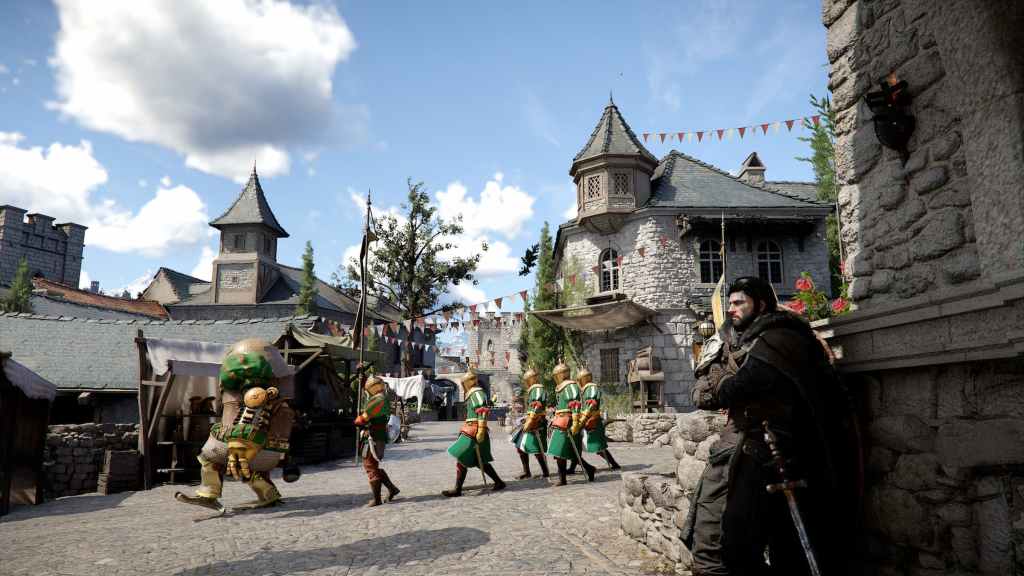
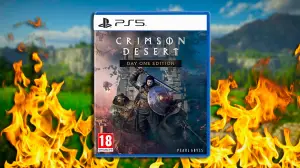
One of the biggest complaints about Crimson Desert pre-launch was the lack of PlayStation 5 footage. This had fascinated me at first, as I couldn’t quite comprehend the fear some people shared about Crimson Desert struggling to run or suffering from a severe visual downgrade in a current-gen system. Not only had PlayStation attempted to get Crimson Desert as an exclusive, but the game appeared to be running beautifully in PlayStation 5 Pro footage. Surely it would run absolutely fine on the base model? How much of a difference could there truly be? Well, it would seem there is a difference, albeit not one so drastic that playing Crimson Desert on the base PS5 is equivalent to playing The Witcher 3 on Switch.
I don’t think that the differences between the PC and base console versions of Crimson Desert were enough to warrant cancelling one’s pre-orders of the game (I certainly didn’t). However, I do think that it exposed a rather significant issue regarding both the age of current-gen consoles and the future of this generation. The PlayStation 5 and Xbox Series X are still relatively powerful pieces of hardware, but it is clear that they’re no longer comparable to PCs, which have long since outpaced them in the power department. The PS5 Pro does a little to alleviate this, but even then, not enough to have true parity between it and PC performance.

Naturally, there’s not much we can do about that now. The PS5 and Xbox Series X/S consoles are nearly 6 years old at this point and lack the necessary technology to keep up with the innovations happening in the PC space. However, it begs the question of how the PS6 and Xbox Project Helix consoles will fare going into the next generation. Will they similarly suffer from a lack of parity with their PC counterpart, or will they manage to stay the course until the PlayStation 7 and Xbox 720? Ultimately, I think it is more likely to be the former rather than the latter, especially with the rate at which technology is improving.
Sure, the changes may seem visually incremental, as games have had stunning graphics for some time now. However, the level of power these innovations require is ridiculous, and not something a PS5 can handle. Take the recent controversial DLSS 5, which required dual RTX 5090s just to get the demo working. This kind of tech is likely to worm its way into video games one way or another, and consoles may not be able to handle it. Of course, with rumors that Xbox Project Helix is essentially a PC, there’s a good chance that it will be more adaptable or, at the very least, a more powerful piece of hardware that can last a little longer through the next generation than its PS6 counterpart. However, I suspect that a shift in how we treat consoles is in order, and unsurprisingly, Nintendo has the answer.
Consoles May Have To Rely On Exclusives More Than Ever

Nintendo abandoned its attempts at maintaining true parity with even its console contemporaries, let alone PC, a very long time ago. Surprisingly, its core consumer base hasn’t ever really complained, at least to such an extent that Nintendo has felt forced to change its ways. The sheer level of abysmal performance Nintendo Switch players, myself included, put up with over eight years simply to be able to play on a handheld is staggeringly impressive and even a little inspiring. Nintendo has established a more realistic and healthy approach to graphics and performance that, while sometimes exploited unfairly, typically empowers it to focus on innovative game design and cheaper hardware.
We surely have to reach a point where, to a lesser extreme, PlayStation and Xbox take a similar road. Crimson Desert, like many other games before it, has showcased that consoles are not designed to last as long as they are. They’re often too limited even at launch and are doomed to fall behind after just a few years. Even if the PS6 had every feature it needs to keep up with the current slate of technological innovations, it would eventually be made obsolete by a whole new spate of improvements. Sure, that’s why Sony invests in Pro models; however, considering just how expensive the base consoles will allegedly be, I struggle to imagine they’ll sell any better than their last-gen counterparts.
Perhaps then a solution is merely for PlayStation and Xbox to focus more on exclusives that can actually run on their hardware, rather than rely on third-party titles to bolster their libraries. This is clearly something that Sony has been attempting to do for some time, especially with its acquisition of studios like Bungie. Microsoft similarly has been collecting studios like they’re Pokémon, although its controversial shift away from first-party exclusives has been hurting its efforts somewhat. Still, as exclusives are guaranteed to work on the hardware they’re designed for, PlayStation and Xbox won’t have to worry about the stark difference between their next-gen consoles and PC.
Crimson Desert Isn’t The Death Of Consoles
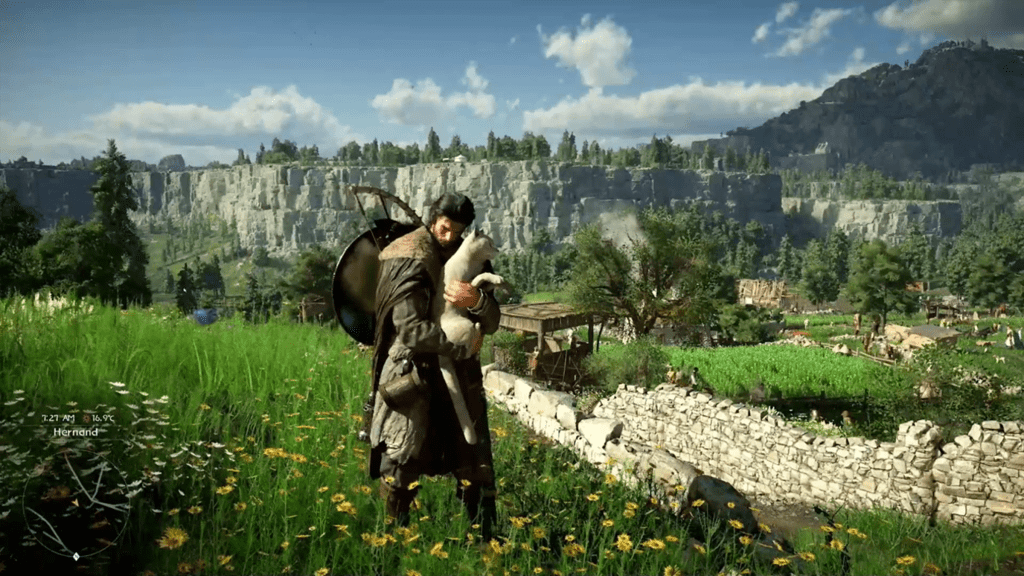
Of course, the console market is so ridiculously big that third-party developers are unlikely to produce games that can’t run on next-gen systems at all. Ultimately, considerations will be made to ensure that console players are catered to, at least somewhat. However, the insatiable desire for technological innovation will continue to push the industry to seek new ways it can make video game characters look like AI-generated humans. When those advancements are created and become more accessible, studios will want to utilize them to make their art better, and engines like Unreal Engine will begin incorporating them.
There needs to be some level of balance between ensuring that the industry doesn’t outpace console hardware too quickly and ensuring that the spirit of innovation is kept alive and healthy. Unfortunately, at the rate at which we’re going, or, perhaps more aptly, as a result of just how much power modern iterative innovations require, that may not be entirely possible. One aspect of Crimson Desert’s design, however, that has enabled it to run well on the base PS5 and Xbox Series X is Pearl Abyss’ custom engine, something many colloquially refer to as Black Magic.
Custom engines can reduce the amount of bloat engines like Unreal add to a game unnecessarily and, as a result, greatly improve performance across all platforms. Of course, they’re expensive to produce and often inconsistent (we’re looking at you, Creation Engine). However, they can help developers better attune their games to console hardware, such as Capcom’s RE Engine being capable of getting Resident Evil 9 and Pragmata to run smoothly on the already outdated Nintendo Switch 2. Of course, there’s the distinct possibility that one day all of this will be rendered moot anyway, thanks to the rise in cloud gaming and its indifference to any hardware at all.
Yet, right now, the growing distance between console and PC is becoming more and more evident and clearly a fear for fans. The sheer number of people ready to decry Crimson Desert a scam and a failure owing to Pearl Abyss’ failure to showcase base PS5 footage illustrates just how much people believe current-gen consoles to be inadequate. I hope that the PlayStation 6 and Xbox Project Helix can provide more consistent and long-term performance and PC parity over their lifespans, and that games like Crimson Desert continue to be a possibility on console without too much sacrifice. The alternative, of course, is that consoles begin costing as much as PCs and thus gaming stops being an affordable hobby and becomes a niche luxury. Frankly, no one wants that, least of all me.
Do you think the PS6 and Xbox Project Helix will be able to keep up with PC? Leave a comment below and join the conversation now in the ComicBook Forum!
Most Viewed
-

Image courtesy of Marvel Studios -

Image Courtesy of Marvel Comics