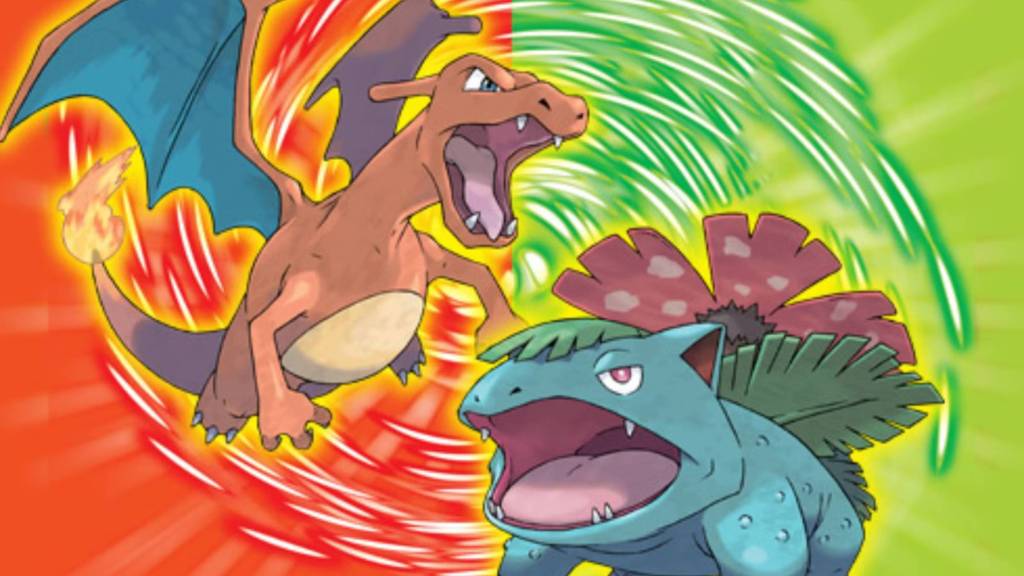
The return of Pokémon‘s Gen 3 games FireRed and LeafGreen on the Nintendo Switch 2 has brought many new players to the Kanto region for the first time in these classic titles. Originally remakes of the first games Pokémon Red and Blue, FireRed and LeafGreen are not just refined visual upgrades in their GameBoy Advance versions, but also an improvement on many mechanics that would become standard in the franchise. Yet, as the series expands to new audiences with every fresh entry, an aspect of the Gen 3 games has become somewhat lost.
Videos by ComicBook.com
For a long time, Pokémon FireRed and LeafGreen have become almost perfect starting points in the series due to their re-creation of the original Gen 1 games. Kanto is arguably the region that embodies Pokémon the most, with a good amount of varied Pokémon to capture, Gyms to challenge, and other events within the world. Despite their age, these titles are hardly dated, representing the 2D era of the series that players now have much easier access to through the Switch 2.
New Players Are Struggling To Beat Some Challenges In Pokémon FireRed & LeafGreen
Many players are jumping into Pokémon FireRed or LeafGreen for the very first time, as each game hasn’t been easily available without emulation, or through an older GameBoy Advance or Nintendo DS handheld device. These games are drastically different from some of the other Pokémon titles on the Switch 2, from Pokémon Sword, Shield, Scarlet, or Violet. Even games that feature the Kanto region, such as Pokémon Let’s Go Pikachu! or Let’s Go Eevee!, are more akin to Pokémon GO than a “classic” iteration of the series.
With this new experience comes new challenges for plenty of players, who have to navigate Kanto for the first time. Despite being the most well-known location in the series, it’s another matter entirely to train a team of limited Gen 3 Pokémon to take on the Gyms, Team Rocket, and Elite Four of FireRed and LeafGreen. With each game having unique limitations on Pokémon, such as trading evolutions and version-exclusive Pokemon, some hurdles have caused players to struggle.
Some posts on platforms like X and Reddit have shown first-time players struggle against foes like Misty, the second Gym leader. The sharp level spike of some Gyms will force players to learn type match-ups, especially depending on the starter they picked. Unless you are really grinding Pokémon levels, some advantage is needed to overcome the ace Pokémon of some Gym leaders, not just Misty. FireRed and LeafGreen have a lot of tough battles, many of which are tests of your game knowledge as sharp barriers to your progress.
Gen 3 Features Far Fewer Tutorials As It Allows You To Learn Through Failure

One of the defining qualities of FireRed and LeafGreen is that outside the initial introduction to Pokémon battles and catching Pokémon, it lifts its hands off the player for the remainder of their adventure. The game doesn’t teach you about type match-ups, how to get specific Hidden Machine moves for progress, or other information by pausing your journey. Instead, you have to actively search for those answers yourself, either by talking to NPCs or exploring the locations you visit.
This can make encounters difficult, especially as you progress through either game. To go back to the Misty example, players who start with Charmander in FireRed and LeafGreen have a fairly easy ride until that Gym. If you want, Charmander can defeat the first Rock-type Gym with ease after it learns the Steel-type move Metal Claw at Level 13. Metal Claw can defeat Brock’s Geodude and Onix, but Misty’s Starmie can take down a fully evolved Charizard if it wants to. There’s almost no way to overcome Misty with a Fire-type alone, forcing players to adapt.
While this could seem obvious to Pokémon veterans, for new players, this can turn into a series of failures. The emphasis on learning mechanics for battle, such as leveling, introduction of limited Technical Machine (TM) moves, and type match-ups are more heightened in FireRed and LeafGreen, without loopholes or shortcuts to avoid them. The limited number of Pokémon in both games also narrows your options, as training is more tedious too. All these factors cause players to actively look for answers, finding their own paths forward instead of one a tutorial recommends them to do.
Recent Pokémon Games Hold Player Hands Far More Without Letting Them Find Solutions

The challenge of FireRed and LeafGreen for new players is not something you see as often with more recent Pokémon games, mainly in the Generations released for the Switch. This could be intentional, to garner a wider audience by toning down the difficulty of Pokémon games as a whole. One of the ways newer games have removed obstacles is by having more tutorials in them, teaching players about mechanics directly instead of them being nebulous.

In older games, Pokémon type match-ups, status effects, and other systems were sometimes communicated through in-game NPCs or resources you had to discover naturally. In newer games, the introduction is lengthier, usually containing all the knowledge you need to play Pokémon from start to finish. In many cases, the only thing the tutorial doesn’t show is how Pokémon of higher levels are stronger, but this is basic math anyone can figure out.
To some, extra tutorials bog down the overall experience, making it take far longer to reach the exciting parts of Pokémon battling and capturing. Part of the appeal of games like Pokémon FireRed and LeafGreen was that so much was unknown, but with newer titles giving you everything at the start, it removes some of the mystery that captured the hearts of fans in the first place.
What do you think about the existence of tutorials and difficulty in older Pokémon games? Leave a comment below or join the conversation in the ComicBook Forum!
More Gaming
-

Image Courtesy of Dreamworks -

Image Courtesy of Electronic Arts -

Image Courtesy of Electronic Arts