The roadmap for Dungeons and Dragons announced at Gen Con this year had some pretty exciting reveals, including the return of the Dark Sun and Greyhawk settings from older editions. At the same time, multiple crossovers with other IPs were announced as part of the TTRPG’s “Universes Beyond” initiative, a similar approach the Magic: The Gathering card game has taken in recent years. While the current planned collaborations with World of Warcraft and Star Wars plan to remold D&D to fit those worlds with gameplay expansions, there are some universes the game might struggle to adopt.
Videos by ComicBook.com
Other fantasy settings like World of Warcraft, Lord of the Rings, or even Game of Thrones would be a natural fit for Universes Beyond, but even these franchises have separate game systems besides D&D. Star Wars in particular has published content that remolds D&D‘s 5th Edition into something more appropriate for the setting. Despite expansions to D&D‘s rules through its recent 5.5e mechanics, the game has natural limitations that would prevent some franchises from being good crossovers.
5. Alien/Predator

The Alien or Predator franchises are rooted in sci-fi horror, a genre that already puts itself slightly at odds with D&D. While the recent 2026 Ravenloft: The Horrors Within setting expansion for D&D gives players Domains of Dread that imitate the themes of these series somewhat, they are still rooted in gothic horror and fantasy concepts before anything too futuristic. Even other games like Starfinder or D&D‘s own Spelljammer would fail to adopt Alien or Predator perfectly, as the helpless feeling of characters in those settings doesn’t quite match D&D‘s typical power fantasy.
Alien: The Roleplaying Game is an already existing TTRPG for the Alien franchise, and it emphasizes the terror from the original Ridley Scott film over the bombastic action in Alien 2. One single Xenomorph could spell disaster for your party, but other threats like rogue Androids or face huggers also pose a considerable threat. Although it could be fun to see sci-fi archetypes of Alien characters built on top of pre-existing classes/subclasses, the core systems of D&D would still create figures who could stand their ground against a Xenomorph, even briefly.
This applies to the Predator series as well, which doesn’t have a popular TTRPG, but does work best when applying the first movie’s feeling of helplessness against an alien killer. One could argue that the recent Predator: Badlands or Predator: Killer of Killers films depict more varied approaches to the IP, a Universes Beyond crossover wouldn’t likely focus on the niches those excellent movies provide. Playing as various types of Yautja in various D&D classes is perhaps the only way this idea might work, but as a whole, these two franchises aren’t the best picks.
4. Marvel Comics

Superhero stories are one that do fit the power fantasy of D&D, but individual heroes, anti-heroes, and villains are far more varied than the organization of typical TTRPGs ever allow. Marvel Comics is a brand that D&D owners Wizards of the Coast and Hasbro have crossed over with multiple times for Magic: The Gathering, showing not only a key partnership, but a continual go-to for Universes Beyond concepts. A D&D collaboration with Marvel may already be in the works, whether it’s for an Avengers, Fantastic Four, Spider-Man, or other corner of the comic universe.
In my opinion, I think a Marvel Comics expansion in D&D would be disastrous, solely because there is already an excellent TTRPG system for superhero stories. The Mutants & Masterminds tabletop game has existed through multiple editions, refining a robust gameplay library meant to tell all kinds of adventures with super powered characters. This game leans heavily on the personalization and individualism of characters, encouraging player creativity instead of simply choosing paths for different builds like D&D does.
Trying to define super powers through traditional D&D archetypes would be next to impossible, with any gameplay expansion likely feeling close to an incomplete adoption of that approach. The restriction that comes from Marvel Comics also narrows the scope of this crossover, likely emphasizing stat blocks for known characters rather than giving players ways to integrate themselves into Marvel’s rich world. At the end of the day, Mutants & Masterminds would always be the superior choice.
3. The Walking Dead
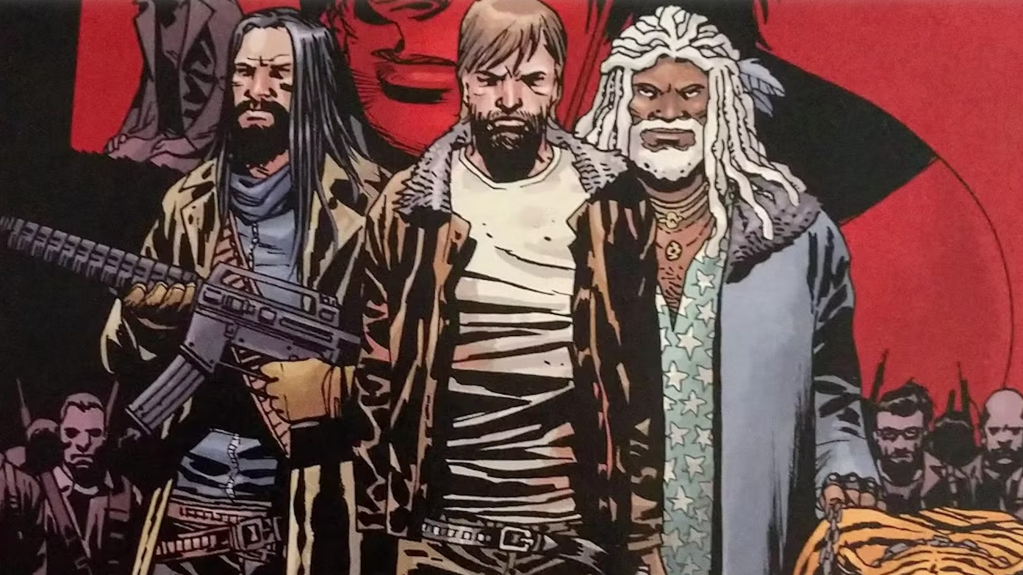
One of the Universes Beyond we could see for D&D is The Walking Dead, a franchise that many still remember fondly for its high-stakes drama within the zombie apocalypse. Yet, there are too many toes this crossover would step on, especially given what was already announced for the game next year. The Walking Dead is a setting defined by a lack of resources, which wouldn’t be too hard to adopt for a unique gameplay setting, but this already matches the Dark Sun world returning to D&D.
The brutal apocalypse of Dark Sun easily dwarfs The Walking Dead, making the latter feel like a stripped down version of the other. When players might have a choice to fight Sorcerer Kings and discover powerful magic artifacts in Dark Sun, or use a reskinned shotgun as a magic item in a Walking Dead collab, the former choice is abundantly clear. The grounded nature of The Walking Dead may be an interesting take on the TTRPG, but it lacks the appeal of more fantastical settings like World of Warcraft, Star Wars, or others.
2. Tomb Raider/Uncharted
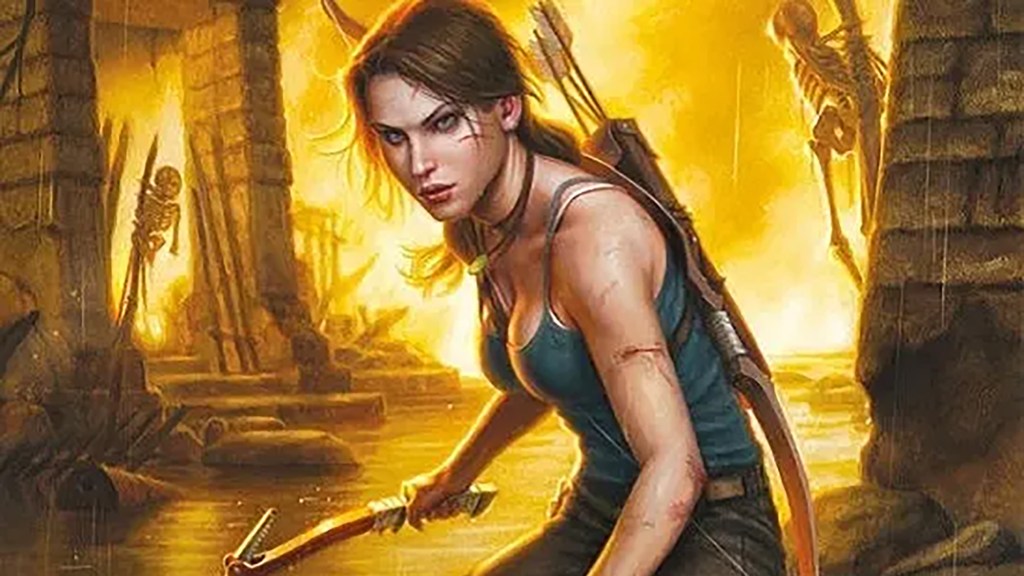
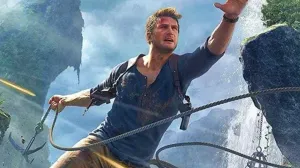
Tomb Raider suffers from the same problem as The Walking Dead — a lack of fantastical variety to justify a D&D crossover. The first game for Tomb Raider might feature dinosaurs and other strange elements, but later games delve into the realism of the setting more often than not. The same can be said of the Uncharted games, whose unique locations of undiscovered treasure could be implemented as a D&D setting, yet with the same restrictions as Tomb Raider when it comes to gameplay variety and flavor.
Both the Tomb Raider and Uncharted games don’t quite fit the idea of D&D archetypes either, with protagonists Lara Croft and Nathan Drake being jack-of-all-trades rather than specialists. Crafting unique classes, subclasses, backgrounds, or feats for a D&D crossover in either of these settings would be incredibly difficult, and likely not worth the effort. Tomb Raider is a setting already used for Magic: The Gathering, so the temptation to use it again for D&D is there, but relying on fans of that series to get into D&D is focusing on too small of an audience for what will likely be a pricey expansion.
1. Transformers
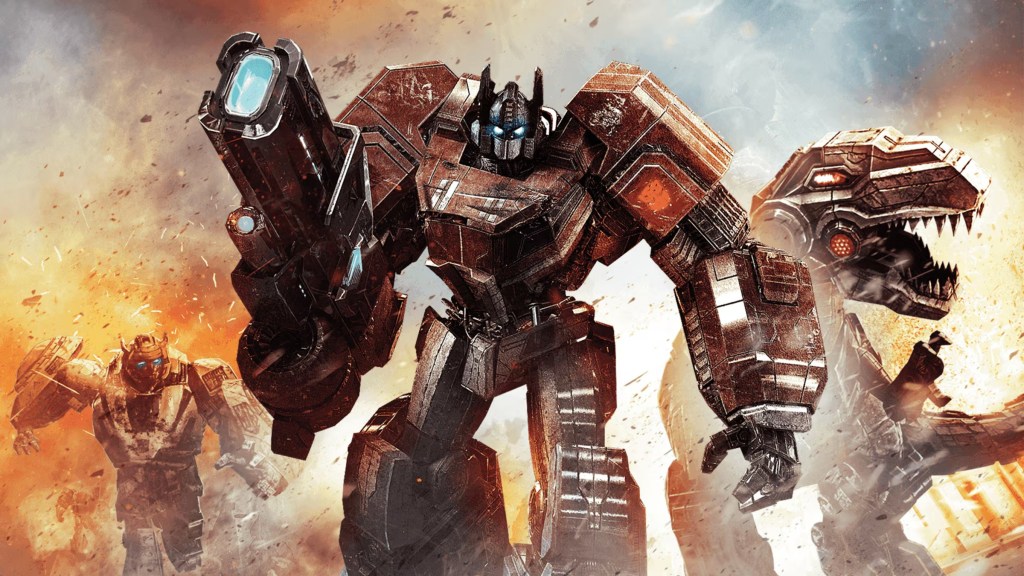
The Transformers franchise, on paper, has everything you would want from a D&D collab, from interesting character variation that could build different gameplay ideas, to a distinct setting with tons of story to explore. Even the sci-fi aesthetic isn’t the defining trait of Transformers, with characters like Optimus Prime often using swords or axes that could easily translate into D&D. However, much like Marvel Comics, there are already systems in place that operate far better than a mere translation of the fantasy TTRPG could achieve.
The Transformers Roleplaying Game is a system published by Renegade Studios, a group that has refined the gameplay of the TTRPG for quite some time. Players in this system embody Autobots with their own classes, creating their own robot in disguise from the ground up. The gameplay of this system is not made for fantasy characters, but rather is made for Transformers first and foremost. There are mechanics tied heavily to the lore of Transformers, from what your character morphs into when it’s time to roll out to the weapons they use in battle to fight against threats.
The way abilities and features are lined up in a character sheet for the Transformers Roleplaying Game are inspired, showing how franchises have built their own TTRPGs without D&D‘s influence. The worst Universes Beyond that Dungeons and Dragons could pursue are ones who already have great role playing foundations, as players will always go for the system that caters to the IP they love rather than a broad game that only features that franchise as a crossover afterthought.
More Gaming
-
Courtesy of Saber Interactive -
Image Courtesy of Electronic Arts/Secret Mode