There are a lot of hopes for Pokémon Winds & Waves, with the 10th Generation of mainline games for the series carrying many expectations since its reveal. Speaking of expectations, players had extremely high hopes for The Legend of Zelda: Ocarina of Time‘s Switch 2 remake, with the game living up to the hype in several ways following its release. The high praise for the remake revolves around its design choices, with a few decisions being something Winds and Waves could also adopt to give it the best chance possible at critical acclaim.
Videos by ComicBook.com
Currently, there is no exact launch window for Pokémon Winds and Waves, with theories pointing toward the end of 2027 at this time. This gives developers plenty of time to iterate on the game’s features, at least on a surface level that corrects some of the most dated aspects of Pokémon games to release in past years. Ocarina of Time‘s biggest strengths should be a source of inspiration, especially since games like Pokémon Legends: Z-A and the past mainline titles of Pokémon Scarlet and Violet both were far from perfect in the eyes of fans.
4. Change Menus so Players Don’t Access Them as Often

One of the biggest fixes in the Ocarina of Time remake was how the game transformed the menu system of the original, making it easier for players to access items and gear. In the 1998 classic, players had to constantly switch between menus to equip certain tools or access items, leading to frustrations Pokémon fans can surely relate to. The menu system of Pokémon games has always been somewhat dated, with players having to navigate a variety of different menus to view their Pokémon team members, what moves they have, their stats, and other useful information.
At the same time, Pokémon often makes it hard to swap between caught Pokémon through its storage system, which often has to be navigated carefully in order to do what you want. There are many menus in Pokémon games that don’t really do much in gameplay, and aren’t communicated well to even let players know they have certain options. Giving players more ways to modify the UI/UX of their game could make Pokémon Winds and Waves revolutionary, changing some long-held pitfall of playing through a Pokémon title.
3. Give Players More Ways to Navigate a Semi Open-World

Pokémon Scarlet and Violet was praised by players for being Pokémon‘s first attempt at an open-world structure for its region, a sharp turn from the often linear paths most games create. Even Pokémon Sword and Shield, which had open areas, were known for putting players on strict progression paths from one location to another, just like the oldest titles in the franchise. However, Scarlet and Violet‘s world design was far from perfect, as it came with a number of issues that prevented it from being great. Some of the key criticisms for Scarlet and Violet‘s map included:
- Lack of Level scaling on wild encounters
- Invisible barriers that prevent players from going to certain spots
- No trainer adjustments to player Pokémon Levels
The Level scaling problem is one that plagues the entirety of Scarlet and Violet, as it allows players to essentially skip any sort of natural progression for making their Pokémon stronger. For example, you can grind experience on extremely high Level Pokémon to boost your team’s XP fast, easily over-leveling your squad for the first Gym to take it down without any sort of challenge. While you could go anywhere and traverse (almost) the whole map of Scarlet and Violet any way you wanted, since no Trainers adjusted to your current Level, you’d get inconsistent battles that could be far too easy or overwhelmingly difficult.
Ocarina of Time lets players navigate the world in any way they choose, but deliberately prevents you from reaching areas that you aren’t ready for. While you could still go to those areas, there are no exploits in the remake that let you skip the natural progression of the game’s main path. This isn’t quite the illusion of choice, but rather giving players multiple paths to accomplish the same goal in whatever order they choose. This is reflected in Pokémon Scarlet and Violet by letting you challenge Gyms in the order you choose, but they don’t account for your evolving strength like Ocarina of Time does.
The current rumors and leaks for Pokémon Winds and Waves point toward the game following Scarlet and Violet‘s approach, giving players an even larger open world map to explore. I would argue that instead of complete freedom in Gen 10, players are restricted slightly more to keep the natural sense of progression between locations that made the original Pokémon series feel enjoyable. Great Pokémon ROM hacks like Pokémon Odyssey prove that the series can benefit from an open world that reacts to what you’re doing, allowing players to navigate it in ways that intentional and not randomized.
2. Allow Areas to Have Greater Detail to Make Them Distinct

The limitations of the Nintendo Switch made Pokémon Scarlet and Violet‘s open world look plan at times, with improvements being obvious with the game’s visual upgrades to 60 FPS on the Switch 2. That being said, the Switch 2 isn’t enough to save the Gen 9 titles from looking flat, with textures of grass, sand, and other landscapes looking like bare bones textures rather than something detailed. Other characters lack any sort of variety too, with NPCs being largely forgettable in populated areas. Some sections of the game are very flat, making exploration feel uninteresting as some locations just don’t seem compelling to travel to.
By comparison, the environments of the Ocarina of Time remake are stunning, full of detail that gives a vibrancy to every location you visit. From regal castles to bustling city streets, Ocarina of Time‘s remake takes all the dated graphics of the N64 game and improves them in every possible way, with even the uncanny doll-like character models growing on you after some time. Character have interesting things to say too, but more often than not, the appeal of Ocarina of Time‘s world is actually being able to engage with it. In Pokémon Scarlet and Violet, many locations are just filler meant to make areas look diverse, giving players no way to investigate further.
For Winds and Waves, Pokémon needs to consider building locations that feel alive, in the same way that they did for some of Pokémon Legends: Z-A. That spin-off had a number of details to it, yet its smaller scope prevented it from reaching similar levels to Ocarina of Time. With the Switch 2 being able to support better graphics and showcase more visual fidelity, the details in Winds and Waves can be extensive, creating a Pokémon world with many layers worth exploring. If the Gen 10 games can be as full of detail as Pokémon Platinum or Pokémon Black and White were, they’ll receive plenty of praise from players.
1. Adjust Creature Appearances to Build a Sense of Scale
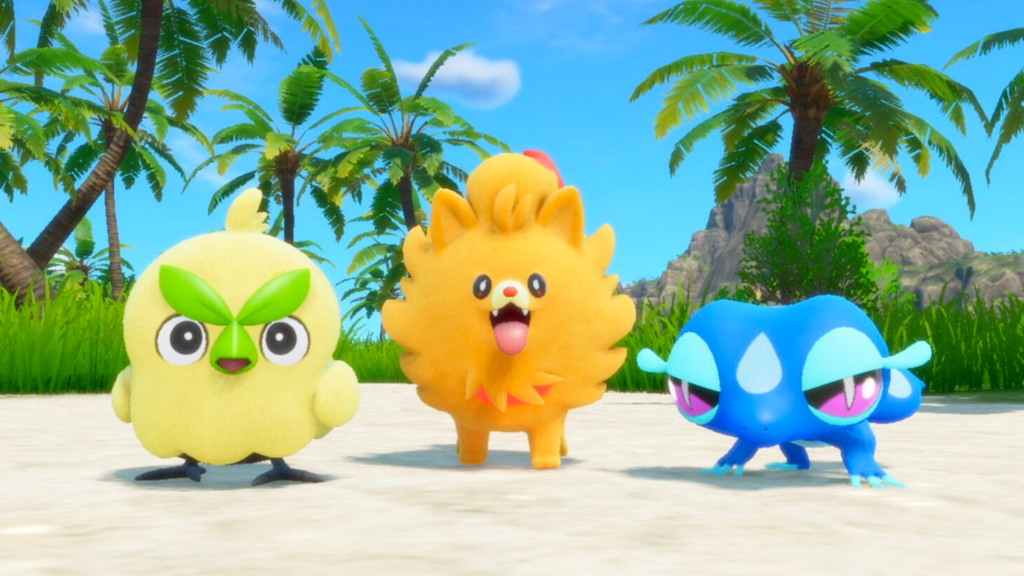
So far, we only know about the cute, small starter Pokémon for Pokémon Winds and Waves, with each fitting the more “modern” direction of creature design for the series. This direction has been appropriate for the 3D model battle system that’s been iterated on since Pokémon X and Y, which took the series away from sprite-based Pokémon. Yet, that has somewhat caused the series’ pocket monsters to lose a sense of scale, with each being around the size of plushies compared to the playable character on a number of occasions. If the Ocarina of Time remake proves anything, it’s that a sense of scale helps a lot to build tension within the world.
Ocarina of Time often pits Link against enemies that dwarf him in size, especially during his younger years during the first stages of the game. Even when in the last dungeons of Ocarina of Time, when players have more confidence in their abilities, you can still feel intimidated by the sheer size of some foes. Likewise, Link is tiny compared to buildings, landscapes, and even his horse, making him feel like a normal person is a land that feels larger than life. Likewise, Pokémon could be awe-inspiring if they matched the scale of their Pokédex entries in game, at least when viewed during exploration of the open world.
Those who want the best for Winds and Waves while developing it could truly be inspired by Ocarina of Time by giving players a reason to be drawn to Pokémon they see, in the wild or otherwise. Pokémon Legends: Arceus did this by making Pokémon aggressive toward the player, but in Winds and Waves, simply imagining a huge Wailord in the sea or Dragonite flying through the sky could be enough to capture that same scale. Making Pokémon feel like imposing, adorable, or natural parts of a region’s environment could help Pokémon Winds and Waves stand out as a celebration of the franchise, using the Ocarina of Time remake’s approach to breathe life into its world.
What do you want to see in Pokémon Winds and Waves? Let us know in the comments below!
More Gaming
-

Courtesy of Rockstar Games -

Courtesy of Rockstar Games -

Courtesy of Rockstar Games