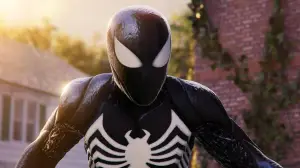
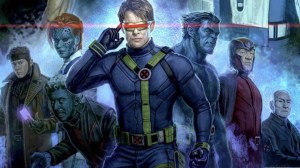
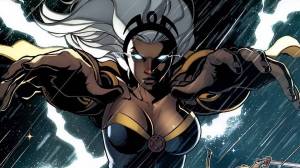
Marvel has been ramping things up for X-Men fans over the last few years. It started small, with X-Men ’97 Season One and Deadpool and Wolverine giving non-comic reading fans the first major MCU X-content. They were massive hits, leading to this year, when Season Two and Spider-Man: Brand New Day kept the X-Men alive in pop culture leading into Avengers: Doomsday. The X-Men are hot right now, with the ’90s being an especially popular era for the team. It’s makes sense; X-Men ’97 was meant to tap into millennial nostalgia for X-Men: The Animated Series and the X-Men’s 1991 reboot was massively successful, giving an entire generation of Americans X-Men nostalgia. It’s easy for Disney to push those buttons with a generation with disposable income.
Videos by ComicBook.com
The ’90s were the X-Men’s decade and there’s plenty of amazing stories for fans of X-Men ’97 to explore. The reboot itself – X-Men (Vol. 2) #1-3 – is a great place to start, but after that, it can get a little hard to recommend X-books. Sure, there’s “Fatal Attraction” and “Age of Apocalypse”, but anyone who was reading Uncanny and X-Men back then will tell you that there’s a lot of convoluted nonsense everywhere in ’90s X-books. X-Men ’97 fans mostly have nostalgia for ’80s X-Men stories, since those were the ones being adapted. However, there is one early ’90s X-story that X-Men ’97 fans would enjoy. It’s perfect for any fan of the show and it’s the most important X-story of the early ’90s you’ve never heard of, shining light on one of the biggest mysteries of the decade – “The X-Cutioner’s Song”.
“The X-Cutioner’s Song” Was Marvel’s Answer to the Image Exodus
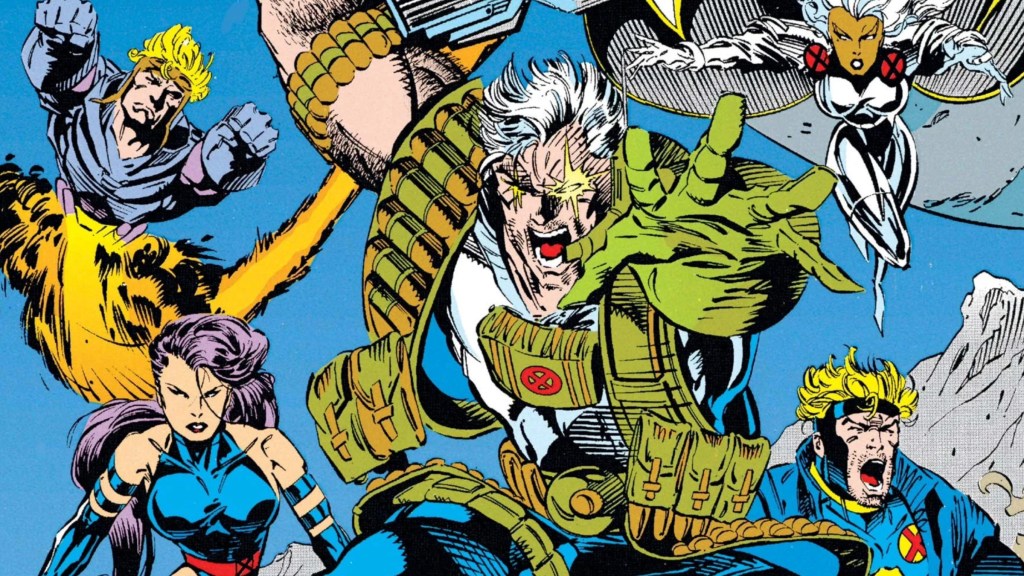
The early ’90s were a time of great change for the X-Men titles. Longtime writers Chris Claremont and Louise Simonson, who had been giving the House of Ideas the bestselling comics of the day, were forced off the books in favor of the superstar artists who had taken center stage of the X-books. Talent like Jim Lee, Rob Liefeld, Whilce Portacio, and Marc Silvestri were huge draws, but Marvel didn’t pay them as well as they wanted. The four of them, along with Spider-Man artists Todd McFarlane and Erik Larsen and Guardians of the Galaxy writer/artist Jim Valentino all left the House of Ideas to form Image.
Lee, Liefeld, and Portacio had been plotting X-Men, X-Force, and Uncanny X-Men respectively, as well as drawing the books, and them leaving the books left a vacuum. Marvel had Scott Lobdell and Fabian Nicieza, the two scripters, take over the three books, with Andy Kubert, Greg Capullo, and Brandon Peterson joining them as artists. You can say a lot about the Lee/Liefeld/Portacio days of the X-Men, but the artists didn’t exactly leave the books in a complicated place; their stories were cool action yarns, but there wasn’t much to them, honestly.
The X-Men books were walking into “The X-Cutioner’s Song” with what amounted to a blank slate, or at least as much as one as you could expect from the ’90s X-Men books. This era was defined by mysteries, with the biggest being the origin of Cable. The militant mutant had become one of the most popular characters in Marvel and “The X-Cutioner’s Song” would finally reveal numerous secrets about the hero. It did that by framing him for the murder of Professor X.
The story kicked off with the X-Men at a festival where Professor X was giving a speech, all hanging out, doing ’90s stuff, when Xavier is shot on stage by Cable. The gunman is able to escape the mutant heroes and it’s revealed that the attack infected Charles with a techno-organic virus, one very familiar to Cyclops, Beast, Iceman, Archangel, and Jean Grey. The last time they saw it was when they battled Apocalypse on the moon, giving them one place to start their search. Meanwhile, the X-Men and X-Factor teamed up to bring in X-Force while Wolverine and Bishop hunted down Cable himself.
The 12-part story ran through Uncanny X-Men (Vol. 1) #294-297, X-Factor (Vol. 1) #84-86, X-Men (Vol. 2) #14-16, and X-Force (Vol. 1) #16-19, with each issue polybagged with a trading card because it was the ’90s. As far as it goes, it’s pretty standard early ’90s X-Men, big on action and edgy moments. It brought back Apocalypse, not seen since X-Factor (Vol. 1) #65-68, and it finally gave readers the truth behind Stryfe and Cable’s relationship to En Sabah Nur, revealing that Stryfe was a clone of Cable, they were involved with the ancient mutant somehow, and that one of the two was Nathan Summers, Cyclops’s son.
There were three big mysteries in 1992 for X-fans – Wolverine’s origin (which we had been getting more of since 1991), Gambit’s origin, and Cable’s origin. “The X-Cutioner’s Song” laid down the foundation for the latter’s reveal as Nathan Summers, as well solving the mystery of who Stryfe was. Apocalypse’s return would go nowhere; he was so weakened that he want back into hibernation after the story was finished. It also was the beginning of the Legacy Virus storyline; the virus was all a part of Stryfe’s plan to destroy the X-Men and weaken mutantkind.
“The X-Cutioner’s Song” was just about completely overshadowed by the Image exodus and the hullaballoo over what they were going to do next. Looking back, I get the feeling that Marvel thought that the best way to deal with them leaving was to reveal a major part of Cable’s origin, keeping the eyes of young X-fans on their books and not what the Image founders were doing during this period. It’s peak ’90s X-Men, a snapshot of the team when they were still at the height of their powers.
The ’90s X-Books Wouldn’t Be the Same Without This Forgotten Event
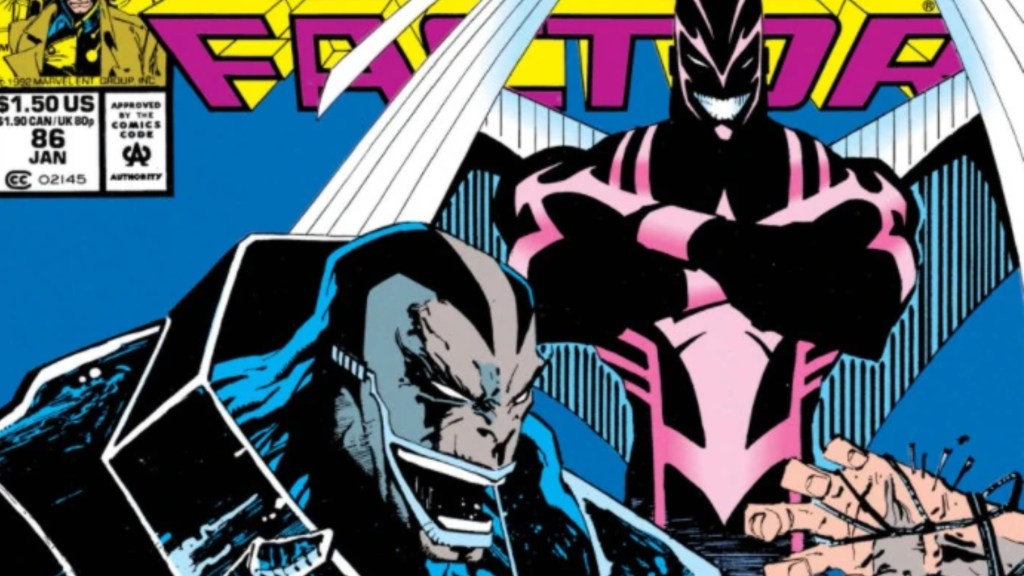
There are some things that are just stereotypically ’90s X-Men and you can find all of them in “The X-Cutioner’s Song”. There’s Stryfe, there’s Cable, there’s Apocalypse. X-Force fights the X-Men. The phrase “techno-organic” gets repeated a hundred times (you don’t realize just how often they used this, “kinetic”, and “psionic” back then) and the Legacy Virus rears its ugly head. It’s a big, loud story where nothing actually important happens, but it looks great and has some cool moments.
That’s the charm of “The X-Cutioner’s Song”. If you’ve watched X-Men ’97, you can pick up a copy of this story and dive right in. Some things will be a little different than you remember, but you’ll easily be able to follow the events and understand who everyone is (the Dark Riders will be a little weird, but I did it back then and I didn’t have Google, so you’ll live). It has everything that you could want from it; great art, big moments, cool reveals, and the kind of wild ’90s action that made those old X-books so much fun. If you’re jonesing for more ’90s X-Men, this is the place to look.
Do you remember “The X-Cutioner’s Song”? Why do you think it’s been so forgotten? Sound off in the comment section.
More Marvel
-
Image Courtesy of Marvel Comics -

Image Courtesy of Marvel Comics -
Image Courtesy of Marvel Comics -

Image Courtesy of Marvel