Edgar Wright established himself as one of his generation’s most creative filmmakers with his now-famous Three Flavours Cornetto trilogy. Alongside the dynamic duo of Simon Pegg and Nick Frost, Wright crafted inventive riffs on classic, well-worn genres that were love letters to film history. Shaun of the Dead is one of the greatest zombie movies ever made. Hot Fuzz is a fantastic action comedy that works on its own merits while still parodying iconic moments from other films. Nearly a decade after Shaun of the Dead put him on the map, Wright looked to end his trilogy on a high note by offering his take on the sci-fi apocalypse film.
Videos by ComicBook.com
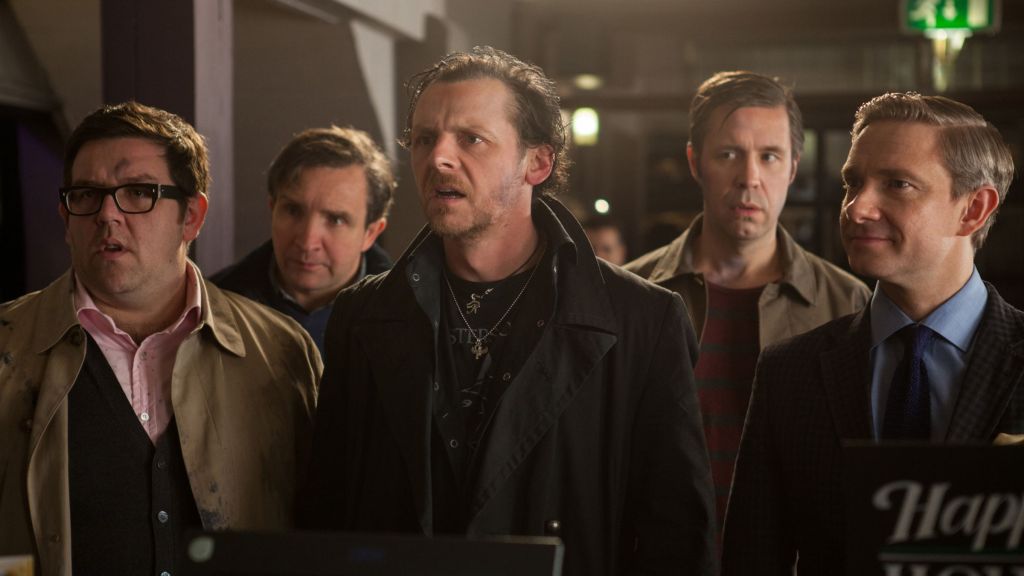
On August 23, 2013, The World’s End released in theaters in the United States. Unlike Hot Fuzz before it, the film wasn’t the biggest box office draw ($46.1 million worldwide against a $20 million production budget), but that didn’t stop it from finding an audience. Fueled by strong word of mouth (89% score on Rotten Tomatoes), The World’s End ultimately went down as a cult classic, capping off what had been a long and winding journey for Wright and Co.
The World’s End‘s Origins Pre-Date the Cornetto Trilogy

Long before Shaun of the Dead hit the big screen, Wright was thinking about The World’s End. He first wrote the script in 1995, when he was just 21 years old. At that time, the film was called Crawl and chronicled a group of teenagers attempting to complete a pub crawl. Rather than moving forward with Crawl, Wright tabled the idea, feeling the film could work better with a cast of adult characters. He envisioned the film as an exploration of aging and returning to your hometown after several years away. In the 2010s, after the Three Flavours Cornetto trilogy had already been established, Wright revised the screenplay with Simon Pegg, and the film became The World’s End.
Wright’s inclination to temporarily set The World’s End aside proved to be the right call. The final film benefits immensely from the shift in perspective; a middle-aged Gary King (Pegg) being the protagonist gives the film an emotional and tragic angle to tap into, providing plenty of substance to ground the classic Wright humor and high-concept genre shenanigans. Gary’s quest is rooted in a very human desire to latch on to the glory days of your youth, when everything seemed so simple and carefree. For most of the film, Gary is presented as an immature annoyance to his group of friends, but there’s a powerful twist in the third act that recontextualizes everything, forcing viewers to reconsider their stance on the character. Wright’s original draft of Crawl would have probably been a fun teen comedy that still had some depth to it, but telling the story from an older man’s point of view elevated the final product.
Tabling The World’s End for nearly 20 years also allowed Wright to really develop and hone his filmmaking craft before tackling the project. By the time he got around to making The World’s End, he had long developed a distinct style — not just in his writing but also the technical aspects. Wright took everything he learned on his previous projects to stage some creative set pieces that blended humor and action in a unique way. Additionally, when The World’s End was released, Wright was 39 years old, so he was able to incorporate his years of life experience to tackle the film’s themes of nostalgia and returning home. The characters’ feelings of coming back to their hometown mirrored Wright’s own after revisiting the places of his youth.
What originated as an amusing idea several years before the Cornetto Trilogy was ever a thing became the perfect culmination of a series. The Cornetto Trilogy is not a traditional trilogy in the sense that all the films are narratively connected, but all of the installments share spiritual DNA, and The World’s End caps everything off with a wild and poignant sci-fi ride. As great as it would be to see Wright and Co. return to this realm, Simon Pegg has said there won’t be any Cornetto sequels, as they prefer to move on to new things instead of pursuing a follow-up as a quick cash grab. However, if Pegg ever were to reprise one of his Cornetto roles, Gary King would be the one he’d go for.
The World’s End and Other Edgar Wright Films Highlight Marvel’s Biggest Ant-Man Mistake
As Wright was wrapping up The World’s End, he had his next gig lined up. For years, he had been attached to direct Ant-Man for Marvel. The project was initially set up at Artisan before the rights reverted back to Marvel Studios and the film became part of the Marvel Cinematic Universe. Wright’s involvement with the movie was a source for much excitement. Having proven himself time and time again as an innovative director, everyone from cinephiles to Marvel fans were interested in seeing what Wright could do with this concept, putting his own stamp on the superhero genre. Unfortunately, Wright’s Ant-Man never saw the light of day. He left the project in 2014.
Wright’s departure from Ant-Man is one of the most infamous incidents of “creative differences” in Marvel Studios history. It’s a painful reminder that while the Infinity Saga is one of the greatest accomplishments in the history of tentpole filmmaking, the road to Avengers: Endgame wasn’t always so smooth. When explaining the situation years later, Wright told Entertainment Weekly, “I wanted to make a Marvel movie but I don’t think they really wanted to make an Edgar Wright movie.” This highlights the tricky balance directors need to strike when working in a massive franchise like the Marvel Cinematic Universe; they want some level of creative control and freedom, but the project also has to fit in the established sandbox. When Ant-Man was at Artisan, Wright would have been able to do whatever he wanted, but the shift to Marvel Studios necessitated changes on that front.
Over the original Ant-Man premiered, some viewers still bemoan the loss of Wright behind the camera, wondering what might have been if he stayed onboard. It’s not that Ant-Man is a bad film; it was well-received and was successful at the box office (making $519.3 million worldwide). However, the general consensus is that it was a perfectly fine Marvel movie; an entertaining palate cleanser after Avengers: Age of Ultron that lacked something extra to elevate the final product. It missed the full extent of Wright’s voice and vision. It’s hard not to watch a Cornetto film, marvel in Wright’s penchant for visual comedy, entertaining character dynamics, and exciting action, and dream about him having full rein on a big-budget superhero movie. Ant-Man in particular would have been a strong fit for Wright’s sensibilities; he would have had plenty of fun with size-changing, and the heist film plot could have allowed him to do another riff on a classic genre, Cornetto style.
After Ant-Man fell through, Wright pivoted to a different heist film: Baby Driver. That went on to become the highest-grossing film of his career and served as another reminder of what Marvel lost. Baby Driver stood out from the crowd with its distinct action set pieces, which were edited to the rhythm of the catchy soundtrack. Sequences like the opening car chase and the “Hocus Pocus” chase demonstrate Wright’s remarkable talent behind the camera. Seeing what he’s capable of at the height of his powers makes one wish for Wright’s Ant-Man to become a reality, but that ship sailed a long time ago. Directors like James Gunn and Ryan Coogler found ways to let their voices shine in the larger MCU framework, so it’s a shame Kevin Feige couldn’t make it work with Wright.