Exactly 31 years ago, a small movie with no major stars and no obvious commercial ambitions gave rise to something no one could have predicted would become one of the most consistent, interesting, and respected trilogies in cinema history. And that’s not an exaggeration — especially when, even today, clips from all three films circulate online as if they were genuine life lessons, moral reflections, or different ways of looking at relationships and existence. In an industry long used to treating romance as either a lesser genre or an overly formulaic one, this trilogy chose something radically simple: two people talking.
Videos by ComicBook.com
No big twists, no amazing score, and no conflicts manufactured just to hold the audience’s attention. The bet was different. It was trusted that strong characters, well-written dialogue, and a very clear idea of what it wanted to say would be enough to carry an entire feature film. And they were.
Before Sunrise Marked the Beginning of One of the Greatest Film Trilogies of All Time

You’ve probably heard of it, or at least stumbled across a scene from one of the three movies somewhere online. Before Sunrise, released in 1995, follows Jesse (Ethan Hawke), an American traveling through Europe, and Céline (Julie Delpy), a French student, who meet by chance on a train. The two decide to get off in Vienna and spend the night together before going their separate ways. And yes, that’s basically the entire plot — but that alone says a lot about the kind of movie this is. It’s not about “what happens,” but about “how these two people connect.” The narrative is built almost entirely around conversations, walks, glances, and small everyday moments that, in most films, would be nothing more than filler.
Looking back, the whole thing feels like a kind of experiment — and in many ways, it was, especially considering the story was inspired by real life. Director Richard Linklater has said that the idea for Before Sunrise came from an experience he had in 1989, when he met a woman in Philadelphia and spent the entire night walking around and talking with her, exactly the kind of experience reflected in the film’s central relationship. More than that, he wrote the film trying to capture the feeling of that real moment: the spontaneity of conversation, the instant connection, and the idea that some encounters stay with us even if they don’t lead to a happy ending.
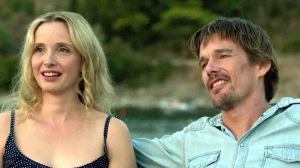
Before Sunrise remains remarkably easy to watch and surprisingly timeless because it refuses to frame Jesse and Céline’s meeting as something magical or destined. They’re not portrayed as soulmates or as perfectly balanced opposites designed to create conflict. They’re just normal people: curious, insecure at times, occasionally arrogant, and occasionally charming, the way real people tend to be. That approach creates an immediate connection with the audience through the feeling of having lived something similar, even if in a different place, at a different time, or at a different age. And the best part is how the conversations move naturally between deeper topics and completely mundane observations, without any concern about sounding profound or clever. That’s exactly what makes everything feel believable.
And that sense of authenticity is no accident. Linklater has always been drawn to stories that respect real time and human rhythm, as later seen in Boyhood, for example. That sensibility is crystal clear in Before Sunrise (and in the movies that follow). This is not a story that rushes moments, forces emotional beats, or hands the audience some simple answers. It actively invites reflection. The experience is designed to pull the viewer into Jesse and Céline’s conversations, making you feel like part of them. The film understands that real connection rarely comes from grand declarations, but from small confessions shared almost without thinking. It’s a romance that doesn’t try to be bigger than life — it tries to be the right size.
How the Trilogy Builds a Complete Emotional Arc Across Three Movies
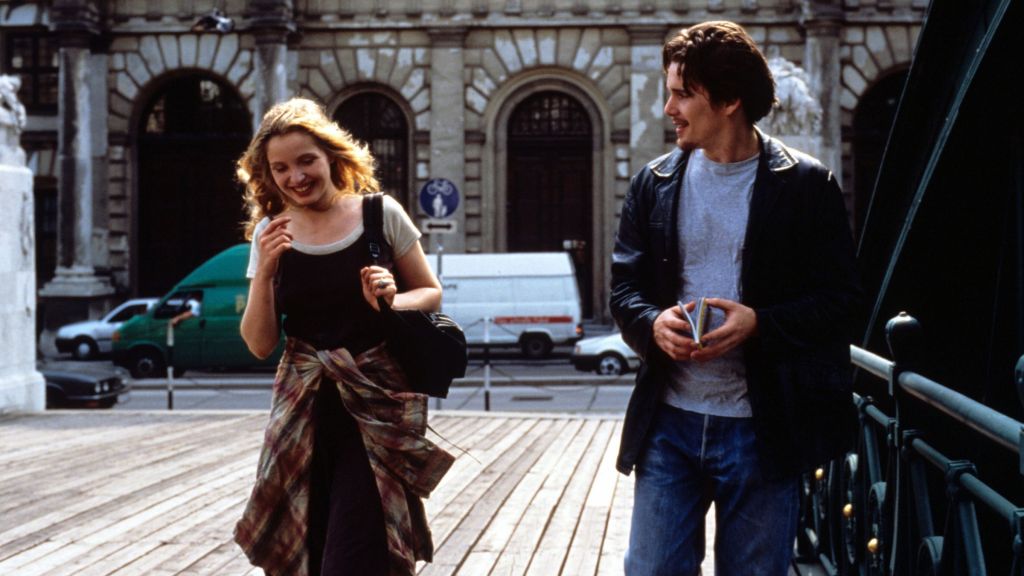
The second film, Before Sunset, was released nine years after the first, and what’s most interesting is how it feels like the story was never meant to be told in just one installment. In reality, though, the opposite is true. The sequels grew out of conversations between the director and the actors after the first film found a loyal audience and took on a life of its own. They talked about a continuation for years, but only because they wanted to revisit the characters and explore how time would change them — something that had always been at the core of the story’s proposal, which is far more interested in emotional evolution than in isolated events.
The reunion between Jesse and Céline, now in Paris, completely reshapes the weight of that first night in Before Sunrise. Where there was once idealism and curiosity, there is now emotional baggage. Jesse is a moderately successful writer, and Céline has moved on with her life, but when they meet again, the frustration over what never happened is unmistakable. The second movie unfolds almost in real time and carries an urgency the first didn’t need — not because of plot, but because there’s a clear awareness that time is limited, not just that day, but in life itself.
One of Before Sunset‘s greatest strengths is its refusal to romanticize this reunion. Time doesn’t make everything more beautiful; sometimes, it just makes things more complicated. The characters talk about wrong choices, resentment, and unmet expectations, and none of it is softened. It’s a film about love, yes, but also about regret and the uncomfortable realization that some opportunities don’t come back. Just like real life.
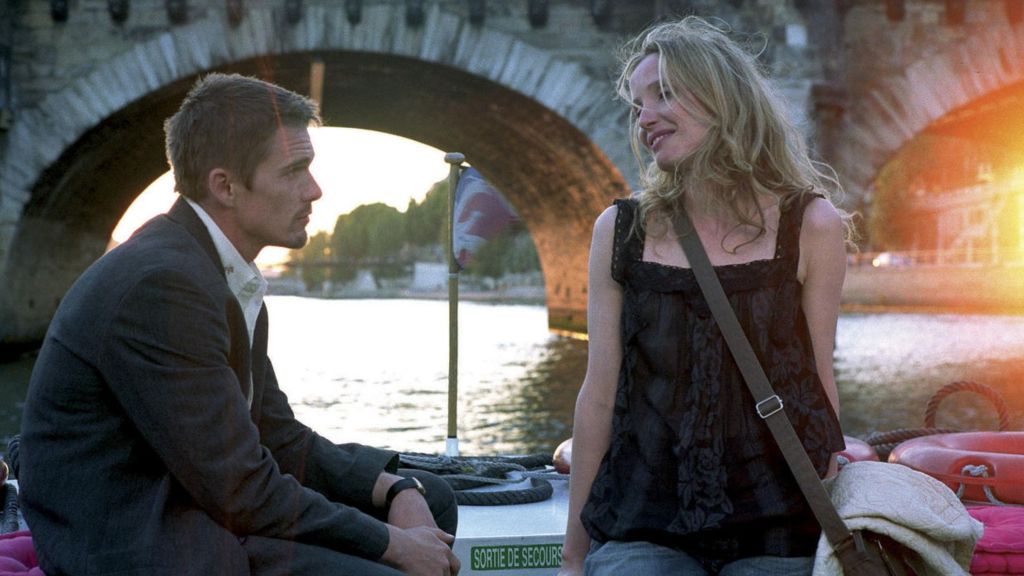
Then comes Before Midnight, released another nine years later, pushing this concept to its limit in order to bring the trilogy to a close. Now we’re watching a couple that’s no longer discovering each other, but struggling to stay together. Set during a vacation in Greece, the film completely dismantles any illusion that this trilogy exists to celebrate idealized romance. If the earlier movies left room for hope, the third focuses squarely on wear and tear. The arguments are long, uncomfortable, and painfully recognizable for anyone who’s been in a long-term relationship. There are no villains, and no clear right or wrong, just two people trying to reconcile desires, frustrations, and expectations that don’t always align.
And that’s why this final chapter is, for many viewers, the hardest to watch (and often the least talked about). The goal isn’t to please the audience or preserve the characters’ image, but to commit to honesty. And it’s that honesty that turns the trilogy into something truly special. Very few projects allow their characters to age naturally and embrace the changes that come with that process.
So what makes Before Sunrise and its two sequels one of the most successful trilogies in film history? It’s not the absence of mistakes or conflict, but the clarity and consistency of its vision. It never loses its way because it understands its purpose from the very beginning. Each film speaks directly to the one before it — not to correct it, but to complicate it. The love that feels light in Before Sunrise gains weight in Before Sunset and collides with reality in Before Midnight. That progression is emotional, for both the characters and the audience.

This trilogy proved that it’s possible to make adult, dialogue-driven cinema without leaning on tired formulas. More than that, it showed that audiences are willing to follow stories without perfect endings, simply because they offer honest reflection.
More than three decades ago, it all began with an ordinary night, two people talking, and a film that trusted that this was enough. And in the end, it really was.
The Before Trilogy is available on Prime Video.
What do you think? Leave a comment below and join the conversation now in the ComicBook Forum!
Most Viewed
-

Image courtesy of Daybreak Game Company -

Image courtesy of Wizards of the Coast -

Courtesy of Netflix