For a while, it really looked like The Chronicles of Narnia might become Hollywood’s next big fantasy franchise. Disney had good reason to be optimistic after The Lion, the Witch and the Wardrobe became a major hit in 2005. It had a whole new world full of talking animals, magical creatures, and an evil witch. What more could a fantasy fan want?
Videos by ComicBook.com
C.S. Lewis had also written seven books, giving the studio plenty of stories to bring to the screen. Yet things didn’t quite work out that way. While Harry Potter kept audiences returning to Hogwarts, Narnia struggled to build the same kind of following. The obvious explanation is that the movies failed to capture the magic of the books. But there’s another issue that deserves some attention. Lewis had created a fantasy series that worked wonderfully on the page. Turning those stories into a lasting Hollywood franchise proved to be a much trickier business.
Narnia Kept Changing Its Heroes, While Harry Potter Had a Familiar Cast
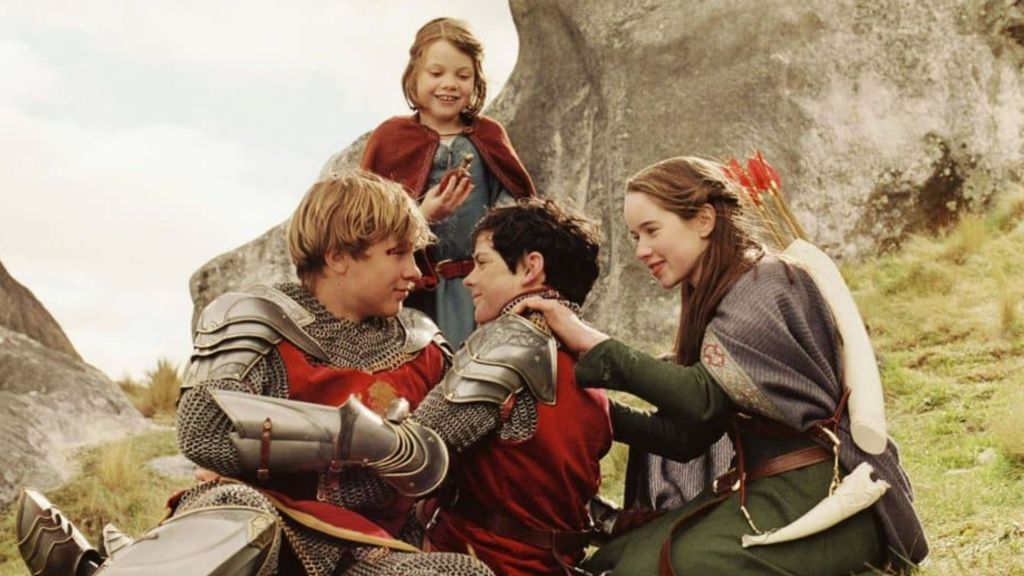
The Pevensie children weren’t meant to be Narnia’s permanent heroes. That’s something the movies had to address right away. Peter and Susan disappear from the main story after Prince Caspian. Edmund and Lucy get one more adventure in The Voyage of the Dawn Treader. The books eventually move on to Eustace Scrubb and Jill Pole. These two characters weren’t even part of the original adventure. C.S. Lewis seemed to prefer shifting characters. He wasn’t writing seven books about four siblings growing up together. He was writing about a magical kingdom where different children could stumble into trouble, meet Aslan, and find themselves caught up in something extraordinary. For readers, that gave Narnia a much bigger world. For Disney, it created a rather awkward franchise problem.
Just look at Harry Potter. Daniel Radcliffe, Rupert Grint, and Emma Watson were the faces of the series for eight movies. Audiences grew up watching them, and there was always another reason to return to Hogwarts. Narnia couldn’t build that same relationship. By the time Disney got around to adapting another book, some of its original stars were no longer part of the story. That’s a difficult sell when you’re trying to establish a dependable blockbuster franchise. The irony is that Lewis never intended Narnia to work like Harry Potter in the first place. His books were about the world, not just the children who visited it. Hollywood wanted another Hogwarts. Lewis had something rather different in mind.
Why Narnia Struggled to Replicate Harry Potter’s Movie Success

The original Lion, the Witch and the Wardrobe made more than $745 million worldwide. That’s an enormous result for a fantasy movie. That signaled the beginning of a blockbuster franchise. But Prince Caspian arrived in 2008 and earned considerably less. The Voyage of the Dawn Treader followed in 2010, but the series never achieved its original success. There were other problems, including changes in distribution and the complicated business of adapting the remaining books. Still, the changing cast made it difficult to build the same kind of audience loyalty that helped Harry Potter become such a reliable theatrical event. The Pevensies weren’t always available, and the movies had to keep introducing new faces. That’s a tricky proposition when you’re asking people to spend years following one fantasy world.
There’s also something rather ironic about Narnia’s situation. Its willingness to move beyond the Pevensie children is one of the things that makes Lewis’ books so appealing. Narnia isn’t just their playground. It’s a world with its own history, its own inhabitants, and adventures that continue long after the original heroes have gone home. That’s a lovely idea, even if it isn’t necessarily what Hollywood wants from a blockbuster franchise. Harry Potter had Hogwarts, but it also had Harry. Narnia had an entire magical kingdom, yet its human characters kept changing. The books were never really the problem. If anything, Lewis had created something too expansive for the kind of movie series Disney was trying to build. Sometimes having seven books isn’t enough. You also need audiences to want to follow the same people through all seven.
Narnia is already getting a major reboot and Netflix has given it major hype. What do you think about the franchise? Is it doomed to fail or will it be able to reach the heights of pop culture success?
More Movies
-
Courtesy of Paramount Pictures -
Image courtesy of Marvel