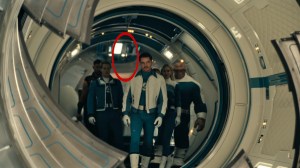
There is a special kind of 1980s science-fiction movie that makes you stop halfway through explaining it and wonder if you have somehow made the whole thing up. An alien stranded with his sworn enemy. Space vampires escaping from Halley’s Comet. A gang of roller-skating children fighting for Earth’s future. A super-secret army driving weaponized sports cars. David Lynch adapting Dune. These movies are real, they were expensive, and somebody in Hollywood actually said, “Yes, let’s make that.”
Videos by ComicBook.com
That is what makes this particular corner of ’80s genre cinema so much fun. These weren’t necessarily the biggest hits of their era, and some of them were downright spectacular financial misfires, but they have something modern studio movies sometimes lack: the unmistakable feeling that nobody had yet explained what was impossible. So let’s take a trip back to that glorious period when a strange idea could become a $20 million gamble, a director could build an entire world around it, and audiences could walk into a theater having absolutely no idea what was in store for them. Welcome to the world of retro sci-fi films.
5)Dune – 1984
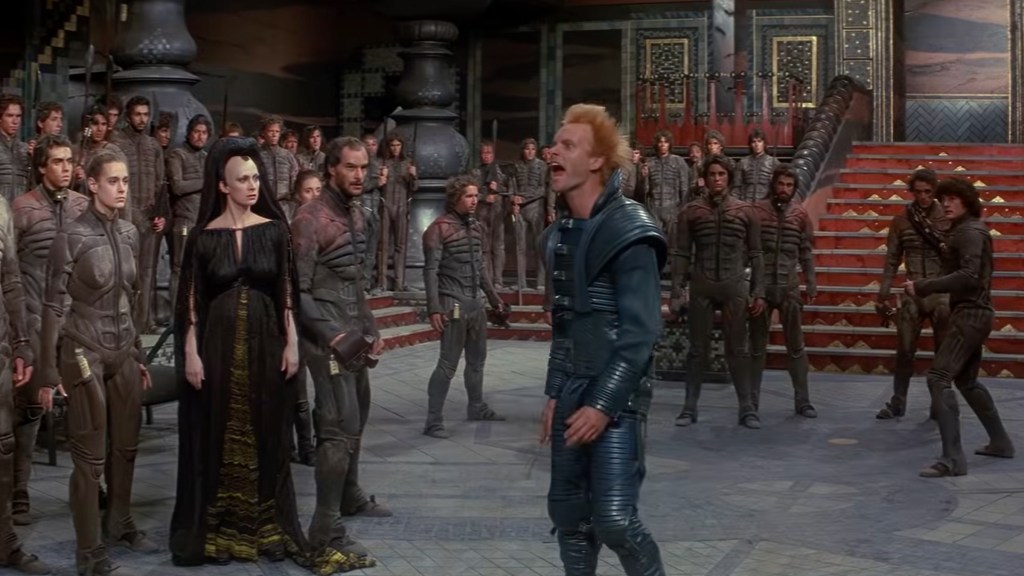
I have a soft spot for Dune. I also have a complicated relationship with it. I saw David Lynch’s Dune when I was young, at an age when I had no business trying to understand what a Bene Gesserit was, and mostly remember the sensation of it. Sand. Weird voices. Giant worms. Sting looking like he had wandered in from another movie. Patrick Stewart carrying a pug into battle. It was magnificent, confusing, and completely unlike anything else on television.
Then you find out what Lynch was actually trying to pull off. The production had an enormous budget, dozens of sets, hundreds of crew members, and thousands of extras, all while attempting to cram Frank Herbert’s famously dense novel into a single movie. That’s the part I appreciate more now. Dune is not a graceful adaptation. It is occasionally ridiculous. Sometimes you can practically feel the movie sprinting to catch up with itself. But look at what Lynch put on the screen. He went epic, operatic, theatrical, and unapologetically bizarre. I may not understand every scene, but I still want to wander around that universe.
4) Megaforce – 1982
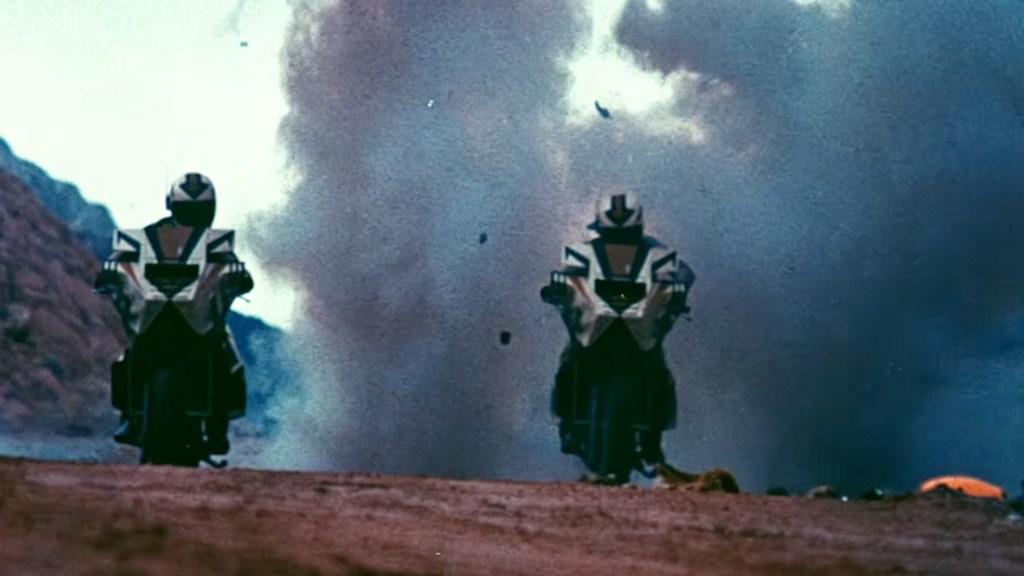
I genuinely love the idea of Megaforce, even though the movie itself can test that affection. This is Hal Needham, the stuntman-turned-director behind some of the wildest action movies of the era, deciding that the world needed a secret international strike force equipped with futuristic motorcycles, armored vehicles, aircraft, explosions, and enough chrome to blind you from across the room. Barry Bostwick plays Ace Hunter, because apparently “Ace Hunter” was considered a perfectly normal human name in 1982. The movie reportedly cost around $18 million and made only a fraction of that back.
By today’s standards, this movie can still be a fun watch, as long as you don’t mind its over-the-top claims and wildly ambitious goals. The whole production feels like an excuse for the cast and crew to bring their childhood dreams of Super Sentai and Saturday morning cartoons to life. Do yourself a favor and check out this trailer to see what I mean.
I remember watching movies like this and being completely sold by the machinery. Forget the plot. Show me the vehicle. If you’re a fan of M.A.S.K. and Mad Max, you’ll get a kick—or a boost—out of this. That’s part of the problem with Megaforce, too. The movie has the enthusiasm of a kid explaining his favorite toy, except somebody handed that kid a Hollywood budget. I can complain about the dialogue, the story, and the occasional absurdity, but then one of those ridiculous machines comes roaring onto the screen and I’m twelve again. Megaforce doesn’t ask whether any of this makes sense. It just wants you to believe that Ace Hunter and his team are the coolest people alive. For a few minutes, you almost do.
3) Enemy Mine – 1985
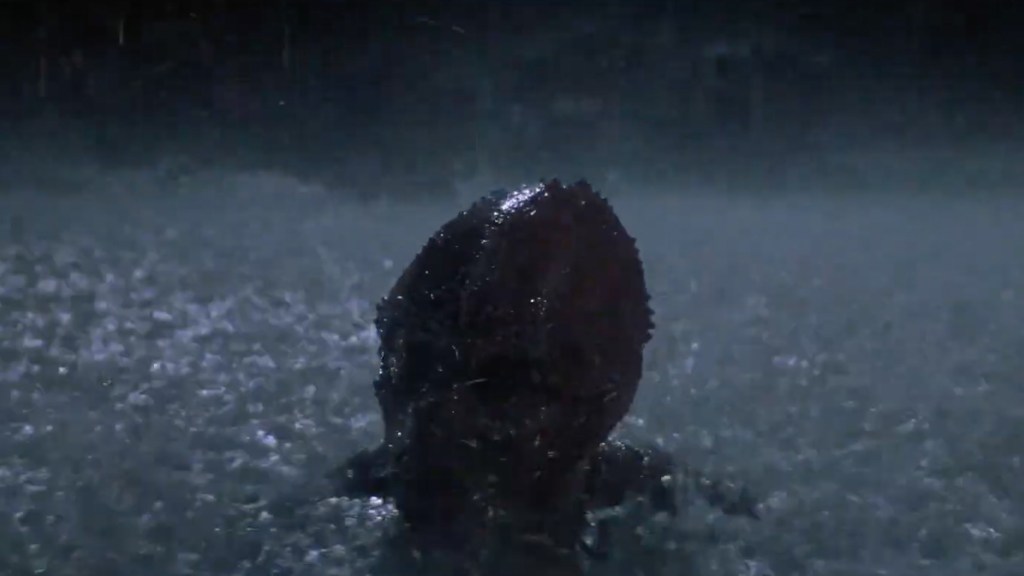
The first time you hear the production story behind Enemy Mine, you assume somebody is exaggerating. They aren’t. Dennis Quaid plays Willis Davidge, a human pilot who hates the Drac he finds himself stranded with. Louis Gossett Jr. plays Jeriba, and what starts as a fairly familiar humans-versus-aliens setup gradually turns into something much more personal. Even the Drac makeup went through a major redesign because Petersen didn’t want Gossett to simply look like a man wearing a rubber mask. For some viewers, the dated special effects and drama-focused story might make the movie difficult to sit through.
The movie originally had Richard Loncraine directing, with production beginning in Iceland and Budapest. After the studio became unhappy with the footage, Wolfgang Petersen took over, the existing material was largely abandoned, and the movie started over. The budget ballooned dramatically in the process. That’s an astonishing amount of trouble for a movie that is, at its heart, about two enemies getting stuck on a planet and realizing that killing each other isn’t particularly helpful.
I’ve always thought Enemy Mine might be better than people give it credit for. It’s sentimental. It can be heavy-handed. It absolutely wears its heart on its sleeve. Good—I’ll take that. Beneath all the spaceships and alien makeup, there are two characters learning to trust each other, and that gives the movie something a lot of bigger science-fiction productions never found. You start out expecting lasers. Somehow, you’re sitting there getting emotional about an alien.
2) Lifeforce (1985)
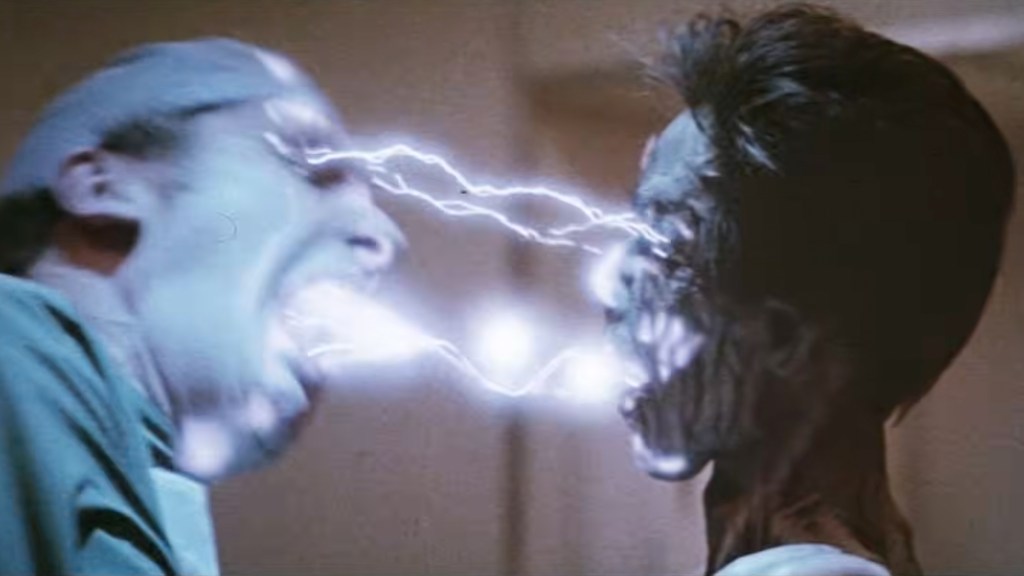
There is no normal way to explain Lifeforce. You have to start with Halley’s Comet. Then astronauts. Then a mysterious alien spacecraft. Then three humanoid beings. Then London. Add vampires and Patrick Stewart. At some point, whoever you’re talking to is going to assume you’ve accidentally mixed together three different movies. Tobe Hooper made Lifeforce for Cannon with a huge budget by the company’s standards, and the production went all in. Parts of London were recreated on a back lot, enormous sets were built, and the movie eventually became this wonderfully strange collision of science fiction, horror, fantasy, and apocalyptic spectacle.
I love movies that sound completely insane when you explain them out loud, and Lifeforce is one of the champions. “Have you seen it?” “No.” “It’s about space vampires.” “Okay.” “They come from Halley’s Comet.” “Wait.” “And Patrick Stewart is in it.” “What?” That conversation is basically the trailer. What I enjoy most is that Lifeforce never seems embarrassed by itself. It is excessive, bizarre, occasionally ridiculous, and completely committed. Today, the movie might cross the line and go so overboard that it’s difficult to watch. But hey, we get a glimpse of Jean-Luc Picard before he became Jean-Luc Picard, and that alone might make it worth the watch.
1) Solarbabies (1986)
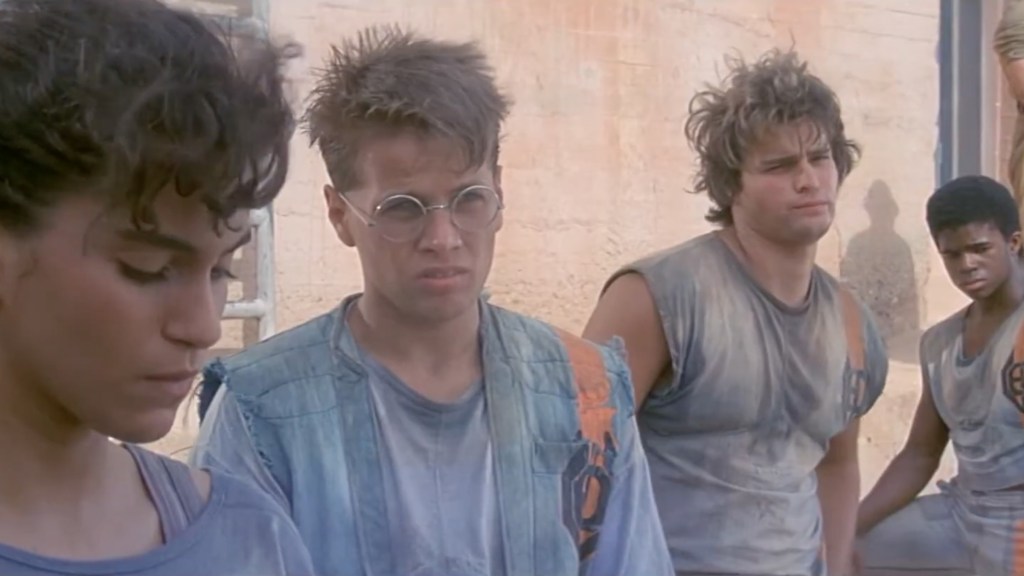
If you’ve never seen Solarbabies, the title probably isn’t going to prepare you. It sounds like a children’s movie about kids somehow born on the sun. Instead, it’s a post-apocalyptic science-fiction movie about orphaned children living under an authoritarian government that controls Earth’s water. Here’s the kicker—they don’t just wander through the wasteland; they roller-skate through it. Soon, they discover a mysterious being named Bodhi. There are futuristic vehicles, soldiers, deserts, and a young cast that includes Jami Gertz, Jason Patric, and Lukas Haas.
And then there’s Mel Brooks. That’s where things get even more dialed up. The original idea came from writer Douglas Anthony Metrov, who created a treatment about futuristic children. Brooks became involved, production moved to Spain, and the budget went from a relatively modest $5 million to roughly $25 million. Brooks reportedly put his own money into the movie and even took out a second mortgage on his home to keep production moving. But even with all of that, it’s really hard to watch a movie that’s supposed to be futuristic, yet roller skates are in heavy use.
That’s an incredible amount of financial pain for a movie about roller-skating kids. And yet, I have a weakness for it. Not because Solarbabies is some undiscovered masterpiece. It isn’t. There are moments when the movie feels like it has wandered into a different story and forgotten to come back. But it has personality. It has that very specific 1980s belief that kids could save the world, that the future could be terrifying and hopeful at the same time, and that somebody might actually spend millions of dollars bringing that idea to a theater near you. The concept is so unique that most people would be hard-pressed to watch it today and take it seriously—especially with all its retro charm. But that’s why I still enjoy it personally.
Some of these sci-fi movies are harder to sit through today than we might like to admit. But there’s something sad about knowing Hollywood may never take chances on anything quite this strange again.