Isaac Asimov stands as one of the most prolific and influential figures in the history of science fiction literature. His vast body of work helped define the genre during its Golden Age and established concepts that remain relevant in modern storytelling. For instance, Asimov introduced the Three Laws of Robotics, which continue to dominate discussions about artificial intelligence and ethical programming. In addition, his creation of the Foundation series brought a sociological approach to galactic empires that inspired franchises like Star Wars and Dune. His writing was never just about the technology itself but rather how humanity reacts to the shifting tides of progress and the unintended consequences of our own inventions.
Videos by ComicBook.com
Despite his immense literary footprint, Hollywood has struggled to bring the full breadth of Asimov’s imagination to the screen. Audiences have seen loose adaptations of his work, such as the 2004 blockbuster I, Robot, where Detective Del Spooner (Will Smith) battles a robot uprising, a film that borrowed the title and concepts but diverged significantly from the source material. The film Bicentennial Man saw Andrew Martin (Robin Williams) attempt to capture the emotional journey of a positronic brain but met with mixed results. More recently, Apple TV+ launched a visually stunning adaptation of Foundation, proving that high-concept cerebral sci-fi can find a home on modern streaming services. While these projects have kept his name in the public eye, a treasure trove of his most fascinating novels remains untouched by major studios.
5) Fantastic Voyage II: Destination Brain
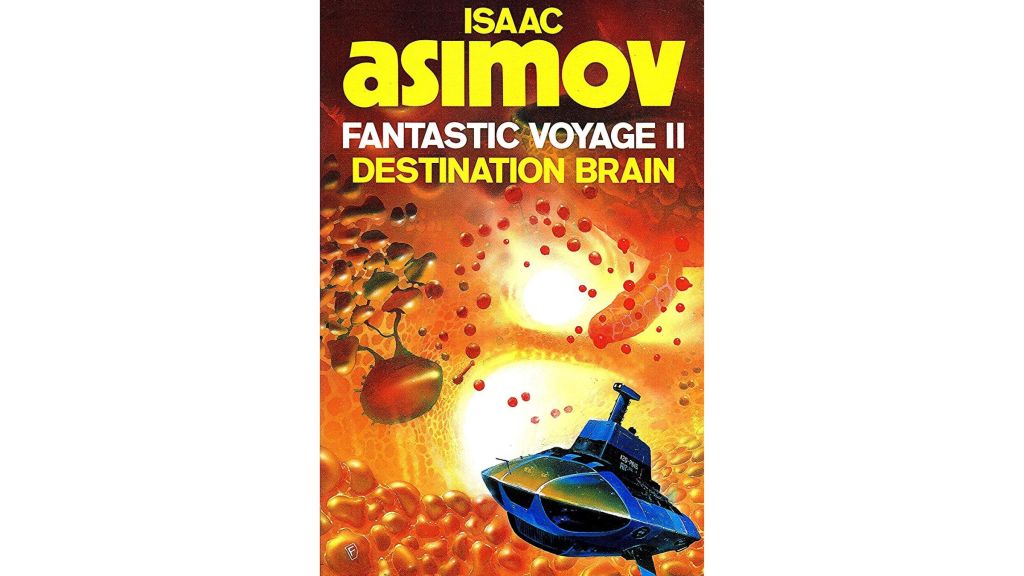
Fantastic Voyage II: Destination Brain holds a unique place in Asimov’s bibliography due to its unusual origin story. Decades prior, Asimov was hired to write the novelization for the 1966 film Fantastic Voyage, a job he accepted despite finding several plot holes in the original script. He eventually corrected some of the scientific inaccuracies in his novelization, but the desire to write his own version of the concept gnawed at him for years. Fantastic Voyage II: Destination Brain is not a sequel to the first book or the movie. Instead, it serves as a complete re-imagining of the premise, written entirely on Asimov’s terms to satisfy his dedication to scientific plausibility.
The story follows Albert Jonas Morrison, a neurophysicist who is kidnapped and forced to join a team of Soviet scientists. Their mission involves miniaturizing themselves and entering the body of a comatose scientist to retrieve vital information from his brain before he dies. Asimov utilizes this framework to explore the Cold War tensions of the late 1980s while diving deep into the actual physics required for shrinking matter. Unlike the adventure-heavy original, Fantastic Voyage II: Destination Brain is a cerebral journey that focuses on the complexities of the human mind and the terrifying reality of existing at a microscopic level.
4) Nemesis
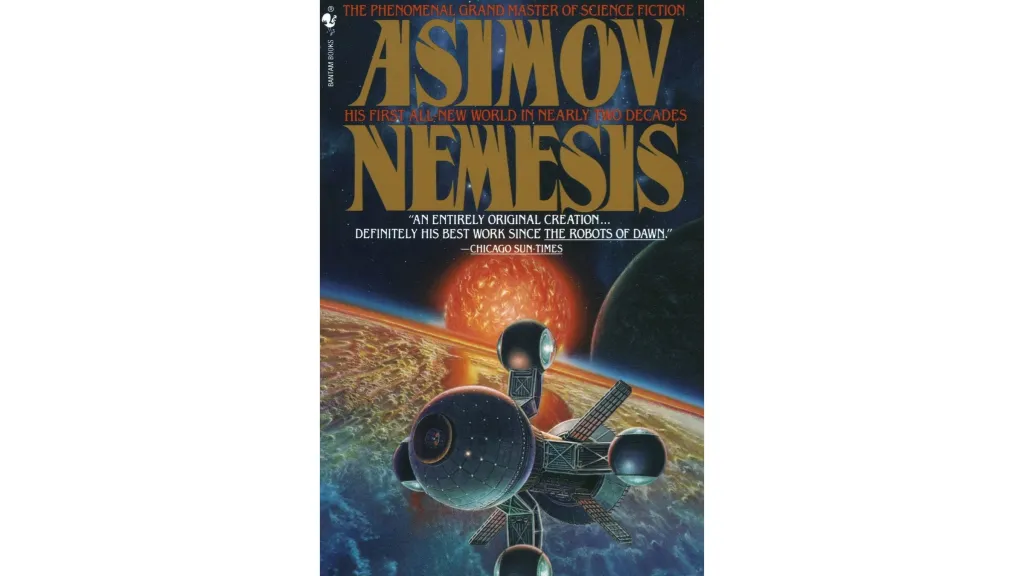
Published in 1989, Nemesis is one of the few Asimov novels that was originally written to stand completely outside his unified future history of Robots and Foundation. The narrative takes place in the 23rd century, an era where humanity is just beginning to explore interstellar travel through a distinct technology called hyper-assistance. A renegade settlement known as Rotor uses this technology to leave the Solar System entirely, taking up orbit around a newly discovered red dwarf star named Nemesis. This star is on a collision course with Earth, adding a ticking clock element to the political and scientific intrigue that unfolds.
The plot of Nemesis centers on a young girl named Marlene, who possesses an intuitive ability to read body language and emotions that borders on telepathy. As the colonists explore a nearby moon called Erythro, Marlene discovers that the bacterial life on the surface forms a collective planetary intelligence. The novel deals with themes of isolation, the ethics of colonization, and the definition of sentience. While Asimov later retconned elements of Nemesis to loosely fit into his larger legendarium, the story functions best as a standalone disaster epic. The dynamic between the separated human factions and the enigmatic alien intelligence offers a psychological depth that would translate perfectly to a modern movie.
3) The Galactic Empire Novels
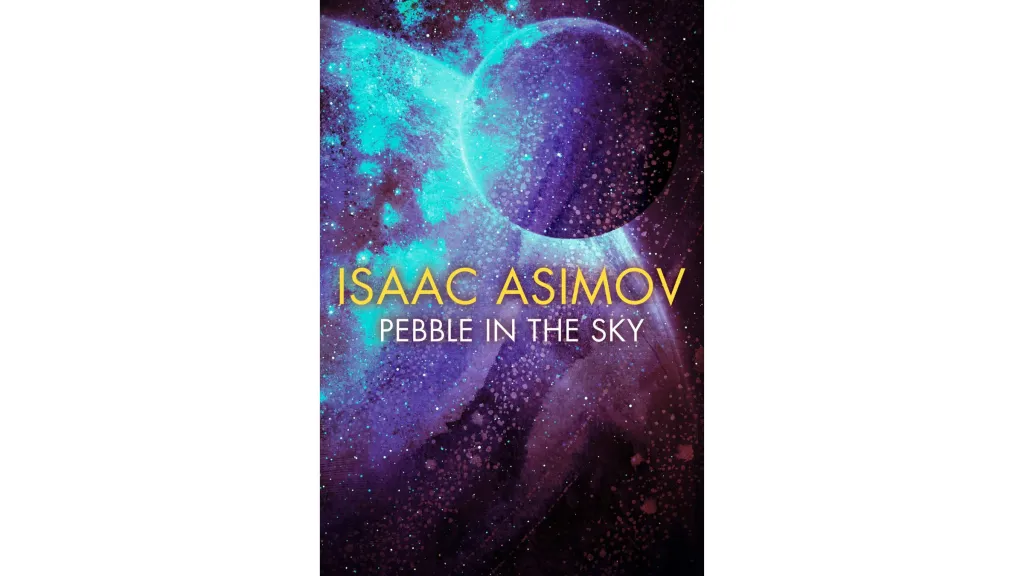
Before the rise of Hari Seldon and the events of Foundation, Asimov wrote three novels that depict the gradual expansion of humanity into the galaxy. The Stars, Like Dust, The Currents of Space, and Pebble in the Sky are collectively known as the Galactic Empire novels. These stories serve as a crucial bridge between the near-future setting of the Robot novels and the far-future decay of the Foundation era. They detail the formation of the Trantorian Empire and the political machinations that allowed one planet to eventually rule over millions of worlds.
Pebble in the Sky is particularly notable for its depiction of Earth. In this timeline, the planet has become a radioactive backwater, despised by the rest of the galaxy and viewed as a source of disease and rebellion. The story follows Joseph Schwartz, a man from the 1940s who is accidentally transported thousands of years into the future. He finds himself caught in a conspiracy where fanatical Earthlings plan to unleash a bioweapon against the Empire. These books are filled with espionage, space opera action, and the classic Asimovian mystery elements. Adapting this trilogy would provide essential context for the Foundation universe, showing viewers exactly how the galaxy became so vast and bureaucratic.
2) The End of Eternity
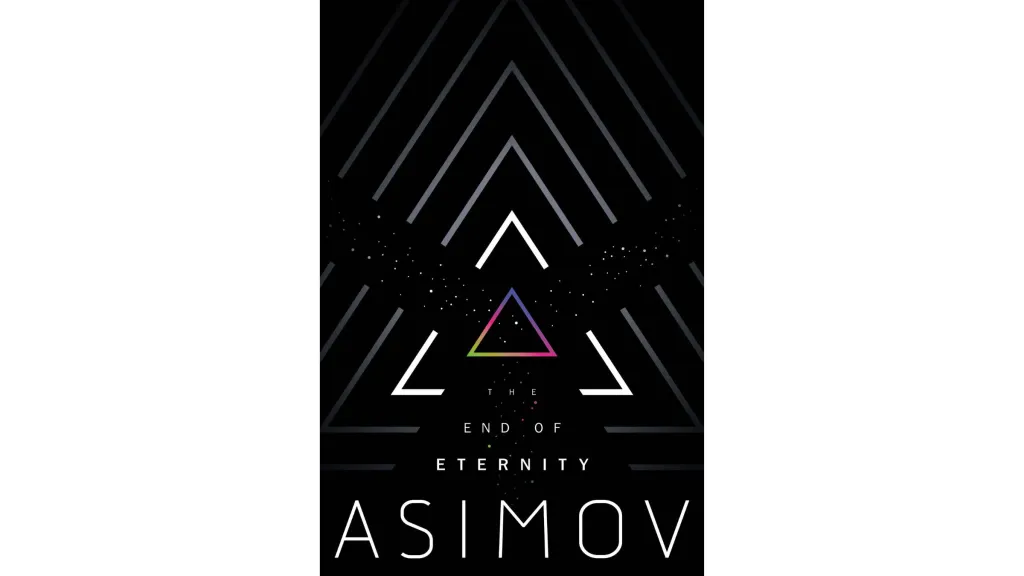
Time travel is a notoriously difficult subject to handle without creating plot holes, yet Asimov managed to craft one of the most logical and compelling time travel stories ever written. The End of Eternity focuses on an organization known as Eternity, which exists outside of standard time. The organization is staffed by men called Eternals who carefully monitor human history. They execute calculated “Reality Changes” to smooth out societal bumps, aiming to minimize human suffering and prevent wars. However, this manipulation has a cost, as it stifles humanity’s growth and prevents it from achieving interstellar travel until it is too late.
The protagonist, Andrew Harlan, is a Technician who executes these reality shifts. His loyalties are tested when he falls in love with Noys Lambent, a woman from a century that he is scheduled to erase from existence. Harlan breaks all the rules to save her, unraveling a conspiracy that threatens the very existence of Eternity. We are bending the rules a little bit, as there was a Soviet film adaptation of The End of Eternity in the 1980s. However, this novel has never received the major English-language production it deserves. The book is a brilliant demonstration of causal loops and paradoxes, offering a romance that spans centuries and a twist ending that fundamentally recontextualizes the history of the Asimov universe.
1) The Gods Themselves
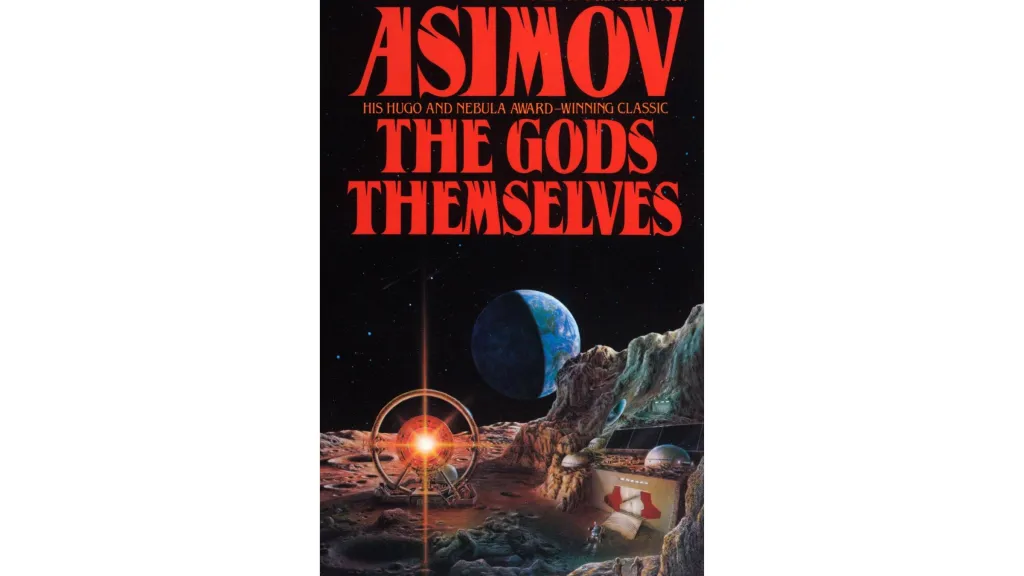
The Gods Themselves is widely considered Asimov’s finest work of the 1970s and holds the distinction of winning both the Hugo and Nebula awards. The book was Asimov’s direct response to critics who claimed he could not write aliens or sex. The story is divided into three distinct sections, all revolving around the discovery of the Electron Pump, a device that generates unlimited free energy by exchanging matter with a parallel universe. While the energy solves Earth’s power crisis, a few scientists realize that the process is altering the laws of physics in a way that will eventually cause the sun to explode.
The middle section of the book is what makes The Gods Themselves a true feat of imagination. It takes place entirely in the parallel universe and features a species with three genders: Rationals, Emotionals, and Parentals. Asimov creates a truly alien culture with unique biology and reproductive cycles, exploring how these beings perceive the universe and their role in the energy exchange. The narrative weaves together the hubris of human scientists with the desperate survival instincts of the parallel beings. The complexity of the alien society and the high-concept physics make it a challenging adaptation, but visually realizing the merging aliens would be a triumph for modern cinema.
Which classic Isaac Asimov novel do you hope Hollywood tackles next? Leave a comment below and join the conversation now in the ComicBook Forum!
Most Viewed
-

Image courtesy of Lucasfilm -
Image Courtesy of Warner Bros -
Wolverine smiling while crouching and brandishing his claws