Who doesn’t love a book adaptation? Pretty much every year, new ones come out, some well-received by audiences and others criticized for not being able to get the basics right. And the fact is that the whole process rarely manages to involve the original author of the work; the story is handed over to screenwriters, directors, and producers, who have to figure out what works best on the big screen, right? However, even if that means cutting scenes, changing a few characters here and there, or leaving entire parts of the book behind, the essence can end up getting lost. But interestingly enough, in some cases, the author can actually take part in the project in a very active way: by being the screenwriter.
Videos by ComicBook.com
Not every adaptation is exactly the same as its source material, but when the person who created the story has a hand in it, it tends to bring some pretty positive results with both critics and audiences. We’ve picked 5 movies that fit the bill, and there’s a good chance you’ve already watched one of these, but didn’t even know it.
5) The Godfather

Who doesn’t know The Godfather? However, not everyone knows that the famous trilogy actually started as a book. Usually, the production gets a lot of attention for Francis Ford Coppola’s direction, but the truth is that the author of the original novel, Mario Puzo, was also heavily involved. Alongside the filmmaker, both developed the screenplay for the story that follows Michael Corleone (Al Pacino), who starts out trying to stay away from the family business but ends up taking on a bigger role after his father, Don Vito (Marlon Brando), is shot. And this collaboration helped a lot when it came to deciding what really needed to be on screen.
The book has several subplots and side stories that were left out of the movie, and honestly, that was a pretty smart decision: instead of trying to fit everything in, Puzo and Coppola focused the adaptation on the Corleone family and, most importantly, Michael’s transformation. The author knew those characters better than anyone, while the director knew how to turn that material into a more focused cinematic story. And maybe it’s fair to say that a big part of The Godfather‘s lasting impact on pop culture came from that collaboration behind the scenes.
4) Interview with the Vampire
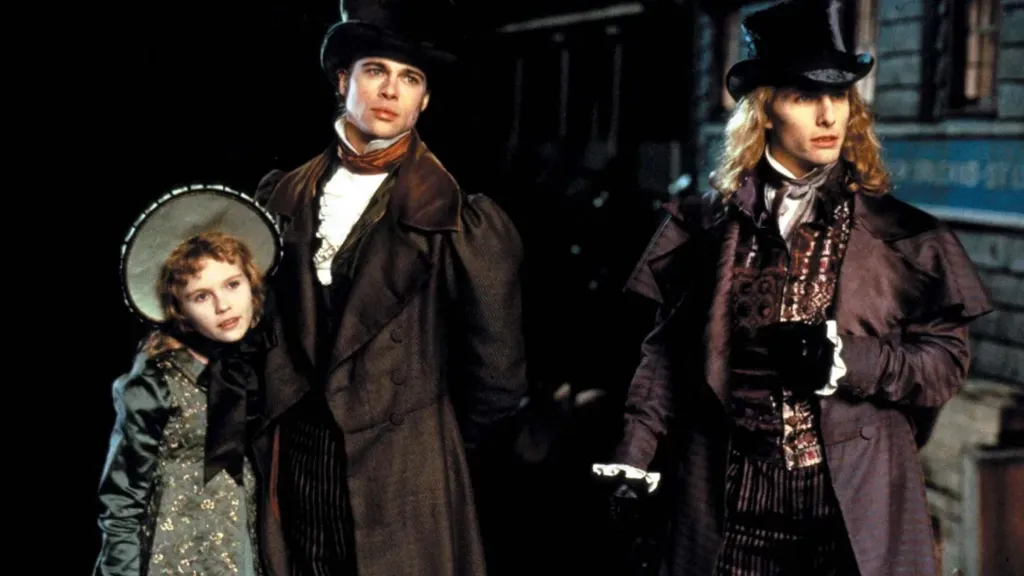
It’s possible that newer generations got to know Interview with the Vampire through the TV series, but before that came the classic ’90s movie, which was, yes, written by Anne Rice herself. The story follows Louis (Brad Pitt), a man turned into a vampire, as he tells journalist Daniel Molloy (Christian Slater) about his long existence, including his complicated relationship with Lestat (Tom Cruise) and the arrival of a young girl named Claudia (Kirsten Dunst), who is also turned. And it’s interesting to imagine that if the author hadn’t been involved in the project, the film might have ended up with a more conventional structure, especially since so much of the novel takes place inside Louis’ head.
But Interview with the Vampire is the kind of story that, to work as well as it does with the source material, needed to keep its focus on the characters and their relationships (the entire book series that followed is basically built around that). It’s true director Neil Jordan substantially rewrote the original screenplay because it was too theatrical, but much of the credit still goes to Rice, and you can see that in the final result: the movie centers on two figures who have spent centuries trapped with each other and a third person who completely changes their dynamic. That emphasis is what makes it work.
3) The Princess Bride
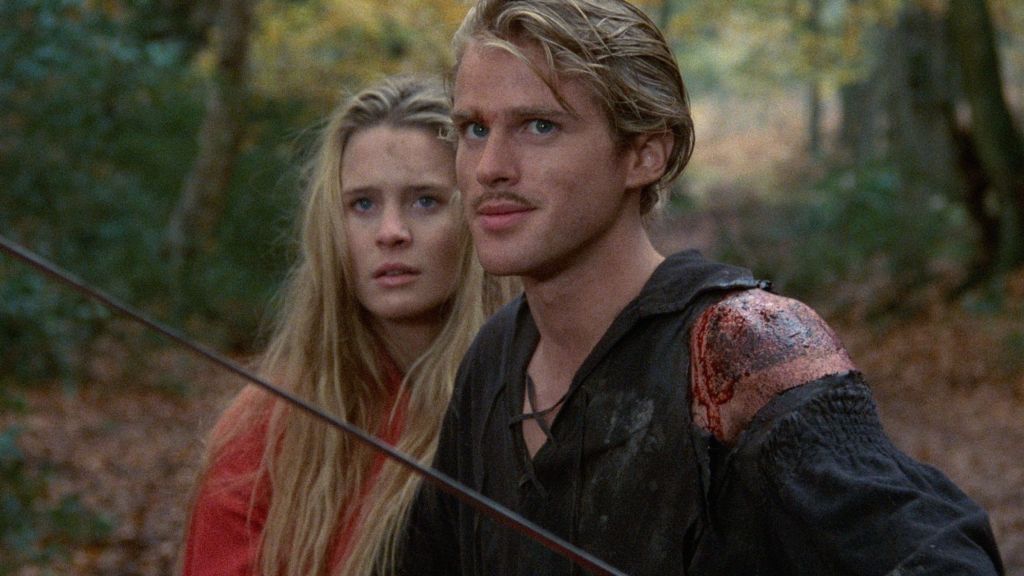
This is probably the most fun example on the list, because William Goldman had the chance to adapt his own fantasy book for the big screen, and he already had plenty of experience writing screenplays. In The Princess Bride, the story follows Westley (Cary Elwes), who returns after being presumed dead to try to save Buttercup (Robin Wright), his former love, from marrying Prince Humperdinck (Chris Sarandon), and from there, the story gets adventure, romance, fights, villains, and comedy. It’s basically a parody of the genre’s clichés, but the fact is that it only worked as well as it did because Goldman understood both the literary and cinematic sides of the story.
Originally, the material has a very particular structure and sense of humor, but simply transferring everything to the big screen wouldn’t necessarily have worked. Goldman knew exactly which elements needed to stay and which ones could be simplified so the movie could also have its own rhythm. And that’s where the balance that makes everything feel so natural came from. On screen, The Princess Bride keeps the original humor and personality, but it never feels like we’re watching an illustrated version of a novel. Besides, the most interesting part of all is that it’s the kind of film that doesn’t make you feel like you have to read the book first.
2) Gone Girl
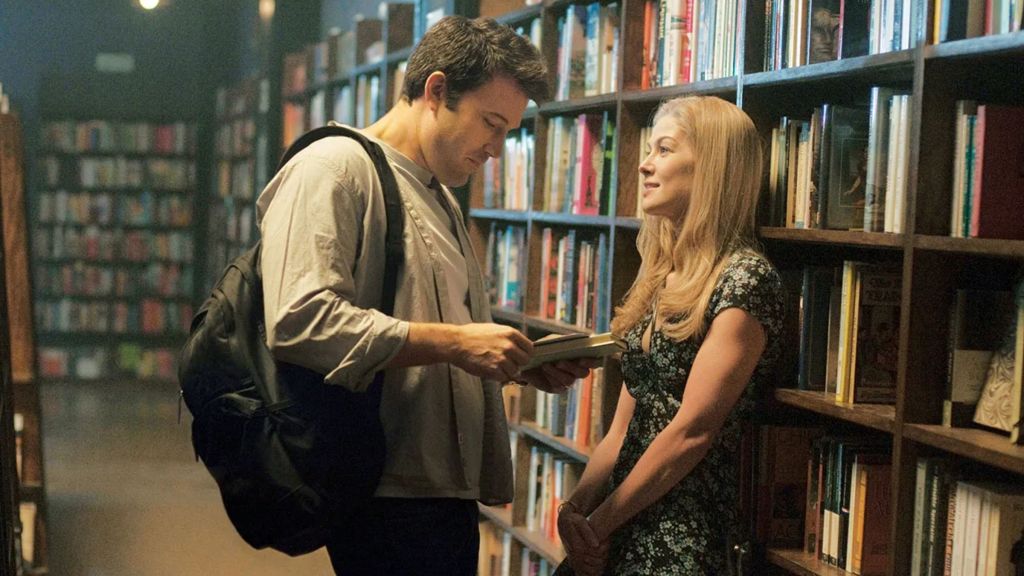
There was a time when Gone Girl was everywhere, and for good reason, because it’s one of the best thrillers out there, with an amazing plot twist. Also, this might be the case where the author’s involvement was especially necessary, since the big trick in Gillian Flynn’s book is all about controlling what the reader knows. The story begins when Amy Dunne (Rosamund Pike) disappears on her wedding anniversary, and her husband Nick (Ben Affleck) suddenly goes from concerned husband to prime suspect as details about their relationship start coming to light. It’s an adaptation by legendary genre filmmaker David Fincher, but the script was entirely in Flynn’s hands.
And if you really break it down, the thing is that adapting Gone Girl wasn’t just about cutting a few pages, as many people assume happens in a process like this, because it was necessary to figure out how to turn the characters’ thoughts, lies, and shifting perspective into something the audience could actually follow on screen. Sure, the movie makes some changes, but overall, it keeps the elements that were truly important for the story to work (especially the way Amy and Nick manipulate both each other and the people watching). That’s how the author managed to preserve the story’s ability to deceive you, which is also what makes it so good from beginning to end.
1) The Perks of Being a Wallflower

Here’s a case you rarely get to see in Hollywood. The Perks of Being a Wallflower has Stephen Chbosky doing pretty much everything: he wrote the book, wrote the screenplay, and directed the movie. The story revolves around Charlie (Logan Lerman), a very reserved teenager who starts high school trying to deal with his own problems until he meets Sam (Emma Watson) and Patrick (Ezra Miller), two friends who eventually pull him out of his shell and introduce him to a whole new phase of his life. And the biggest challenge here was adapting a book told through Charlie’s letters without turning the movie into one long sequence of narration explaining what he’s thinking.
What the author basically did was use situations, reactions, relationships, interactions, and even moments of silence to show things that the book could only present through the protagonist’s perspective. Charlie is a character who doesn’t always understand his own behavior, and a lot of the time, you have to realize before he does that something is wrong. So, in short, Chbosky managed to leave certain aspects implied without making the character confusing or difficult to understand, which also makes it easy for the audience to connect with the film. It’s pretty cool to know that the person who created The Perks of Being a Wallflower was able to translate its essence into another format so well.
More Movies
-

Image Courtesy of Marvel Entertainment