Horror movies are loved by a lot of people, but when you throw in a plot twist, the stakes get even higher. The problem is, this trick doesn’t always work the way it should, because not everyone knows how to pull it off and actually make the movie hit the way it’s supposed to. Some stories go all in on shocking endings that seem to be there just to leave the audience stunned, but they forget about basic narrative logic and even the characters’ psychological development. In the end, you’re left watching something that just doesn’t make sense, and you walk away feeling more confused than impressed. Coherence is key if a twist is really going to land.
Videos by ComicBook.com
With that in mind, here are 10 horror movies with twists that still don’t make any sense and just aren’t convincing. Sadly, they end up dragging down the quality of the whole thing. Naturally, spoilers ahead.
1) The Mist
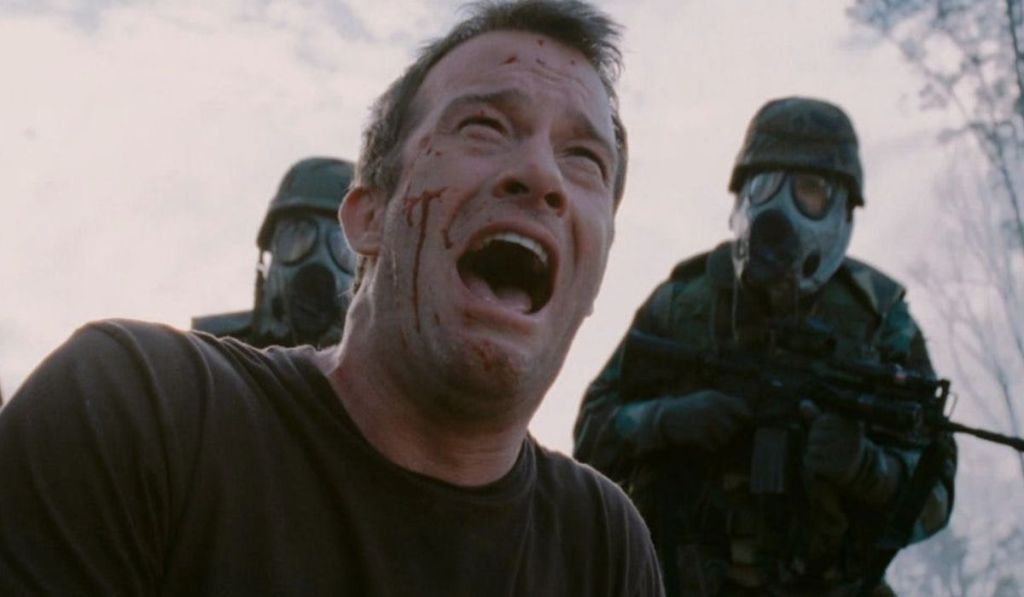
You know that kind of plot twist that gives the viewer no warning whatsoever and exists purely for shock value, even if it makes no sense in the context of the story? The Mist, adapted from Stephen King’s work, leans heavily into this idea. The movie ends with the protagonist, David (Thomas Jane), killing his own son in a moment of utter desperation, only to be rescued mere minutes later. The twist borders on the absurd. David’s motivation feels poorly constructed, with no real psychological development that would make the audience believe he’d reach this point. Was his goal to protect his son the entire movie, only to give up so suddenly at the end? It feels like the script sacrificed coherence just to deliver a gut punch. On top of that, the timing of the military rescue is so implausible that it comes off as forced.
2) Orphan

Yes, the twist in Orphan is shocking, but it also ends up being problematic on several levels. The idea of Esther (Isabelle Fuhrman), an adult woman with a rare form of dwarfism posing as a child, feels more like a convenient excuse than a fully developed plot device – especially since the film never explains how no one, from doctors to family members to neighbors, ever picked up on the truth during her time with the family. In some stories, a bit of inconsistency can be forgiven if the experience is strong enough to carry it, but in this case, it’s too big to ignore. On top of that, Esther’s extreme violence, manipulative behavior, and psychopathic tendencies don’t have any kind of psychological foundation. The character leans entirely on the shock factor, without enough depth to make her believable, and the result is a story that ends up feeling pretty absurd.
3) High Tension

Perhaps one of the most surreal twists comes in High Tension, when it’s revealed that the protagonist, Marie (Cécile de France), is actually the killer – completely unraveling the coherence of the plot. The truck crash, the fact that she’s injured and supposedly being chased, yet still manages to carry out brutal murders on her own, all highlight major holes in the script. How does the truck appear and vanish out of nowhere? There’s no reasonable explanation for these inconsistencies, which makes it seem like the movie leans on the “unreliable narrator” trope just to cover up its narrative flaws. For viewers expecting a story that makes sense, it’s a frustrating experience, especially since the first half is genuinely tense and gripping. In the end, the twist feels less like a smart reveal and more like an attempt to be clever without really earning it.
4) The Village

The Village is a good film in some ways, but its plot twist (while somewhat predictable) is mostly hard to buy into. The idea that the isolated village is actually a modern-day community hiding from the real world, and that this secret has been passed down for generations, feels a bit far-fetched once you start asking questions. Wouldn’t someone have tried to challenge or escape this illusion at some point? Keeping a lie this massive would require intense social and psychological control – something the film never really explores in depth. On top of that, the mysterious “monster” in the woods turns out to be just adults in costumes, which totally undercuts the fear and suspense the story builds. In the end, the twist feels more like a shortcut to wrap up the plot than a payoff that actually earns its impact.
5) Mother!

A psychological horror movie best known for Jennifer Lawrence’s standout performance, Mother! leans heavily on symbolism and metaphor, but its final twist is so enigmatic that it leaves most viewers completely lost. Director and writer Darren Aronofsky has even admitted that the script was written quickly and designed to be intentionally chaotic and unsettling. Still, a strong script, even one that plays with ambiguity, should leave room for interpretation without completely confusing its audience. Here, the story is a dense and layered allegory, but it lacks the clarity needed to make its meaning accessible. As a result, many viewers walk away with little to no understanding of what actually happened. On top of that, the protagonist slowly stops functioning as a character with clear motivations, making the ending feel abstract and emotionally distant. To this day, plenty of people still don’t know what the film was really trying to say.
6) Signs
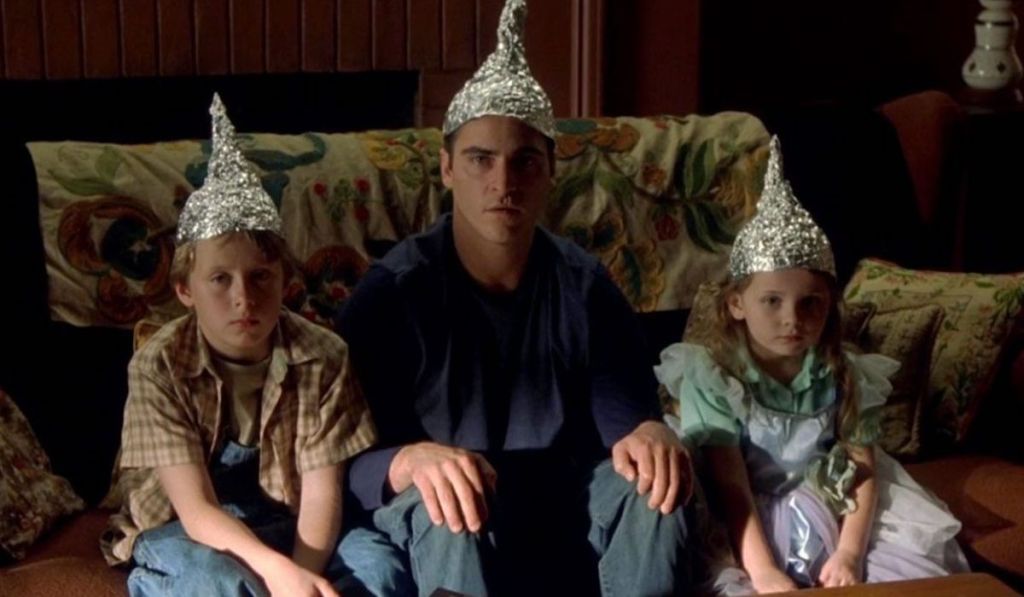
The big problem with the twist in Signs lies in its flawed scientific logic: the aliens, who plan to invade Earth, are vulnerable to water – an element that covers more than 70% of the planet. How could they not have foreseen this? Or worse, how did they come into contact with water without suffering immediate consequences? This is the kind of basic detail that should’ve been worked out long before the script was finished. Some fans have tried to justify the weakness with theories, but it still comes across as a superficial device – one that exists just to offer an easy solution to the conflict, which good storytelling should avoid at all costs. In the end, the inconsistency undercuts all the suspense the film builds up and even makes the ending feel a bit laughable for anyone watching with a more critical eye.
7) Longlegs

When Longlegs was released, most of the buzz centered around Nicolas Cage’s eerie appearance. But looking at the film as a whole, the twist that the protagonist’s mother, Ruth (Alicia Witt), is an accomplice to the satanic killer feels like a last-minute addition with very little foundation. This isn’t a movie to dismiss entirely (it has atmosphere and ambition), but the truth is that it doesn’t give enough time or depth to develop this revelation. There’s no real explanation for Ruth’s motives, nor does the film explore how or why she became involved. The supernatural elements and satanism show up without much buildup, which leaves the ending feeling confusing and disconnected. It’s another example of a story that wants to shock, but forgets to ground its twist in a coherent narrative. The script doesn’t tie its ideas together in a way that truly satisfies.
8) Catacombs

The idea of crafting a movie’s ending as a prank might sound interesting in theory, but in practice, it can easily frustrate the viewer – especially in the horror genre. That’s exactly what happens in Catacombs, and the result feels hollow and pointless. The protagonist, Victoria (Shannyn Sossamon), goes through terrifying, life-threatening situations, only for the audience to find out it was all just a cruel joke? This doesn’t just invalidate her trauma, it also leaves the audience wondering why any of it was supposed to matter. It’s like sitting through nearly two hours only to realize the story had no real weight. The issue isn’t just the overused “it was all a joke” twist – it’s the way it’s handled. The movie never gives the characters a believable reason for doing something so extreme, and the emotional impact on Victoria is brushed off completely. Instead of being clever, the twist ends up feeling lazy and, ultimately, meaningless.
9) The Perfection

The Perfection is a horror film that tries to be bold, especially with its twist, but it stumbles in its attempt to mix body horror, social commentary, female revenge, and psychological trauma all at once. The story starts off fairly strong, but it quickly spirals into bizarre territory, with scenes of self-mutilation and intense hallucinations. The reveal that it’s all part of protagonist Charlotte’s (Allison Williams) plan to expose a cycle of abuse at a prestigious music academy should carry weight, but the way it unfolds doesn’t make much sense. The violence feels over-the-top and theatrical, and the script never clearly explains how the plan is even possible, let alone believable. It becomes hard to relate to the characters or understand the logic behind their decisions. The movie clearly wants to shock (and it definitely does), but that shock value seems to be the only goal, rather than telling a coherent, compelling story.
10) The Skeleton Key

The ending of The Skeleton Key has all the ingredients to be a memorable horror twist: a hoodoo ritual that involves exchanging bodies between an elderly couple and unsuspecting young people. The problem is that the film asks the audience to accept this mystical system without establishing clear rules or limits on what’s possible within that universe. The protagonist, Caroline (Kate Hudson), is rational and skeptical throughout the story, yet she becomes a victim of her own skepticism because, according to the movie, the ritual only works if the person believes in it. But if belief is required, how did the plan succeed with someone who spent the entire film questioning it? It might be that the idea was to explore her slowly coming to believe, but it’s not convincing. When it’s time for the final impact, the audience’s experience is compromised because the script’s rules don’t hold up. It had a strong concept but ultimately fails to deliver on it.
Most Viewed
-

Courtesy of TOHO Animation -

Image Courtesy of MAPPA -

Courtesy of Viz Media -

Image Courtesy of Shueisha