WandaVision premiered on Disney+ in January, 2021, becoming Marvel Studios’ first live-action series and the official start of the Marvel Cinematic Universe‘s Phase Four. The nine-episode series reunited Wanda Maximoff (Elizabeth Olsen) and Vision (Paul Bettany) weeks after the events of Avengers: Endgame, offering a supernatural mystery for fans to solve. However, rather than opening with a conventional superhero setup, WandaVision‘s creator Jac Schaeffer built the show as an homage to the American sitcom format, exploring Wanda’s grief through the tropes and visual language of I Love Lucy, Bewitched, and Full House. The unconventional premise was fully embraced by critics and fans, turning the show into appointment viewing during its nine-week run and making it one of Marvel Studios’ most acclaimed television projects.
Videos by ComicBook.com
The structure of WandaVision allowed the creative team to hide clues in plain sight by using important faces and pieces of information as part of the sitcom episodes Wanda and Vision were experiencing. For example, in the premiere episode, Wanda and Vision discover a heart drawn over August 23rd on their kitchen calendar and cannot explain why it is there. The scene plays as a classic sitcom beat, as Wanda and Vision exchange one-liners while the forgetful spouses try to figure it out. Hard dates were always rare in the MCU, which means fans quickly latched onto August 23rd, trying to figure out what the date truly meant.
What Does August 23rd Mean in WandaVision?
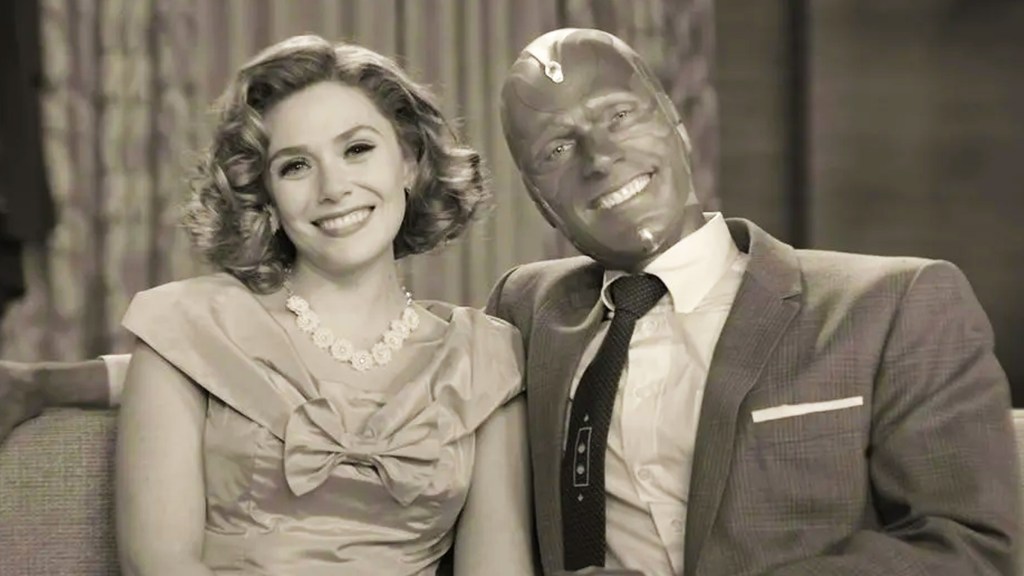
In WandaVision‘s first episode, Vision initially assumes that August 23rd marks his and Wanda’s wedding anniversary, until the couple’s neighbor, Agnes (Kathryn Hahn), presses them for details on their wedding. While still committed to the sitcom beat, the series uses playful banter to reveal that neither main character can account for their wedding or how they came to live in Westview at all. Inside the episode, we find out that Vision’s boss, Arthur Hart (Fred Melamed), and his wife are coming for dinner that night, with Wanda and Vision scrambling to prepare a last-minute dinner for the Harts. Still, the dinner setting didn’t explain why Marvel Studios chose that specific date, with everyone coming up with theories.
Some fans posit that August 23rd could mark the creation of the Hex, the reality-warping bubble Wanda built around Westview, which doesn’t hold in the Sacred Timeline chronology. In WandaVision‘s fourth episode, SWORD director Tyler Hayward (Josh Stamberg) tells Monica Rambeau (Teyonah Parris) it has been three weeks since she returned from the Blip, and the Blip reversal that closes Avengers: Endgame has been placed on October 17, 2023, by subsequent MCU projects. That means WandaVision unfolds in November. Another theory tied the date to Vision’s death, but Vision was killed in Avengers: Infinity War, which Marvel Studios has set within about ten weeks of Black Panther‘s February setting, placing his death in the spring of 2018. The theory that fits the timeline says that Vision bought the house on August 23rd, maybe in 2017, months before his death. The heart on the calendar comes from the house deed, where Vision wrote “to grow old together,” and since we don’t see the date on the paper, we can choose to believe it’s August 23rd.
Of course, August 23rd has other meanings. Twenty-three MCU films had been released by the time WandaVision premiered, ending with Spider-Man: Far From Home, and the number could be a tribute to the franchise’s Infinity Saga. On top of that, read in European date order like Wanda would, 23/8 matches Avengers #238, a comic published in December 1983. In that issue, Vision recovers his consciousness and speech after a battle against the cosmic villain Annihilus, with Monica Rambeau featured prominently as Captain Marvel. Both plot points mirror WandaVision directly, since the series revives Vision through Wanda’s power and gives Monica Rambeau an investigative role. Marvel Studios never confirmed the reference outright, but the date became Wanda and Vision’s anniversary, an annual celebration of WandaVision and two of the best MCU characters.
WandaVision Keeps Shaping the MCU

WandaVision changed how integral a series could be to the MCU’s theatrical output. When Doctor Strange in the Multiverse of Madness arrived in 2022, it picked up Wanda Maximoff directly from WandaVision‘s finale, casting her as the film’s primary antagonist and requiring theatrical audiences to have watched the streaming series to follow the plot. Marvel’s earlier television efforts, from Agents of SHIELD to the Netflix series, existed on the margins of the film continuity, with both sides separate. WandaVision reversed that hierarchy, and the show’s awards recognition confirmed the shift. WandaVision earned 23 Emmy nominations, the most of any limited series that year, and won three: for production design, for fantasy and sci-fi costumes, and for the original song “Agatha All Along.” Those wins gave Marvel Studios its first Emmy Awards and the incentive to keep pursuing prestige television.
The show’s success also led to Agatha All Along in 2024, sending Agatha Harkness (Kathryn Hahn) down the Witches’ Road in a story that subverted expectations while becoming a fan favorite in its own right. VisionQuest will now close out the trilogy that WandaVision began, following Vision as he confronts the AI personas embedded in his programming and reckons with a son he never expected. Curiously, Marvel Studios seems to be scaling back its Disney+ programming after VisionQuest‘s release, with Daredevil: Born Again Season 3 standing as the only other live-action series currently in development. WandaVision was there at the inception of the Disney+ experiment, and through VisionQuest, it will be there at the end of this phase. Now we need a WandaVision follow-up to kick off whatever comes next.
More TV Shows
-

Courtesy of Paramount+ / Rotten Tomatoes -
Image Courtesy of DC Comics